

The commonest way to eat badly in a foreign city is not choosing the wrong restaurant. It is turning up at half past six for dinner in Madrid, or at three in the afternoon in Tokyo, and taking whatever is still open. The kitchens that serve at those hours are the ones that serve at every hour, which is exactly the wrong signal.
What follows is the clock in each of the thirteen countries on this site, the hours when the kitchen is genuinely shut, and the separate and stricter timetable that markets run on.
The clock, country by country
The column that matters most is the last one. Anywhere with a long closed window, the places that stay open through it are catering to people who do not know the timetable.
| Country | Breakfast | Main midday meal | Evening meal | Kitchen shut |
|---|---|---|---|---|
| Italy | 07:00 to 10:00, standing, coffee and a pastry | 13:00 to 14:30 | 20:00 to 22:00 | About 15:00 to 19:30 |
| Spain | 08:00 to 10:00, then a second one around 11:00 | 14:00 to 16:00 | 21:00 to 23:00 | About 16:30 to 20:30 |
| Portugal | 07:30 to 10:00 | 12:30 to 14:30 | 19:30 to 22:00 | About 15:00 to 19:00 |
| Greece | 08:00 to 10:00, often just coffee | 14:00 to 16:00 | 21:00 to 23:00 | Tavernas often stay open through |
| Japan | 07:00 to 09:00 | 11:30 to 14:00, and lunch sets stop dead at 14:00 | 18:00 to 21:00, izakaya later | About 14:00 to 17:00, strictly |
| Vietnam | 06:00 to 09:00, and it is a full hot meal | 11:00 to 13:00 | 18:00 to 20:00 | Street stalls change shift rather than close |
| Thailand | 07:00 onwards | 11:00 to 14:00 | 18:00 to midnight for street food | Very little closes |
| Mexico | 08:00 to 10:00, then almuerzo around 11:00 | 14:00 to 16:00, the main meal of the day | 20:00 to 22:00, light | Fondas close after the comida |
| Peru | 07:00 to 09:00 | 13:00 to 15:00, the main meal | 19:00 to 21:00 | Cevicherias close mid-afternoon and do not reopen |
| Colombia | 06:00 to 08:00, early | 12:00 to 14:00 | 19:00 to 20:00 | Set-lunch places close after service |
| Morocco | 08:00 to 10:00 | 13:00 to 15:00, the main meal | 20:00 to 22:00 | Ramadan rewrites all of this |
| United States | 07:00 to 10:00 | 12:00 to 14:00 | 18:00 to 21:00 | Little closes, but kitchens stop earlier than you expect |
| Australia | 07:00 to 11:00, and brunch is a real meal | 12:00 to 14:00 | 18:00 to 20:30 | Kitchens close early, often by 21:00 |
Three practical consequences. In Japan the two o'clock cutoff is absolute, and a restaurant serving a lunch set at 14:15 is not a restaurant that cares about lunch. In Peru a cevicheria that is open at eight in the evening is serving fish bought that morning and kept all day, which is why the good ones shut. And in Mexico the evening meal is the small one, so a visitor who skips the two o'clock comida has missed the day's cooking entirely.

Breakfast is the meal that varies most
In Italy and Spain it is coffee and something sweet, taken standing, in under five minutes. In Vietnam it is a full bowl of hot soup, and the best pho of the day is sold before eight in the morning. In Colombia it is early and substantial, in Australia it is an event with a queue.
If you eat one meal like a local on a short trip, make it this one. It costs the least and it is the hardest to get wrong.
Why Spain eats so late, and it is not what you think
The usual explanation is temperament. The actual explanation is an administrative order, and you can read it.
On 7 March 1940 the Spanish government issued an order advancing legal time by sixty minutes from eleven o'clock on the night of Saturday 16 March. The stated reason, in the text itself, was the convenience of having the national timetable run in step with other European countries. The order calls the change a temporary advance of the hour. Spain never put the clocks back.
Geographically almost all of Spain sits west of Greenwich and belongs on the same time as Portugal and Britain. Instead it runs on central European time, an hour ahead of the sun. So dinner at ten in Madrid is dinner at nine by the sun, which is late but not extraordinary, and lunch at half past two is lunch at half past one. The Spanish are not eating at strange hours. Their clocks are.
An order of 7 March 1940 describes itself as a temporary advance of the hour. Eighty-six years later the whole country still eats an hour after the sun says it should.
The market runs on a different clock, and it is stricter
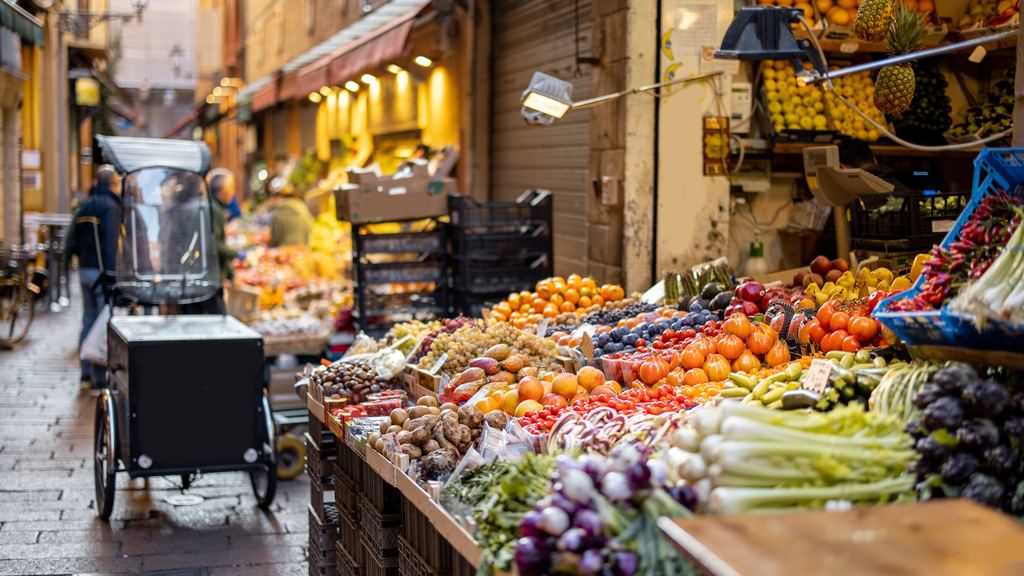
Restaurants have opening hours. Markets have a working day, and it ends whether or not you have arrived. This is the timetable almost nobody publishes, and it explains why every market tour you will ever be offered starts early.
| Time | What is happening | What you can still buy |
|---|---|---|
| Before dawn | Wholesale trading. Restaurants and stallholders buy | Nothing, usually. Access is often restricted |
| 07:00 to 09:00 | Retail opens. Everything is on the counter | Everything, and this is when to come |
| 09:00 to 11:00 | The local shopping hour | Almost everything. Best time for a visitor |
| 11:00 to 13:00 | Specialities start to run out | Most things. The famous stall may be finished |
| 13:00 to 14:00 | Packing up begins, prices soften | Whatever is left, cheaply |
| After 14:00 | Closed, in most of Europe and Latin America | Nothing. The building may be open and empty |
One operator in Mexico City is the only company we found that states the consequence out loud: for daytime street food, starting earlier is essential, because stalls run out of their specialities. That is the whole reason for the early start, and it applies from Lima to Athens.
Then there are the closed days, which cost people an entire morning. In most of southern Europe and Latin America, markets close on Sunday afternoon and often all of Monday. Fish is the sharpest case: where boats do not go out on Sunday, Monday fish is Saturday's fish, and this is why Italian restaurants traditionally do not serve it that day. In Mexico the tianguis is a market that exists only on its allotted day and is an empty street the rest of the week.
How the eating day was assembled
None of these hours are natural. They were built, fairly recently, by lighting, by work and in one case by a government order.
Five moments that set the modern table
Where the meals in the table above came from.
The origins
Edo period
Japan settles into three meals
Japanese towns move from two meals a day to three over the course of the Edo period, as cheap lighting extends the working day and city labour separates eating from the household's rhythm.
1760s
The restaurant appears in Paris
Rooms open in Paris selling restorative broths, called restaurants, to people who choose a dish from a list and eat at their own table at their own hour. Eating out stops being a fixed communal sitting and becomes a service.
1786
Vermouth, and an hour of its own
Italian vermouth is traditionally dated to Turin in this year. The drink creates the pre-dinner hour that Italy still calls the aperitivo, and with it the idea that the meal has a scheduled prologue.
The growth
1940
Spain advances the clock
An order of 7 March advances Spanish legal time by sixty minutes from 16 March, to bring the country into step with the rest of Europe. The text describes the change as temporary. It has never been reversed, and the Spanish meal timetable has been an hour ahead of the sun ever since.
1954
Coffee leaves the house
Post-war migration brings Italian espresso machines to Melbourne, and the plans for one of the city's first espresso bars are lodged with the council in August of this year. Within a generation the standing coffee becomes a habit across the English-speaking world.
Eating early, and how not to
Sometimes you genuinely need to eat at seven in Madrid, because of a child, a flight or a body clock that has not caught up. There are ways to do it that are not a bad tourist restaurant.
Eat the bar version. In Spain, Italy and Portugal the counter serves earlier and longer than the dining room. Tapas from six, cicheti from five, a plate of petiscos with a beer. It is the same kitchen, standing up.
Move the main meal to lunch. In Mexico, Peru and Spain this is what locals do anyway, and the midday meal is the better one. It is also cheaper: the set lunch has a name in every one of these countries, and it is the most reliable value on this site's whole map.
Use the market for lunch. Market halls in Lisbon, Athens, Madrid and Mexico City have counters that cook what the stalls sell, and they serve continuously from mid-morning.
Book the first sitting. Many good restaurants open their kitchen at eight in Spain and half past seven in Italy and are half empty for the first hour. That is not the wrong table. That is the table nobody wants, in the right restaurant.
Timing questions
Why is dinner so late in Spain?
Partly because the clocks are wrong. An order of 7 March 1940 advanced Spanish legal time by an hour to match central Europe and was never reversed, so Spain runs an hour ahead of solar time. Dinner at ten is nine by the sun. The rest is a long working afternoon and a late lunch.
What time should I go to a food market?
Between eight and eleven in the morning. Wholesale trading happens before dawn and is usually closed to visitors, the specialities sell out through the late morning, and in most of Europe and Latin America the whole thing shuts by two.
Is it true you should not order fish on a Monday?
Where the fleet does not sail on Sunday, yes, and that covers much of the Mediterranean. It is less true in cities with a large wholesale market taking daily deliveries by air and road. If you are unsure, ask what came in this morning, which is a normal question and not a rude one.
Which country has the most useful breakfast?
Vietnam, without much competition. Breakfast is a hot bowl of soup eaten out of the house, the best of it is sold before eight, and it is the cheapest good meal of the day anywhere on this site.
Do these hours change in summer?
They shift later, sometimes by an hour, in Spain, Italy, Greece and Morocco. In August large parts of Italy and Greece also close entirely for holidays, which is a different problem and one we cover in when to go.
Data verified on. The 1940 Spanish time order read in the Boletin Oficial del Estado, number 68. Meal hours are customary ranges, not opening times: individual places vary.
The words for all of this
A hundred and thirty-nine terms, from the name above the door to the charge that appears before you order.