
Food Tours in the United States
Twenty experiences, all in New York, all the same shape: one neighbourhood, six tastings, three hours. So the only decision that matters is which block.
Every food tour in New York is the same product: a walk through one neighbourhood with six or seven tastings over about three hours. Twenty listings, one format. That sounds like a criticism and it is not, because in a city assembled from immigrations, the neighbourhood is the content. Chinatown and Greenwich Village are not two versions of the same tour; they are two different countries' worth of food eight streets apart.
Before you choose one, there is a piece of public information in every restaurant window that visitors look at and misread daily.
Choose a destination in the United States

Food Tours Experiences in the United States
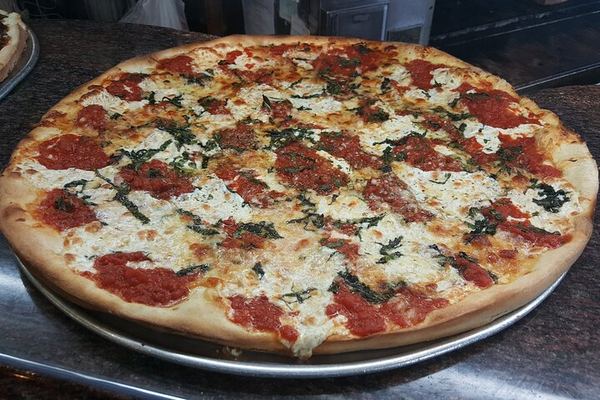
A Mile and a Half of Old Railway, Then Lunch in the Village
Four hours: the full mile and a half of the elevated park in the morning, then lunch through Greenwich Village. Nine guests, food starts around 12:45. €139.32.
Bagel Bob's to Molly's, Past Three Famous Doorways
Two and a half hours from a hand-rolled everything bagel to a red velvet cupcake, past the Friends corner, Carrie Bradshaw's stoop and 23 Cornelia Street.
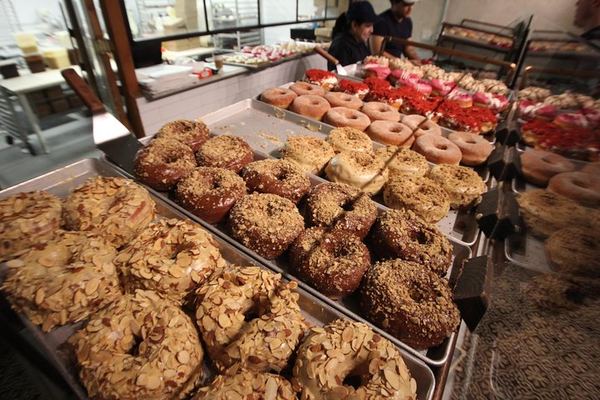
Bombolone, a 1964 Donut Wall, and a Brioche Finish
Italian bombolone off Union Square, a Village counter open since 1964 with a wall of them, and a brioche doughnut to finish on Greenwich Avenue. Ten guests.
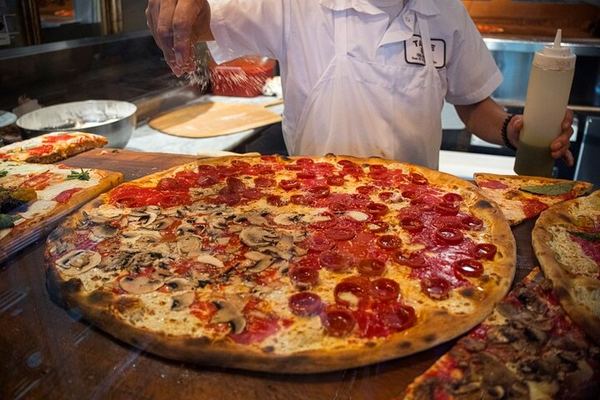
Carroll Gardens and Cobble Hill Food Walk with Chocolate Finish
Three hours and four kilometres through Carroll Gardens, Cobble Hill and Atlantic Avenue, in family shops, ending on chocolate made on the premises.
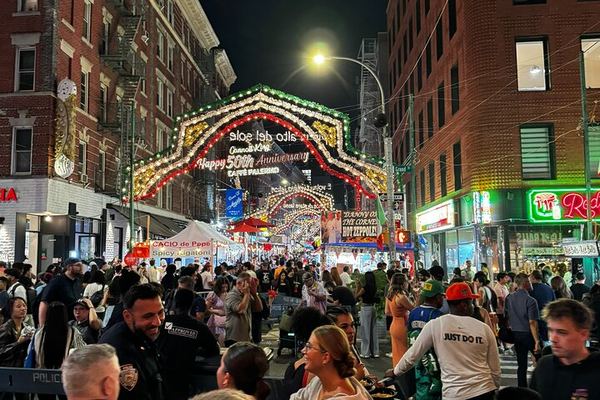
Dinner at John's of 12th Street, Told by a Detective
Three and a half hours from a 1908 red-sauce joint in the East Village to Mulberry and Canal, guided by officers who worked these streets. Dinner included.
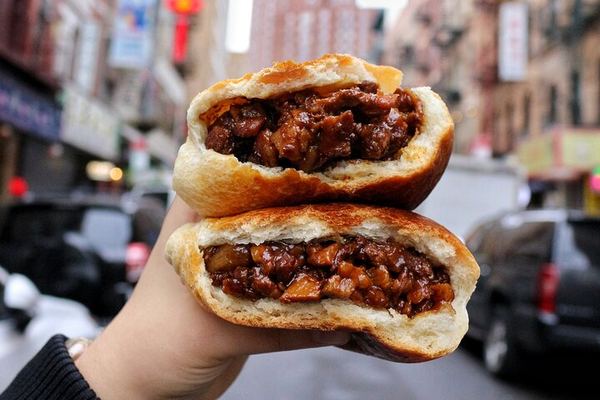
Doyers Street, an Audrey Hepburn Mural, and Seven Tastings
Pork and chive dumplings, char siu buns from a sixty-year-old counter, sponge cake, gnocchi from a century-old pasta shop, pizza and cheesecake. Two hours.
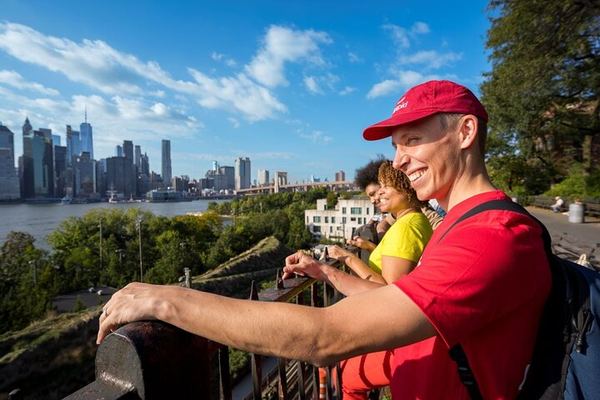
DUMBO and Brooklyn Heights Food Walk with the Bridge at the End
Immigrant-owned bakeries in Brooklyn Heights, Time Out Market, the DUMBO Archway and New York pizza, finishing up on the Brooklyn Bridge itself.
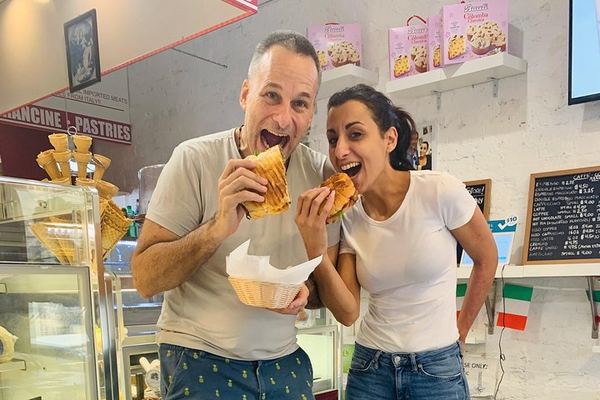
Eight People, One Guide Whose Family Arrived in 1884
A licensed guide whose family has lived on these blocks since 1884, eight guests, two hours, and the shops that outlasted the neighbourhood's Italian years.
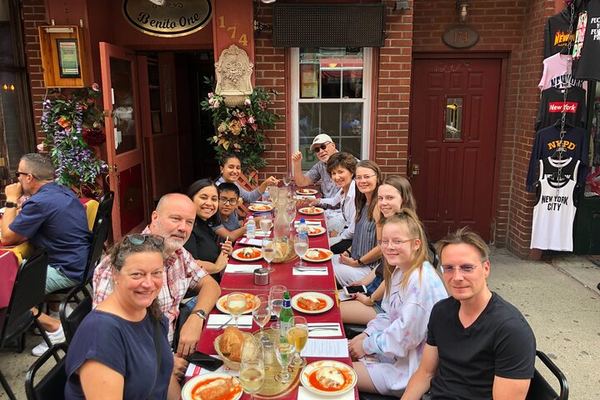
Eight Tastings, Six Guests, Running Since 2009
Six guests, eight tastings, three hours and half a mile of walking, from a Mott Street tea house. Two or three seated courses, the rest on the go. Since 2009.
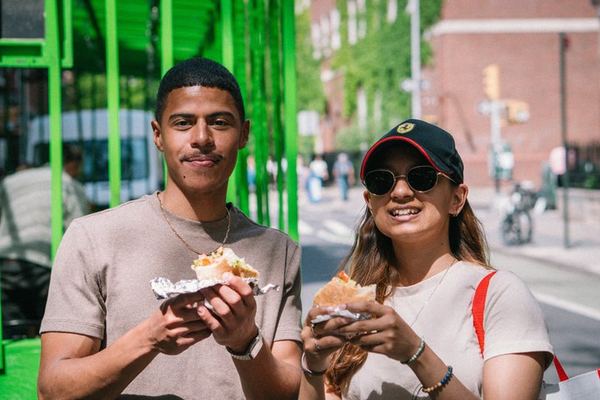
Faicco's Arancini, Mamoun's Falafel, Thirty Sauces of Fries
Arancini from a 1900s salumeria, falafel from 1971, Belgian fries with thirty sauces, and a nine-and-a-half-foot house. Starts and ends at the cupcake counter.
Five Points to Petrosino Square, Six Dishes
Three hours from the old Five Points through Chinatown into Little Italy: dumplings, roast pork bun, dan dan noodles, arancini, pizza and one unnamed dish.
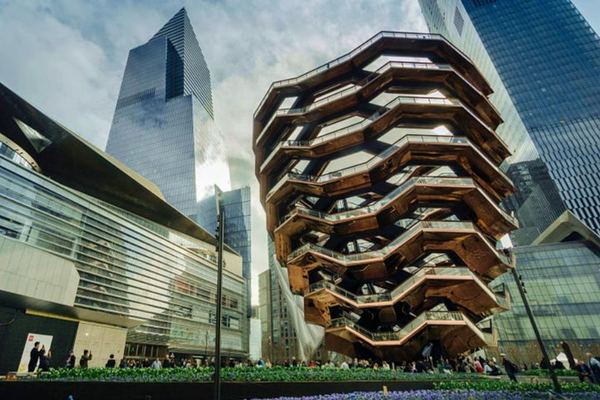
From Chelsea Market to the Vessel, Along an Old Freight Line
Dumplings, a Portuguese custard tart, a Japanese-Mexican taco and mini doughnuts, then a drink carried up onto the elevated railway. Ends at the Vessel.
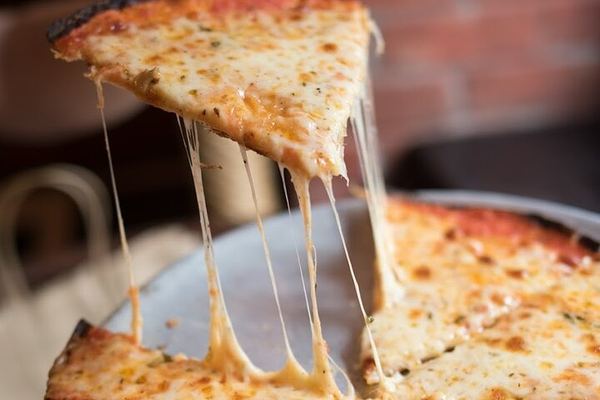
From the IFC Center to Sheridan Square, Six Tastings
Three hours from the IFC Center to Sheridan Square with six tastings: bagel and schmear, falafel, a hot slice, a cupcake, a cookie and one unnamed dish. €84.99.
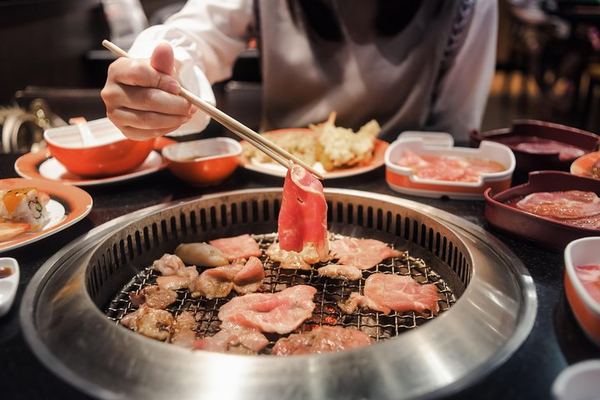
Georgian Cheese Boats and Japanese BBQ off Ninth Avenue
Eight guests, two and a half hours and a block-by-block argument that the best eating near Times Square is the part nobody walks to. Japanese BBQ to Georgian.
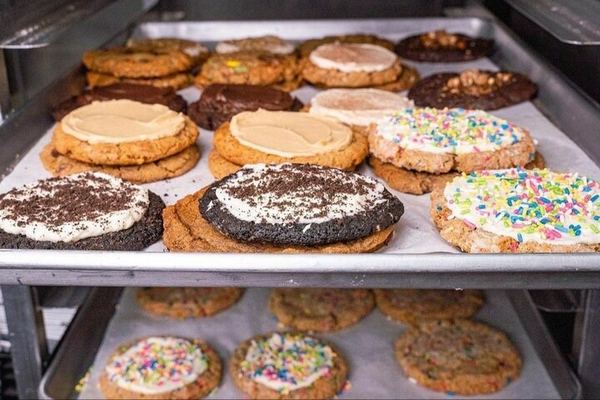
Hell's Kitchen First, Then Eight Hundred Acres to Walk It Off
Four and a half hours: international tastings and dockside history two blocks from the theatre district, then 843 acres of park to walk them off. Nine guests.
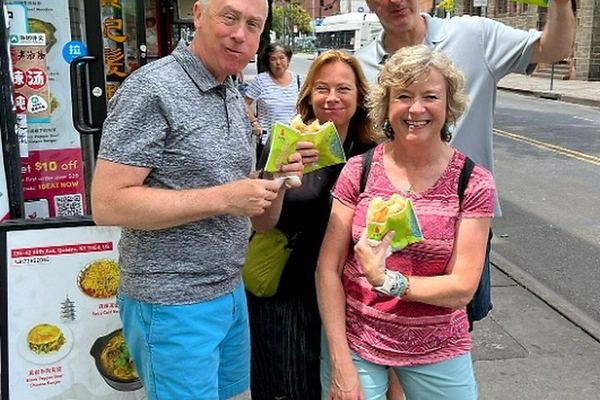
Jianbing, Roujiamo and Salty Chicken, Forty Minutes Out on the 7
Two hours in Queens for jianbing, roujiamo, Cantonese rice rolls, Taiwanese salty chicken and handmade dumplings. Forty minutes from Manhattan on the 7. €60.46.
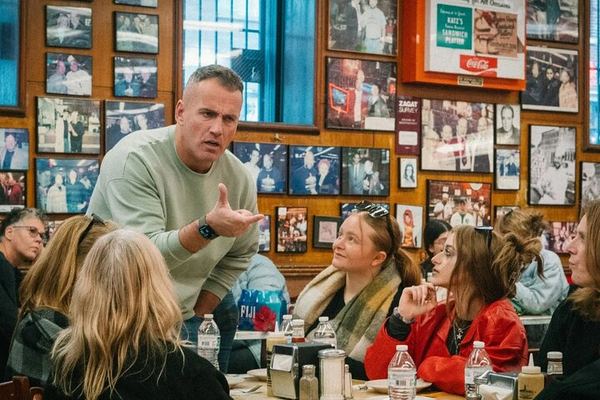
Katz's, Kossar's, the Pickle Guys and a Romaniote Synagogue
Pastrami where the film scene was shot, rugelach, candy from 1937, three kinds of pickle, bialys, dumplings and a doughnut that beat Bobby Flay. Twelve people.
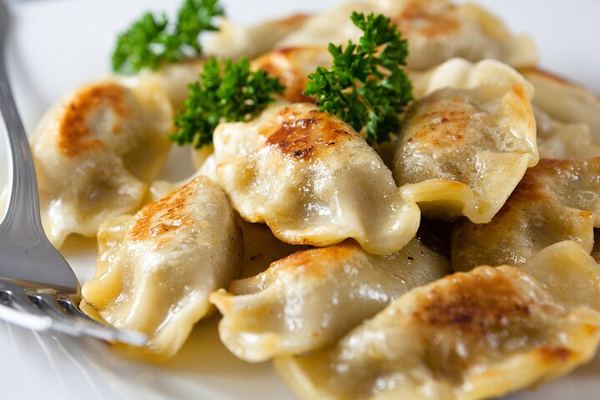
Pierogi in Greenpoint, Cannoli in Carroll Gardens, by Coach
Four and a half hours by air-conditioned coach through Williamsburg, Greenpoint, Gowanus, Carroll Gardens and DUMBO. Six tastings that add up to lunch.
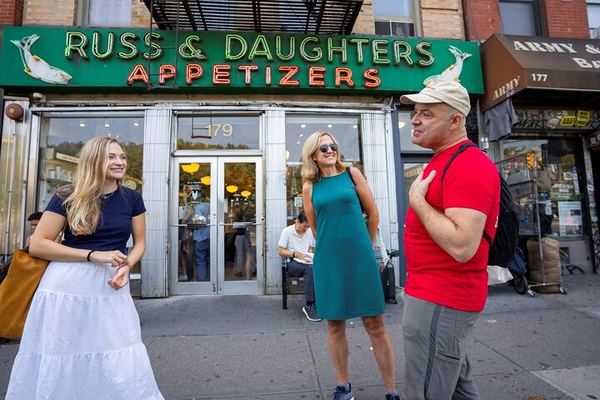
Six Waves of Immigration in Two and a Half Miles
Two and a half miles from Canal Street to the Tenement Museum, four tastings and six waves of immigration told on the streets that received them. From €52.72.
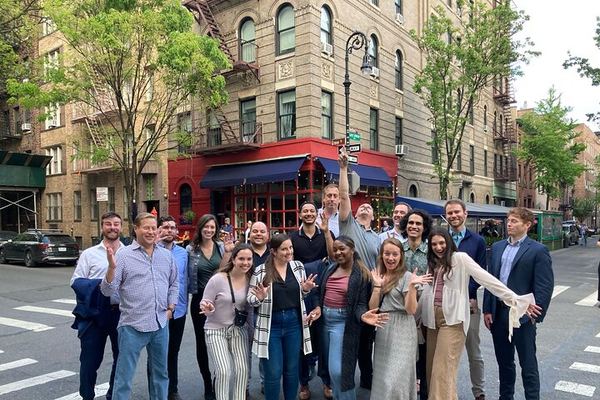
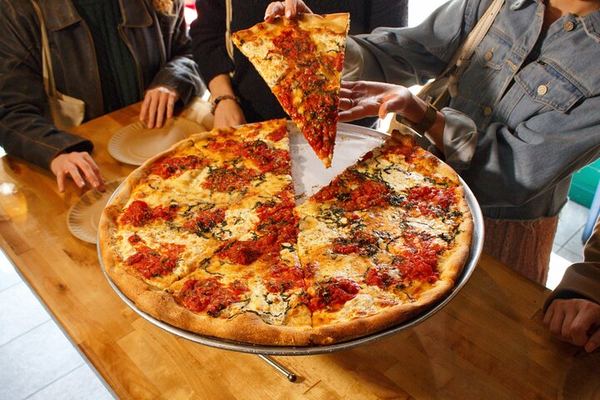
Skip the Line at Joe's, Then Nine More West Village Stops
Award-winning mac and cheese, a queue skipped at the city's most photographed pizza counter, a fish taco, arancini from a 120-year-old pork shop, and a cannoli.
Ratings collected by Viator and Tripadvisor
The letter in the window
Since 2010 New York City restaurants have been required to display a hygiene grade issued by the health department, and the system is precise enough to be useful once you know how it reads.
Inspectors assign points for violations, and fewer points is better. That is the part visitors get backwards. A restaurant scoring 0 to 13 gets an A. From 14 to 27 it gets a B. At 28 or more it gets a C.
The card that causes the most confusion says Grade Pending, and it is worth understanding because it is not what it looks like. A place cannot receive one on a first inspection: if the first visit scores 14 or more, the restaurant gets the score but no letter, and an inspector returns unannounced. Only if that second inspection also exceeds 13 does a letter get issued, and the operator may then display either the letter or the pending card while it contests the result. So Grade Pending means at least two inspections have gone badly, not that nobody has been yet.
Since December 2018 the system covers mobile food vendors too: carts and trucks carry the letter on the permit decal. That is genuinely useful in a city where a great deal of the best eating happens at a cart.
| What you see | What it means | What we would do |
|---|---|---|
| A | 0 to 13 violation points | Eat there without thinking about it |
| B | 14 to 27 points | Common enough. Look at the date on the card |
| C | 28 or more points | Your call, and it is a real signal |
| Grade Pending | Two inspections failed; the result is being contested | Not a new restaurant. Treat it as a B at best |
| A letter on a cart | Mobile vendors have been graded since December 2018 | The same rules apply, on the permit decal |
Why the food is where it is
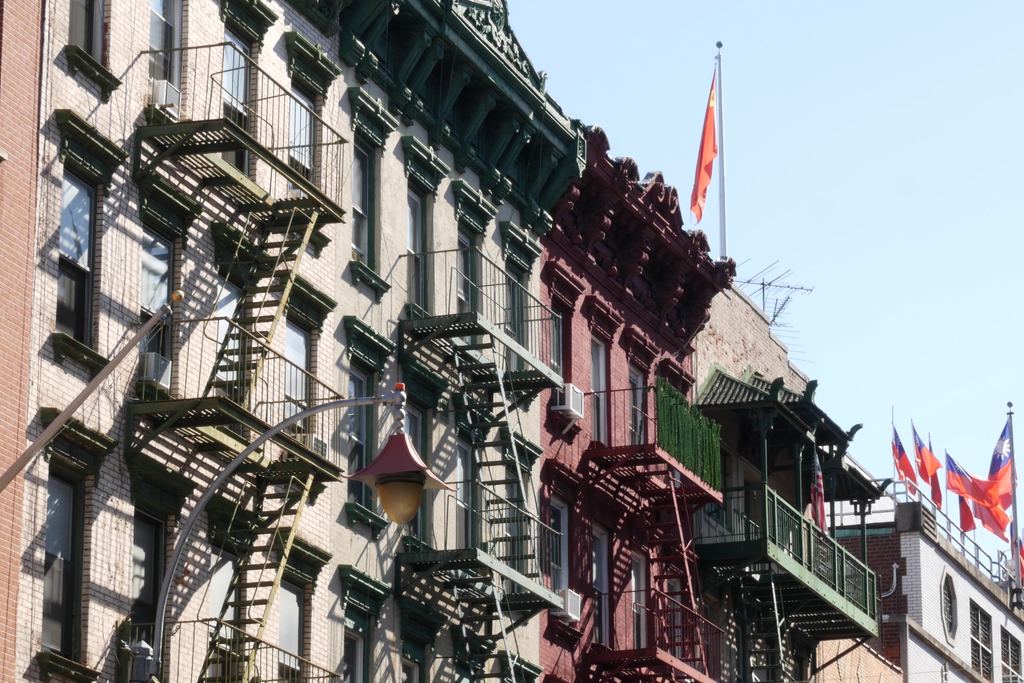
New York's food map is an immigration map with dates on it. The first Chinese resident of what became Chinatown settled there in 1858; the Chinese Exclusion Act of 1882 then froze the community's growth for six decades. Little Italy formed alongside it and has since shrunk to a few blocks as its population moved outward.
The change that produced the city you will eat in was the Hart-Celler Act of 1965, which abolished the national origin quotas. Everything that followed, the Dominican food in Washington Heights, the Bangladeshi restaurants in Jackson Heights, the enormous Chinese food scene in Flushing rather than Manhattan, comes from that one law.
It explains the shape of this catalogue too. A New York food tour is not about a cuisine; it is about a wave. One listing here goes to Flushing, in Queens, and is arguably the most interesting Chinese food in the city.
What things actually cost
Useful for judging an 86 euro tour, and for the rest of your week.
A slice of pizza averaged $3.81 in 2025, measured across 464 slices in a long running survey that excludes the dollar slice shops. In 2014 the same measure was $2.52.
That figure has retired a piece of New York folklore. The Pizza Principle held that a slice and a subway ride cost the same, and it tracked for decades. The subway fare reached $3.00 in 2026 while the slice moved towards $4. The rule is broken, and it is the sort of thing a good guide will tell you.
A pastrami sandwich at the most famous delicatessen was reported at $27.45 in late 2025 and $28.95 in early 2026. That is one sandwich, and it is shared by two people more often than the queue admits.
So a tour at 86 EUR is roughly three pastrami sandwiches, or twenty slices. What it buys is six or seven things in three hours across a neighbourhood you would otherwise have walked past.
The carts, and the law that unfroze them
Street food in New York was capped for decades. The number of mobile food vending permits was frozen in 1983, which created a black market in permits that lasted a generation: the permit itself cost a few hundred dollars from the city and was sublet for tens of thousands.
A law passed in 2021 began releasing up to 445 new permits a year for ten years, starting in July 2022, the first increase in nearly four decades. It is slow, it is contested, and it is the reason the carts are changing.
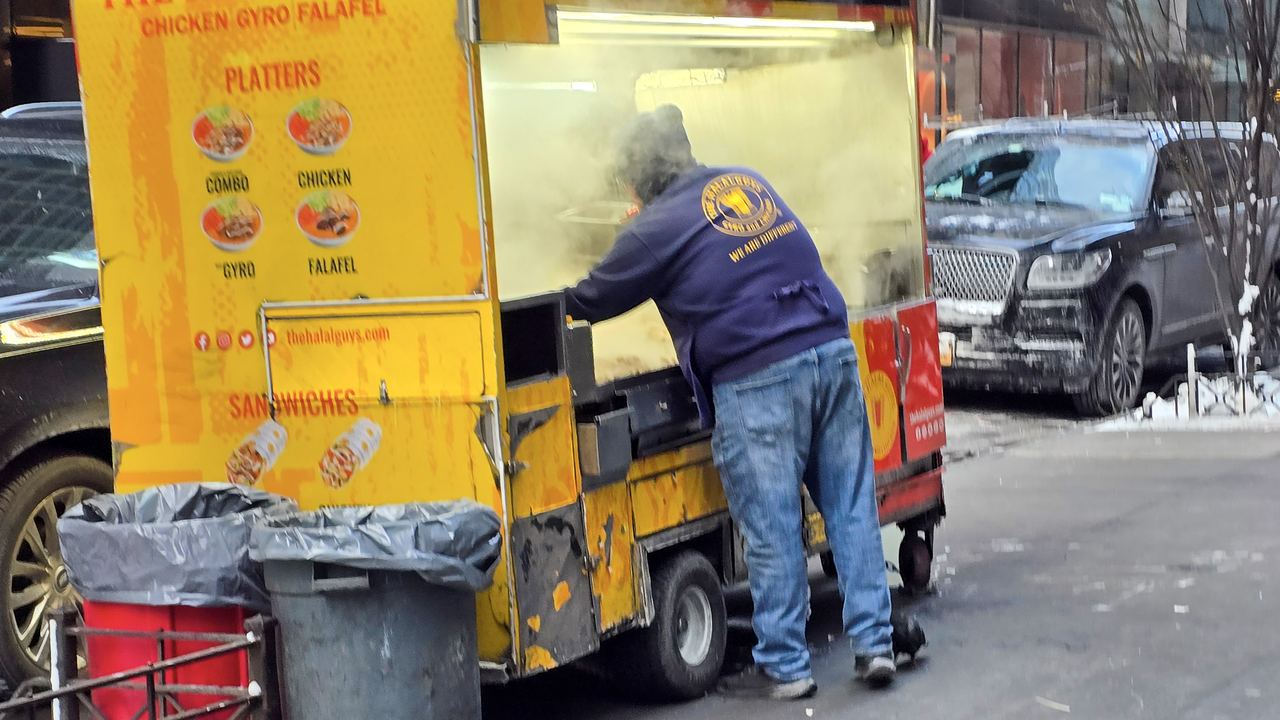
The one everyone knows started as a hot dog cart in 1990 and switched to chicken and rice in 1992, when its owners noticed that Muslim taxi drivers had nowhere to eat halal. That is now a global franchise, and it began as three men on a corner solving a problem for their neighbours.
When to come, and it is not what you think
New York has no dry season. Rainfall is remarkably even, between roughly 80 and 117 millimetres every month of the year, so waiting for a dry week is pointless.
What you can choose is temperature, and only two months sit in the range where three hours of walking is genuinely pleasant: May, averaging 17.3 degrees, and October at 14.4. January averages just under one degree and July 25.3, with humidity that makes it feel worse.
Tours run all year and the operators are used to it. But an August afternoon in Chinatown and a February evening in Greenwich Village are both endurance activities, and the reviews of winter tours mention the cold more than the food.
| 1 | 2 | 3 | 4 | 5 | 6 | 7 | 8 | 9 | 10 | 11 | 12 |
Three stories to enjoy and not repeat
New York food history is unusually rich in confident claims that do not survive checking, and a good guide will tell you which is which.
It is the water. The idea that New York's water makes its bagels and pizza uniquely good is folklore. It has been tested blind more than once, including a controlled comparison by a well known food science writer, and the differences did not appear.
The famous delicatessen since 1888. That date is the shop's own claim. The founding family arrived around 1900, and a 1903 insurance map records a laundry at the address. Say that it dates its founding to 1888 rather than that it opened then.
The first licensed pizzeria in America, 1905. No licence has ever been found. The man in question arrived in November 1904 and was recorded as a labourer, and a pizzeria was already operating at the site.
None of this makes the food worse. The bagels are still excellent, and the reason is dough and time rather than plumbing.
Questions about food tours in New York
What does the letter grade in the window mean?
Points for hygiene violations, where fewer is better: A is 0 to 13, B is 14 to 27, C is 28 or more. Grade Pending means two inspections have gone badly and the result is being contested, not that the place is new. Carts and trucks have carried grades since December 2018.
Which neighbourhood should I pick?
Chinatown and Little Italy for the oldest layered immigration story and four listings to choose from. Greenwich Village for the most listings, six, and the most walkable evening. The Lower East Side for the Jewish food and the cheapest tour on the page at 53 EUR. Flushing, in Queens, for the best Chinese food in the city and the fewest visitors.
How much food is on a tour?
Six or seven tastings over two and a half to three hours, which in American portions is a full meal. Do not book dinner afterwards, and be aware that one or two of the stops will be substantial rather than a mouthful.
Is 86 euros expensive for New York?
It is the median here and it is in line with Rome and Athens. In local terms it is about three pastrami sandwiches. Five separate listings share the exact price of 86.97 EUR, which tells you the market has settled on what three hours and seven tastings is worth.
Do I tip on a food tour?
Tipping the guide is customary in the United States in a way it is not in Europe, and 15 to 20 per cent of the tour price is the usual range. It is not included in what you paid. This catches European visitors out more than any other difference.
What about dietary restrictions?
Handled better than almost anywhere, because the operators are used to it and the city has options for everything. Say so at booking. Kosher and halal are both straightforward in the relevant neighbourhoods; gluten free is harder on tours built around pizza and bagels, which is most of them.
Data verified on. Prices and reviews read from the 20 US listings on this site on 4 September 2026. Hygiene grade thresholds from the New York City health department; slice prices from a published multi-year survey.