
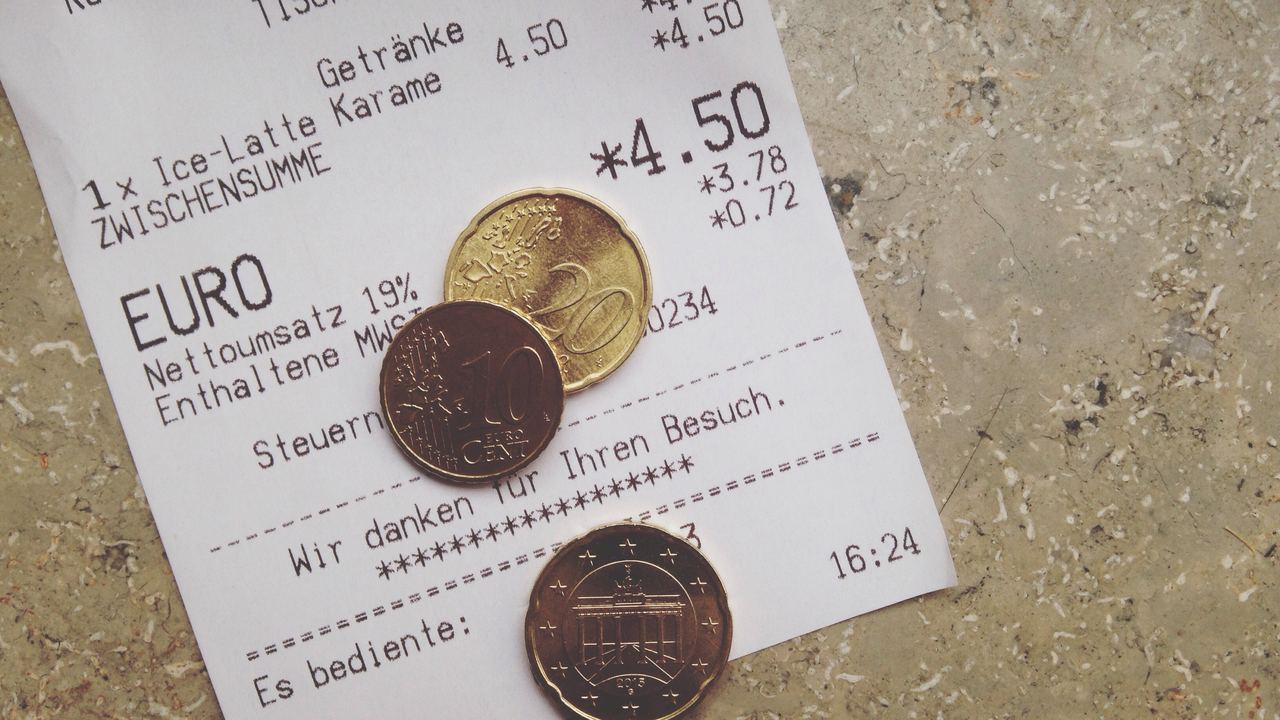
In Rome, the cover charge on your bill is illegal. In Athens it is illegal even when it is printed on the menu, and restaurants have been fined for exactly that. In Florence, three hours up the line from Rome, the same charge is perfectly lawful unless you ordered the set menu. Nobody tells you any of this, and all three cities are on the same food tour circuit.
The reason the advice you find online is so bad is that it collapses three different things into one word. Getting them apart is most of the work.
Three charges, and only one of them is optional
A cover charge is a fixed sum per seated person. It goes by coperto in Italy, couvert in Portugal, kouver in Greece and, in a form nobody recognises as one, otoshi in a Japanese izakaya. It is not a tip and none of it necessarily reaches the person serving you.
A service charge is a percentage added by the business, and it is a price component. Once it has been properly disclosed before you order, it is part of what you owe.
A tip is money you decide to give. Everywhere on this site it is voluntary, and in one country the law requires the waiter to ask you about it out loud.
| Country | Cover charge | Service on the bill | Tipping in practice |
|---|---|---|---|
| Italy, Lazio (Rome) | Prohibited by regional law | Not automatic; must be disclosed before you order | Not expected. Rounding up |
| Italy, Tuscany (Florence) | Prohibited only on fixed-price menus | Same rule as above | Not expected. Rounding up |
| Italy, Campania (Naples) | Lawful if priced and displayed. No regional ban found | Same rule as above | Not expected. Rounding up |
| Greece | Prohibited, menu notice or not | Rare outside groups | 5 to 10 per cent if you were looked after |
| Portugal | Lawful, priced on the list, and refusable | Uncommon | Rounding up, or about 5 to 10 per cent |
| Spain | Not a standard charge. Unrequested food you are billed for is another matter | Uncommon | Weak. Small change |
| Japan | The otoshi in an izakaya is one in all but name | 10 to 15 per cent in hotels and high-end dining | Not expected anywhere |
| Vietnam | No | 5 to 10 per cent in formal places, by trade practice | Not traditional. Common in tourist areas |
| Thailand | No | 10 per cent in formal places. The ++ on a menu means this | Not traditional. Common in tourist areas |
| Mexico | No | Must not be added without your agreement | 10 to 15 per cent |
| Peru | No | A recargo al consumo may be added if disclosed | Modest, and separate from the recargo |
| Colombia | No | Suggested tip capped at 10 per cent when itemised | You will be asked. The law says so |
| United States | No | Service fees appear. Restaurants are exempt from the federal fee rule | The waiter's wage assumes it |
| Australia | No | A surcharge on public holidays, disclosed | Not expected. Award wages instead |
| Morocco | No | Sometimes added in tourist restaurants | Rounding in cafes, more in restaurants |
Italy: one country, three answers
There is no national rule about the coperto. Retail and hospitality are regional competences in Italy, and the regions have gone their own ways.
Lazio bans it outright. Regional Law 22 of 6 November 2019, the region's consolidated commerce act, says at article 75 that in food service it is prohibited to apply additional costs for the coperto. Full stop, not only on set menus. The penalty sits in a different article, 85, and runs into thousands of euros, with suspension of the licence for repeat offences.
Two traps here, and both catch people who have done their homework. The first is the date: this law is 6 November 2019, and it is widely misquoted as 21 November. The second is worse. A great many consumer pages, some of them run by consumer organisations, still cite an older Lazio law from 2006 as the source of the ban. That law contained the same sentence and was repealed by the 2019 act. If someone quotes it at a waiter, they are quoting a dead statute.
Tuscany bans it narrowly. Article 100 of the region's commerce code, Regional Law 62 of 23 November 2018, prohibits additional charges for service and coperto on fixed-price offers, and requires the drinks not covered by the fixed price to be stated clearly. Outside a set menu, a coperto in Florence is lawful as long as it is displayed.
Campania does not appear to ban it at all. We went looking through the region's commerce act and found nothing on the coperto, which means that in Naples the charge is lawful if it is priced and shown. Read that as an absence of evidence rather than evidence of absence: we did not read every article.
One rule is national and applies wherever you are in Italy: if there is table service, the price list has to be available to you before you order, and it must state any service component. A charge you discover at the end is a charge you can query.

Greece: the ban that survives being written down
The Greek rule lives in a ministerial decision of 2017 that codifies the rules on the distribution and marketing of products and services, published in the government gazette. Article 72 prohibits food service businesses from charging customers for the kouver, with an administrative fine per item charged. No product, including bread and bottled water, may be served and billed without the customer's agreement.
What makes this worth knowing rather than merely true is the enforcement. Regional authorities in Attica have fined restaurants for the kouver, and the case that got attention involved a restaurant where the charge was declared on the menu. Printing it does not make it lawful. If bread arrives that you did not ask for, you are entitled to decline it and to decline the line on the bill.
Portugal: the couvert you can send back
Portugal took the opposite route and regulated the couvert rather than banning it. Decree-Law 10 of 16 January 2015 does three things at once in article 135. The price list must state everything, including the couvert where one exists. And then the sentence that every visitor to Porto should know: no dish, food product or drink, the couvert included, may be charged if it was not requested by the customer or was left untouched.
So the olives, the cheese and the little dish of butter that land on your table unasked are an offer. Eat them and you have bought them. Leave them alone, or say no when they arrive, and they come off the bill. This is not a negotiating position, it is the text of the law.

Spain has no cover charge, and a rule about what arrives anyway
Spanish law does not really recognise a coperto. The situation it does address is the one that actually happens: bread, olives or a tapa put in front of you without being ordered, and then billed.
The consumer code prohibits supplying goods or services that were not requested where the supply carries a demand for payment, and it says plainly that failing to respond is not consent. Bread on the menu that you accept is bread you owe for. Bread you never asked for is not.
Japan: the tipping question is the wrong question
Everyone arrives in Tokyo knowing that you do not tip. The national tourism organisation confirms it and puts it mildly: tipping is not expected, and if you insist, do it discreetly. Note what it does not say. It does not say that tipping offends. That is a traveller's embellishment, and there are established forms of giving money in Japan, from an envelope at a ryokan to a gratuity for a private guide.
The charge that actually surprises people is the otoshi, sometimes called tsukidashi: a small dish you did not order, delivered soon after you sit down in an izakaya, with a few hundred yen attached. It is a cover charge wearing a starter's clothes. In principle it is a contract term, and you can decline it at the door or as you sit, before it is served. In practice many places will not take no for an answer, and a few chains advertise the option to skip it. Either way, it is not a tip and it is not a scam. It is the seat.
One thing Japan does better than almost anywhere: the price on the menu includes consumption tax by law. Where a service charge exists, in hotels and at the top end, it has to be stated separately.
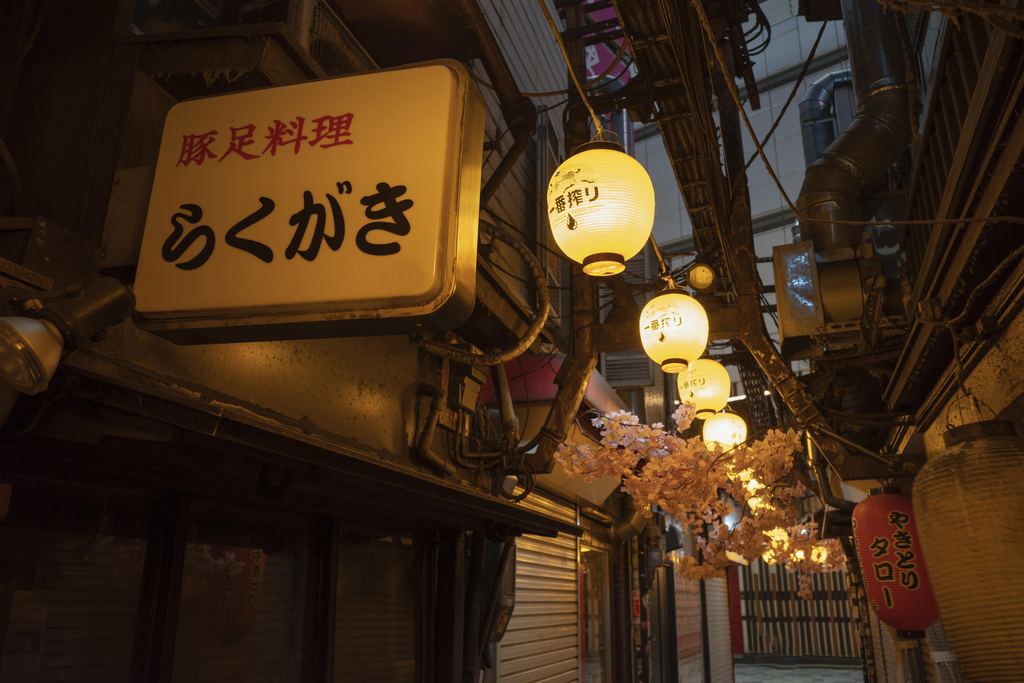
The small plate you did not order is the cover charge
An otoshi typically runs a few hundred yen a head. On a bill with four people and three rounds it disappears into the noise; on a quick stop for one drink it can be a third of what you spend.
If you are doing an izakaya crawl on your own rather than with a guide, that arithmetic is worth knowing before the third bar rather than after it.
Latin America: the strongest tipping law we found anywhere
Colombia passed a law in 2018 dealing solely with tips, and it goes further than most people believe. The tip is defined as voluntary. A business may suggest one, but where it is suggested and put on the bill it cannot exceed ten per cent. The bill must be handed over before payment, itemised. And article 4 requires the person serving you to ask whether you want the voluntary tip included, or to state what amount you want to give. The money goes only to the workers in the service chain; owners and managers may not take a share or use it to cover the costs of the business. The consumer protection authority supervises all of it.
If you are in Medellin and a tip appears on the bill without anyone asking you, that is not how it is supposed to work.
Mexico gets to a similar place by a different route. There is no specific tipping statute; the consumer protection agency applies the general prohibition on coercive and unfair commercial practices in the federal consumer law. Its position is unambiguous: the propina is voluntary, and no business may load it onto the bill by default or demand it. Custom is ten to fifteen per cent.
Peru has something that looks like a service charge and is legally its own animal. A recargo al consumo may be applied by hotels and restaurants under a 1992 decree, it is expressly not remuneration, and it must go to the workers by agreement with them. It is a price component the business chooses to apply, not a tip and not a tax, and once it has been disclosed before you order it is owed. A tip, if you leave one, is separate and modest.
The United States, where two rules are widely misreported
The reason a New York server depends on your tip is a mechanism, not a mood. Federal labour law lets an employer pay a lower cash wage and count tips towards the minimum, which is called the tip credit. The credit can never exceed the tips actually received, the worker has to be told, and the employer may not keep any part of the tips or let managers take a share, whether or not the credit is used. Several states, California among them, do not allow the tip credit at all, so the reason for tipping is not the same across the country.
Two things you will read that are wrong. The federal rule against hidden fees does not cover restaurants. It came into force in May 2025 and applies to live event tickets and short-term lodging, and that is the whole list. A proposal covering online food delivery is pending, not in force. And California did not ban restaurant service charges: the honest pricing law arrived in July 2024, then a second bill exempted restaurants and bars, provided the charge is displayed clearly wherever prices appear.
On what to actually leave in New York, we are going to do something unusual and decline to give you a number with a false citation. The figure repeated everywhere is eighteen to twenty per cent, and sometimes higher in the city, but every source we could find for it was a tipping calculator or a travel page with no data behind it. Treat it as the going rate people report, not as a rule anyone published.
Australia: the tip is inside the wage
Melbourne confuses American visitors because service is often excellent and tipping is genuinely not expected. The reason is structural. Hospitality pay is set by a national minimum and by an industry award that carries penalty rates, which are premiums for evenings, Saturdays, Sundays and public holidays. The wage does not assume a tip, so nobody is waiting for one. The visible consequence is the surcharge some places add on a public holiday, which is the penalty rate showing through the menu, and which has to be declared.
Thailand and Vietnam: the plus plus
If a Bangkok menu prices a dish with ++ after the number, it means the price is before service charge and before tax. The ten per cent service is trade practice in hotels and formal restaurants, not a legal requirement, and we found no statute imposing it. The same is true in Vietnam, where five to ten per cent appears on formal bills by contract rather than by law.
Neither country has a tipping tradition. Both have acquired one in the places tourists go, which is a different thing and worth holding lightly.
Morocco, honestly
Rounding up in cafes, something more in restaurants, and some tourist places add service already. We could not find a Moroccan institutional source for any of it, and the pages that state confident percentages are the kind of content farm that states confident percentages about everywhere. So take this as observed custom rather than a rule, and look at your bill before you add anything.
And the guide on your food tour?
Here the operators themselves are more useful than any guide to tipping, and what they say is consistent. Gratuities are excluded from the price and appreciated. Eating Europe puts it exactly that way. Devour says it is really up to you, that it is customary if you enjoyed yourself, and that neither the company nor the guide will hold it against you if you do not.
Almost nobody names a percentage. Culinary Backstreets is the exception, suggesting around ten per cent of the ticket outside the United States and restaurant norms inside it. Eat Mexico makes a distinction nobody else bothers with: tips for the food vendors are already in your ticket, tips for the guide and driver are not. And Traveling Spoon, which places you in someone's home, asks you not to tip, because the hosts are paid before you arrive and set their own prices.
Of the 429 experiences on this site, only about sixty mention gratuities at all, and they mention them to say they are not included. The other eighty-six per cent are silent. Silence is not a hint, in either direction.
Our own position, for whatever it is worth from a site that earns a commission on the booking and nothing on the tip: budget five to ten per cent of the ticket if the guide was good, carry it in cash in the local currency, and do not agonise. In Japan, skip it and say thank you properly instead.
Common questions about the bill
Can I refuse to pay a cover charge in Rome?
In Lazio the charge is prohibited by regional law, so yes, you can point that out and ask for it to be removed. Be aware that plenty of restaurants apply it anyway and that arguing over a couple of euros at the end of a good dinner is a choice. The stronger use of this knowledge is checking the price list before you sit down, which the same law entitles you to.
Is the bread in Portugal really free if I do not eat it?
It is not free, it is refusable. The law says nothing may be charged that was not requested by the customer or was left untouched, and that includes the couvert. Say no when it arrives, or leave it, and it should not appear on the bill.
Should I tip in Japan?
No, and the reason is not that it causes offence. It is simply not part of the transaction, and the tourism board says so. The charge you should expect instead is the otoshi in an izakaya, which is a cover charge for the seat.
The service charge is already on the bill. Do I still tip?
In Thailand, Vietnam, Peru and formal Japanese venues, the service charge is a price component, and no further tip is expected. In the United States a service charge is not a tip and does not necessarily reach the server, so it is worth asking. Nowhere on this site is a tip required on top of a disclosed service charge.
How much should I tip a food tour guide?
Operators say it is voluntary and appreciated, and almost none of them name a figure. Five to ten per cent of the ticket, in cash, covers it in most of the countries here. In Japan it is not expected. On experiences hosted in a private home, at least one operator asks you not to tip at all.
Data verified on. Regional and national statutes read in the official consolidated texts; operator wording quoted from published FAQ pages; the catalogue count taken from the 429 listings on this site.
What else nobody explains before you book
How long a tour really runs, how far you walk, and the fifteen listings on this site that cannot be cancelled at all.