

We earn a commission when you book through this site, and we earn nothing when you decide not to. With that on the table: there are cities on this site where we think you should skip the tour, and the most expensive city in our entire catalogue is one of them.
This is not modesty. It is the only thing a site like ours can say that an operator cannot, because every operator's honest answer is yes, and every travel blog's answer is whichever one earns the click. So here is the arithmetic, then the cities, then the five questions that settle it for your particular trip.
The objection is correct, and it is not the point
Somebody on a travel forum did the sum that everyone quietly does: over eighty euros for a tour, against maybe twenty euros of food. That ratio is real. Across our catalogue the median works out at 19.70 euros per hour, and nobody serves you twenty euros of food per hour on a walking tour.
So if you are buying calories, a food tour is a bad purchase and you should stop reading. What you are actually buying is the part that is hard to price: which of the forty stalls, which cut, which day, which door, and what any of it means. In some cities that knowledge is worth a great deal, because it is genuinely hard to get. In others it is lying around in the street, free, and you are paying eighty euros for company.
The useful question is not whether a food tour is worth the money. It is whether this city hides its food, and from whom.
Where the answer is probably no
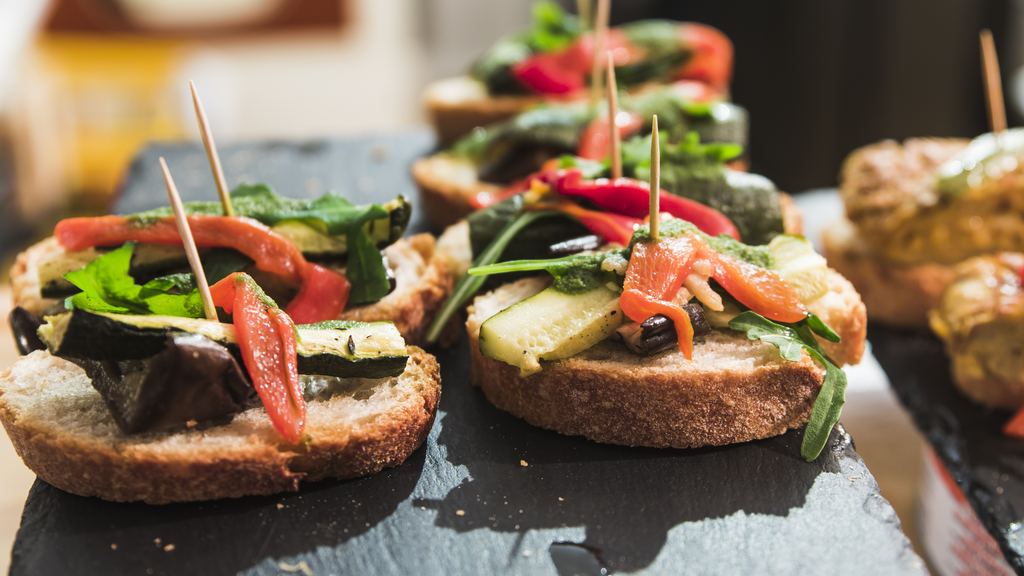
San Sebastian. This is the clearest case we found, backed by three independent sources and by our own numbers pointing the same way. The pintxos crawl in the Parte Vieja is designed to be done alone: the bars are in a row, the food is laid out along the counter where you can see it, you take what you want, and you pay at the end. There is no menu to decipher, no ordering to fumble, no door to get through. A local told a forum flatly that the whole system exists so that strangers can use it.
And San Sebastian is the most expensive city in this catalogue, at a median of 155 euros against 69 across everything we sell. You are paying more than twice the going rate for guidance through the one format in Europe that needs the least of it.
There is a case for a guide there, and it is narrow: your first evening, if you have never done it, to learn the rhythm and which bar is known for which single thing. After that, go alone. Our San Sebastian page sets out a route you can walk without us.
Porto, for the second tour. A city expert on a major forum called a Porto food tour a waste of time and said to do it yourself, which is a minority view. But even the people who disagree with him agree on one thing that matters more: one tour covers the whole of northern Portugal. The food does not change enough between Porto, the Douro and Braga to justify a second guided day. Book one, then stop.
Naples is contested, and we are not going to pretend otherwise. One side writes out a do-it-yourself route in detail: the fried food of the Pignasecca, a pizza, a sfogliatella, done. The other side gives specific, repeated endorsements of specific operators. Both are right, because Naples is cheap enough that the tour is a small bet. At a median of 47 euros it is one of the least expensive cities we sell, and the downside of getting it wrong is an afternoon, not a budget.
Where a guide pays for itself, and why
In every one of these the reason is specific and it is almost never finding good food. Good food is easy to find. The obstacle is something else.
| City | The real obstacle | Verdict |
|---|---|---|
| Hanoi | Prices are not written down in the Old Quarter, and overcharging visitors is documented and routine. A guide's job is knowing what each bowl costs | Strongest case on this site, and the cheapest |
| Tokyo | The door. Many of the best small places seat six, take no reservations from strangers, and have no English anywhere | Worth it, and the small caps are the reason |
| Marrakech | The fake guide. Impersonating an official guide is a criminal offence in Morocco and the badge can be asked for. A booked guide removes the whole problem | Worth it, for safety as much as food |
| Bangkok | Which stall, on a street with sixty. Quality varies enormously and the good ones sell out | Worth it once, then you can read the queues yourself |
| Medellin | The neighbourhood rather than the meal. Some of the most interesting eating is in areas where a first-time visitor needs local judgement | Worth it, and it is really a neighbourhood tour |
| Mexico City | Scale. The city is enormous and the difference between a great taqueria and a poor one two streets away is invisible from outside | Worth it, ideally on day one |
| Lima | The huarique, by definition a place locals do not advertise. Also which market, since the obvious one is not the good one | Worth it |
| Rome, Florence, Athens, New York | Nothing structural. You are buying curation and company, both of which are real but optional | Worth it if you want it, not if you begrudge it |

The cheapest city is the one where a guide earns the most
Hanoi has the lowest median price in this catalogue, around 26 euros. It also has the clearest justification for a guide anywhere on the site, because the Old Quarter runs on prices that are not written down and a visitor has no way to know what a bowl should cost.
San Sebastian is the exact inverse: the highest median at 155 euros, in the one place where the system is built to be used by strangers. The market has priced these two almost precisely backwards.
Five questions that settle it
Is the food visible? If you can see it laid out and point at it, a guide adds less. Pintxos bars, market halls and taquerias with a spit in the window are all self-explanatory. An izakaya behind a sliding door with no window is not.
Are the prices written down? Where they are, you can walk in anywhere. Where they are not, you are negotiating without information, which is the single strongest argument for a guide and the reason Hanoi tops our table.
How long are you staying? A tour on day one of five pays for itself in the four days afterwards, because you leave with a list. On the last afternoon of a trip it is a meal with commentary.
Can you read the menu, and would you ask? These are two different questions. Plenty of people who can decode a menu still will not walk into an unmarked place alone. A tour buys the nerve as much as the vocabulary, and there is nothing embarrassing about that.
What does the guide do when the eating stops? The best answer, and the only part of a food tour whose value is unambiguous, is that they hand you a list of places for the rest of your trip. Ask for it. Every good guide has one and almost nobody thinks to ask.
What we would do with 150 euros in each city
Since that is roughly the price of one tour in the expensive cities and three in the cheap ones.
In Hanoi or Hoi An, book two tours and still have money left, because at 26 euros the median they are close to free and the second one teaches you as much as the first. In Naples or Marrakech, book one and spend the rest eating. In Tokyo, book one evening tour and treat it as an access purchase rather than a meal. In San Sebastian, take the money into the Parte Vieja and drink your way along the counter, which is what the money is for.
And in Porto, book the one tour that covers the region and skip the second, because the second one will show you the same things.
Fair questions to ask a site that sells these
Why would you tell me not to buy something you sell?
Because the alternative is telling you that all sixteen cities are equally worth it, which is not true and which you would find out. A recommendation only carries information if it could have been negative. We also cover fifty-one categories, so a reader who skips a tour in San Sebastian is a reader who might trust us about Hanoi.
Are food tours a rip-off?
No, but the value is not in the food. At a median of 69 euros for three and a half hours you are paying for selection, access and explanation. Where those are hard to get, the price is fair. Where the food is laid out on a counter with prices on it, it is not.
Is a cheap food tour worse than an expensive one?
Not in our data. Price tracks the local cost of living far more than it tracks quality, which is why Hanoi is 26 euros and San Sebastian is 155 for a comparable three hours. Judge by the review count and the group cap, not the price.
What about free walking tours with food?
They are a different product: you pay for your own food and tip the guide, so the total is not necessarily lower. They work best where the food is cheap and visible, which is the same condition under which you do not need a guide at all.
If I only do one food thing on a trip, what should it be?
A market tour early in the morning, in any city that has a working market. It is the cheapest format, it explains everything you will eat for the rest of the week, and it is the one thing that is genuinely hard to do alone because you do not know what you are looking at.
Data verified on. Prices and medians counted across the 429 experiences on this site. The community verdicts come from public travel forums, read directly, and are attributed as opinion rather than fact.
If the answer is yes, book the right one
How to read a listing, what the four formats actually differ on, and the six things that should make you look twice.