
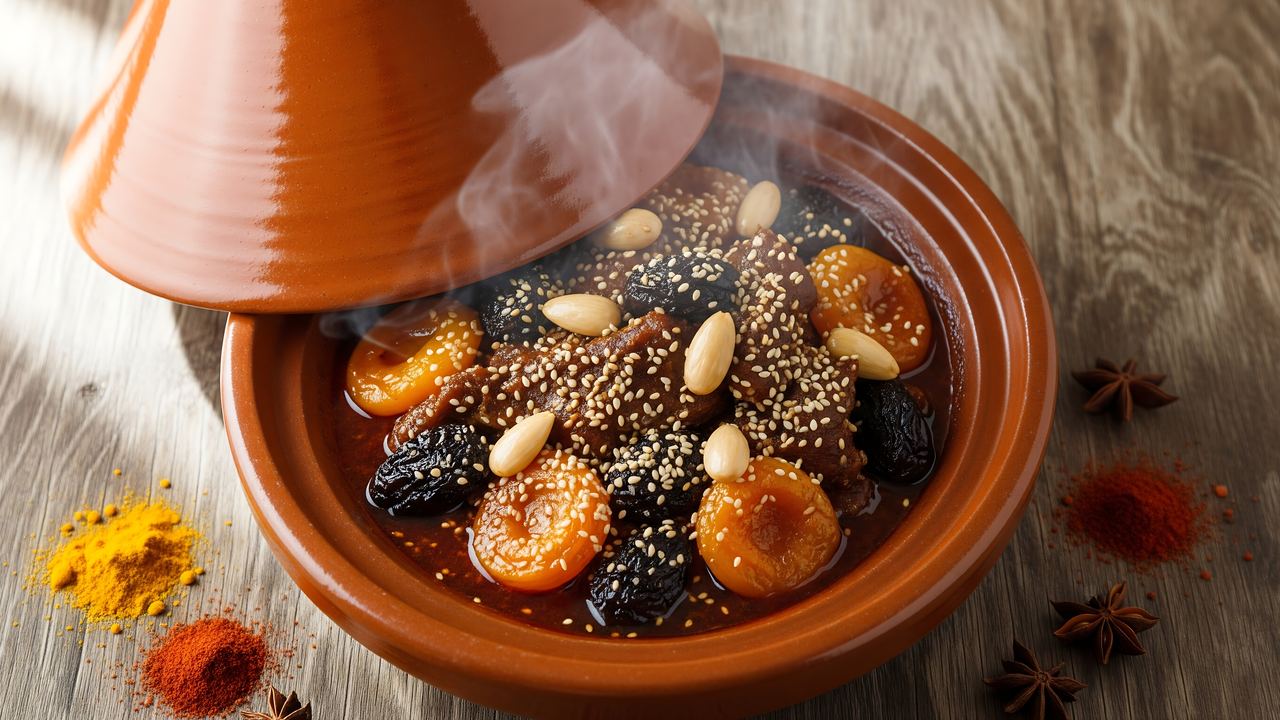
Cooking Classes and Food Tours in Morocco
Thirty-one experiences in Marrakech at a median of 36 euros, with 13,262 reviews. And a badge you are entitled to ask to see, because impersonating a guide here is a criminal offence.
Morocco has the cheapest cooking classes on this site and among the best reviewed: a median of 36 euros, 7,763 reviews on the classes alone, and a weighted rating of 4.94. Several are taught by named cooks in family houses, and the most reviewed of them has 1,862 reviews on its own.
The thing worth knowing before you arrive has nothing to do with food, and it is the most concrete piece of consumer protection on this entire site.
Choose a destination in Morocco

Food Tours Experiences in Morocco
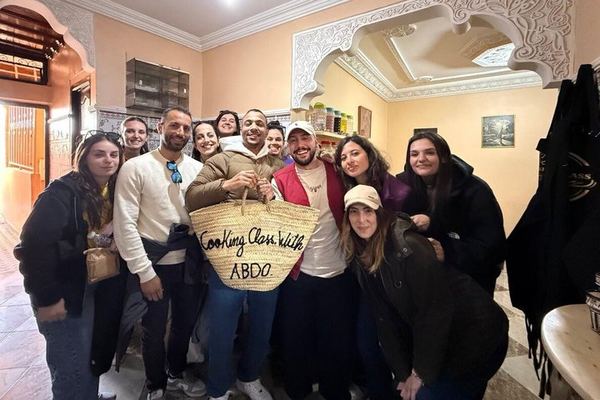
Abdo's House: Kefta Tagine and a Spice Shop if You Ask
Chicken or spiced meatball tagine in a family house off Derb Dabachi, and a free spice shop visit at either end if you say you want it. Three hours.
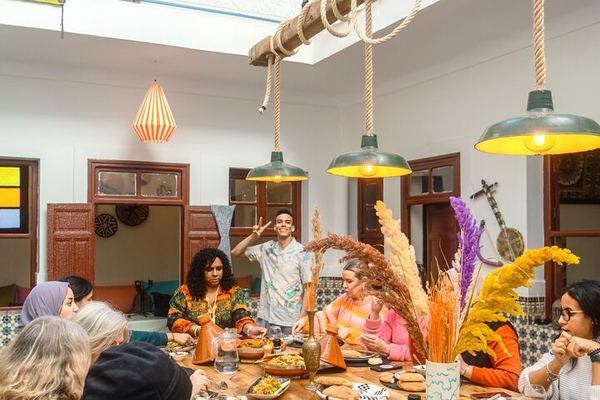
A Communal Table at ArtEscape, North of the Medina
Three and a half hours at ArtEscape, ending in a communal meal of what the group made. Wheelchair accessible throughout, and Uber gets you there easily.
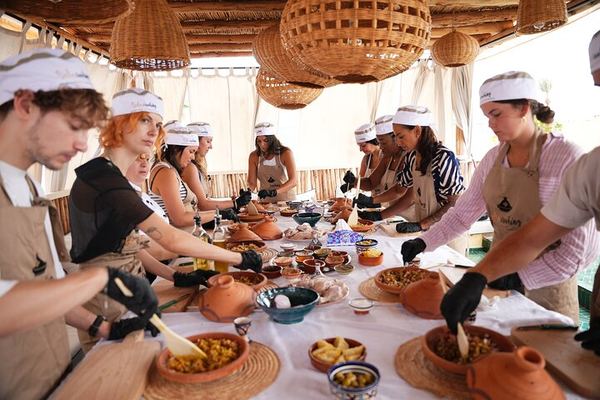
A Rooftop Tagine at Riad Nelia, Atlas in the Distance
Blend the spices, marinate, and slow-cook a chicken tagine on a Medina rooftop with the Atlas behind it. Mint tea taught properly, recipe card, certificate.
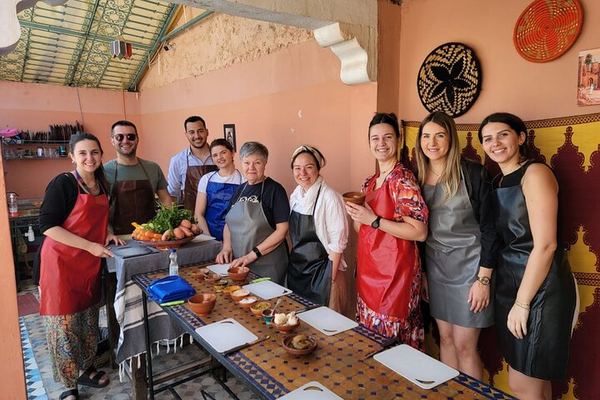
Chef Fatima's Traditional House in the Old Medina
Chef Fatima cooks and Yassir guides, in an old house in the middle of the Medina. Ten people, three and a half hours, and they walk you the last stretch.
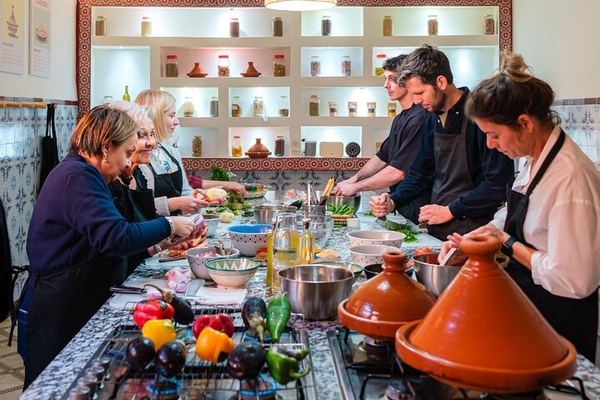
Chicken and Lemon Tagine, Then Mhencha for Dessert
Several dishes rather than one, with the spices explained as you go, and the recipes emailed after. Book the 10:30 slot if you want the market included.
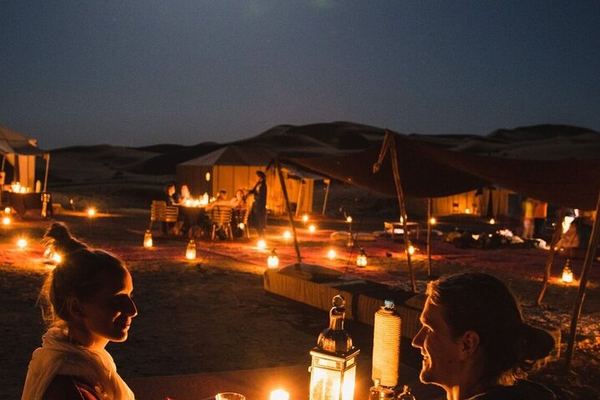
Dinner in the Stone Desert, Thirty Kilometres Out
Agafay is stone rather than sand and sits 30km from Marrakech, so a desert sunset takes an afternoon instead of two days. Tagine in a nomad tent, fire show.
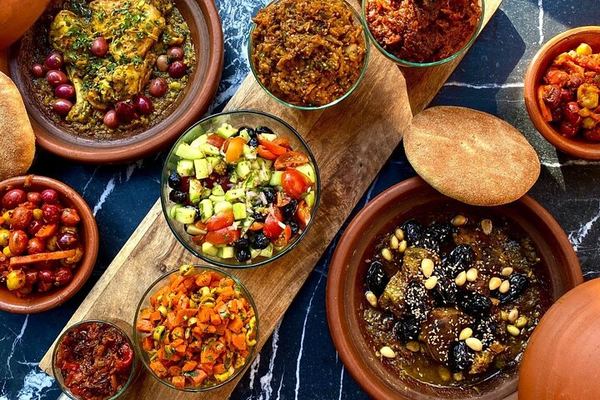
Farm to Table: Five Hours and One Tajine, Done Properly
Five hours and a single traditional tajine, cooked where the ingredients come from. Aprons, tajine pots and everything else provided. Meet at the Koutoubia.
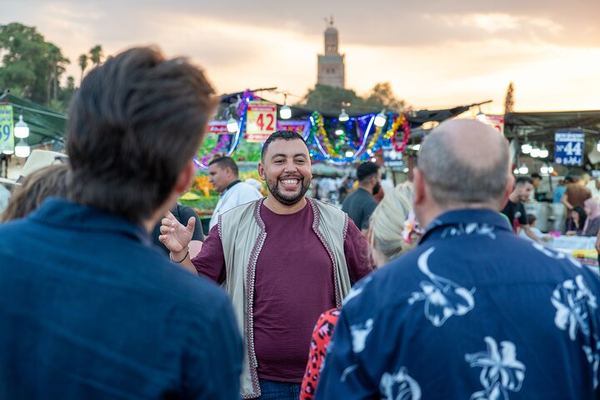
Four Olives, a Herbalist's Berber Tea, and Tanjia
Four olive varieties at Souk Semmarine, snail soup on the night square, Royal Berber tea at a herbalist, and a three-course dinner ending in tanjia.
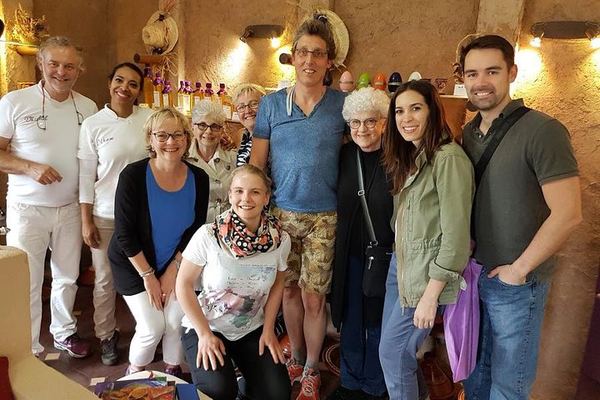
Guess the Spices, on a Farm Outside Marrakech
Six hours on a farm outside the city, with a blind spice test before you cook and a private driver each way. The market first, then lunch you made yourself.
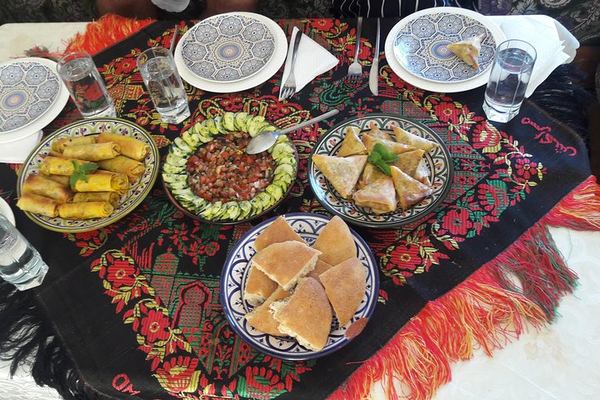
Khmisa's Kitchen in the Medina, and the Old Souk First
Twenty-five years a chef, and the class is in her own house in the Medina. Mint tea, you choose the menu, then the Old Souk for the ingredients.
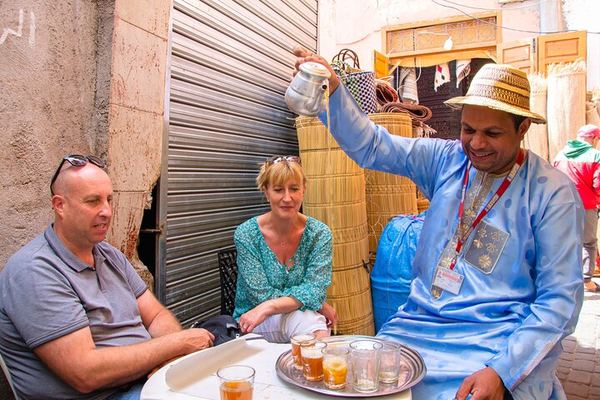
Khodanjal, Panache and Mint Tea, with the Food
Msemen, chebakia, kefta shakshuka and skewers, with three Moroccan drinks: mint tea, khodanjal and panache. Wheelchair accessible throughout, which is rare.
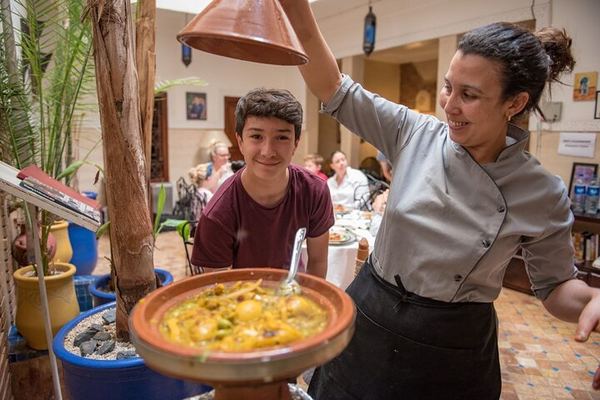
Learn to Haggle in Arabic, Then Cook the Tajine
The haggling and the Arabic food vocabulary are taught alongside the tajine, in a restored riad with a local family. B Corp certified, twelve people at most.
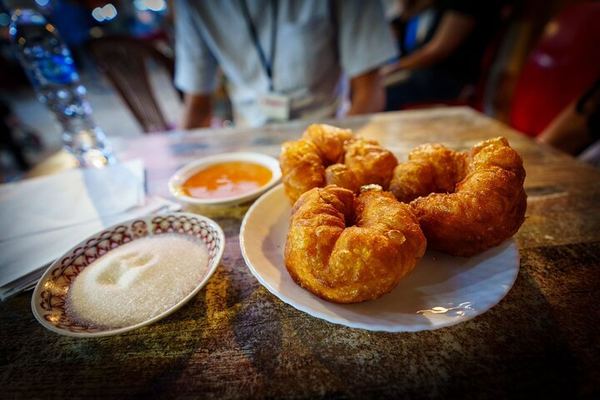
Meula, Chfange and Olives, Guided by Mehdi
Three hours through the Medina with Mehdi, a licensed guide who runs it himself: meula, the Moroccan shakshuka, chfange doughnuts, olives and the barbecue.

No Tagine, No Couscous: Nine Stops in the Hidden Medina
The operator's own promise is no tagine and no couscous: nine street food stops deep in the Medina, Berber rather than tourist. Ten people, three hours.
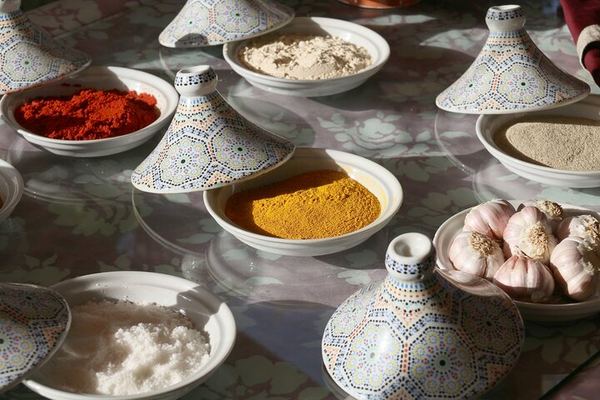
Pastilla, Briouates and the Sephardic Dishes of Morocco
Salads, briouates, tagine, pastilla, couscous and traditional Sephardic plates, which almost no other Marrakech class teaches. Three and a half hours.
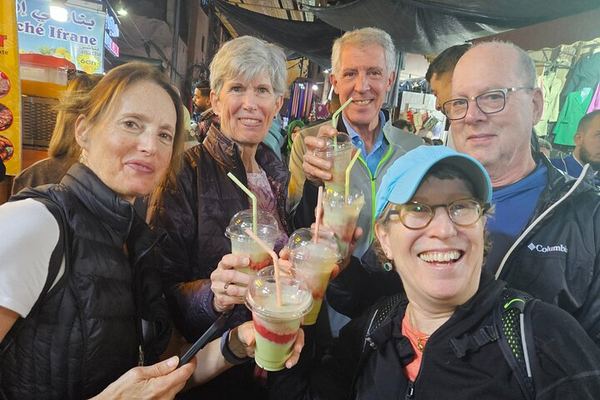
Pastilla, Tanjia and Pastries from the Oldest Bakery
Ten-plus tastings including chicken and almond pastilla, pastries from the city's oldest bakery, snails, and a tanjia dinner. Guided in six languages.
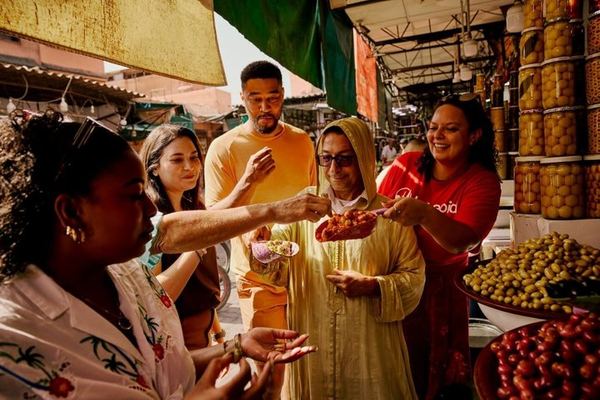
Rahba Kedima's Spice Stalls, and Dinner in the Square
Three hours through the souks after dark, past the spice stalls of Rahba Kedima, ending with dinner among the food carts of Jemaa el-Fnaa. Twelve people.
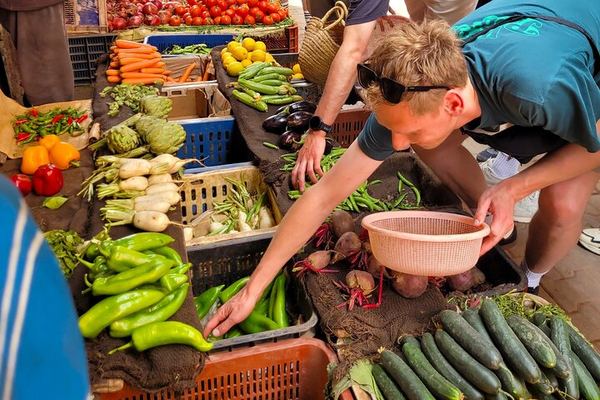
Ras El Hanout and Several Tagines, with Chef Hassan
The market first, then a family home and several tagines cooked as one team, with the spices explained. Ten people, air-conditioned, recipes at the end.
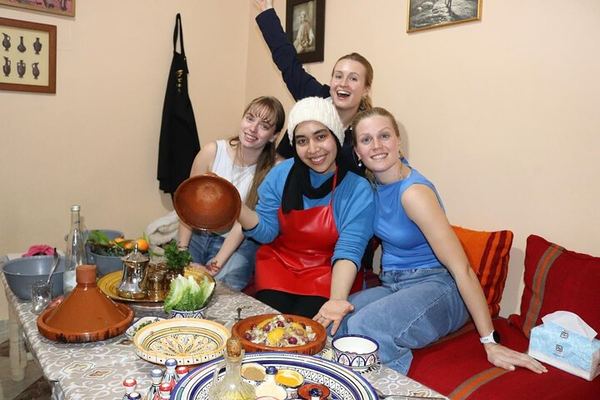
Seven at the Table in a Marrakech Family House
Seven people at most, in a family's own house near the Rue des Banques, for three hours of traditional recipes, treats and conversation with the host.
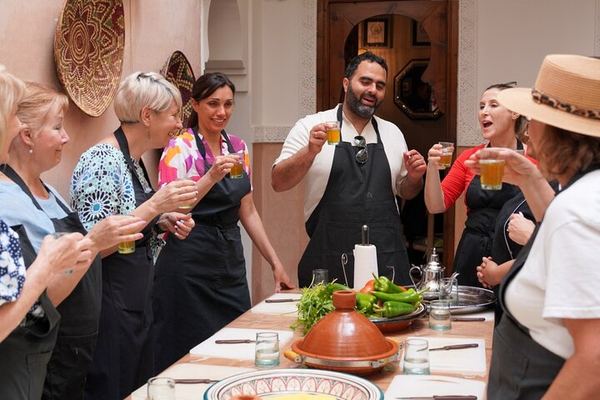
Shopping the Mellah Market, Cooking in a Working Riad
The shopping happens at the covered Mellah market rather than the tourist souk, and the class is in a riad that still takes guests. Chef Aicha, recipes after.
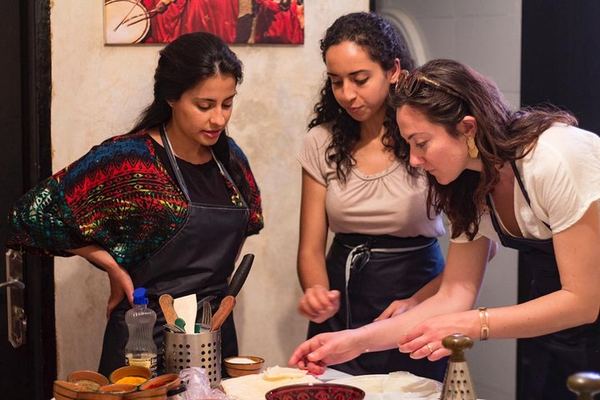
Shopping the Neighbourhood Shops with Najla, Not the Souk
The ingredients come from the small shops on Najla's own street rather than the tourist souk, and the class is in her own kitchen. Four hours, tea after.
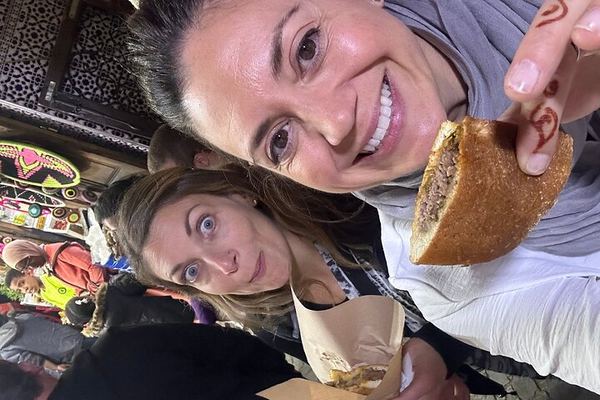
Snails, Sheep's Head and Chebakia: Two Medina Routes
Two alternating routes through the Medina from golden hour into the night: snails in herb broth on one, steamed sheep's head on the other. Both end in dinner.
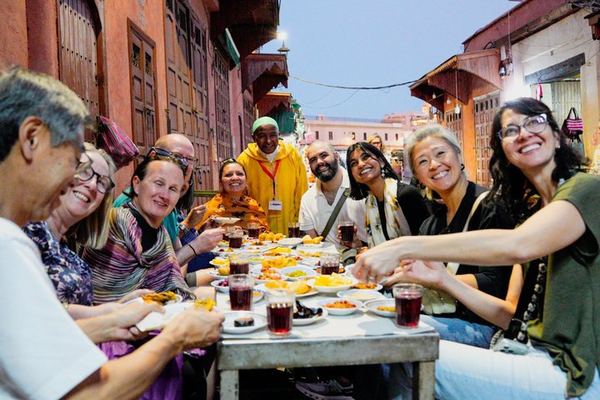
Spleen, Tangia and Butter Beans, After Dark
Five to eight dishes from 18:30, including tihal, grilled spleen, and tangia, the Marrakech dish. Not for vegetarians, and different during Ramadan.
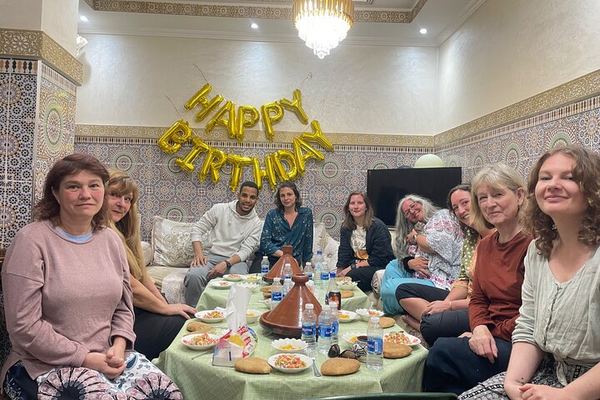
Tagine, Salads and Spice Tips, Two Minutes off the Square
A family house two minutes from Jemaa el-Fna: tagine, fresh Moroccan salads and dessert, with the recipes and the spice tips to take away. Three hours.
Ratings collected by Viator and Tripadvisor
The guide law, and the badge you can ask to see
Approaches from men presenting themselves as official guides are the most commonly reported nuisance in Marrakech, and British government travel advice states plainly that it is common for people posing as official tourist guides to harass tourists.
What almost nobody tells visitors is that Morocco regulates the profession by statute, and the protections are specific.
A licensed guide must carry a professional card and a badge, and must produce them on request. Both are personal and non-transferable. Usurping the title of guide is a criminal offence under the penal code, not a civil matter. Lending, renting or transferring a card or badge, or working while suspended, carries a prison term of six months to a year and a fine of 10,000 to 20,000 dirhams. A company operating without authorisation faces 100,000 to 200,000 dirhams, and penalties double for repeat offences.
The practical version is one sentence: ask to see the badge. A licensed guide will produce it without irritation, because they are required to and because they are competing with people who cannot. Anyone who reacts badly to the question has answered it.
None of this makes Marrakech difficult. It makes it a city where one specific question resolves one specific problem, and where the tours on this page all use licensed guides.
A tanjia is not a tagine
This is the distinction that separates someone who has been to Marrakech from someone who has read about Morocco, and it is the single most useful thing a cooking class here teaches.
The tagine is the conical earthenware dish, used across the whole country. Food cooks over a fire while steam rises into the cone, condenses and falls back, so the dish braises in very little liquid. It is active cooking: you can lift the lid, adjust, taste.
The tanjia is a Marrakech dish and the word refers to the vessel, an urn-shaped clay pot. Lamb goes in with preserved lemon, whole cumin seeds, garlic, saffron and oil, the mouth is covered with parchment and tied, and the sealed pot is buried in embers for hours. Traditionally that meant the furnace of the neighbourhood hammam, tended by the farnatchi, who kept the bathhouse fires going and would cook your pot in the ashes for a small fee.
So: tagine, conical dish, active cooking, all of Morocco. Tanjia, sealed urn, passive cooking, Marrakech. The tanjia is traditionally the bachelor's dish, assembled by men and left with the furnace man while they worked.
| Type | How many | Price | What happens |
|---|---|---|---|
| Cooking class in a riad or family home | 17 | 18 to 45 EUR | Two to four hours, tagine and salads, often with mint tea |
| Cooking class on a farm or garden | 3 | 39 to 70 EUR | Outside the city, ingredients picked on site |
| Medina food tour | 8 | 36 to 70 EUR | Three hours, souks and bakeries, 15 or more tastings |
| Evening or night food tour | 2 | About 45 EUR | Jemaa el-Fna after dark, when the stalls appear |
| Outside the medina | 1 | 22 EUR | A desert dinner with a show, and not a food tour |
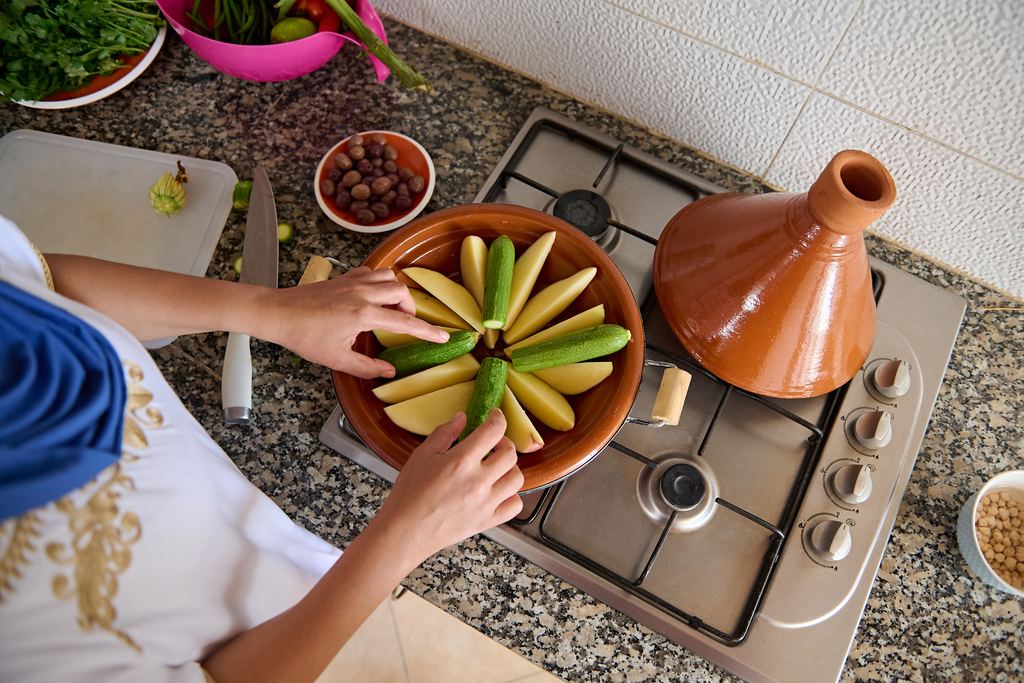
What a class actually teaches
The seventeen riad and home classes follow a similar shape and it is a good one: a market walk in some, then bread, then a set of cooked salads, then a tagine, then mint tea.
The salads are the underrated part. Moroccan cooked salads, zaalouk of aubergine, taktouka of pepper and tomato, carrots with cumin, are the dishes you will actually reproduce at home, because they need no special equipment and they keep.
The tagine teaches layering: aromatics at the bottom, meat, then vegetables arranged in a cone so the steam circulates. And the tea is a technique of its own, poured from a height to aerate it, with the first glass often returned to the pot.
What you should ask before booking is whether the class includes the market, because the spice stalls are where the vocabulary is, and because ras el hanout means whatever the individual shop decides it means.
What UNESCO listed, precisely
Three separate things get conflated in tour marketing, and they are genuinely different.
The medina of Marrakech is a World Heritage site, inscribed in 1985, covering about 700 hectares. That is the walled old city, the physical place.
Jemaa el-Fna is not World Heritage. It was proclaimed a masterpiece of oral and intangible heritage in 2001 and formally inscribed on the intangible list in 2008, and what is protected is the cultural space: the storytellers, the musicians, the acrobats, and the food sellers. UNESCO's own description mentions the selling of water, fruit and traditional food in the square, which is the legitimate link between the listing and a food tour.
Couscous was inscribed in 2020, and it is a joint listing by Algeria, Mauritania, Morocco and Tunisia. It is not Moroccan heritage; it is shared, and the four countries applied together.
The argan listing of 2014 concerns the argan groves of the south west, several hours away, so it is national context rather than something you will see here.
The heat is not a detail
Marrakech in July has an average daily maximum of 37.7 degrees, and August is barely lower at 37.4. Those are averages: the records for both months are close to 50.
A three hour walking food tour through the medina in those conditions is not a pleasant afternoon, and no amount of shade in the souks compensates. Operators run them, often in the evening, and the reviews from July and August mention the heat more than the food.
Rain, by contrast, is concentrated in January to April at 25 to 35 millimetres a month, which is not much, and July and August are effectively dry. So the calendar here is simple: March to May and October to November, with the winter months being cool, quiet and perfectly workable.
| 1 | 2 | 3 | 4 | 5 | 6 | 7 | 8 | 9 | 10 | 11 | 12 |
Two things worth stating plainly
The 2023 earthquake. On 8 September 2023 at 23:11 local time a magnitude 6.9 earthquake struck the Al Haouz province, with its epicentre about 73 kilometres south west of the city, and 2,960 people died. In the medina a minaret collapsed onto Jemaa el-Fna and there was damage to the Koutoubia and to sections of the walls. The city itself came through largely intact, unsafe areas were cordoned, and businesses reopened within days. Anyone telling you the medina is closed or unsafe is repeating something three years out of date. The damage was concentrated in the mountain villages of the High Atlas, which is a different and much more serious story.
The mint tea legend. You will be told that green tea reached Morocco when the British, cut off from Baltic markets during the Crimean War, offloaded their stock here. It circulates as fact and it rests on a newspaper article rather than on historical work. The defensible version is that green tea spread in Morocco between the eighteenth and nineteenth centuries, with a documented jump in consumption around the middle of the nineteenth. Enjoy the tea; skip the anecdote.
Questions about eating in Morocco
How do I avoid fake guides?
Ask to see the professional card and badge. Licensed guides are legally required to carry both and to produce them on request, and impersonating a guide is a criminal offence in Morocco rather than a civil one. The tours on this site all use licensed guides; the problem is with people who approach you in the street.
What is the difference between a tagine and a tanjia?
A tagine is the conical dish used across Morocco, cooking actively over a fire with the steam falling back into the food. A tanjia is a Marrakech speciality: an urn sealed with parchment, filled with lamb, preserved lemon, cumin, garlic and saffron, and buried in embers for hours, traditionally at the neighbourhood bathhouse furnace.
Cooking class or food tour?
Both cost about the same here, at a median of 36 EUR, which is unusual. The classes have more reviews and higher ratings, and several are taught in family homes by named cooks. The food tours give you the medina and the souks. If you have one morning, take a class that starts at the market and you get both.
Is it safe to eat street food in Marrakech?
Use the usual judgement: busy stalls, food cooked in front of you, and care with anything raw or with ice. Public health guidance recommends hepatitis A vaccination for all unvaccinated travellers and typhoid for most, which is standard advice for the region rather than anything specific to the city.
Was Marrakech damaged in the earthquake?
The city came through the September 2023 earthquake largely intact. A minaret fell on Jemaa el-Fna and there was damage to some historic structures and walls, unsafe areas were cordoned, and businesses reopened within days. The devastation was in the High Atlas villages to the south, not in the medina.
When should I avoid going?
July and August, if you intend to walk. Average maximums are around 37 degrees and the records approach 50. March to May and October to November are the comfortable months. Winter is cool and quiet and works well, with the small amount of annual rain falling between January and April.
Is couscous Moroccan?
It is shared. The 2020 UNESCO inscription was a joint application by Algeria, Mauritania, Morocco and Tunisia, covering the knowledge and practices around producing and eating it. Anyone claiming it for one country is contradicting the listing they are citing.
Data verified on. Prices and reviews read from the 34 Moroccan listings on this site on 4 September 2026. Guide licensing from Moroccan law 05-12; UNESCO dates from the relevant inscriptions.