

Food Tours and Cooking Classes in Greece
Thirty-four experiences in Athens, all rated 4.95. And a fact worth more than any of them: in Greece the cover charge is illegal, and the fine is 500 euros a head.
Start with the bill, because it is the thing that will affect every meal you eat here and almost nobody tells visitors about it. In Greece a restaurant may not charge you a cover. Not for the table, not for the cutlery, not for the napkins. It is written into the national trading rules, and the fine for doing it is 500 euros.
The same rules require that the price list is handed to you before you order and that the bill itemises every line. Knowing this changes the balance of a meal in a tourist quarter more than any recommendation could.
Choose a destination in Greece

Food Tours Experiences in Greece
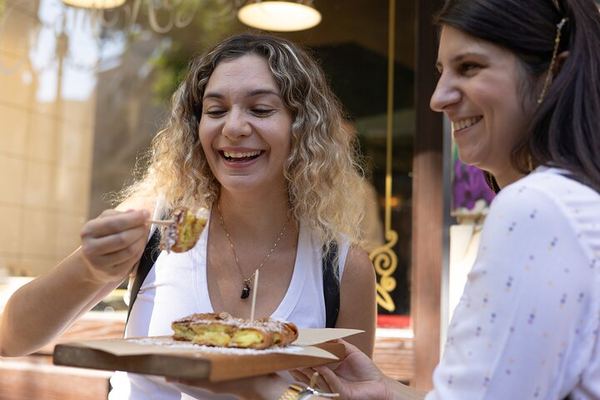
Athens After Dark Food Tour: Monastiraki, Psirri and Dinner
Three hours from a pastry shop on Athinas Street: Monastiraki and Psirri, a charcuterie board with tsipouro, a seated meze dinner, then loukoumades or baklava.
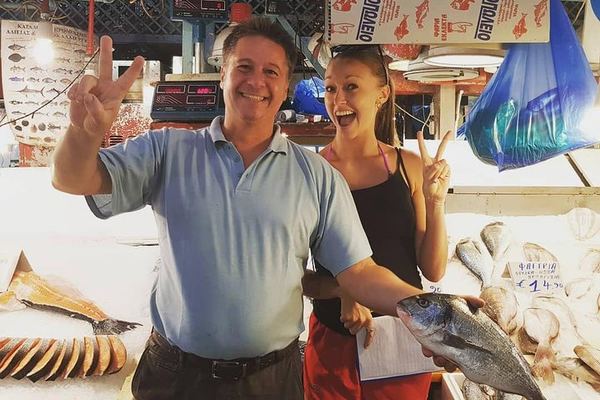
Athens Classic Food Tour: Varvakios, Meze and a Cooked Lunch
Koulouri, Greek cheeses, raki, a spread of meze and a cooked lunch, with a walk through the Varvakios market. Three hours in German, English, Italian or French.
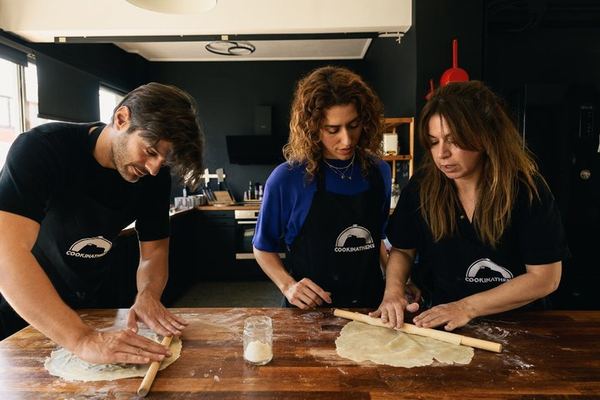
Athens Cooking Class in Pairs: Handmade Phyllo and Moussaka
Roll your own phyllo, then dolmades, tzatziki, Greek salad and moussaka or pastitsio, eaten with handmade sourdough and Greek wine, the Acropolis in view.
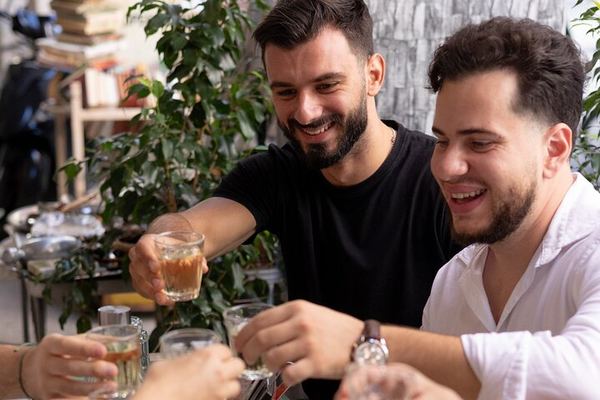
Athens Daytime Food Tour: Central Market and Evripidou Delis
Athinas Street, the central market and the spice and deli shops of Evripidou, with a charcuterie tasting and a seated meze meal. Three hours, English.
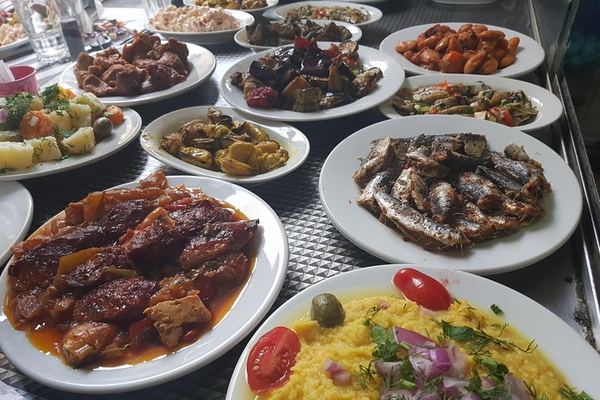
Athens Food Tasting Tour: 7 Stops, Breakfast and the Market
Breakfast, Greek pies, cheese and cold cuts, olives, koulouri, meze, loukoumades and coffee across four hours. Guided in German, English, French or Spanish.
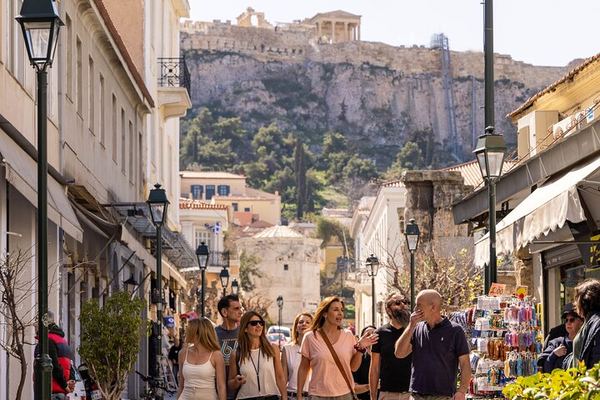
Athens Food Tour for Eight: Sfakiani Pie, Rakomelo and Honey
Eight to ten stops between Syntagma and Monastiraki: Cretan sfakiani pie, rakomelo, PDO cheeses, pastourma, three honeys and hundred-year-old loukoumades.
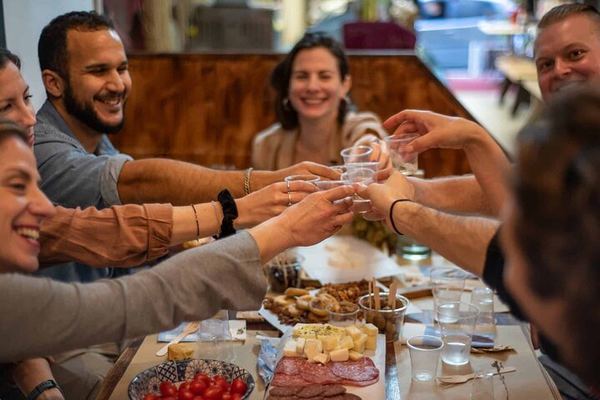
Athens Food Tour with a Coffee Reading and Your Own Souvlaki
A 1990s café behind the oldest record shop, a coffee cup read for your fortune, a souvlaki you build yourself, and Greek donuts to finish. Twelve people.
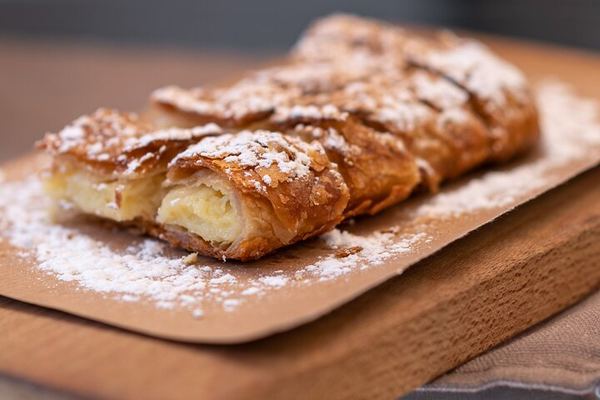
Athens Food Tour with Julia and Douk: 16 Tastings and Lunch
Three hosts, sixteen freshly cooked tastings, a herb and spice stop, cheese, a seated lunch and dessert. Every dietary restriction can be met here.
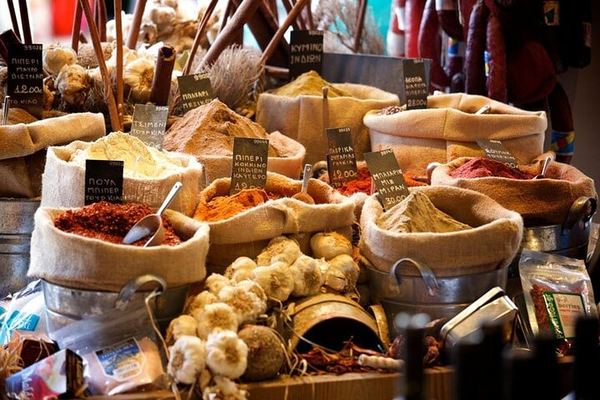
Athens Food Walk: Varvakios Market, Psirri and 12 Tastings
Six stops and twelve tastings between Monastiraki, the Varvakios meat and fish market and the spice street of Evripidou. Groups of twelve at most, in English.
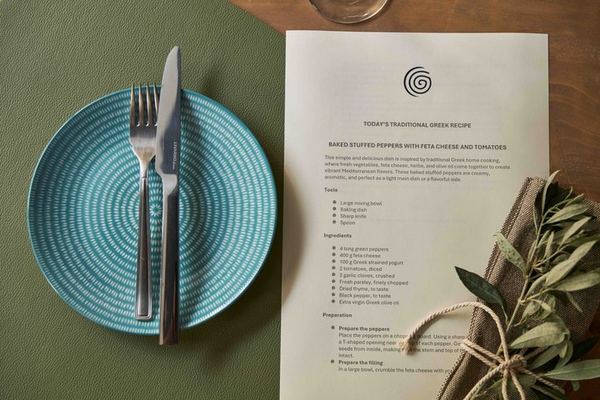
Athens Garden Cooking Class with a Home Cook and Transfer
Four and a half hours at a home outside the centre, cooking whatever the market gave up that morning, with unlimited wine and ouzo. Transfer from Monastiraki.
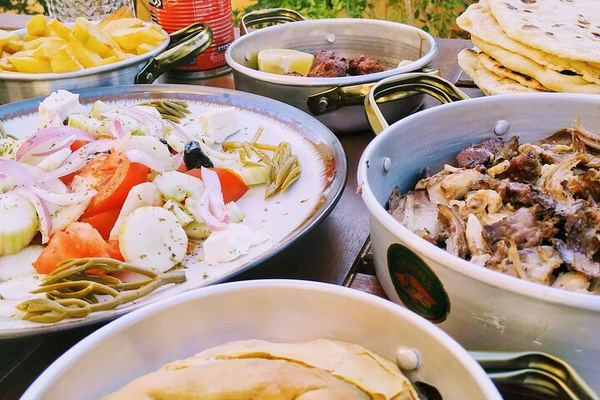
Athens Home Cooking Class: Pita Gyros Made from Scratch
Pita gyros built from nothing in a passageway kitchen off Panepistimiou, with vegetables bought that morning and a beer from the fridge while you cook.
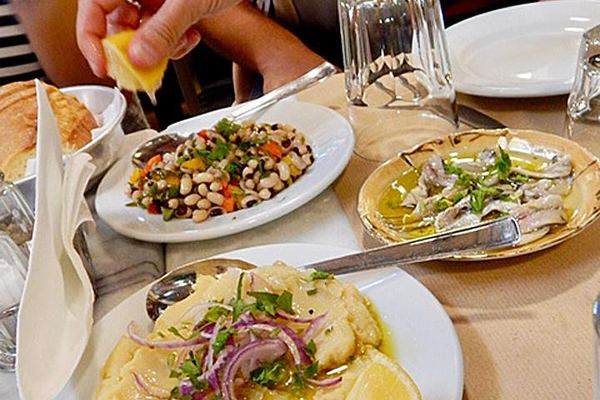
Athens Market Food Tour with 20 Tastings and Two Sit-Down Meals
Twenty-plus tastings across the meat, fish and spice markets, with a souvlaki stop and a full meze table at the end. Honey and olive oil from the producers.
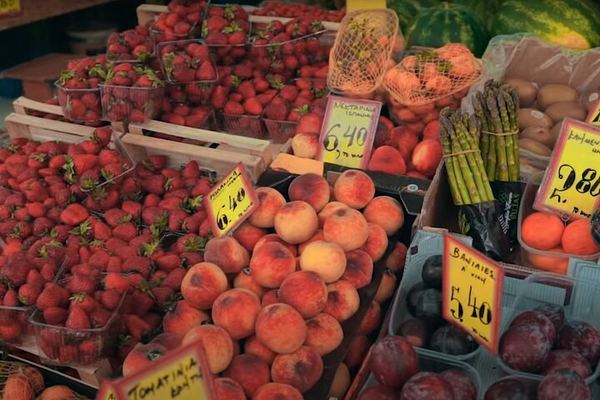
Athens Market Shopping and Taverna Cooking Class with Lunch
Shop the Central Market with the cook, then make tzatziki, dolmadakia, stuffed peppers and chocolate salami in a working neighbourhood taverna. Twelve places.
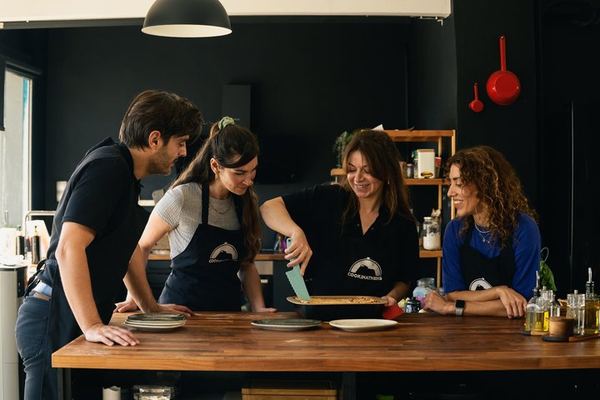
Athens Meze Cooking Class: Seven Small Plates and Phyllo
Seven meze dishes cooked in pairs in a loft above Evripidou, phyllo shaped by hand, then the whole spread shared at the table with plenty of Greek wine.
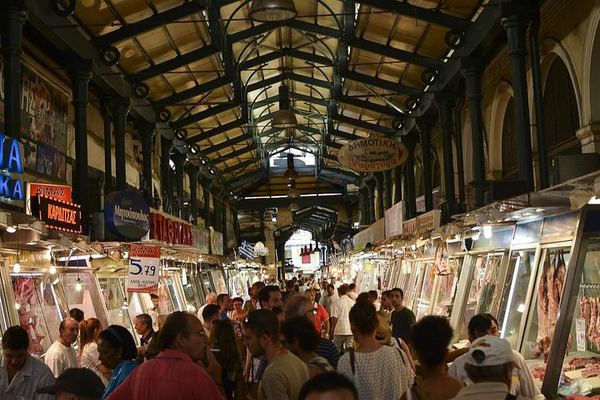
Athens Morning Food Tour: 15 Tastings from Pies to Pastourma
Spanakopita at breakfast, feta and yoghurt at a deli, pastourma in Monastiraki, olives, loukoumades, a home-cooked lunch and coffee in Psiri. Ten people.
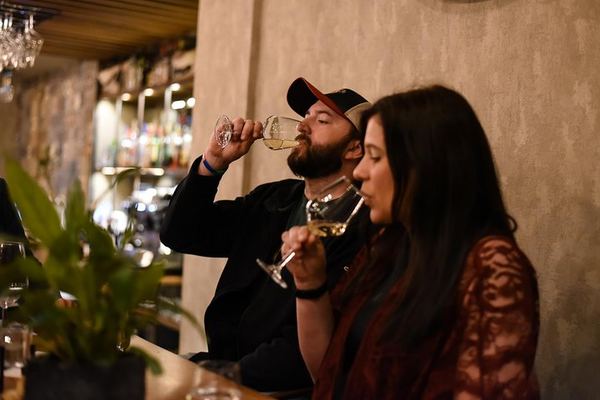
Athens Night Food Tour with Four-Wine Tasting and Dinner
Souvlaki at Agias Irinis, four Greek wines poured by a sommelier with cheeses, a full dinner with Greek salad and spirits, and gelato. Eight people at most.
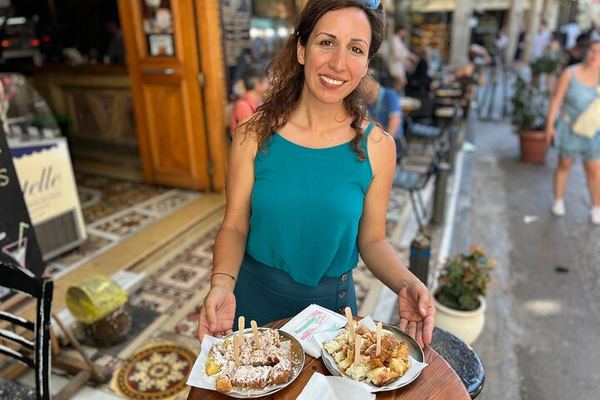
Athens Secret Food Tour: 10 Tastings and One Secret Dish
Tiropita, zucchini balls, galaktoboureko and a dish the guide will not name in advance, walked between the flea market, Hadrian's Library and Plaka.
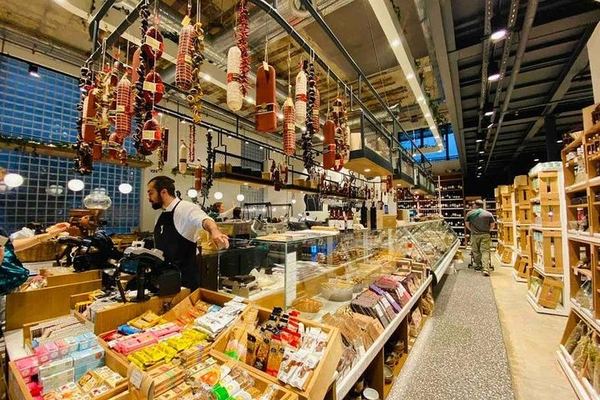
Athens Small-Group Food Tour: Ermou, Psyrri and a Meze Taverna
From a deli in the Commercial Triangle to a family taverna in Psyrri: Kalamata olives, tapenades, street food and a shared meze meal. Twelve people at most.
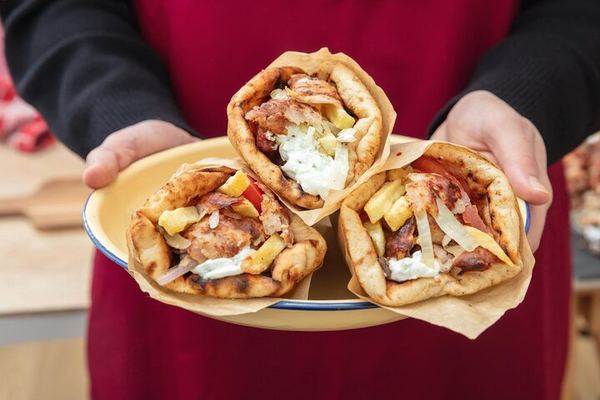
Athens Street Food Walk: Peinirli, Souvlaki and Loukoumades
Peinirli, the boat-shaped Greek pizza, plus spanakopita straight from the oven, souvlaki, loukoumades and baklava with ice cream. Three hours on foot.

Athens Vegan Greek Cooking Class at the Soybird Studio
A plant-based Greek class in a ground-floor studio on Veikou, mains through desserts, with water, beer and white wine and the recipes sent afterwards.
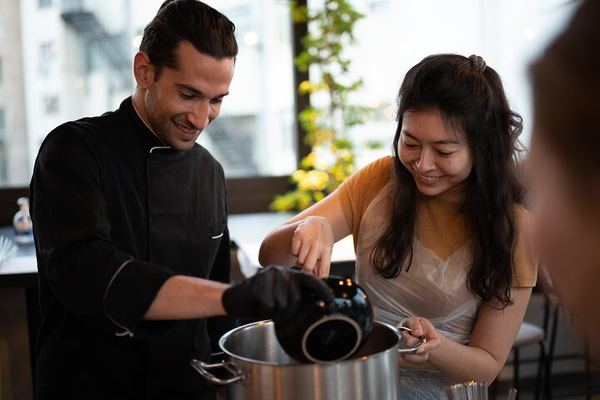
Chef-Led Greek Cooking Class at The Artist Athens
Four hours with a professional Greek chef four minutes from Athinas Street, cooking a full Greek menu and eating it under the Acropolis. Ten places.
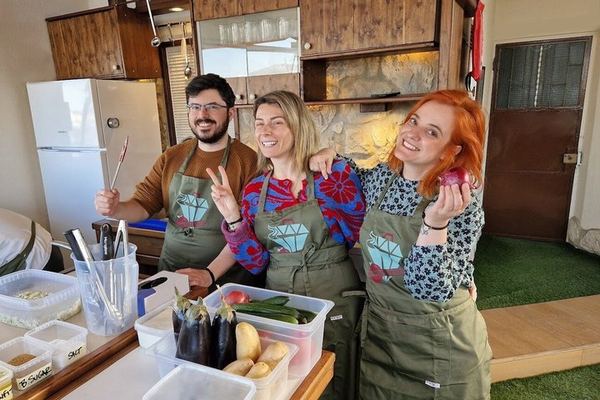
Diamond Roof Garden Cooking Class above Panormou, Athens
Six courses cooked on a sixth-floor roof garden over a residential Athens street, ten minutes from Panormou metro. Nine places, chef-led, wine included.
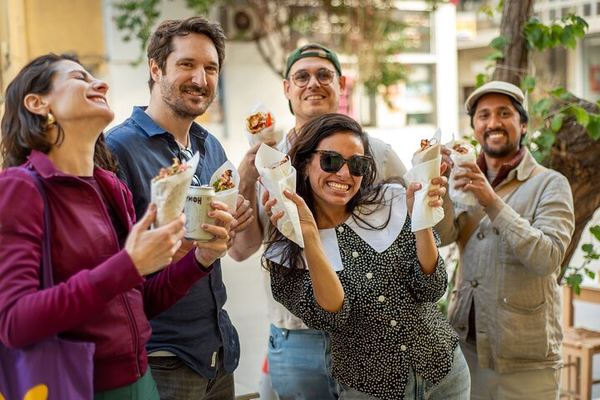
Koukaki and Acropolis Food Tour: Trigona, Gyro and Tsipouro
Six tastings in Koukaki and the Acropolis district: freddo espresso with trigona, handmade phyllo pies, a charcuterie board with tsipouro, gyro and loukoumades.
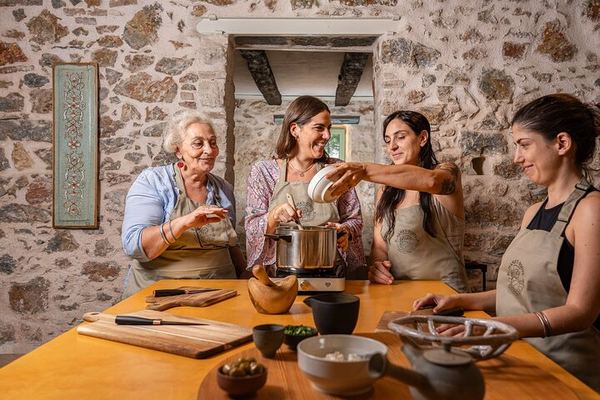
Mama's Roots Cooking Class in Athens: Six Dishes in a Garden
Six dishes from Cretan and Peloponnesian family recipes, cooked with garden herbs and vegetables in a Keramikou garden, then eaten with local wine.
Ratings collected by Viator and Tripadvisor
Your rights at a Greek table
The Greek trading rules are unusually explicit about restaurants, and the relevant provisions are worth carrying around. None of this is obscure: the ministry publishes the fines it issues, by name, every month.
| The rule | What it means for you | Fine |
|---|---|---|
| No cover charge | Nothing may be billed for the table, cutlery or napkins | 500 EUR |
| No unrequested items | Bread or bottled water cannot be served and billed without your prior agreement | 500 EUR |
| Price list before ordering | A menu must be given to each customer, and one displayed at the entrance | 1,000 EUR |
| Itemised bill | Every line must be listed separately, not lumped as a total | 1,000 EUR |
| Honest description | A dish cannot be described as something it is not | 3,000 EUR |
| Menu in Greek | Greek is compulsory; other languages are optional additions | — |
Two practical notes. If bread arrives unasked, you can decline it and it comes off. And if a bill arrives as a single number, you are entitled to an itemised one, which is the moment most disputes in tourist areas resolve themselves.
Worth adding for balance: in the ministry's published enforcement for a recent month, 91 fines were issued across the country and most concerned price lists and bills rather than cover charges. The rule is clear; the enforcement concentrates elsewhere.

Souvlaki, gyros, kalamaki: three words, three things
These are used loosely by everyone including Greeks, so here is what they mean in the dictionary rather than in a blog. Souvlaki is the skewer: from souvla, a spit, plus a diminutive. Strictly it is meat on a stick. Gyros is meat stacked on a vertical rotisserie and shaved off in pieces, and the dictionary definition specifies pork. Kalamaki has no food entry in the dictionary at all: it is Athenian colloquial usage for the small skewer, and outside Athens asking for one may get you a drinking straw, which is what the word actually means.
The practical version: order a pita, which is the wrap, and specify gyros or souvlaki inside it. The wrap costs about 3.20 to 4.60 euros in Athens, and the same thing eaten sitting down at a table in a tourist square can be three times that.
Why sitting down costs more, and it is not greed
You will see two prices for the same coffee or the same wrap, one for takeaway and one for the table, and the gap is larger than seems reasonable. There is a tax reason: takeaway food carries a lower rate of VAT than table service, 13% against 24%, so a restaurant charging the same for both would be losing money on the table.
A coffee to carry costs roughly 1.80 to 2.80 euros in Athens; the same one sitting down is 3.20 and upwards. A frappé, which is instant coffee shaken with ice and the national drink of the Greek summer, is around 2.10 for takeaway. A koulouri, the sesame bread ring sold from carts every morning, is 70 to 90 cents.
Restaurant prices have been moving: the national statistics office measured restaurants and fast food up 6.4% year on year in mid 2026, while hotels fell 2.4%.
Feta, and the thirty year argument
Feta is the most litigated cheese in Europe and the outcome is worth knowing when someone hands you a menu that says Greek salad.
Greece applied for protection in 1994. A first registration in 1996 was annulled in 1999. A second, in 2002, was challenged by Germany and Denmark, and in October 2005 the Grand Chamber of the European Court of Justice dismissed both actions. In July 2022 the court found Denmark had failed in its obligations by allowing Danish producers to export cheese labelled feta to countries outside the EU.
The number that decided the 2002 case is the one to remember: over 85% of the European Union's per capita consumption of feta happens in Greece. That is why the name was held to be Greek rather than generic, and it is also a fair description of how much of it you are about to eat.
Practically: feta is sheep's milk, with up to 30% goat, brined and sold in blocks. What is served on a Greek salad is a slab on top, not crumbled through it, and it arrives with oregano and oil.
The olive calendar
Greek olive growing runs on two seasons and they are not the same crop. Table olives are picked green in September and October. Olives for oil come in from the beginning of November to February, when they are riper and yield more.
That matters for a visit because new oil, freshly pressed, is peppery and green and tastes almost nothing like the bottle in your kitchen at home. If you are here between November and January, it is the single most worthwhile thing to taste, and any cooking class will have it.
| 1 | 2 | 3 | 4 | 5 | 6 | 7 | 8 | 9 | 10 | 11 | 12 |
A note on the mythology
Greek food is sold with a great deal of continuity talk, and some of it does not survive contact with the evidence.
Moussaka as it is served now, with a béchamel top, was codified in the early twentieth century by the cook Nikolaos Tselementes, who was deliberately Europeanising Greek cooking and reducing its Ottoman spicing. That is documented in peer reviewed work. It is a good dish with a short history, not an ancient one.
The frappé is usually credited to a Nestlé employee at a Thessaloniki trade fair in 1957. The company's own account does not name him and the fair's archive does not mention it. It is a story worth telling as a story.
And the ceramic trays excavated at Akrotiri that get called souvlaki trays are called that by modern archaeologists, in quotation marks, and their function is debated. Bronze Age Greeks cooked things on spits. That is as far as the evidence goes.
Questions about eating in Greece
Is there a cover charge in Greece?
No, and it is illegal to apply one: the trading rules ban charging for the table, cutlery or napkins, with a 500 euro fine. Nothing can be served and billed without your prior agreement either, including bottled water and bread. If a cover appears on your bill, it should not be there.
Do I tip in Greece?
Rounding up or leaving five to ten per cent for good service is normal and appreciated, and is not built into the bill. It is a courtesy rather than an expectation, and nobody will chase you down the street either way.
Why is the takeaway price so much lower?
Tax. Takeaway carries 13% VAT and table service 24%, so the same coffee costs about 1.80 to 2.80 to carry and 3.20 or more to sit with. It is not a tourist surcharge, and the difference applies to Greeks too.
Food tour or cooking class?
The tours are cheaper here, at a median of 79 EUR against 96, and they cover more ground. The classes are the ones with rooftops: several are held with a view of the Acropolis, which is a large part of what the higher price buys. Both categories rate 4.95, so this is a preference rather than a quality decision.
Is Athens too hot in summer?
For a four hour walking tour in July and August, yes, frequently. Temperatures regularly pass 35 degrees and the city has little shade in the market districts. If you are here then, book an evening tour or a cooking class, which is indoors. April to June and September to October are the comfortable months.
Is Greek food good for vegetarians?
Unusually good, and there is a religious reason: the Orthodox fasting calendar produces a whole repertoire of dishes with no meat, dairy or eggs, called nistisima. Gigantes, dolmades, briam, fava, horta and most of the meze table are vegetarian by design rather than by adaptation. Vegan is harder only because of the cheese.
Data verified on. Prices and ratings read from the 34 Greek listings on this site on 4 September 2026. Consumer rules from the Greek trading regulations of 2017; feta case law from the CJEU judgments of 2005 and 2022.