

Food Tours in Australia
Twenty experiences around Melbourne, and nine of them leave the city. The coffee culture is real and the story everyone tells about where the flat white comes from is not.
Melbourne's food culture is a migration story with a date range: Italians and Greeks arriving in large numbers after the Second World War, into a city that until then had eaten British. What they brought was not just restaurants but a habit, and the habit was coffee.
Which makes it odd that the word coffee appears in none of these twenty titles.
Choose a destination in Australia

Food Tours Experiences in Australia
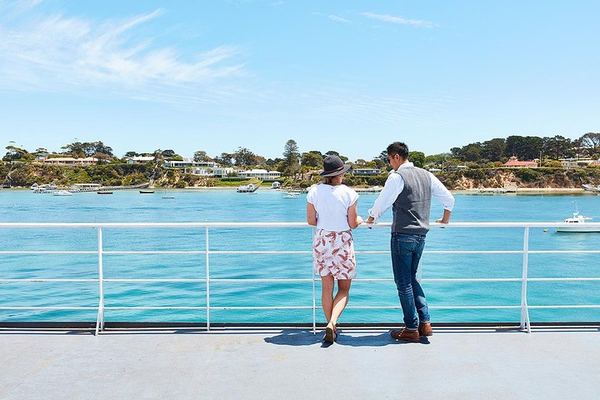
Across the Bay by Ferry, Bellarine to Mornington
Ten hours covering both peninsulas, with a ferry across the bay in the middle: Scotchmans Hill, lunch at Jack Rabbit, and beer poured from old stable doors.
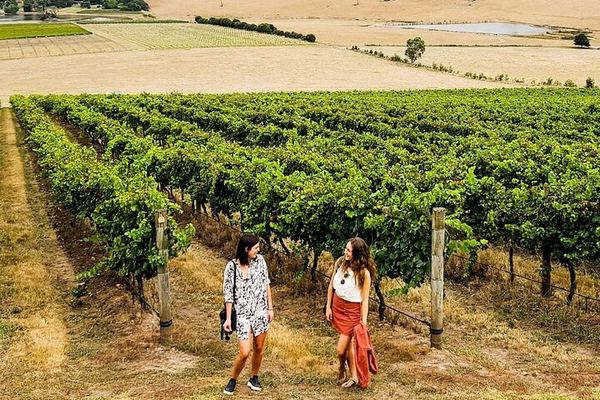
A Midday Start, a Surprise Winery, and Apple Cider
It leaves at noon rather than dawn, visits three wineries with the second kept as a surprise, and finishes on apple cider at Yering Farm. Back by 5:15.
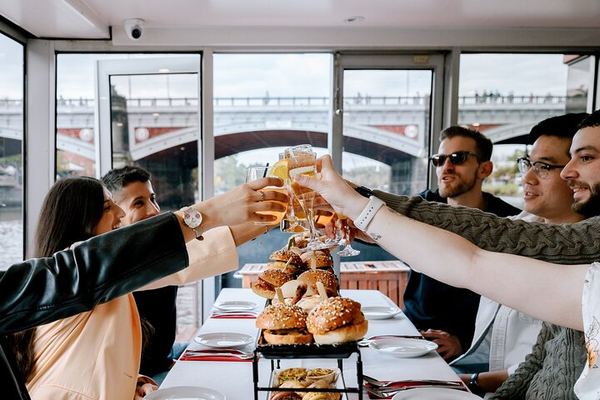
Bottomless Brunch on the Yarra, Berth 1 Southgate
Two hours on the Yarra with brunch and the drinks not stopping, from Berth 1 at Southgate. Ten people, and note that bookings here are final, no refunds.
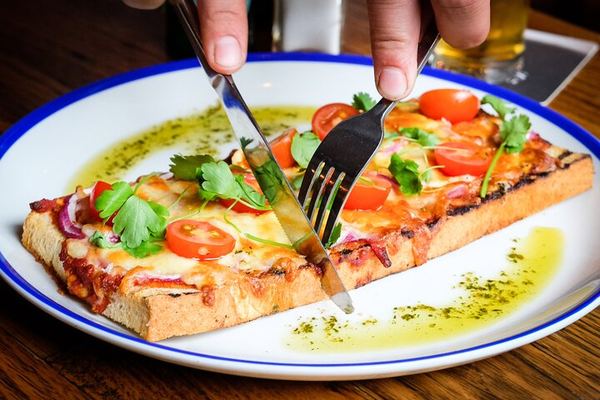
Bush Croquettas, Vegemite and a Secret Dish, Adults Only
Indigenous Australian ingredients, bush croquettas, Vegemite bites and a dish they will not name, plus wine and coffee. Over-18s only, three and a half hours.
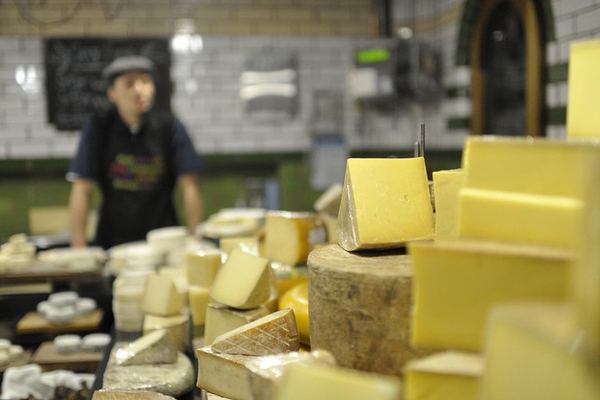
Coffee at Pellegrini's and Noodles Being Pulled
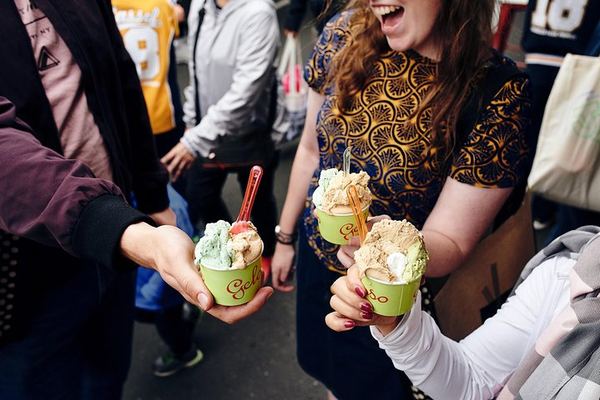
Three hours, eight people: handmade gelato, coffee at Pellegrini's, noodles made in front of you, the laneways, and lunch at a local restaurant.
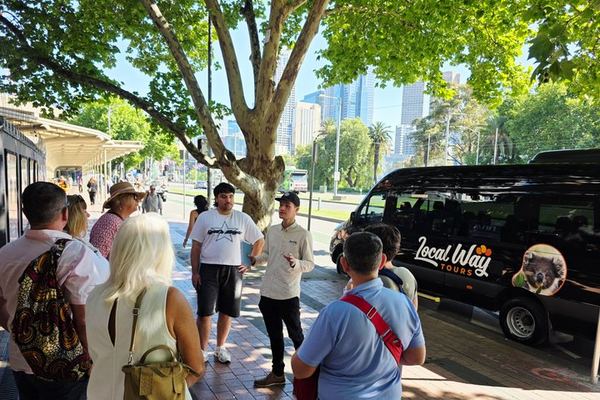
Driven Between the Tastings, Ending on a Fitzroy Rooftop
A minibus carries you between the stops, so four hours covers gardens, laneways, arcades, the market and a Fitzroy rooftop with infused vodkas. Ten seats.
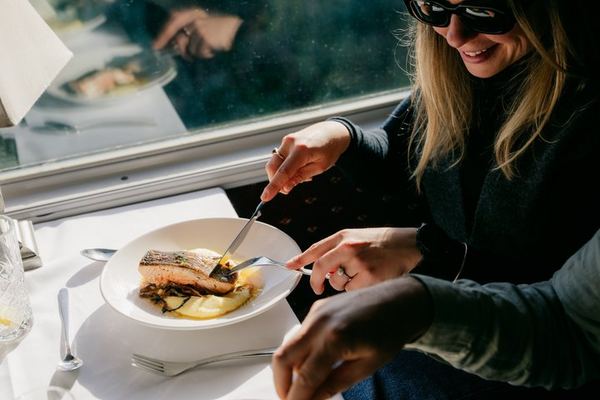
Five Courses for Two in a Private Compartment, Bellarine
A five-course degustation with a paired drink each, in your own compartment, on a heritage railway between Drysdale and Queenscliff. Swan Bay out the window.
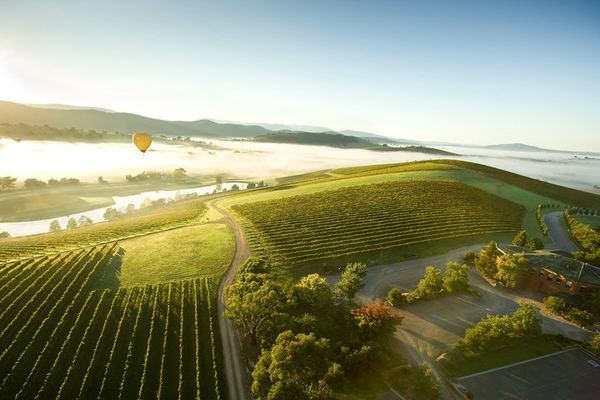
Four Cellar Doors and Lunch at Yering Station, 1838
Four cellar doors chosen to span boutique to large, De Bortoli's Noble One with cheese, and lunch at Yering Station, where the Valley's first vines went in.
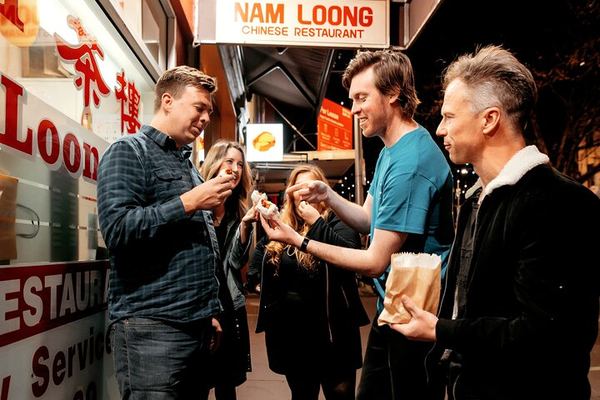
Four to Six Stops Chosen on the Day, Chinatown to Hosier Lane
The guide picks four to six tastings on the day, so no two tours match: dumplings in Chinatown, a drink in Hosier Lane, dessert by Federation Square.
Grilled Peppered Kangaroo at the Queen Victoria Market
Two hours through the market with a guide who knows the traders: seafood, grilled peppered kangaroo, local cheese, dips and gelati. Bring a water bottle.
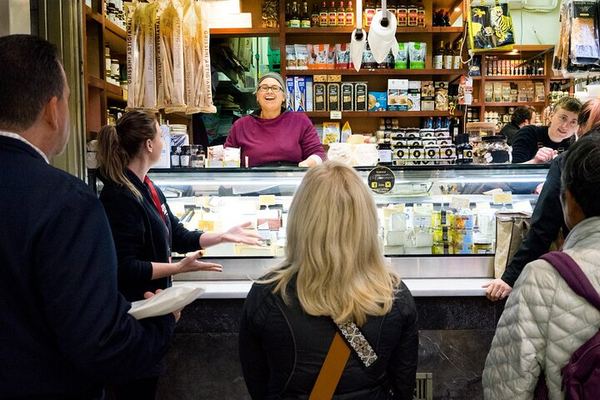
How Immigration Built Melbourne, Told at the Market
The subject is immigration and what it did to how this city eats, told through the Queen Victoria Market before the crowds. Antipasto, coffee, gelato, 1km.
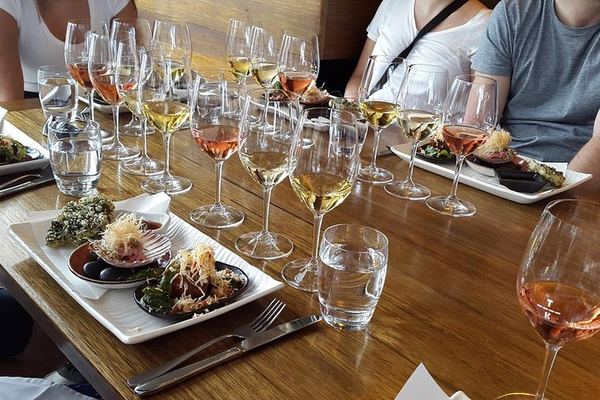
Nine Wines, Nine Plates, Three Sommeliers, One Evening
Three restaurants, and at each the sommelier pours three of their own favourites with plates the chef made to match. Nine and nine, over one evening, on foot.
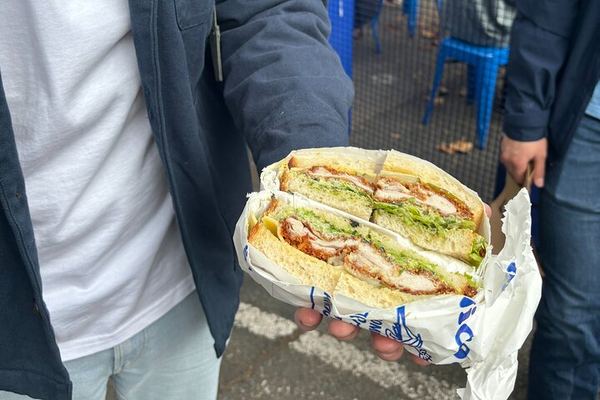
Seven Kilometres of Fitzroy and Collingwood, on Foot
Out of the CBD and into Fitzroy and Collingwood: a famous sandwich, a vegan deli, cheesecakes, and tacos with the best view. Seven kilometres, so wear shoes.
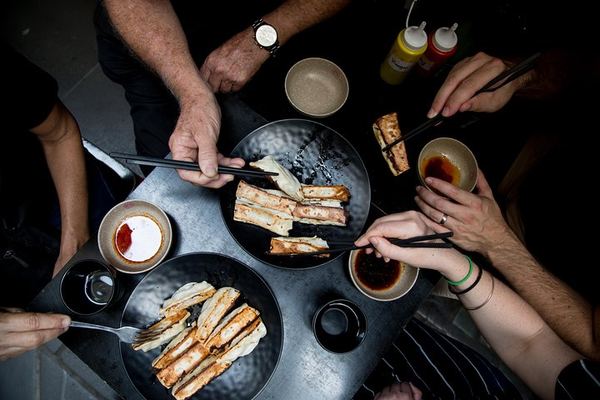
Seven Tastings Through the Arcades, Ending in a Bar
Seven tastings through the Royal Arcade, the Block, Chinatown and Hardware Lane, with the buildings explained, and a drink in a laneway bar at the end.
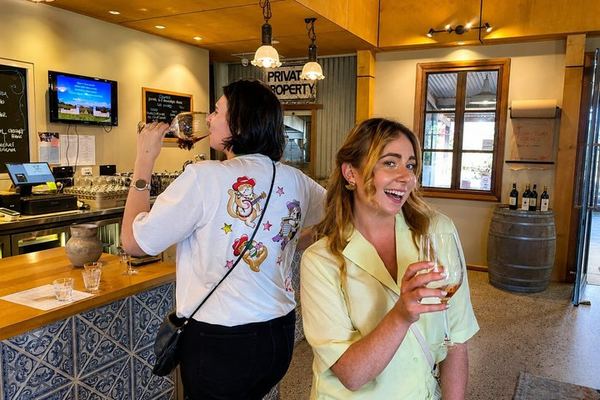
Sixteen Wines, Three Very Different Cellar Doors
More than sixteen wines across three cellar doors picked to be unalike: a premium estate, a natural-wine boutique and an Italian-leaning one. Fifteen seats.
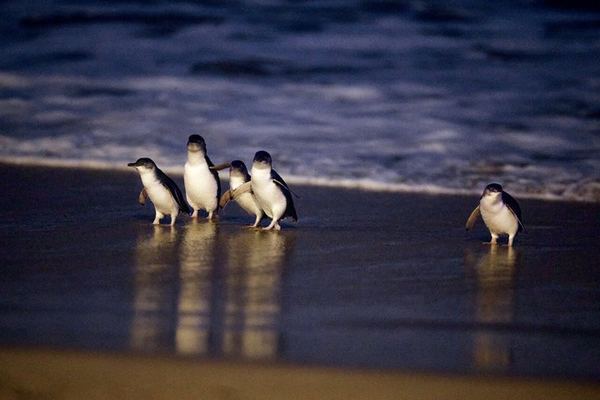
Sparkling at the Nobbies, Then the Penguins Come In
Twelve hours to Phillip Island: six wines and wood-fired pizza at the island winery, a glass of sparkling at the Nobbies at dusk, then the Penguin Parade.
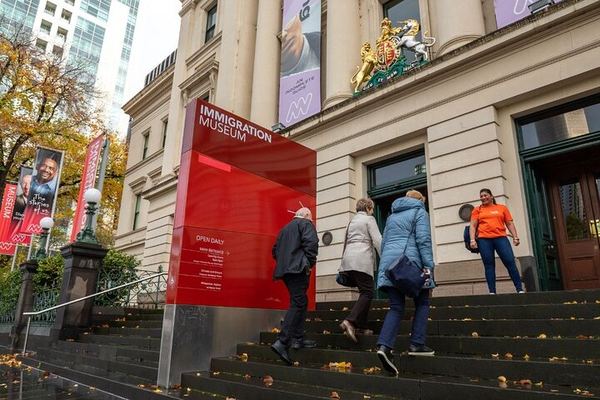
The Immigration Museum, Then Four Places to Eat
A food tour that includes the Immigration Museum, which is the right museum for the subject. Four progressive courses, spice shops, and Melbourne coffee.
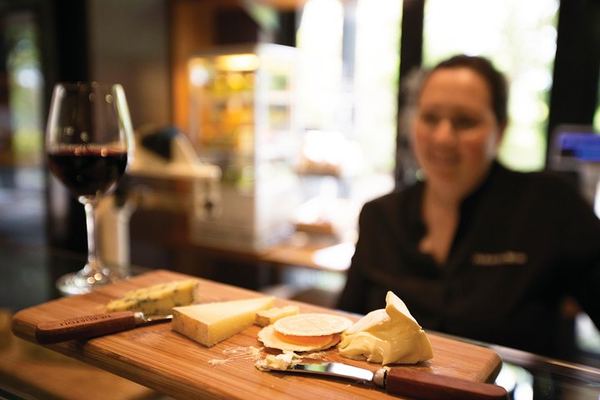
The Yarra Valley in a Mercedes, Six Seats Filled
Six seats in a Mercedes van, seven and a half hours, and the same three wineries done slowly: Chandon, lunch at Soumah or Tokar, De Bortoli, and kangaroos.
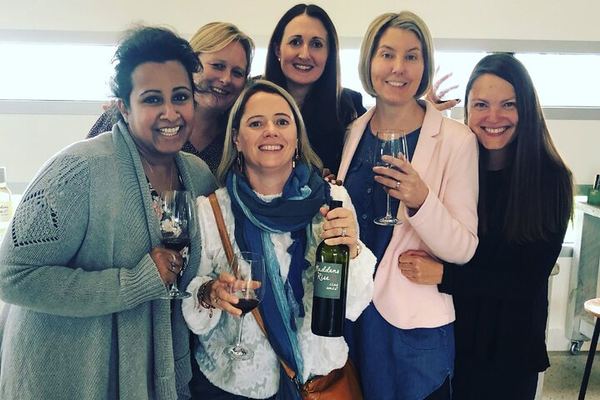
Three Wineries, Not Five, and the Kangaroos on the Golf Course
Three wineries given proper time instead of five rushed: Chandon's sparkling flight, lunch at Ai Fiori, and Noble One with cheese in De Bortoli's Trophy Room.
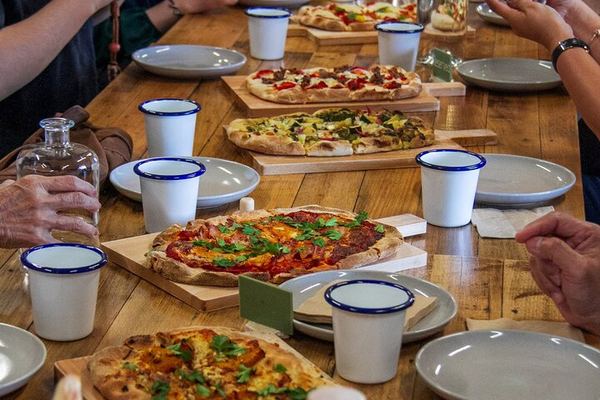
Wine, Cheese, Gin, Pizza and Chocolate in One Day
Cool-climate wine at Rochford, a cheese board on a working dairy, gin with pizza at a farm distillery, coffee in Healesville, then chocolate. €119.
Ratings collected by Viator and Tripadvisor
The flat white was not invented in Sydney in 1985
You will hear this confidently in Melbourne, in Sydney and in Auckland, usually with a specific year and sometimes with a name. The evidence does not support any of the versions.
The Oxford English Dictionary records the term from 1971. A coffee historian places it as probably English, from the 1950s. It appears in a British film in 1963. The earliest Australian attestations found are from May 1983 and April 1984. What happened in 1985 is that a Sydney café owner put it on a menu permanently, which is a different claim from inventing it. The New Zealand counterclaims do not have documentation of equivalent quality.
So the honest position is that the question is open, and that a drink this ordinary probably emerged in several places at once. What Melbourne can claim without argument is the density and the standard: this is a city where a bad coffee is a complaint rather than a fact of life, and where the barista is a profession rather than a summer job.
Ordering here: a flat white is espresso with steamed milk and minimal foam. A long black is espresso poured over hot water, not the reverse. A magic, which you will only meet in Melbourne, is a double ristretto in a small flat white.
Pellegrini's, 1954, and the qualified claim
The espresso bar at 66 Bourke Street opened in 1954, run by the brothers Leo and Vildo Pellegrini. It received National Trust recognition in 2014 and its neon sign is on the Victorian Heritage Register.
It is often described as the first espresso bar in Australia, and the accurate version is narrower: it was among the first to use a genuine Italian espresso machine and it was the first in the city centre, while a number of Italian-Australian cafés in Lygon Street, Carlton acquired machines in the same period. Competing claims about who imported the first machine are not documented well enough to repeat.
That distinction matters more than it sounds, because the story of Melbourne coffee is not one bar but a neighbourhood: Carlton, Fitzroy and the city blocks in between, where a post-war community rebuilt the way a whole city drank.
| Where | Listings | What it is | Price |
|---|---|---|---|
| Melbourne laneways | 5 | Six or seven tastings on foot, two to three hours | 87 to 102 EUR |
| Yarra Valley | 6 | Wine day, an hour out. The two most reviewed listings | 119 to 214 EUR |
| Queen Victoria Market and Chinatown | 2 | Market produce, dim sims, multicultural stalls | 48 to 70 EUR |
| Progressive dinner and evening tours | 3 | A course per venue, sit down | Around 100 EUR |
| On the water, in the city | 1 | A bottomless brunch cruise on the Yarra river | About 85 EUR |
| Phillip Island | 1 | Penguins, with wine attached | About 148 EUR |
| Bellarine and Mornington | 2 | A dining train, and a peninsula wine day | 135 to 165 EUR |

The market that shuts on Mondays and Wednesdays
The Queen Victoria Market opened on 20 March 1878 and is the largest open-air market in the southern hemisphere. It went onto the Victorian Heritage Register in 1989 and the National Heritage List in 2018.
The thing to know before booking anything around it: it is closed on Mondays and Wednesdays. Opening is Tuesday, Thursday and Friday 6:00 to 15:00, Saturday 6:00 to 16:00 and Sunday 9:00 to 16:00. A Monday morning market tour is not a market tour.
The other two are South Melbourne, open Wednesday, Friday, Saturday and Sunday from 8:00, and Prahran, which dates itself to 1864 and calls itself Australia's longest serving market. South Melbourne claims 1867 and a similar primacy. Both claims are commercial and we are not going to arbitrate between them.
The dim sim is Melbourne's own
Not a dumpling, and not the same thing as dim sum. The dim sim is a larger, denser parcel of minced meat and cabbage in a thick wrapper, steamed or deep fried, sold from fish and chip shops and market stalls across Victoria.
The modern version was developed in Melbourne's Chinatown in 1945 by William Chen Wing Young, for the family firm Wing Lee, though the term itself is attested in Australia from 1928. The big, round, deep-fried variety is known as the South Melbourne dim sim, after the market where it was popularised.
It is genuinely local, it is cheap, and it is the thing to eat at a market stall rather than in a restaurant. One thing not to expect: the pie floater, a meat pie in pea soup, belongs to Adelaide rather than Melbourne, and it turns up in Melbourne food writing far more often than it turns up in Melbourne.
Nine of these leave the city
Almost half the catalogue is not a Melbourne food tour, and six of those nine are wine days in the Yarra Valley, an hour north east. They are also the two most reviewed products on the page, at 119 and 214 EUR, so this is what the market is buying.
The valley is a cool climate region: pinot noir, chardonnay, sparkling wine, with cheese and gin producers along the same roads. A grazing style tour at 119 EUR takes in several of them; the 214 EUR listing is a fuller wine day.
Two further listings go further afield and are worth flagging. One is built around Phillip Island, where the main attraction is the evening penguin parade and the food is secondary. The other is a restaurant on a moving train on the Bellarine peninsula, about ninety minutes away, which is a lovely thing and is not a tour of Melbourne.
The genuine Melbourne food tours are the five laneway walks, at 87 to 102 EUR for six or seven tastings over two to three hours, plus the market and Chinatown options at 48 to 70.
When to come, and the one festival
Melbourne is in the southern hemisphere, so the seasons are reversed: December to February is summer, June to August is winter. The city has a reputation for changeable weather that is entirely deserved, and layers are not a joke here.
The date worth planning around is the Melbourne Food and Wine Festival, founded in 1993 and held every March, which is also when the weather is at its most reliable: warm, dry and past the peak of summer heat.
The laneway walks run year round and are largely weatherproof, since the point of a laneway is that it is narrow and often covered. The Yarra Valley days are better from October to April.
| 1 | 2 | 3 | 4 | 5 | 6 | 7 | 8 | 9 | 10 | 11 | 12 |
Questions about eating in Melbourne
Was the flat white invented in Australia?
Probably not in the way the story is told. The term is recorded in English from 1971 and appears in a British film in 1963; the earliest Australian attestations are 1983 and 1984, and the famous 1985 date is when a Sydney café put it on a permanent menu. New Zealand's counterclaims are no better documented. The question is genuinely open.
When is the Queen Victoria Market open?
Tuesday, Thursday and Friday 6:00 to 15:00, Saturday 6:00 to 16:00, Sunday 9:00 to 16:00. Closed Mondays and Wednesdays. It opened on 20 March 1878 and is on both the state and national heritage registers.
Which of these are actually Melbourne food tours?
Eleven of the twenty. Five are laneway walks with six or seven tastings, two cover the markets and Chinatown, three are progressive dinners, and one is a brunch cruise on the river. The other nine leave the city, six of them for wine in the Yarra Valley.
Is the Yarra Valley worth a day?
The two most reviewed listings here are Yarra Valley days, at 119 and 214 EUR, so a great many people think so. It is cool climate wine, an hour out, with cheese and gin producers on the same route. It is a wine day rather than a food tour, and it is the thing this catalogue does best.
What should I eat that is specifically from here?
A dim sim, from a market stall or a fish and chip shop: the modern version was developed in Melbourne's Chinatown in 1945 and it is nothing like dim sum. Then coffee, anywhere, because the standard is high across the whole city rather than concentrated in a few places.
Is Melbourne really the biggest Greek city outside Greece?
No source we could find supports that, in any of its versions. What is documented is that Melbourne has the largest Greek community in Australia, which is a real and substantial thing and does not need the superlative.
Data verified on. Prices and reviews read from the 20 Australian listings on this site on 4 September 2026. Market hours and heritage listings from the markets' own published information.