
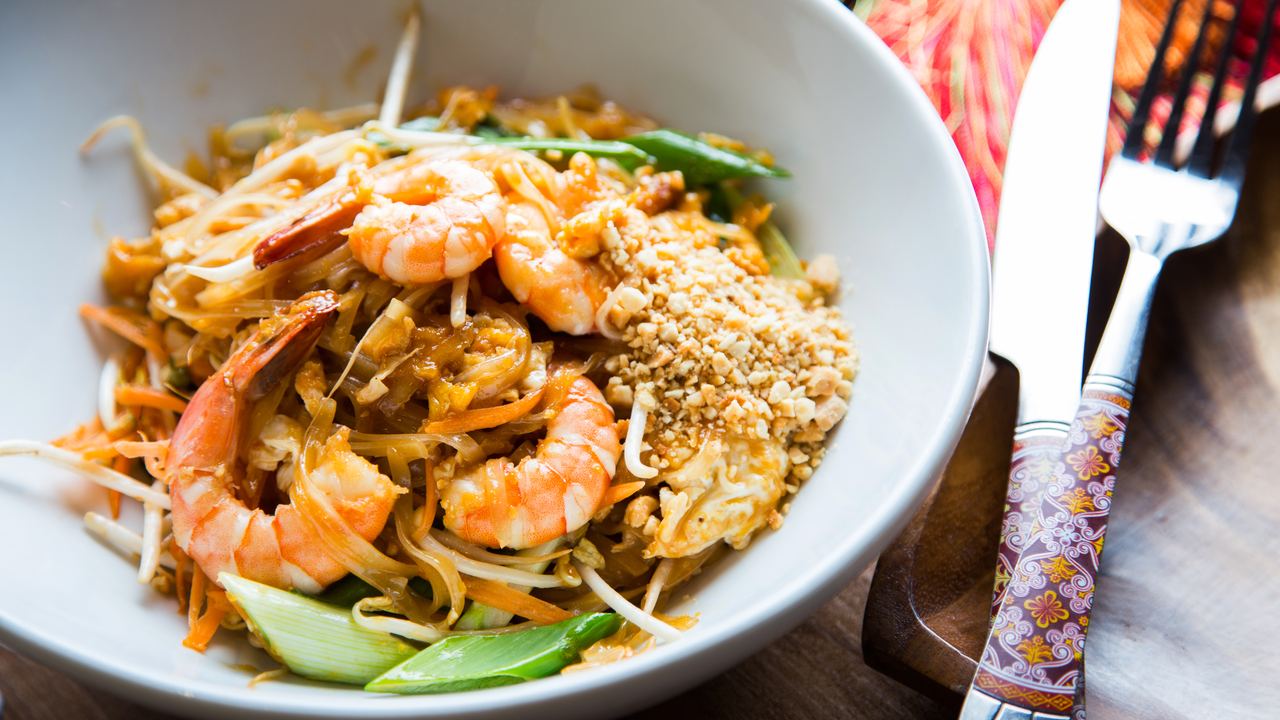
Food Tours and Cooking Classes in Thailand
Twenty-five experiences, all in Bangkok, at a median of 37 EUR. The country where eating out is not a treat but the default, and where the fork does not go in your mouth.
Thailand is a country where cooking at home is the exception. Rents are small, kitchens smaller, and a plate of rice with something on it costs so little from the stall downstairs that a great many households simply do not cook on a weekday. That is the fact underneath everything on this page: the street is not a novelty here, it is the kitchen.
Two things about Thai eating catch visitors out, and neither appears in any tour description. One is cutlery. The other is what happens when you say you like spicy food.
Choose a destination in Thailand

Food Tours Experiences in Thailand
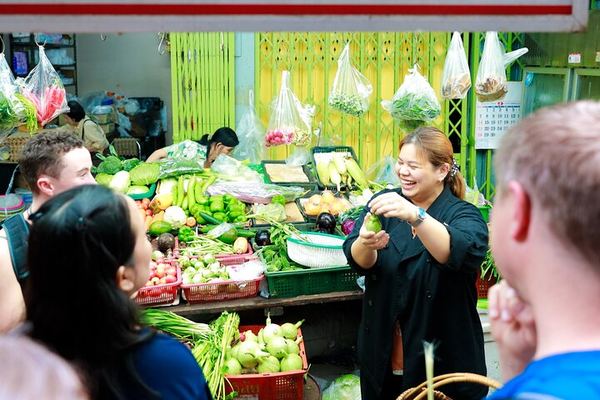
Asok Market Thai Cooking Class: Four Dishes at House of Taste
Four Thai dishes cooked in an air-conditioned kitchen off Sukhumvit 4, with a walk round Asok market first on morning classes, mango carving on later ones.

Bangkok by Longtail Boat, Tuk Tuk and Street Food at Night
An hour on the Bangkok Yai canal to Wat Paknam, then Talad Plu market, a tuk tuk through the Old Town and a finish in Chinatown. Three and a half hours.
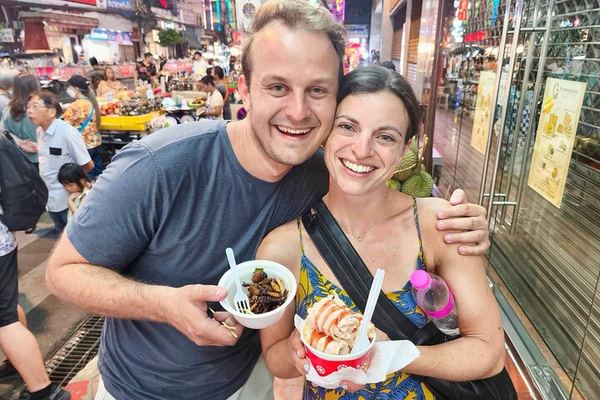
Bangkok Tuk Tuk Street Food Tour with Hotel Pickup at Dusk
Collected from your hotel at 4.30, then Pattana Market, Michelin-listed wok noodles down an alley and stir-fried ice cream in Chinatown. Twelve tastings.

Boat, Don Wai Market and a Cooking Class with Chef Aoy
Two markets, a thirty-minute boat down the Tha Chin river, and a private class in the riverside home of an Iron Chef Thailand winner. Six hours, private.
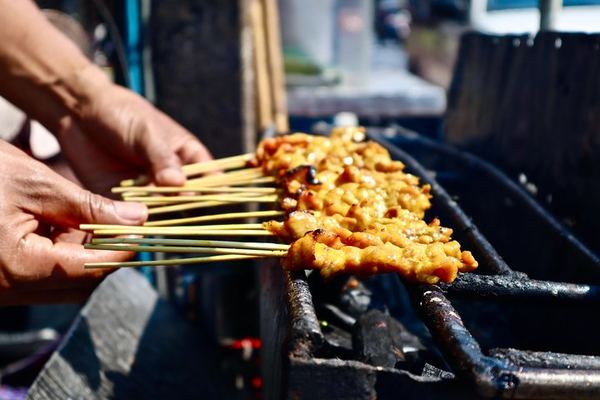
Chinatown and Talat Noi Food Tour: 10 Tastings and a Secret Dish
Basil chicken, shrimp dumplings, red pork buns, papaya salad and black sesame dumplings in ginger tea, plus one dish the guide keeps back. Three hours.
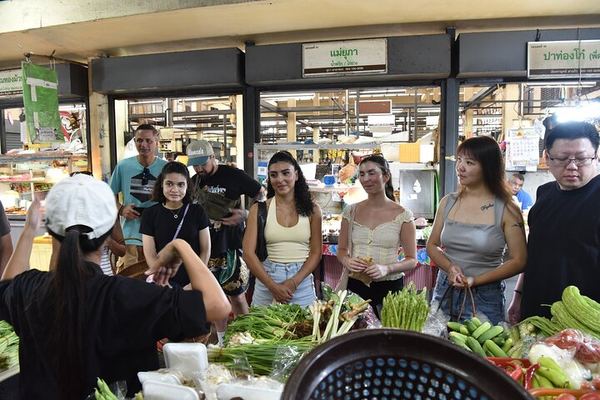
Hands-On Thai Cooking in Sathon with Coconut Milk from Scratch
Press the coconut milk, pound the curry paste, cook four dishes and eat each one hot. Inside Suan Phlu Market, with the market walk in every session.
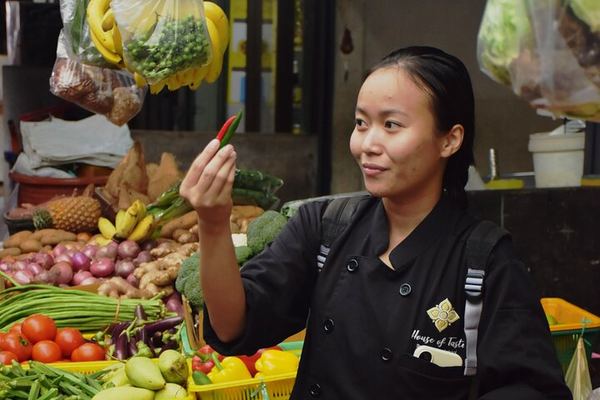
House of Taste Thai Cooking Class with Curry Paste from Scratch
Four Thai dishes in two hours, with the curry paste pounded and the coconut milk made from scratch. Morning classes add a market walk near BTS Asoke.
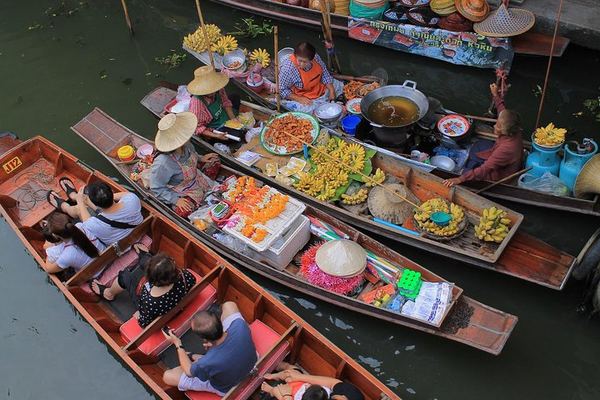
Maeklong Railway Market and Damnoen Saduak by Train and Boat
Seven hours from Bangkok: the umbrella market that folds up as the train passes, then Damnoen Saduak by long-tail boat. Book 6am for the quiet version.
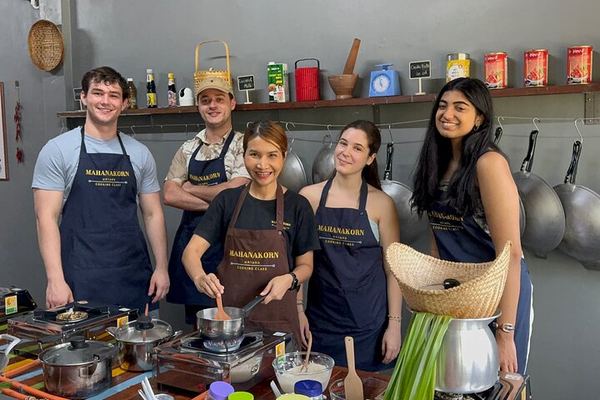
Mahanakorn Cooking Class by Wat Paknam: Four Thai Courses
Four Thai courses cooked by hand in a residential district two minutes from Wat Paknam, with the Giant Buddha optional afterwards. Eight people at most.
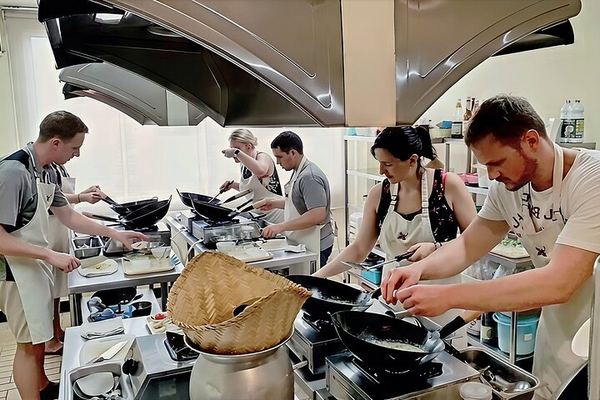
Maliwan Thai Cooking Class near Bowon Niwet, Four Places
The smallest class in the old town: four people, a wet market walk, a menu the instructor sets in advance, and printed recipes with a certificate at the end.
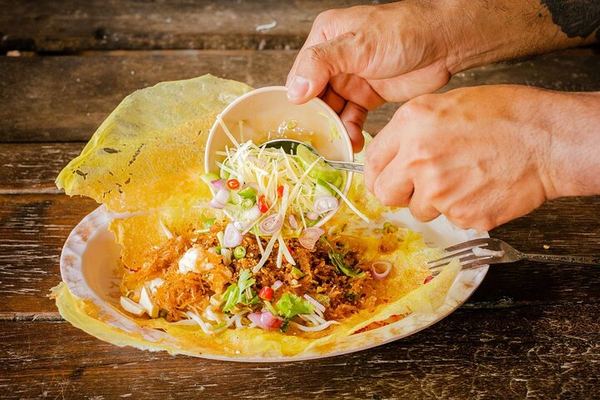
Old Siam Food Tour: Khlong Boat, Tuk Tuk and Nang Loeng Market
A canal boat and a tuk tuk into old Bangkok, then hoi tod, crispy pork belly and miang kham around a market that has fed locals since 1899. Eight guests.
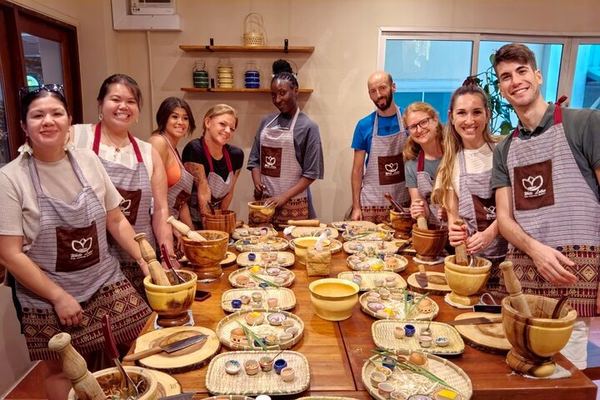
Old Town Cooking Class at Pak Khlong Talad with Lotus Folding
Four Thai dishes above the Pak Khlong Talad flower market, minutes from the Grand Palace, plus a lesson in folding a white lotus to take home.
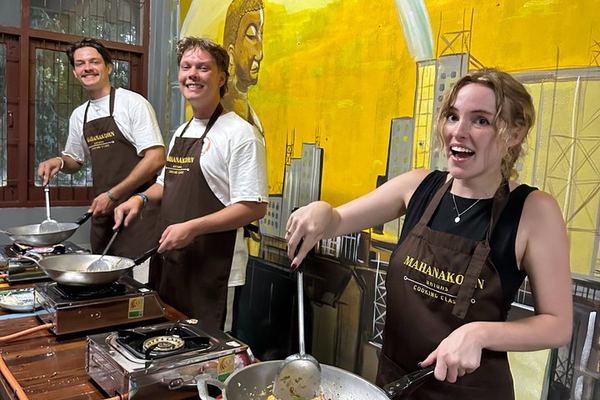
One-Hour Pad Thai and Tom Yum Class near Wat Paknam
Sixty minutes and two dishes: pad thai and tom yum with shrimp, cooked from fresh ingredients with a local chef in a district few visitors reach.
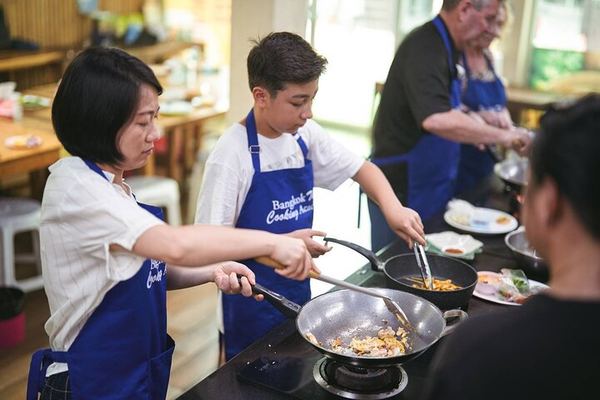
On Nut Thai Cooking Class: Pick Five Dishes from Twenty
No set menu: pick five dishes from more than twenty, pound your own curry paste, and cook all five yourself. Two minutes from BTS On Nut, market walk first.
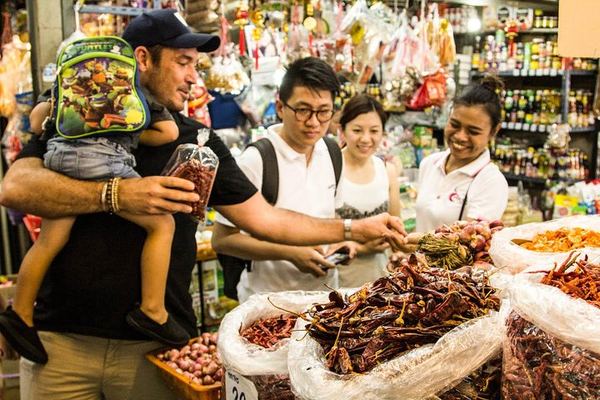
Pink Chili Thai Cooking Class in Phra Khanong with Market Walk
Green curry, pad thai and som tam among the four dishes, shopped for at a local market first. Six people at most, and beginners are the point here.
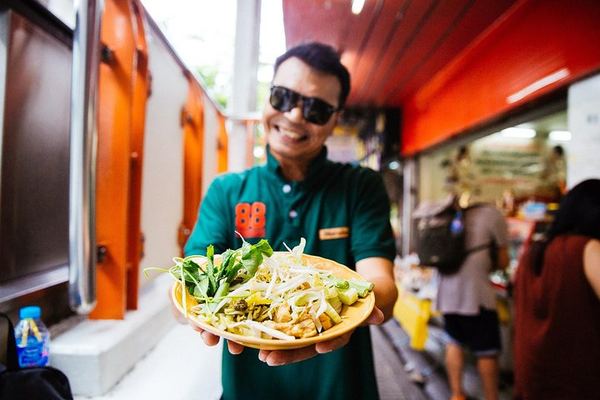
Private Or Tor Kor Market Food Tour with Six Tastings
Two hours around Or Tor Kor and Chatuchak with a guide to yourselves: red curry, papaya salad, mu ping, pad thai and sticky rice with coconut milk.
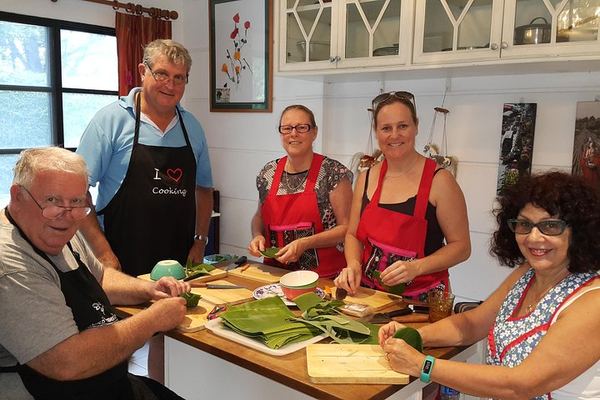
Private Thai Home Cooking Lesson: Pick from 100 Family Recipes
A teacher who has been running these since 2004, more than a hundred recipes from three generations of one family, and you pick which ones you cook.
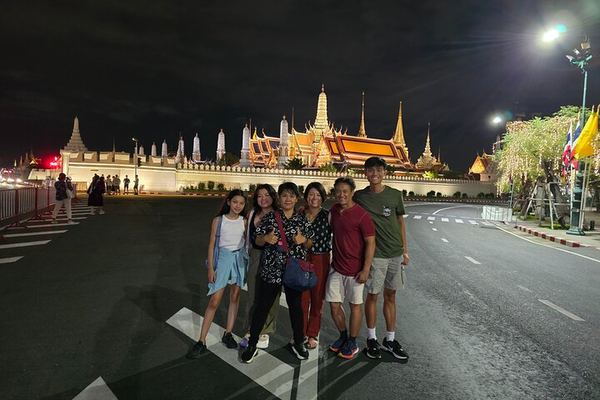
Private Tuk Tuk Night Tour: Ban Tad Thong Dinner and Old Town
Dinner on Ban Tad Thong, the Golden Mount, the Giant Swing and the flower market after dark, all by private tuk tuk with hotel pickup. Three hours.
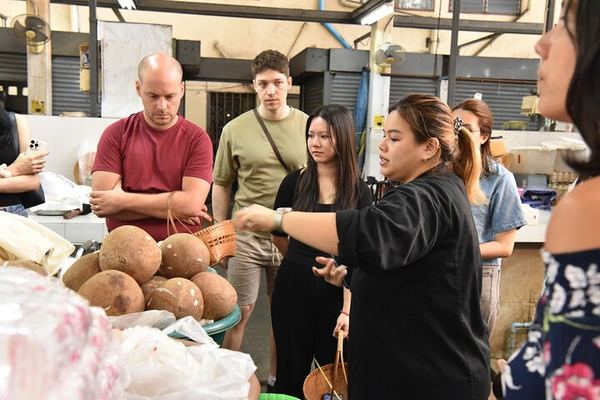
Suan Phlu Market Cooking Class in Sathon: Four Thai Dishes
The market is one minute from the kitchen, so every class gets the walk, morning, afternoon or evening. Four Thai dishes, each eaten as it comes off the heat.
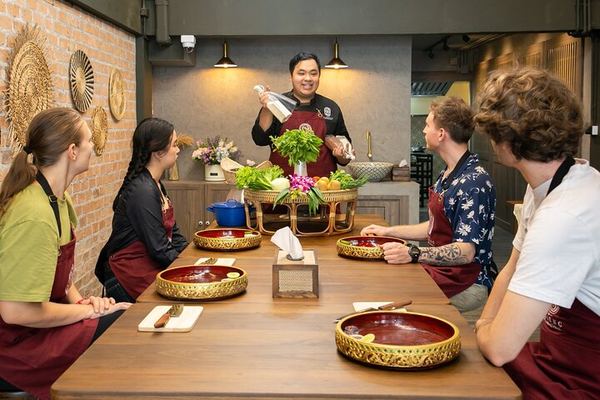
Thai Cooking Class with a Tuk Tuk Ride to the Big Market
A third-generation cooking instructor, a tuk tuk to the largest fresh market in the city, and four Thai dishes cooked and eaten one at a time. Six places.
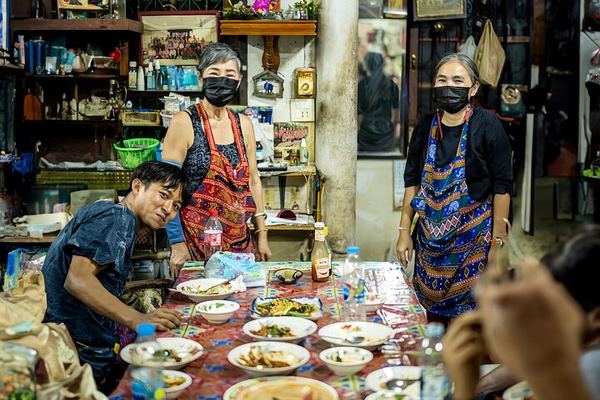
Thonburi by Bike: Hidden Bangkok Food Ride with Five Snacks
Four and a half hours cycling the Thonburi backstreets: five street food snacks, a meal at Khlong Bang Luang, temples, and the train market at Talad Plu.
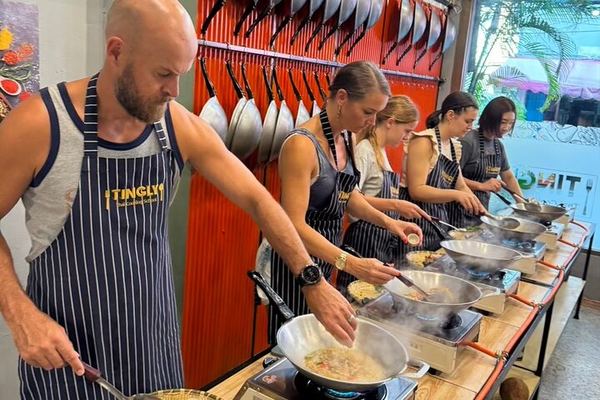
Tingly Thai Cooking Class: Tom Yum, Pad Thai and Mango Sticky Rice
Wat Kheak market at half past eight, then tom yum kung, pad thai kung, a curry that changes with the day, and mango sticky rice. Recipe book to take home.
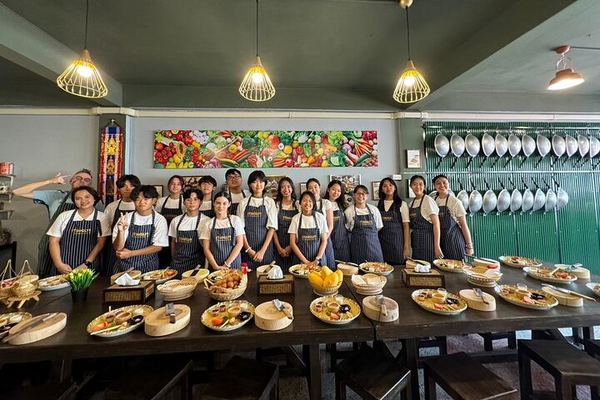
Tingly Thai Cooking School: Morning, Afternoon or Evening Class
The same four dishes at 8.30, 1pm or 6pm: tom yum kung, pad thai kung, a curry set by the weekday, and mango sticky rice. Only the morning goes to the market.
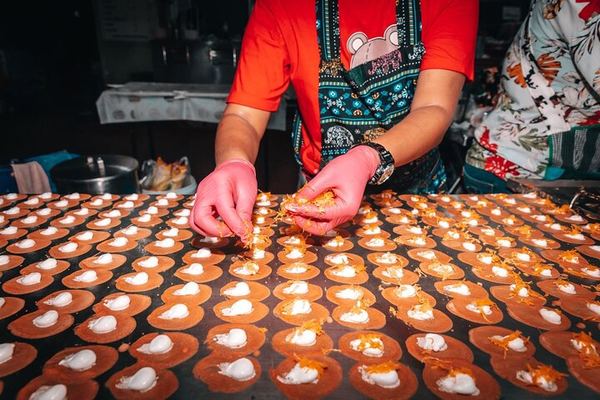
Yaowarat Backstreets Food Tour: 15 Tastings for Eight Guests
Nine stops through Bangkok's Chinatown alleys, two of them Michelin-listed, with chive dumplings, satay, braised pork and poh taek soup. Eight guests only.
Ratings collected by Viator and Tripadvisor
The fork does not go in your mouth
Thais eat with a spoon and a fork, and the fork is a tool for loading the spoon. It does not go into your mouth. This is not a rule anyone will correct you on, and nobody will mind, but it is the single most visible marker of someone who has just arrived.
Chopsticks are for noodle soups and for Chinese-Thai food, which is why they appear in Chinatown and not with a plate of curry and rice. Sticky rice, in the north and northeast, is eaten with the fingers: you take a small amount, compress it into a ball against your palm, and use it to pick up whatever is next to it.
The second convention matters more for your enjoyment. Thai food is shared and eaten simultaneously, not in courses. Everything arrives when it is ready, is placed in the middle, and each person keeps a plate of rice. Ordering four dishes for four people and expecting them to arrive in sequence is a European habit that produces confusion in a Thai kitchen.
| Situation | What Thais do | Why |
|---|---|---|
| Rice and curry | Spoon in the right hand, fork in the left to push food onto it | The fork is a loader, not a utensil to eat from |
| Noodle soup | Chopsticks and a spoon | The Chinese-Thai dishes kept Chinese tools |
| Sticky rice | Fingers, right hand, rolled into a ball | Northern and northeastern habit, and it works better |
| Ordering for a group | Several dishes to share, plus one plate of rice each | Courses are not a Thai idea; everything lands together |
| Saying you like it spicy | Say phet noi, a little spicy, and work up | Thai spicy is a different scale, and there is no going back |
| The ice in your drink | Drink it | Tube ice with a hole through it is factory made and safe |

Four flavours, adjusted at the table
Thai cooking works on the balance of four tastes: salty, sour, sweet and hot, with bitter as an occasional fifth. That balance is not fixed by the cook. On almost every table in the country there is a caddy of four condiments, the phrik nam pla and the sugar and the vinegar with chilli and the dried chilli flakes, and you are expected to use them.
This surprises people who have been taught to treat a chef's seasoning as final. In Thailand a noodle dish arrives deliberately underseasoned, because the last adjustment belongs to the person eating it. A guide who explains that caddy in the first ten minutes has already earned a fair part of their fee.
The mortar is the technique
If a cooking class teaches you one thing that changes how you cook at home, it will be the mortar. Thai curry paste is not chopped or blended; it is pounded, in a heavy granite mortar, in an order that matters: the driest and toughest first, the wet aromatics last. The pounding ruptures cells rather than cutting them, which releases oils that a blade leaves inside, and the difference in the finished curry is not subtle.
The same tool makes som tam. The name says so: tam means to pound, and som means sour. Green papaya, long beans, tomato, garlic, chilli, lime, fish sauce and palm sugar go into a tall clay mortar and are bruised rather than crushed, so the papaya stays crunchy while taking on everything else.
Nine of the fourteen classes on this site include a market visit before the pounding starts, which is the right order: you cannot understand a paste until you have handled the twelve things going into it.
Where the street food is allowed to be
Bangkok's street vendors are not a fixed institution. Since 2016 the city authorities have cleared stalls from a number of major streets on pavement-obstruction grounds, in a programme that produced a great deal of international coverage, some of it announcing the end of Bangkok street food altogether.
That did not happen. What happened is more particular: certain streets were cleared, and certain areas were confirmed as places where vending continues, Yaowarat in Chinatown among them. The effect on a visitor is that the food is now more concentrated than it was, and the districts that kept their vendors are busier than ever.
It is worth knowing because it explains the shape of the catalogue. Most of the street food listings on this site are built around markets and Chinatown rather than around a general wander, and that is a response to where vending is now secure.
When to come
Bangkok has three seasons and only one of them is comfortable for walking around eating. November to February is the cool dry season, which in Bangkok means low thirties rather than high thirties, and it is when the evening food streets are at their best. March to May is the hot season and genuinely punishing: a four hour walking tour in April is an endurance activity. June to October is the rainy season, which is less of a problem than it sounds because the rain arrives in heavy bursts rather than all day.
The practical adaptation the operators have made is timing. Most street food tours here start in the late afternoon or evening, which is both when the stalls open properly and when the heat becomes bearable.
| 1 | 2 | 3 | 4 | 5 | 6 | 7 | 8 | 9 | 10 | 11 | 12 |
Why only Bangkok
Chiang Mai has a strong case for a category of its own: a distinct northern cuisine, a well established cooking school scene, and a night market culture that is not a copy of Bangkok's. It is not here yet, and the reason is depth rather than quality. Twenty-five products in one city allow a real comparison; a dozen in a second city would produce a page that looks thin next to it.
What is on this site is Bangkok, split into street food and cooking classes, with the honest caveat that the split is porous: nine products appear under both headings because they are genuinely both.
Questions about eating in Thailand
Is Thai street food safe?
Broadly, yes, and the usual rules apply: choose stalls with turnover, eat what is cooked in front of you, and be sensible with anything that has been sitting out. Ice is generally fine in Bangkok, particularly the tube ice with a hole through the middle, which is factory produced. Guided tours use vendors they visit weekly, which is part of what you are paying for.
How spicy is spicy?
Hotter than the scale you are used to, and asking for very spicy as a test of character is a decision you will regret for the rest of the meal. Say phet noi, a little spicy, and adjust upwards with the chilli on the table. Thai kitchens are used to the request and nobody thinks less of you for it.
Street food tour or cooking class?
They cost about the same here, which is unusual: the medians are 37 and 35 EUR. Take the tour if you want to be shown the city and taught how to order; take the class if you want the technique, particularly the mortar. Nine products are both, starting at a market and ending in a kitchen, and those are the best use of a single morning.
What is the tour with 4,350 reviews and a 4.5 rating?
A half day trip to the floating market and the railway market, both outside Bangkok. It is the most reviewed product in the Thai catalogue and it carries the lowest rating on the page. Both facts follow from the same thing: it is a coach excursion to two heavily visited attractions, sold in volume, and it is not a street food tour of Bangkok in any meaningful sense. On its own it moves the country's weighted rating from 4.94 to 4.82.
Do I tip?
Not required and not expected at street stalls. In restaurants, rounding up or leaving small change is normal and appreciated. On a guided tour, tipping the guide is common practice but entirely optional, and the price you paid already covers the work.
Can vegetarians eat Thai street food?
With care. Fish sauce and shrimp paste are in a great many dishes that contain no visible animal, including som tam and most curry pastes. The useful phrase is jay, which refers to a strict Buddhist vegan style of cooking and is understood at stalls displaying a yellow and red sign. Cooking classes handle this much better than street tours can.
Data verified on. Prices, ratings and review counts read from the 34 Thai listings on this site on 4 September 2026. Street vending policy from Bangkok's published pavement clearance programme since 2016.