

Rome Food Tours and Cooking Classes
Thirty-four experiences, 66,840 reviews, and six of the twenty walking tours go to Trastevere. Rome is the one city here where almost nothing leaves the city.
Roman cooking is narrower than most people expect and better for it. Four pasta dishes, built from three ingredients between them. A tradition of offal that came out of a slaughterhouse. Artichokes for two months of the year. It is a cuisine of a working city rather than a court, and once you see that shape, the food stops being a list and starts making sense.
The catalogue is unusually concentrated: five neighbourhoods carry almost all of it, and the choice between them is the choice you are actually making.
Choose a destination in Rome
-
Rome Food Tours
Rome food walks from 31 EUR, median 82. Six go to Trastevere, three to the Jewish Ghetto. How many tastings to expect and which listings are not walks at all.
20 experiences -
Rome Cooking Classes
Rome cooking classes from 29 EUR, median 56. Fettuccine, ravioli and tiramisu almost everywhere: what the class actually teaches, and how to pick between…
14 experiences


Food Tours Experiences in Rome
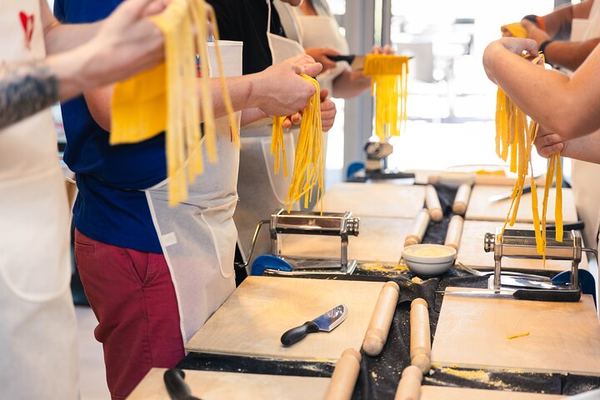
A Bench Each, a Tiramisù You Top Yourself
Three hours over one of Rome's biggest food markets, a workstation each, fettuccine and ravioli by hand, a tiramisù you finish yourself, unlimited wine. €59.
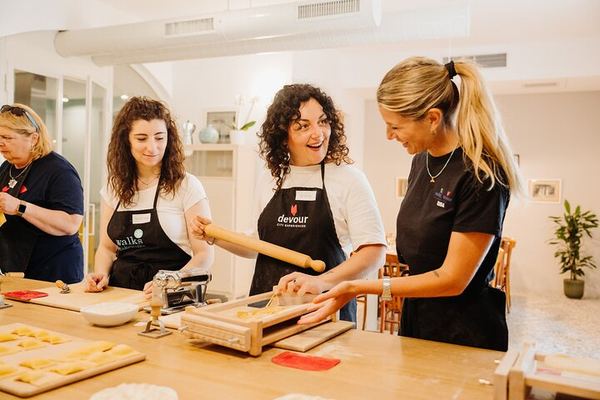
A Kitchen Reserved for Your Group, and a Gelato Demo
Prosecco, cured meats and cheese first, then fettuccine and ravioli with a red and a white sauce, a gelato demonstration while the pasta dries, and dinner. €55.
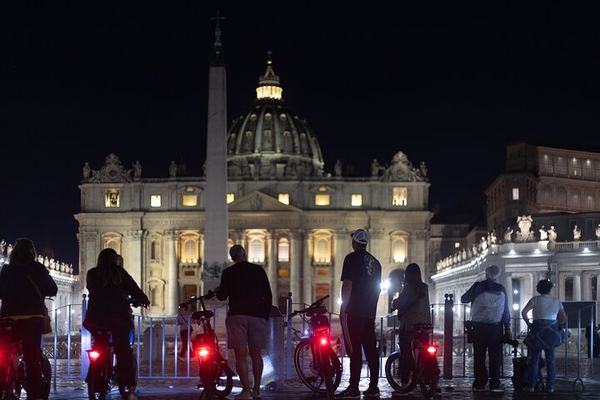
An Aperitivo, an E-Bike, and a Terrace Over the Colosseum
An aperitif by Santa Maria Maggiore, then four hours on an e-bike through Monti, the Campidoglio, St Peter's Square and the Trevi. Ten riders per guide. €59.
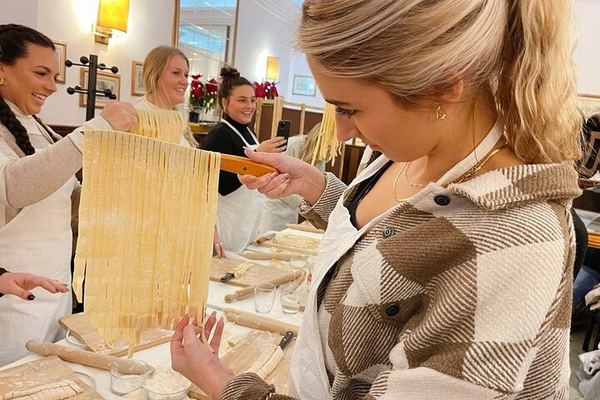
A Pasta Class With Bernini's Fountain Out the Window
Two hours in a restaurant on the square itself, making fettuccine with the fountains and the church in view, then eating them with your chosen sauce. €50.
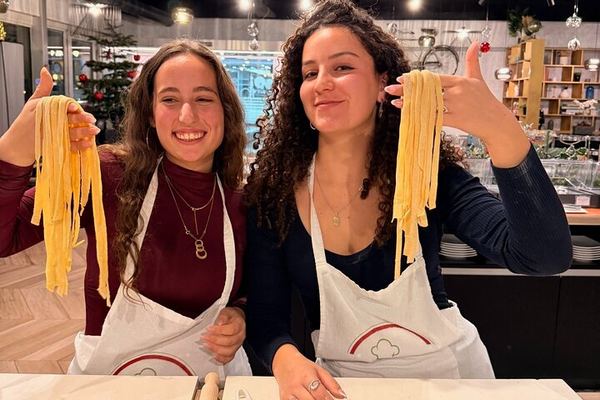
A Prosecco on Arrival, a Limoncello on the Way Out
Two and a half hours off Via Nazionale: a welcome prosecco, two fresh pasta shapes made by hand, tiramisù, and a limoncello or coffee to close. €55.
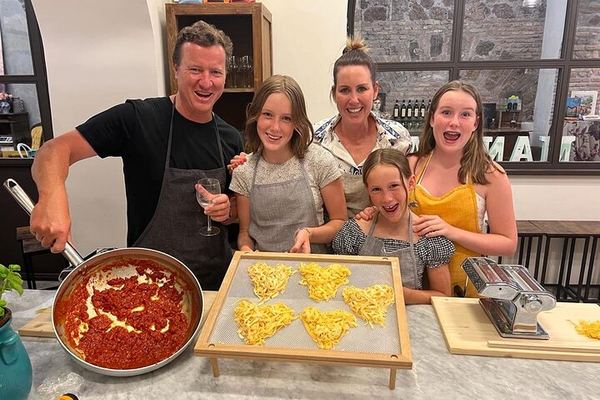
A Tomato Sauce Borrowed from Dolce & Gabbana
Handmade fettuccine, a tomato sauce the chef traces to Dolce & Gabbana, and gelato you make yourself, in a pizzeria a few streets from the Vatican walls.
A Trattoria Cut Into a Hill of Broken Amphorae
Rome's first food tour, running since 2011: bruschetta built in the market, carbonara, amatriciana and cacio e pepe, and a 105-year-old gelateria.
A Wine Cellar 160 Years Older Than the Colosseum
From the Tiber island across Ponte Cestio into Trastevere: porchetta on white pizza, supplì, a sit-down pasta dinner with amatriciana and gricia, then gelato.
Baccalà or Supplì, Then a Three-Course Dinner and a Limoncello
A century-old deli for prosciutto and pecorino, then baccalà or supplì eaten standing, a three-course Roman dinner with wine, and organic gelato to close.
Buy the Ricotta at the Butcher, Then Cook It Down the Street
Porchetta and wine at a Trastevere butcher while the chef buys the eggs, Parmigiano and ricotta, then pasta chitarra and lemon ravioli in a trattoria.
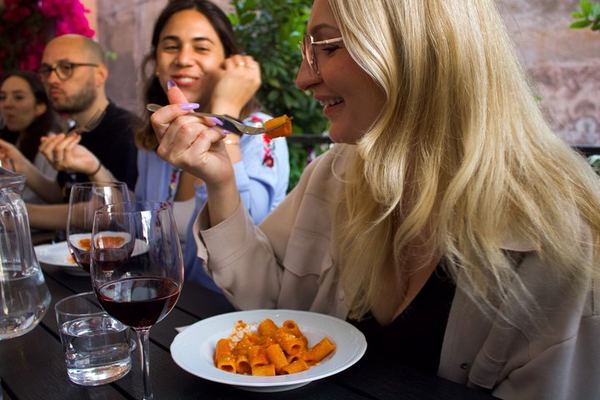
Every Table Booked Before You Arrive
Ten or more tastings across Trastevere with every table booked in advance: cured meats, supplì, Roman pizza with a cold beer, a sit-down course, then gelato.
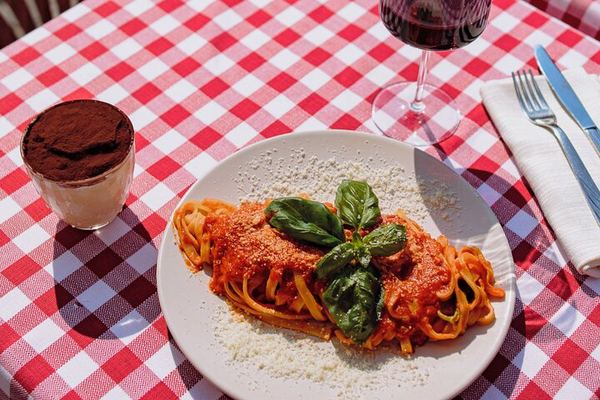
Fettuccine and Tiramisù, Ten People, One Square
Two and a half hours in a restaurant on the square, making fettuccine and tiramisù with a view of the fountains, then eating them with appetisers and a drink.
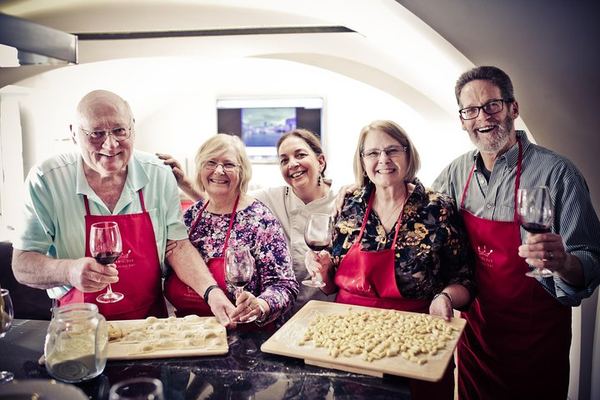
Five Hours: The Market First, the Kitchen After
Five hours and eight people: shop the markets and food shops of the centre with a chef, learn what to look for, then cook and eat what you bought, with wine.
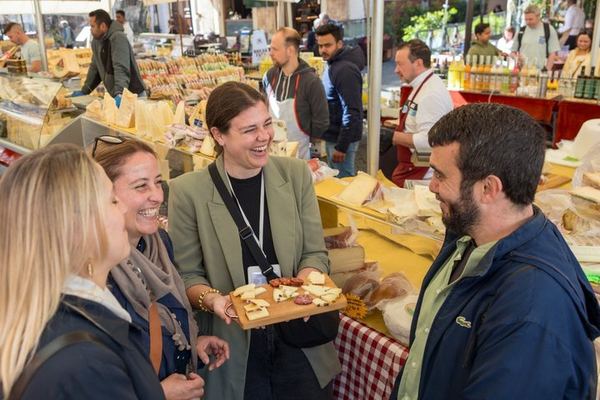
From Giordano Bruno's Statue to a World-Champion Gelato
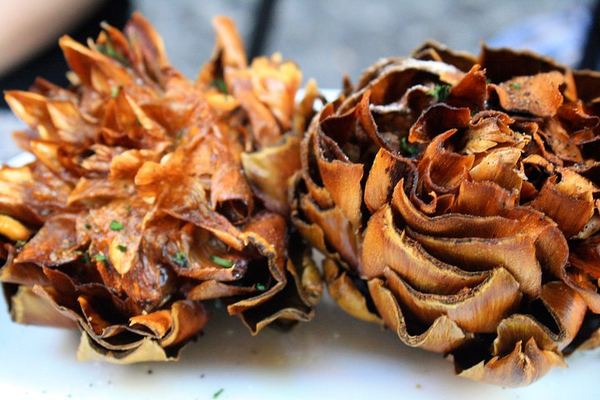
An 1890 norcineria, Rome's oldest bakery, artichokes by the Portico d'Ottavia, cacio e pepe in Trastevere and a 2020 gold-medal gelato. Twelve guests.
From the Turtle Fountain to Cacio e Pepe by the Pantheon
Antipasti and wine at the Turtle Fountain, a Ghetto tavern, pizza by the slice with beer at Largo Argentina, cacio e pepe by the Pantheon, then gelato. €179.
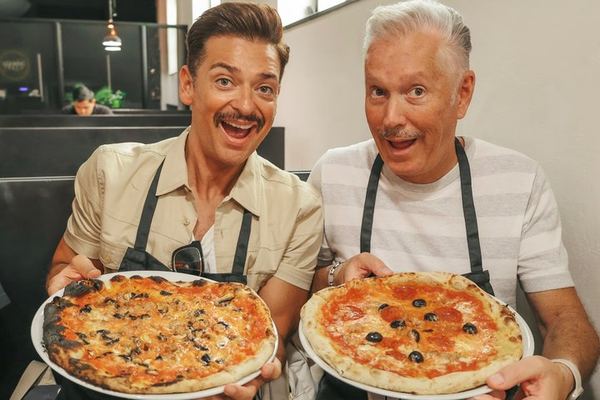
Mozzatura, a Six-Hundred-Year-Old Way to Cut Dough
Make the dough, cut it the old way, top a Margherita and bake it in the oldest wood-fired oven in Prati. Tiramisù or gelato after, with wine that keeps coming.
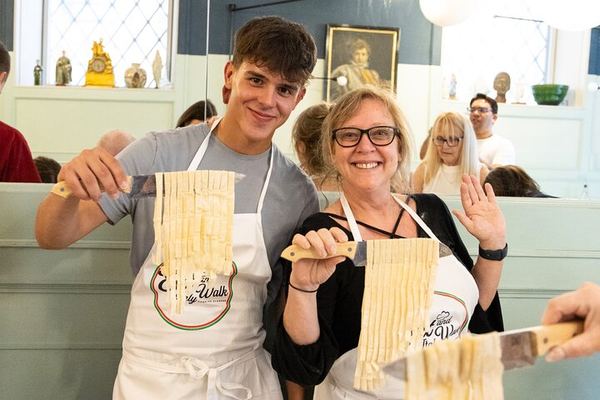
One Pasta Shape, Three Sauces to Pick From, Two Hours
Two hours near Piazza Navona: make fettuccine and tiramisù from scratch, then choose amatriciana, cacio e pepe or tomato and basil. Wine and limoncello. €42.
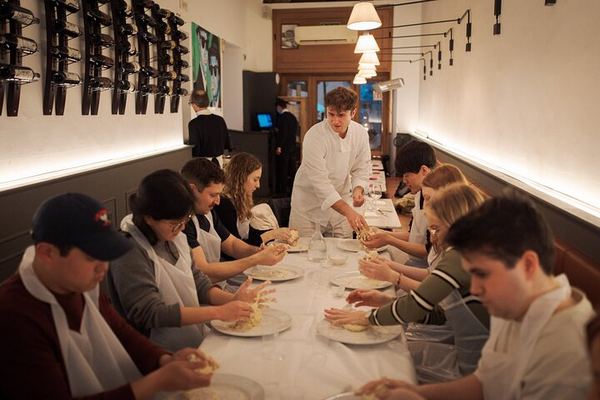
Pizza Beside Rome's Talking Statue
Two hours in an osteria at the top of Via del Governo Vecchio, making real Italian pizza and eating it with wine or beer and a limoncello. Ten people. €38.40.
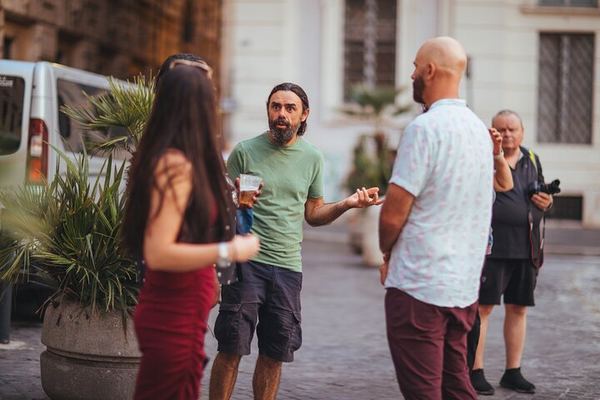
Prosecco in a Golf Cart, Two Bars, and the Aventine at Night
Three hours in a six-seat electric cart with prosecco on board and two bar stops for artisanal beer, wine and snacks. Colosseum, Circus Maximus, Navona, Trevi.
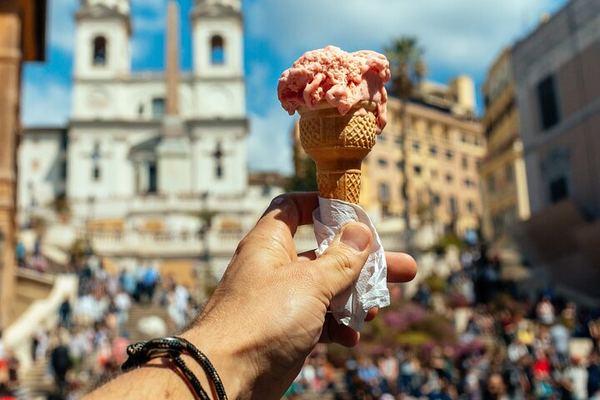
Six Tastings in Trastevere or Ten from Campo de' Fiori
Your party and one local guide, nobody else. Book six tastings starting in Trastevere or ten starting at Campo de' Fiori, with the city covered in between.
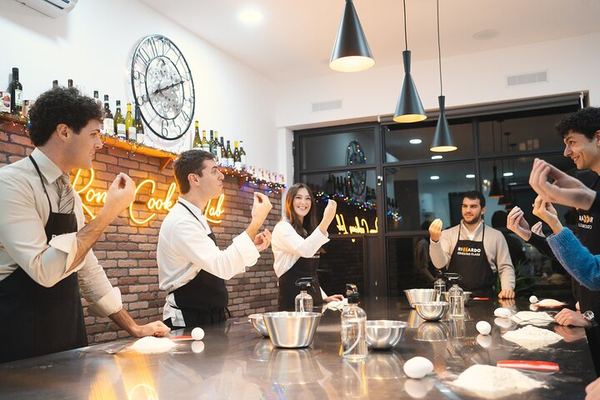
Spaghetti Cut on a Guitar, and All Three Sauces Made by You
Ravioli, fettuccine and spaghetti alla chitarra, each with an iconic Roman sauce you make from scratch rather than watch. Ten people, wine throughout. €85.
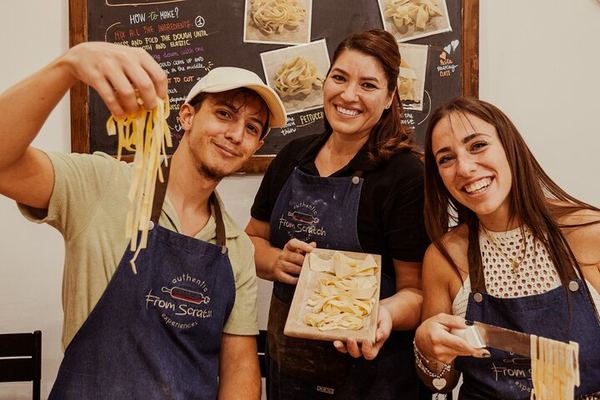
Take the Train to Frascati, Make Pasta in a Family Cellar
A short train ride into the Castelli Romani, a walk through the town, two family wines with meats and cheese, then pasta by hand and a visit to the wine cave.
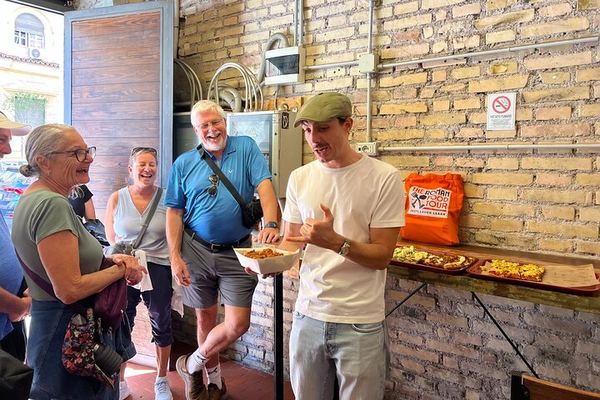
The Biggest Market in Rome, Tasted Stall by Stall
Four hours and six venues in Prati: coffee, Bonci's pizza, truffles and 30-year balsamic, several stalls in Rome's largest market, then pasta and tiramisù.
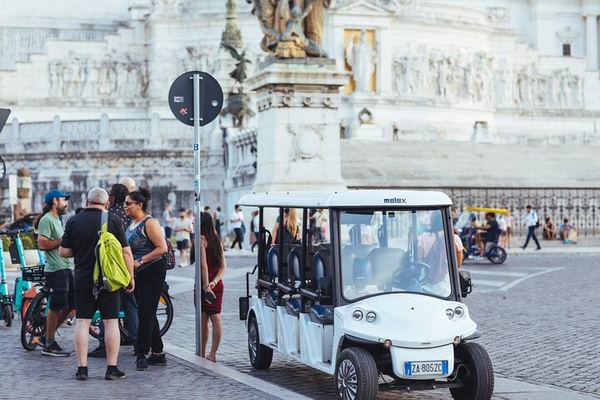
The Cart Is Yours, and So Is the Route
Three hours in your own electric cart with a guide who drives: Colosseum, Circus Maximus, Ghetto, Navona, the Spanish Steps from above and Castel Sant'Angelo.
Ratings collected by Viator and Tripadvisor
Five neighbourhoods, and what each one is for
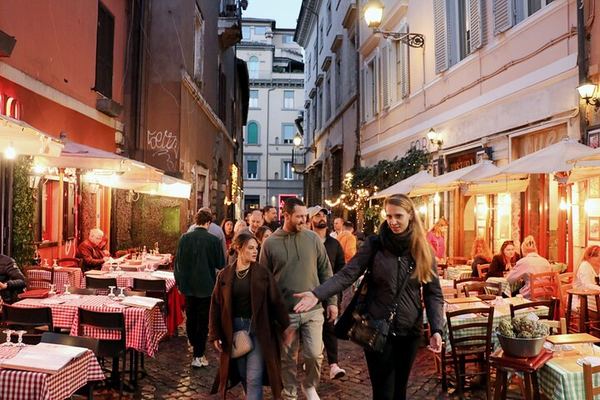
Rome's food tours are neighbourhood tours. The city is too spread out to walk between districts in an evening, so what you book is three or four hours inside one of them, and they are not equivalent.
| Area | Listings | What it is | Best for |
|---|---|---|---|
| Trastevere | 6 | Medieval lanes across the river, restaurants and wine bars, busy after dark | An evening walk with several sit-down stops |
| Jewish Ghetto | 3 | The oldest continuously inhabited quarter of its kind in Europe, and its own kitchen | Fried artichokes and a food tradition found nowhere else |
| Campo de' Fiori and centro | 3 | Morning market, then the streets around Piazza Navona | A daytime walk combined with sightseeing |
| Testaccio | 2 | Working class quarter built around the old slaughterhouse, with the city's best food market | The food Romans actually eat, and the fewest visitors |
| Prati and Trionfale | 1 | Residential, north of the Vatican, and home to the largest covered market in Rome | Anyone staying near the Vatican who wants to eat well |
| Cooking classes, various | 14 | Mostly central, near Piazza Navona, sometimes with a market visit | Learning four pasta shapes and a tiramisu |

The artichoke is two dishes and one argument
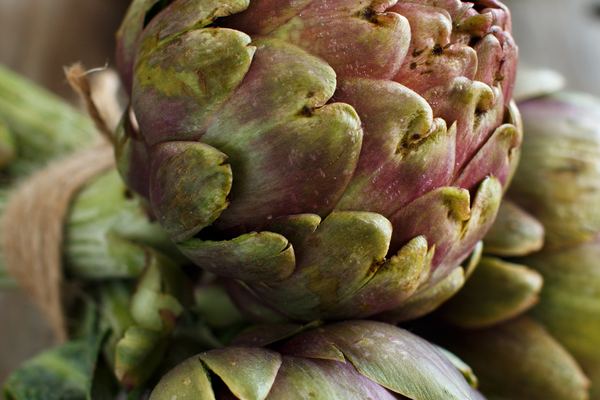
The carciofo romanesco has a protected geographical indication and a season that runs from about February to April. In those weeks Rome eats it two ways, and the difference is a small piece of history.
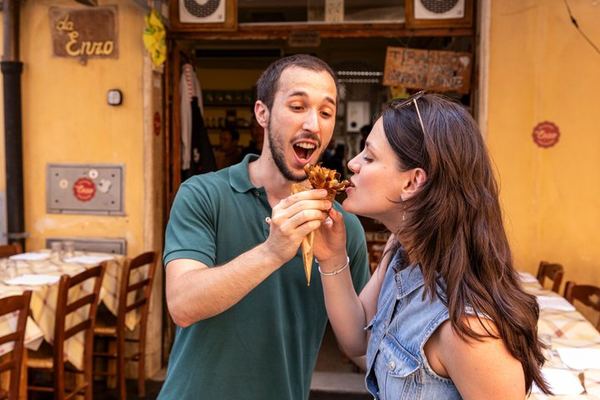
Carciofi alla romana are braised whole with mint and garlic, stem upwards, and served soft. Carciofi alla giudia come from the Jewish Ghetto: the artichoke is flattened, deep fried twice, and arrives looking like a bronze flower with leaves that shatter. The Ghetto was established in 1555 and its kitchen developed inside those walls, which is why this dish exists in Rome and effectively nowhere else in Italy.
Outside the season you will still be offered them. They will be from elsewhere, and any guide worth their fee will tell you so.
Four pastas, three ingredients
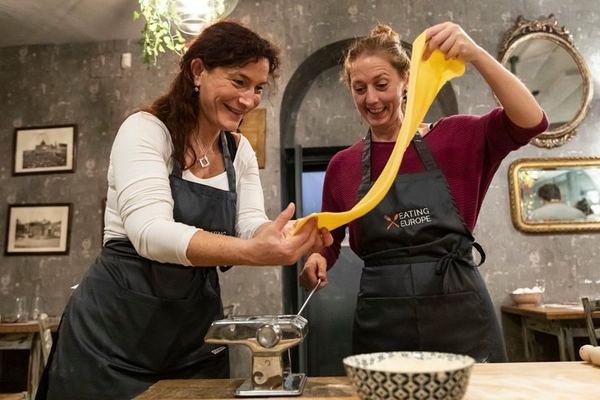
The classic Roman pastas are related to one another in a way that becomes obvious once someone lays them out, and every good cooking class in this city does exactly that.
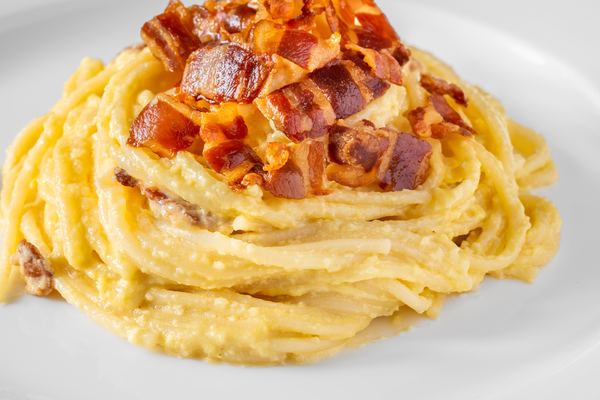
Cacio e pepe is pecorino romano, black pepper and pasta water, emulsified. That is the whole dish, and it is the hardest of the four because there is nothing to hide behind. Gricia adds guanciale, cured pork jowl, to the same base. Amatriciana adds tomato to the gricia. Carbonara adds egg yolk instead of the tomato. Four dishes, one family, and each addition is a single ingredient.
Two things a Roman kitchen will tell you and a home cook usually gets wrong. Guanciale is not pancetta and not bacon: it is fattier, cured differently, and it renders into the sauce rather than crisping. And there is no cream in carbonara, ever, in any Roman restaurant that would admit to it.
On the origins, a note of caution, because guides tell these stories with more confidence than the evidence supports. The carbonara-and-American-soldiers story is not proven. The first printed recipe is American, from Chicago in 1952; the first Italian one appeared in 1954 and used pancetta, gruyère and garlic, with guanciale arriving in 1957. And amatriciana had onion in it in 23 of 30 published recipes between 1914 and 2007, so the modern insistence that it never did is a recent purism rather than a tradition.
The fifth quarter
Testaccio grew up around the city's slaughterhouse, which operated there from 1890, and the workers were partly paid in what the four quarters of the animal left behind. That is the quinto quarto, the fifth quarter, and it is the root of a set of dishes that still define the neighbourhood: coda alla vaccinara, oxtail braised with celery and a little cocoa; trippa alla romana; pajata, which is the intestine of a milk-fed calf, cooked with the milk still inside it.
This is not obligatory eating and no guide will force it on you. But it is the most distinctive thing Rome has, and the two Testaccio listings on this site exist because a market and a neighbourhood built on offal is a more interesting three hours than another walk past the Pantheon.
The Testaccio market itself moved to a purpose-built site on 2 July 2012, taking the traders with it. It is the best food market in Rome and it is almost entirely local: Monday to Saturday, 7:00 to 15:30, closed Sundays.
Two of these are golf carts
Filed under food tours, at 270 EUR at the top end, are two private golf cart tours of Rome with food and wine included. They are sightseeing products with an aperitivo attached: you see a great deal of the city, you stop for something to eat, and the vehicle is the point.
There is nothing wrong with them, and for anyone who cannot walk three hours on cobbles they are a genuine solution. They are simply not what most people mean by a food tour, and at 270 EUR they are the most expensive Roman listing on this site. Five more products filed under food tours are cooking classes, and one is an e-bike tour where the food is optional.
A useful filter for Rome: if the title names a neighbourhood, it is a walk. If it names a vehicle, the vehicle is the product.

Eating in Rome without a guide
The tours are worth it and you will still eat twenty other meals here alone. Five things that help.
The cover charge is illegal in Rome. This is the most useful line on the page and almost no visitor knows it. A regional law of Lazio, in force since 2019, states that in food service it is forbidden to apply any additional cost for the coperto, with fines from 2,500 to 7,500 euros. Rome is not like the rest of Italy in this: elsewhere pane e coperto is a normal charge of a euro or three a head, and here it should not appear on your bill at all. Bread may be charged as a listed item if you ordered it; the table may not.
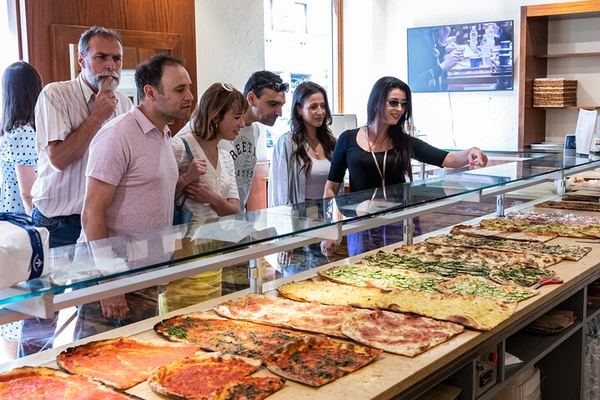
Pizza al taglio is sold by weight. You point, they cut, it is weighed, and you pay by the gram. This is why a slice can cost anything from two to six euros: the price is honest, the portion is your choice, and asking for less is normal. Expect roughly 20 to 28 euros a kilo at the serious bakeries.
Coffee at the counter. Around 1.20 euros in Rome, and several times that at a table in a piazza. Both prices are legal and both are posted.
The gelato test. Bright green pistachio and mounded, sculpted tubs are signs of industrial paste and added air. Covered metal containers, muted colours and a shorter list mean someone made it that morning.
One street back. In Trastevere and around Campo de' Fiori the difference between a tourist trattoria and a good one is often thirty metres and no view.
Questions about food tours in Rome
Which neighbourhood should I choose?
Trastevere for an evening with several sit-down stops, and it has the most listings. Testaccio if you want the market and the food Romans eat, with the fewest visitors around you. The Jewish Ghetto for the fried artichokes and a kitchen you cannot meet anywhere else. Campo de' Fiori if you want a morning that doubles as sightseeing.
How much should a Rome food tour cost?
The median is 82 EUR and most walks sit between 62 and 104. Below 40 you are looking at a cooking class rather than a walk. Above 150 you are buying privacy or a vehicle: the two golf cart tours reach 270 EUR, which is the most expensive listing in the city.
Should there be a cover charge on my bill?
Not in Rome. Lazio's regional law forbids charging for the coperto in food service, with fines of 2,500 to 7,500 euros, and it has been in force since 2019. That makes Rome different from most of Italy, where pane e coperto is normal and legitimate. If it appears, you are entitled to question it.
Are the cooking classes any good?
They carry 30,550 reviews at a weighted 4.92, which is a large sample agreeing. The format is standardised, usually fettuccine, ravioli and tiramisu, and the most reviewed class in the city has 9,596 reviews on its own. Because the format is so uniform, the teacher is the variable, not the syllabus.
When are the artichokes?
Roughly February to April for the Roman variety, which carries a protected geographical indication. Outside that window you will still find them on menus, imported or from elsewhere in Italy. It is the one Roman ingredient with a season worth planning a trip around.
Is there anything for a vegetarian?
Yes, more than the offal reputation suggests. Cacio e pepe, the artichokes, fried courgette flowers, pizza bianca and much of the market food are all vegetarian. Guanciale is the obstacle in three of the four classic pastas, so say so at booking and the route will change.
Do any Rome tours leave the city?
Almost none, and that is unusual. One cooking class goes to Frascati, in the hills south east of Rome, reached by train. Everything else stays inside the city, which is the opposite of Florence, where sixteen of thirty-four listings head into the countryside.
Morning or evening?
Evening for Trastevere, which comes alive after dark and is where most of the walks run. Morning for anything involving a market, because Testaccio closes at half past three, and Campo de' Fiori and Trionfale wind down by early afternoon. In July and August, morning for everything.
Data verified on. Prices and reviews read from the 34 Rome listings on this site on 4 September 2026. The coperto ban is Lazio regional law 22/2019, article 75; Testaccio market hours from the market.