

Cooking Classes in Rome: Pasta, Ravioli and Tiramisu
Fourteen classes, a median of 56 EUR, and 30,550 reviews. Nearly all of them teach the same three things, which means the only variable left is who is teaching you.
This is the most standardised category on the entire site. Eight of the fourteen classes teach pasta, six teach tiramisu, and the most reviewed one, with 9,596 reviews on its own, is called three in one: fettuccine, ravioli, tiramisu. Two separate operators sell an identical format of pasta plus three spritz. The syllabus has converged.
When the product is this uniform, the usual advice about reading the itinerary stops working. Something else has to do the choosing.
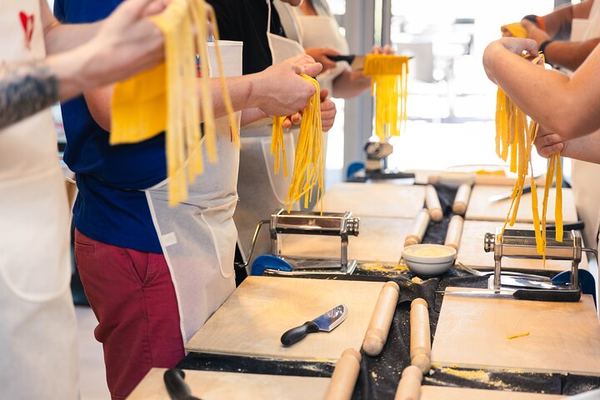
A Bench Each, a Tiramisù You Top Yourself
Three hours over one of Rome's biggest food markets, a workstation each, fettuccine and ravioli by hand, a tiramisù you finish yourself, unlimited wine. €59.
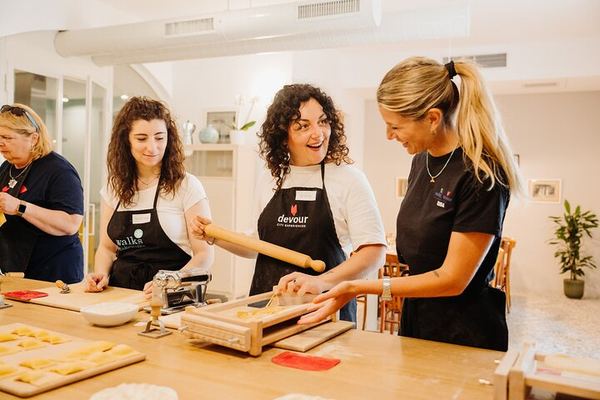
A Kitchen Reserved for Your Group, and a Gelato Demo
Prosecco, cured meats and cheese first, then fettuccine and ravioli with a red and a white sauce, a gelato demonstration while the pasta dries, and dinner. €55.
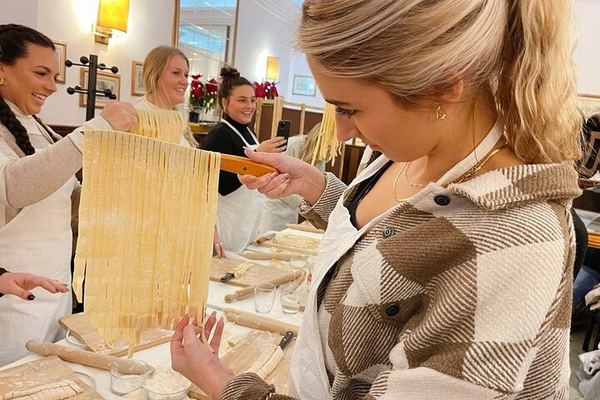
A Pasta Class With Bernini's Fountain Out the Window
Two hours in a restaurant on the square itself, making fettuccine with the fountains and the church in view, then eating them with your chosen sauce. €50.
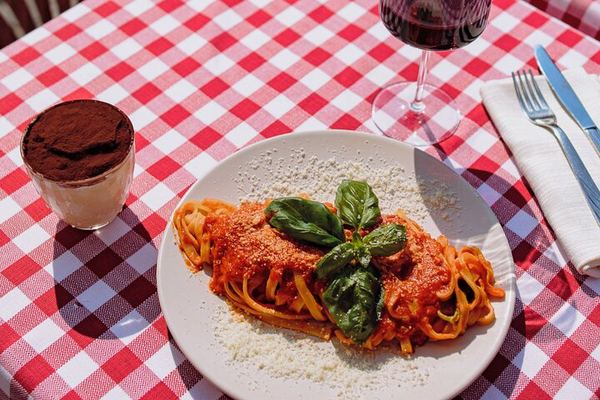
Fettuccine and Tiramisù, Ten People, One Square
Two and a half hours in a restaurant on the square, making fettuccine and tiramisù with a view of the fountains, then eating them with appetisers and a drink.
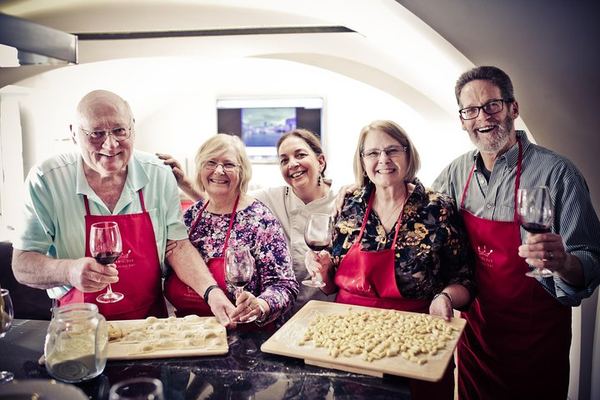
Five Hours: The Market First, the Kitchen After
Five hours and eight people: shop the markets and food shops of the centre with a chef, learn what to look for, then cook and eat what you bought, with wine.
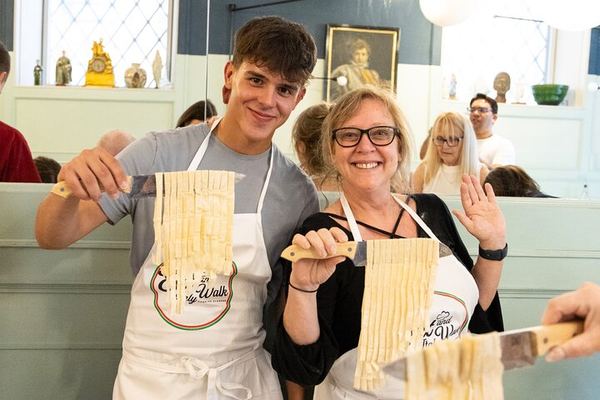
One Pasta Shape, Three Sauces to Pick From, Two Hours
Two hours near Piazza Navona: make fettuccine and tiramisù from scratch, then choose amatriciana, cacio e pepe or tomato and basil. Wine and limoncello. €42.
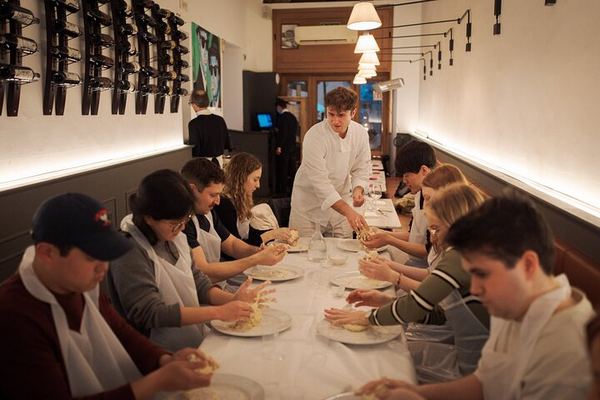
Pizza Beside Rome's Talking Statue
Two hours in an osteria at the top of Via del Governo Vecchio, making real Italian pizza and eating it with wine or beer and a limoncello. Ten people. €38.40.
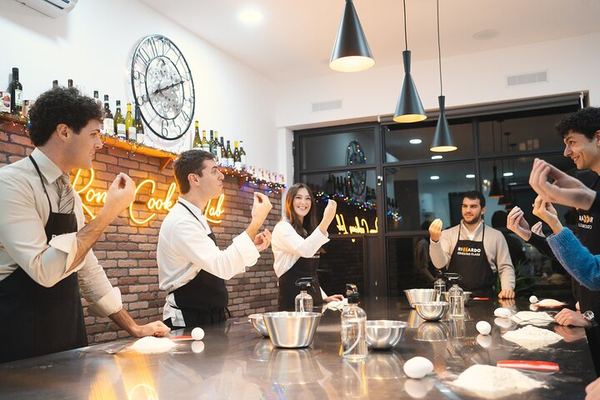
Spaghetti Cut on a Guitar, and All Three Sauces Made by You
Ravioli, fettuccine and spaghetti alla chitarra, each with an iconic Roman sauce you make from scratch rather than watch. Ten people, wine throughout. €85.
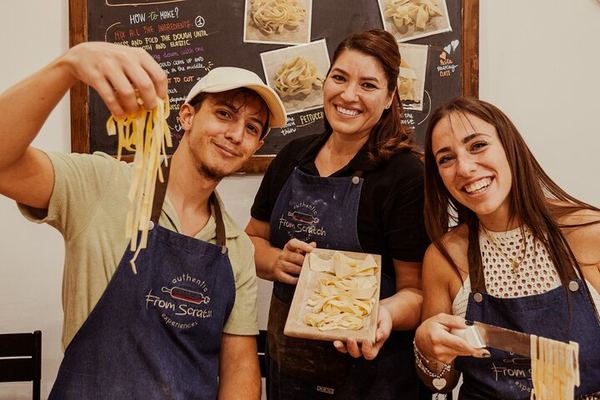
Take the Train to Frascati, Make Pasta in a Family Cellar
A short train ride into the Castelli Romani, a walk through the town, two family wines with meats and cheese, then pasta by hand and a visit to the wine cave.
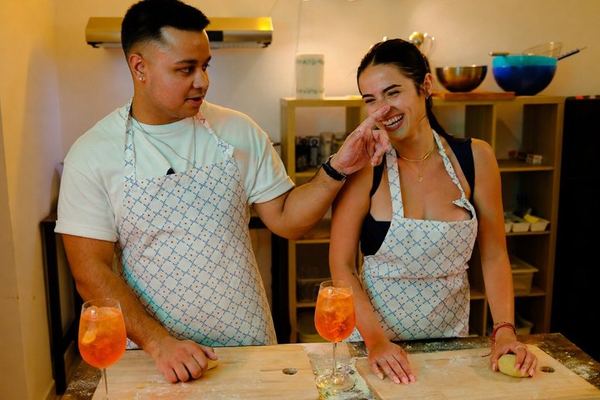
Three Spritzes, Alcohol-Free If You Want Them
Three hours with a chef and a mixologist: fresh pasta and sauces by hand, an Aperol, a Hugo and a limoncello spritz mixed yourself, recipes as an ebook.
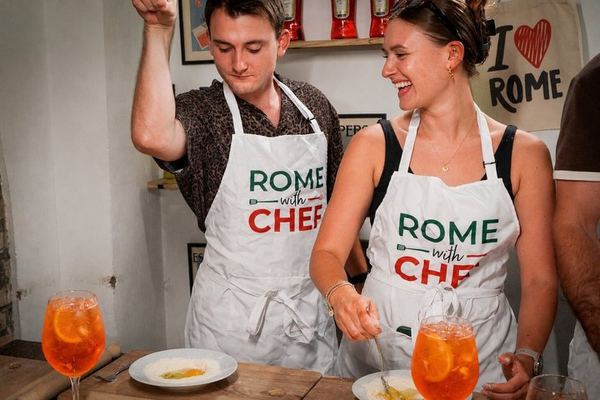
Three Spritzes While the Dough Rests
A chef and a mixologist in the same room near Monti: make fresh pasta and its sauce, mix an Aperol, a Hugo and a limoncello spritz, then eat and drink the lot.
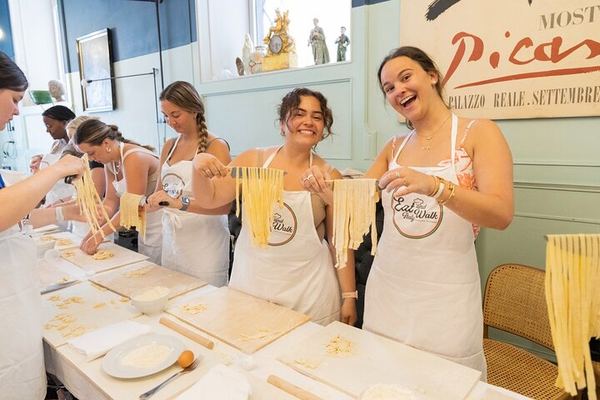
Two Pasta Shapes, One Sauce You Get to Choose
Three hours in a working restaurant off Piazza Navona: cut fettuccine, fill ricotta ravioli, build a tiramisù, then choose which Roman sauce goes on top. €52.
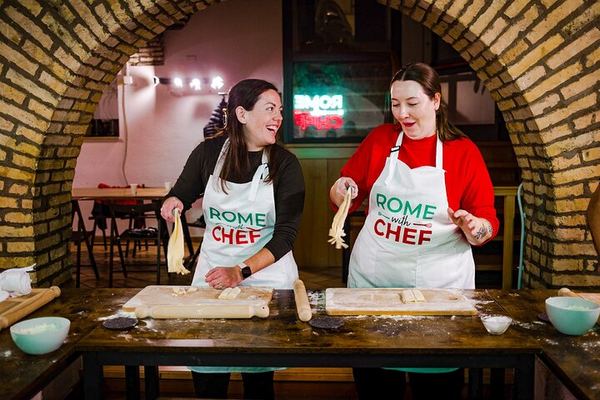
Two Proseccos, Two Wines and a Limoncello, Counted
Three hours in a Roman kitchen making handmade pasta, a carbonara or cacio e pepe sauce, and tiramisù, with two proseccos, two wines and a limoncello. €65.
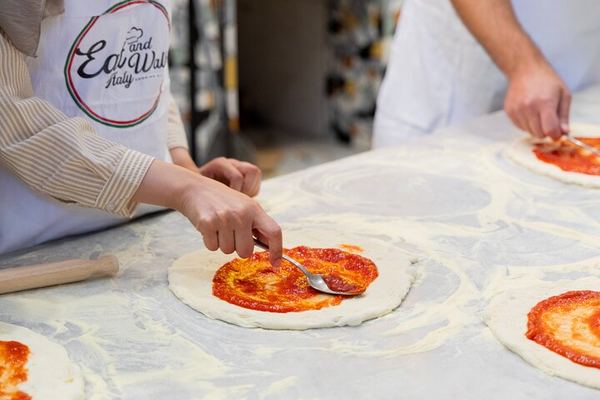
Your Own Pizza, Your Own Toppings, Then Tiramisù
Two and a half hours near Piazza Navona: stretch and top your own pizza, layer a tiramisù, then eat both as dinner with wine and a limoncello or coffee. €46.
Ratings collected by Viator and Tripadvisor
What you are really being taught
Behind the identical syllabus there is one genuine skill, and it is worth knowing what it is so you can tell whether you have been taught it.
Egg pasta is a ratio and a feel. Roughly one egg to a hundred grams of flour, worked until it stops being sticky and starts being elastic, then rested. The rest is time. What a class should give you is the moment when the dough changes under your hands, because that is the only part a recipe cannot transmit. If you leave able to recognise it, the 52 euros did its job.
Rolling is where most people fail at home. A sfoglia rolled by hand with a long pin is thinner and rougher than a machine sheet, and sauce clings to it differently. Most Rome classes use a hand-cranked machine, which is honest and practical, and a few teach the pin. Ask which, if you care.
The sauces are physics. Carbonara is an emulsion of egg yolk, cheese and rendered fat, held together by pasta water and by keeping the pan off direct heat. Cacio e pepe is the same problem with fewer ingredients and no fat to help you. Every Roman class explains this, and it is the reason both dishes fail at home: too much heat, too fast.
| Taught | In how many | Why it recurs |
|---|---|---|
| Fresh egg pasta, usually fettuccine | 8 | The core skill, and the one people book for |
| Ravioli | 2 explicitly, more in practice | Uses the same dough, adds shaping and filling |
| Tiramisu | 6 | No cooking, no oven, and it travels home in a notebook |
| Pizza | 2 | Different dough entirely, and needs a hotter oven than a class kitchen has |
| Wine, often unlimited | 4 | Included at the table rather than taught |
| Spritz or limoncello | 3 | The aperitivo half. Two operators sell the identical pasta plus three spritz format |
| A market visit first | 2 | Only the two most expensive listings, at 195 EUR and near it |

The tiramisu question
Six of these fourteen classes finish with tiramisu, and it is a sensible choice: no oven, no timing pressure, and it is assembled rather than cooked, so a group of twelve can each build their own while the pasta water comes back to the boil.
One thing worth knowing, and worth asking about if it matters to you. Traditional tiramisu uses raw egg, whipped with sugar into the mascarpone. In a professional Italian kitchen the eggs are pasteurised; in a class they may not be. Anyone pregnant, or cautious about raw egg, should ask before the class rather than while holding a bowl of it. Most schools have a version without.
The four ingredients to bring home
Roman cooking has a very short shopping list, which is why it travels better than most Italian regional food. Four things do almost all of the work, and three of them fit in hand luggage.
Pecorino romano. Hard, salty sheep's cheese, and the one ingredient you cannot substitute: parmesan is cow's milk, milder and sweeter, and it makes a different dish. One curiosity worth knowing while you grate it: the protected designation covers all of Lazio, all of Sardinia and the province of Grosseto, and the consortium is based in Sardinia. Romano here means the method, not the place, and most of it is made on an island.
Guanciale. Cured pork jowl, fattier and more aromatic than pancetta and quite different from bacon, which is smoked and will ruin the dish. It renders into the sauce rather than crisping into it. If you cannot find it, use pancetta and accept that you have made something adjacent.
Black pepper, whole. Cacio e pepe is two ingredients and pepper is one of them, so pre-ground dust will not do. It is toasted briefly in the pan before the water goes in.
Bronze-drawn dried pasta. Not fresh, for these dishes: the Roman sauces cling to rough dried pasta made in bronze dies, and the packet will say trafilata al bronzo. It costs a little more and it is the cheapest upgrade available to a home cook.
What you do not need to buy is a pasta machine, unless the fresh egg pasta is what you came for. The four classic Roman pastas are all made with dried.
How to choose when the syllabus is identical
Four questions, in the order that changes the afternoon most.
How many people? The single biggest variable. A class of eight with individual stations and a class of twenty-four watching one demonstration are both sold as hands-on. The good listings state the maximum; the ones that do not are usually the larger.
Is there a market visit? Only the two most expensive listings include one, at around 195 EUR. That is a substantial premium over the 56 EUR median, and whether it is worth it depends on whether you would otherwise visit a Roman market at all. If you are already doing a food tour, you will have seen one.
Where is it? Three classes are near Piazza Navona, which is central and convenient. The cheapest, at 29 EUR, is in Frascati, half an hour out by train into the hills. That is a different afternoon entirely, and for the price, an interesting one.
Do you eat what you made, and with wine? On most of these, yes, sitting down, and four listings include unlimited wine. That converts a cooking lesson into dinner and explains why the median price is lower than a food tour: you are feeding yourself.
The single most useful question to ask an operator before booking: how many people will be in the class, and will each of us have our own station? Everything else on this page is roughly the same.
The 195 euro class and the 29 euro one
At the top, a class at 195.12 EUR includes a market visit and is described as an authentic Roman cooking class. It is three and a half times the median, which in this category buys a small group, a market hour and a longer session rather than a different curriculum.
At the bottom, 29.24 EUR gets you to Frascati by train, in the Castelli Romani, where the wine is white and the class is in a town rather than a city kitchen. It is the cheapest cooking class in Italy on this site by some margin, and the trade-off is an hour of travelling and a location that is not Rome.
Between them, eleven classes sit between 42 and 80 EUR doing broadly the same thing. That band is where the reviews matter, and where the differences are the teacher, the kitchen and the group size.
Questions about cooking classes in Rome
How long is a class?
About three hours, including eating what you cooked. The ones with a market visit run four to five. Most start in the late morning for a lunch class or around five for a dinner one.
Do I actually cook, or watch?
That depends entirely on the group size, which is why it is the question to ask. Eight to twelve with individual stations means you cook. Twenty means a demonstration with a turn at the machine. Both are sold as hands-on and the price does not reliably tell them apart.
What should I buy to take home?
Pecorino romano, guanciale, whole black pepper and a packet of bronze-drawn dried pasta. That is the entire shopping list for the four classic Roman dishes. Parmesan instead of pecorino, or bacon instead of guanciale, makes a different and lesser dish rather than an approximation.
Is wine included?
On most, and four listings specify unlimited wine with the meal. That is a real part of the value: you are getting a three hour class and dinner with wine for a median of 56 EUR, which is less than dinner alone in central Rome.
Will I be able to make this at home?
The pasta, yes, and it is the one thing worth taking away: flour, eggs, a rolling pin or a cheap machine, and the feel of a dough that is ready. The Roman sauces are harder than they look, because carbonara and cacio e pepe both depend on temperature control rather than ingredients. Tiramisu is straightforward everywhere.
Which is better, a class or a food tour?
The class is better value here: a median of 56 EUR against 82, and you eat a full meal with wine. The tour shows you the city. If you are in Rome for four days, do both; if you are here for two, the tour teaches you where to eat for the rest of your stay, which compounds.
Are they suitable for vegetarians or coeliacs?
Vegetarian, easily: the pasta, the ravioli filling and the tiramisu are all adaptable and most classes do it without comment. Coeliac is harder in a class built on wheat flour, though Italian kitchens take gluten intolerance seriously and some schools offer a gluten free dough. Ask when booking, not on the day.
Data verified on. Prices, ratings, review counts and syllabus contents read from the 14 listings on this page on 4 September 2026.