

Naples Food Tours and Pizza Classes
Thirty-two experiences, nothing above 150 euros, and the shortest tours on this site. Naples is the cheapest guided eating in western Europe here, at a median of 42.
Naples is the cheapest city in the Italian catalogue and the most specific. Nothing here costs more than 150 EUR. The street food tours have a median of 42 and run two and a half to three hours, which makes them the shortest on the entire site. In a city where a fried pizza costs less than a coffee in Florence, the tours have priced themselves accordingly.
It is also the Italian city where the tours are most honest about how long they will take, which turns out to correlate with a lot of other things.
Choose a destination in Naples
-
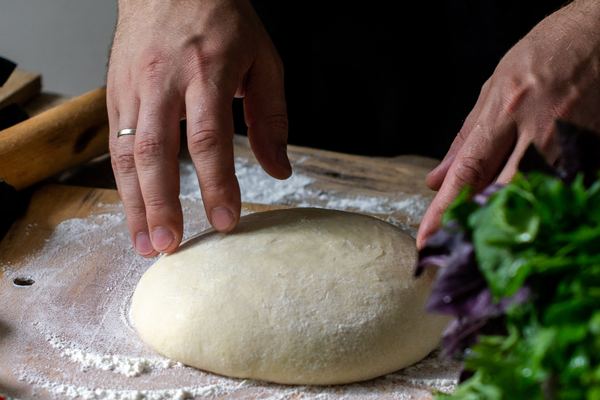
Naples Pizza Classes
Naples pizza classes from 24 EUR, median 63. The EU specification behind the dough, why ten of the eighteen teach pasta instead, and how to read the review…
18 experiences -
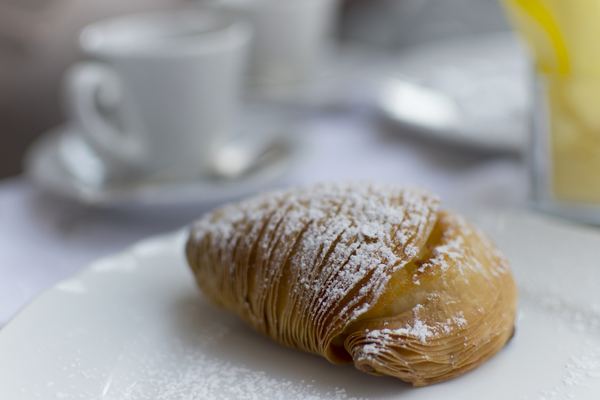
Naples Street Food
Naples street food walks from 30 EUR: cuoppo, pizza fritta, sfogliatella and the Pignasecca market. Short, cheap and unusually honest about how long they take.
14 experiences


Food Tours Experiences in Naples
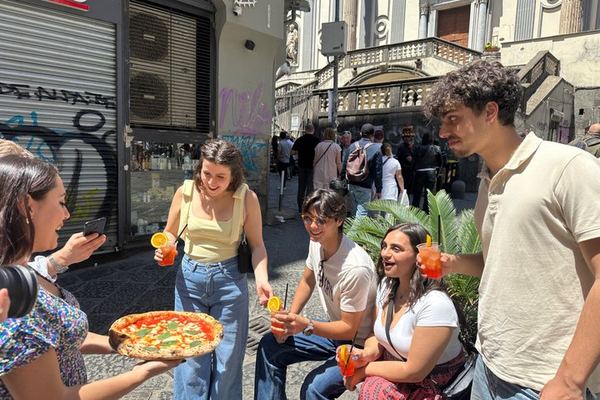
A Bakery Open Since 1837, and Gelato Under the Guglia
Mozzarella on Tribunali, fried pizza by the nativity workshops, frittatina on Spaccanapoli, pastries from an 1837 bakery, gelato under the guglia. €42.
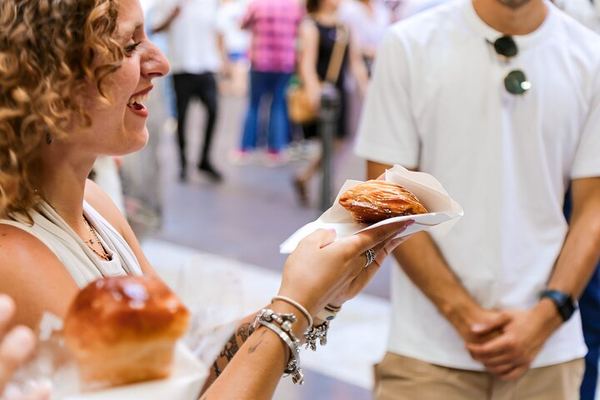
A Lucky Corno from San Gregorio Armeno, and Nine Stops
Three hours from the Duomo to Piazza del Plebiscito with tarallo, folded or fried pizza, baba and espresso, plus a red corno from San Gregorio Armeno. €59.
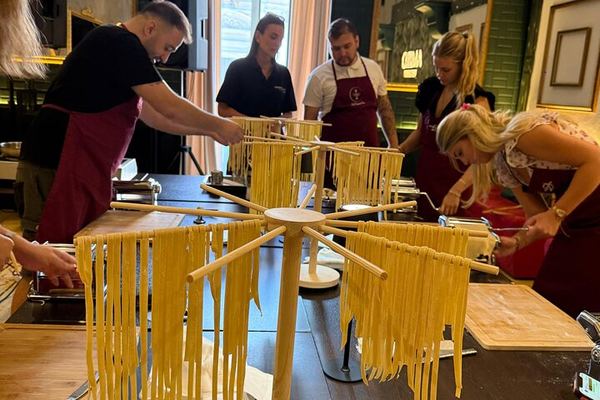
A Prosecco, Two Pasta Shapes and a Tiramisù on Via Medina
Ten people, an air-conditioned kitchen on Via Medina, prosecco and an appetiser to start. Two pasta shapes and tiramisù, then you eat them. Luggage stored free.
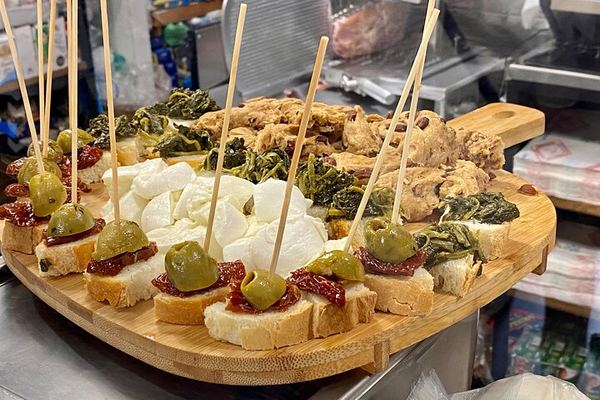
Arancini on Tribunali, Then the Deep-Fried Pizza
Two and a half hours from the Greek ruins at Piazza Bellini to Via Toledo, with arancini on Tribunali and deep-fried pizza as the last stop. €42, 15 places.
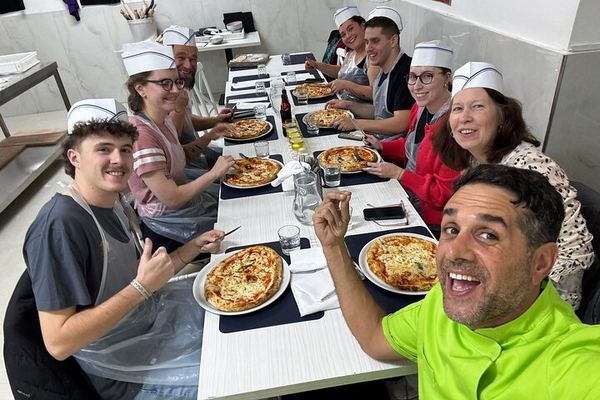
Bake Your Own Pizza, Then Churn the Gelato
The shortest hands-on class in the Naplesbay lab: stretch and bake your own pizza, then churn gelato. Drink, apron and certificate included. From €41.60.
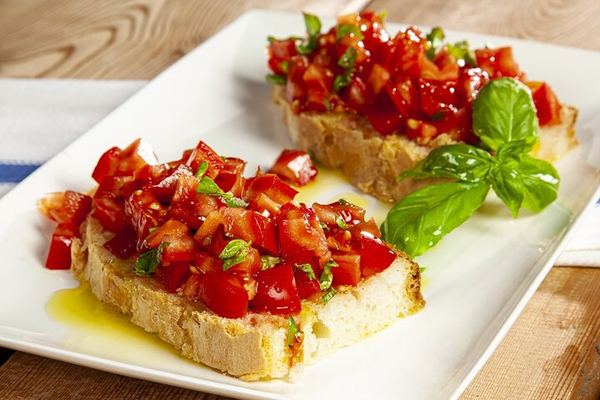
Cooking from the Family Cookbooks in Forio, Ischia
Wednesdays and Saturdays only: island recipes read out of old family cookbooks, cooked with what Ischia grows that season, at your own bench, with house wine.
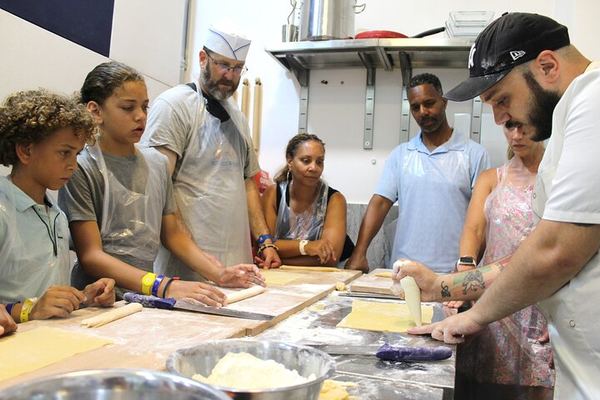
Fill the Ravioli, Cut the Fettuccine, Whip the Tiramisù
Three hours near the Duomo: fill ravioli, cut fettuccine, whip tiramisù, then eat the lot with a drink. Recipes and diploma go home with you. From €36.75.
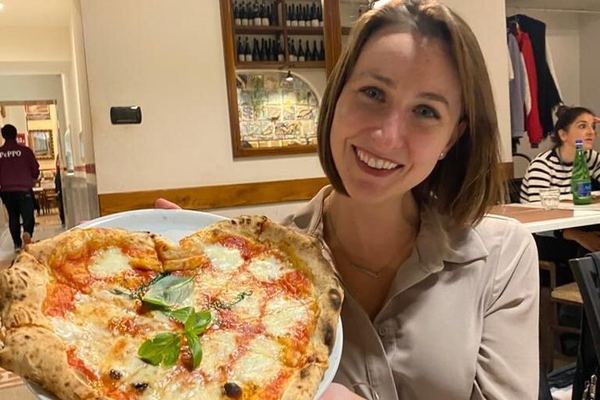
Free-Flowing Wine, One Pizza, Three Hours in Chiaia
Three hours in a restaurant kitchen on Piazza Amedeo in Chiaia: build your own pizza from the dough up, then eat it as a full meal with wine that keeps coming.
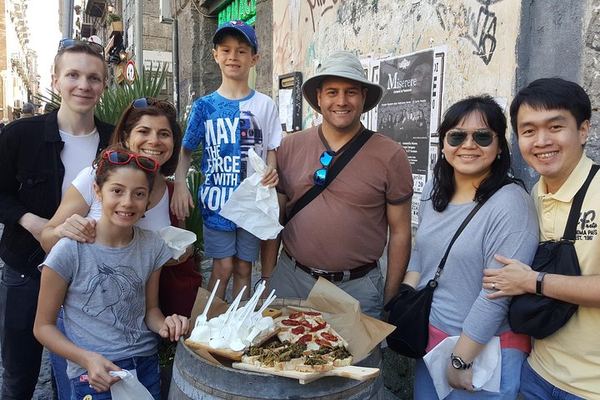
Fried Pizza on the Decumano, Mozzarella from 1958
Taralli by the Greek walls, mozzarella from a shop open since 1958, fried pizza on Via dei Tribunali, then sfogliatella and baba. Two and a half hours.
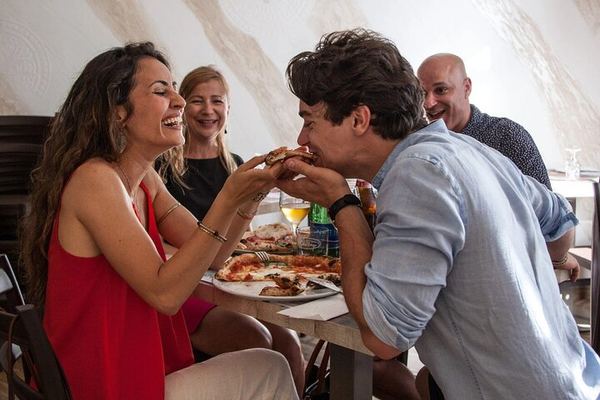
Frittatina at a Five-Generation Friggitoria, Then the Quartieri
Six tastings and three drinks across Galleria Umberto, a five-generation friggitoria and the Spanish Quarter. Twelve people maximum, three hours. From €80.10.
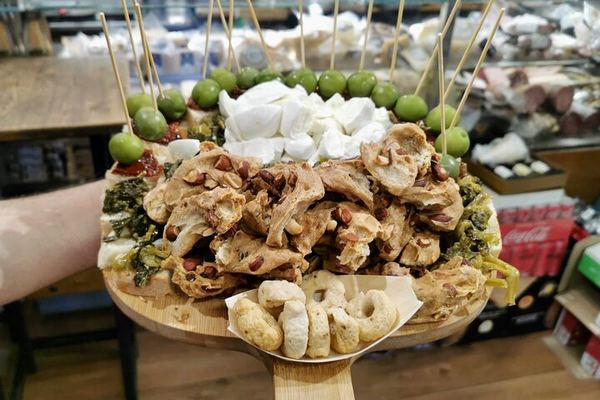
From the Greek Walls of Piazza Bellini to Via Toledo, Eating
Two and a half hours from Piazza Bellini's Greek walls through Tribunali and San Gregorio Armeno: buffalo mozzarella, pizza fritta, limoncello. From €42.
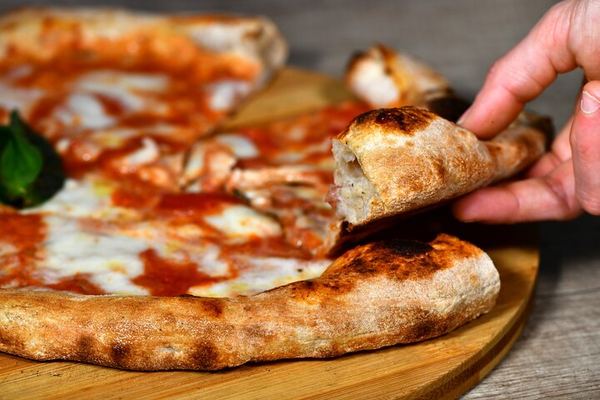
Margherita, Marinara and Pizza Fritta for Thirty Euros
Margherita at San Domenico Maggiore, Marinara alongside it, pizza fritta on Piazzetta Nilo, plus tarallo, frittatina and dessert by Santa Chiara. Twelve people.
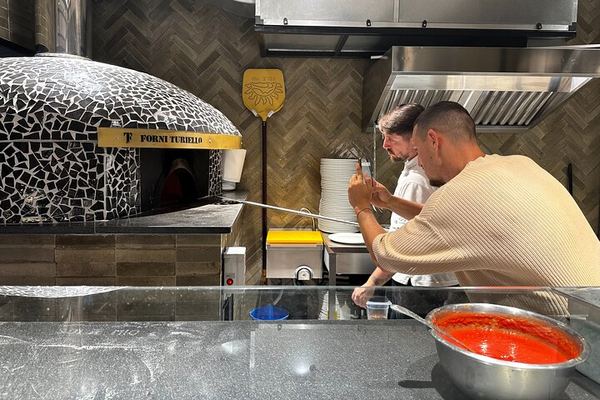
Margherita or Marinara, Plus One Dish They Won't Name
Two hours, twelve people, and a venue the operator won't name until you get there. Knead, top and fire your own Margherita or Marinara, then eat it. €58.99.
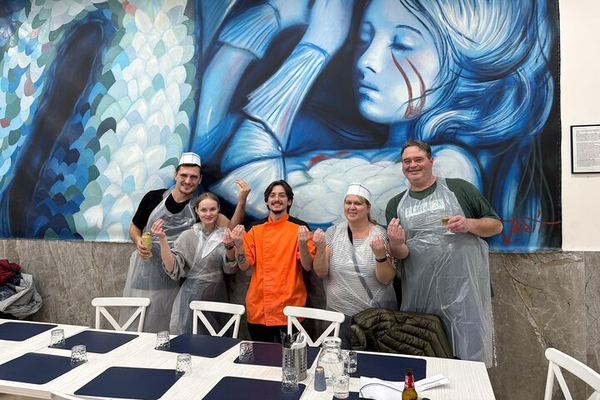
Meet the Ricotta, Then Fill the Ravioli
The class starts at the ingredients table: fresh ricotta, aged Parmigiano, San Marzano. Then fettuccine, filled ravioli and tiramisù, eaten on the spot. €49.
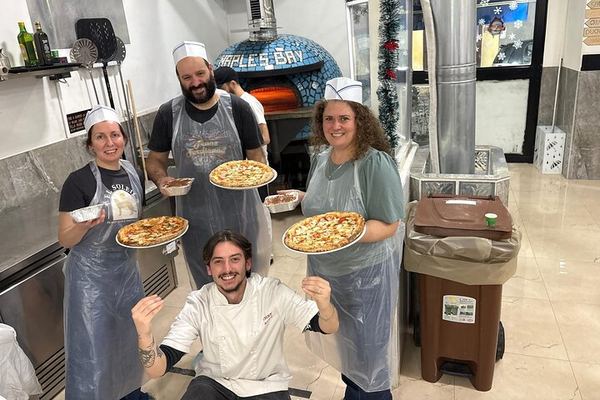
Ninety Minutes After Dark, Bread and Cherry Tomatoes First
The shortest class in the Naples set: a glass of local wine, wood-fired bread with cherry tomatoes, then your own dough into the oven. Luggage stored free. €42.
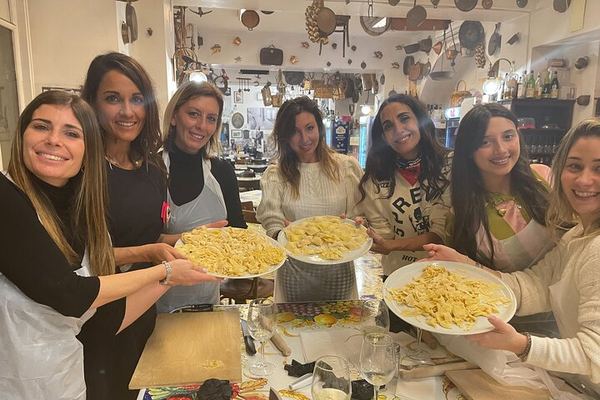
One Dough, Three Sauces, Opposite the Opera House
A restaurant kitchen on Via San Carlo, two and a half hours, and a plate that ends up holding the same pasta under three different sauces. Tiramisù too. €60.
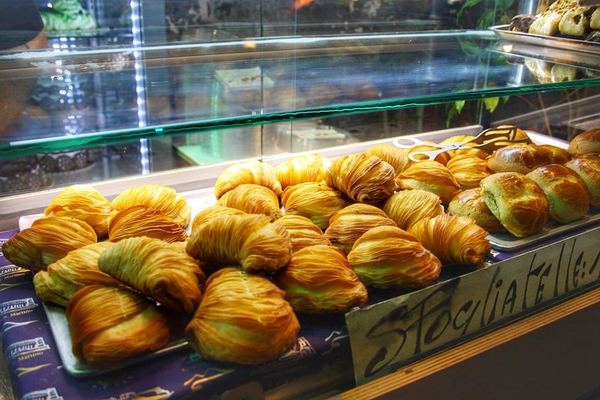
Out from Piazza Bellini and Back in Two and a Half Hours
Two and a half hours out from the Greek walls and back to the same square, through pizzerias and suppliers you would walk past without a licensed local. €38.
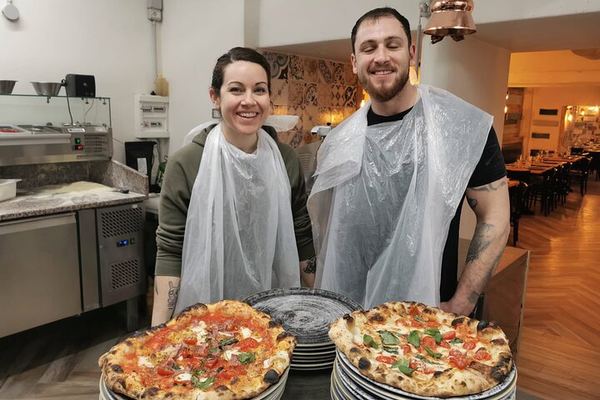
Roll Your Own at Oltre Pizzeria Democratica
Two and a half hours inside a working pizzeria east of the centre: measure, knead, roll, top and fire your own pizza. Starter and a drink included. €69.
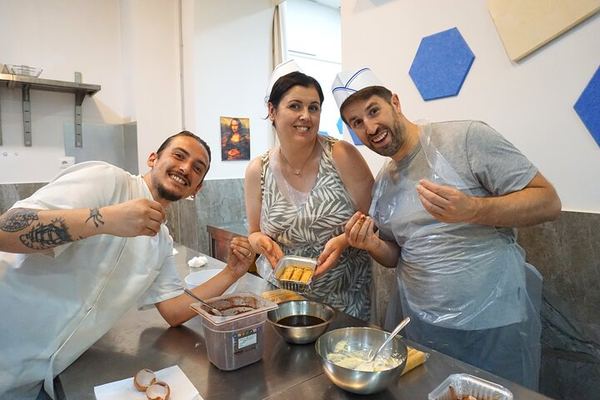
San Marzano Tomatoes, a Peel, and a Wood-Fired Oven
You prepare the San Marzano sauce yourself and load the pizza into the wood-fired oven on a peel. Then tiramisu, with a limoncello, and the recipe.
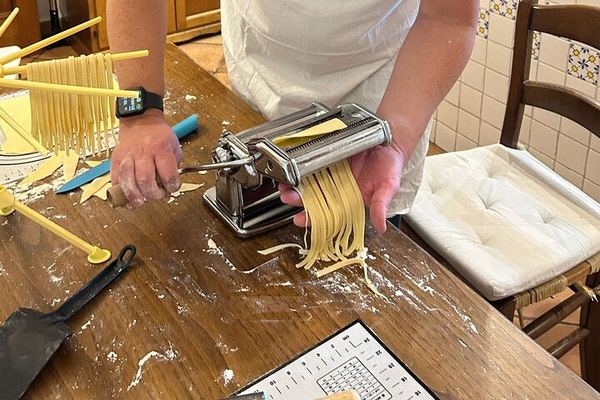
Scialatielli or Caprese Ravioli, in Emanuela's Kitchen
Three hours in Emanuela's kitchen west of the centre: fresh pasta, pizza, caprese ravioli or scialatielli, then lunch with wine, tiramisu and limoncello.
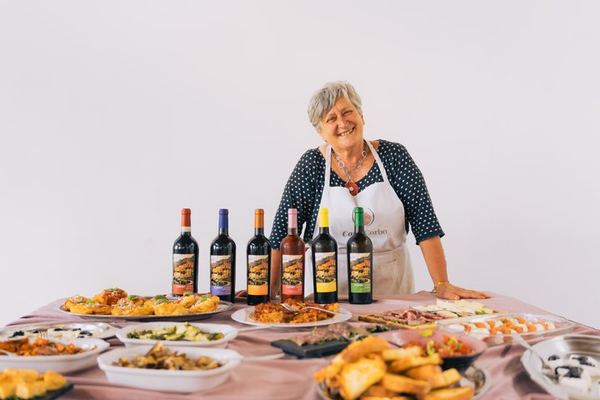
Six Wines Including Taurasi, and a Day in Irpinia
Eight hours at an organic family winery in the Avellino hills: vineyard and cellar, a hands-on class, then lunch matched to six wines. From Naples, €99.
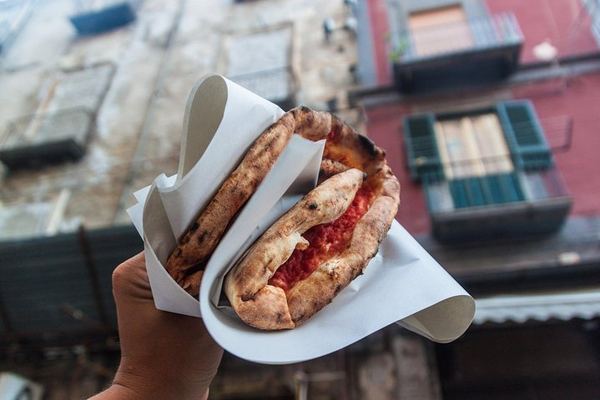
Taralli at Piazza Dante, Pizza a Portafoglio on Tribunali
Three hours from the Dante monument through the old centre, four stops that add up to a full meal: tarallo, frittatina, folded pizza, ragù, sfogliatella. €65.

Taralli at the Greek Walls, Dessert by the Conservatorio
Over ten samples in two and a half hours: tarallo at the Greek walls, mozzarella from a 1958 deli, fried pizza, limoncello, dessert by the Conservatorio. €38.
Ten at the Bench, One Wood Oven, Two Hours
A small bench in a working pizzeria near Loreto: knead, shape, sauce, top and fire your own pizza, then eat it with a starter and a drink. Ten people. €79.
Ratings collected by Viator and Tripadvisor
The two things Naples sells
Eighteen listings teach you to make something, and eight of those are pizza specifically. Fourteen walk you through the old town eating fried food. That is the entire catalogue, and the split is cleaner than in any other Italian city.
What is missing is telling. There are no wine days, because Campania's vineyards are not organised for visitors the way Tuscany's are. There are almost no sit-down restaurant tours. And there is very little that leaves the city, with three exceptions: one class on Ischia, one at Pompeii, and one at a winery inland in Irpinia.
| Type | How many | Price | Length |
|---|---|---|---|
| Pizza making class | 8 | 24 to 65 EUR | 2 to 3 hours |
| Pasta, tiramisu or gelato class | 10 | 24 to 150 EUR | 2 to 3 hours |
| Street food walk, old town | 9 | 30 to 65 EUR | 2.5 to 3 hours |
| Street food walk, premium or small group | 3 | 65 to 80 EUR | 3 hours |
| Market focused walk | 2 | About 42 EUR | 2.5 hours |
| Of those classes, held outside Naples | 3 | Up to 150 EUR | Ischia, Pompeii and a winery in Irpinia |

What you eat on a Naples street
The vocabulary is short and worth learning, because these are the words on every itinerary here. Cuoppo is a paper cone of fried things: courgette flowers, small fish, potato croquettes, arancini. Pizza fritta is a folded, deep fried pizza with ricotta and pork inside, and it predates the baked version in the poorest parts of the city. Frittatine are fried discs of bucatini bound with béchamel. Sfogliatella comes two ways, riccia with its hundred crisp layers and frolla in short pastry.
And pizza a portafoglio, the wallet: a full pizza folded twice and eaten in the hand while walking, which costs a fraction of a sit-down pizza and is the single most Neapolitan thing you can do with two euros.
Pizza has two legal protections and they cover different things
People conflate these constantly, and the difference is real.
Pizza Napoletana is an EU Traditional Speciality Guaranteed, registered in 2010. A TSG protects a method, not a place: the dough composition, the hydration, the fact that it is shaped by hand and never rolled, the oven at around 485 degrees, the bake in sixty to ninety seconds. Anyone anywhere in the world can make a certified Neapolitan pizza if they follow the specification, which is exactly the point of the designation.
The art of the Neapolitan pizzaiuolo was inscribed by UNESCO in 2017 on the representative list of intangible cultural heritage. That is not about the pizza. It is about the craft, the gestures, the songs, the transmission of the skill between generations in this city. It protects a practice rather than a product.
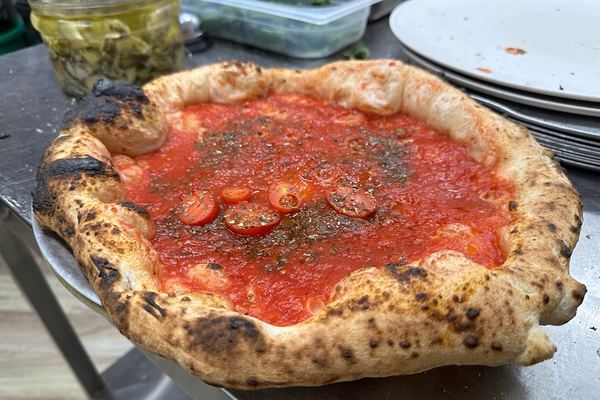
In a class, the practical consequence is what you are taught: hand shaping only, no rolling pin, and the specific movement that pushes the air from the centre of the disc into the rim. That rim, the cornicione, is the whole argument, and a flat crust means the dough was handled wrong.
Where the walks go
The Quartieri Spagnoli are a grid of narrow streets built in the sixteenth century to house Spanish garrison troops, and they are still one of the densest residential areas in Europe. Washing overhead, scooters, shrines in the walls, and food sold from ground floor rooms called bassi.
Pignasecca, just below, is the oldest market in Naples and still a working one: fish on ice at seven in the morning, vegetables, cheese, and stalls that have been in the same families for generations. It is loud and it is not staged.
Via Toledo and Spaccanapoli are the two spines of the centre. Spaccanapoli is the straight Greco-Roman street that splits the old town, and most of the walking tours use some of it because the pizzerias, the sfogliatella bakeries and the babà shops are strung along it.
Almost every tour here stays within these few square kilometres, which is why they are short. You are not covering distance; you are stopping every three minutes.
The coffee, and the one that is already paid for
Neapolitan coffee is roasted darker than in the north, ground finer, and served in a cup that has been warmed. It arrives with a small glass of water, which is to be drunk before the coffee, not after: it clears the palate. Ask for it senza zucchero if you do not want it sweetened, because in many bars sugar is stirred in as a default.
The other Neapolitan coffee custom is the caffè sospeso, the suspended coffee: you pay for two and drink one, leaving the second for whoever comes in and cannot afford it. It is genuinely practised, it is not a performance for visitors, and no bar will make a fuss if you do it.
Why the review counts are lower here
Naples has 11,299 reviews against Rome's 65,532 and Florence's 82,327, and it is worth being straight about what that means. It is not a quality signal: the ratings here are 4.90 and 4.83, in line with everywhere else. It means this is a younger market with a longer tail. Five of the fourteen street food listings have fewer than fifty reviews, and eight of the eighteen classes have under a hundred.
The practical consequence is that the review count is doing more work in Naples than anywhere else in Italy. In Rome, twenty listings all have thousands. Here, the top listing has 3,624 and the bottom has eight. A tour with forty reviews is not necessarily bad, but it has been tested by forty people rather than four thousand.
Questions about food tours in Naples
Is a food tour in Naples worth it when the food is this cheap?
The same question applies here as in Hanoi, and the answer is similar: you are not paying for the food, which costs a few euros, but for the route and the explanation. At a median of 42 EUR for two and a half hours it is the cheapest guided eating in western Europe on this site. Book one early and eat on your own for the rest of the week.
Pizza class or street food walk?
The class if you want to make the thing this city invented: eight of the thirty-two listings teach pizza specifically, from 24 EUR, and another ten teach pasta, tiramisu or gelato. The walk if you want the fried food, the markets and the Quartieri Spagnoli, at a median of 42. They are genuinely different afternoons and the classes are the better souvenir.
How long do they last?
Two and a half to three hours, and Naples is unusually honest about this: six of the fourteen street food listings state the duration explicitly, more than any other category on the site. The classes run two to three hours. Nothing here is a full day except the three listings that leave the city.
Is the old town safe to walk at night?
The historic centre and the Quartieri Spagnoli are busy and populated in the evening, which is the condition that matters most. Ordinary city precautions apply, particularly with phones and bags in crowded streets, and the guided tours are on well travelled routes. Ask your accommodation about the specific streets around it rather than relying on the city's reputation, which lags a long way behind it.
What is the difference between pizza fritta and a normal pizza?
Pizza fritta is deep fried rather than baked, folded over a filling of ricotta, cicoli or provola, and it comes from the period when many households had no oven and fried food was what the street sold. It is heavier, cheaper and older than the baked pizza most visitors come for, and it is one of the things a street food tour is genuinely for.
Do any tours go to Pompeii or the coast?
Three listings leave the city: a class on Ischia, one at Pompeii, and a winery experience in Irpinia. Everything else stays in the centre. If you want Vesuvius, the coast or the archaeology, those are separate trips and they are not food tours.
Data verified on. Prices, ratings, review counts and durations read from the 32 Naples listings on this site on 4 September 2026. TSG registration 2010; UNESCO inscription of the pizzaiuolo craft 2017.