

Pizza Making Classes in Naples
Eighteen classes from 24 to 150 EUR, but only eight of the titles mention pizza. The specification you will be taught is a legal document: 485 degrees, sixty to ninety seconds.
A Neapolitan pizza is one of the few dishes on earth with a legal specification, and in a class here you are being taught to a written standard rather than to somebody's grandmother. The document sets the flour, the hydration, the fact that the disc is shaped by hand and never rolled, an oven floor at 485 degrees, and a bake of sixty to ninety seconds.
Before booking, two things are worth knowing: what that specification actually protects, and the fact that more than half this page is not about pizza at all.
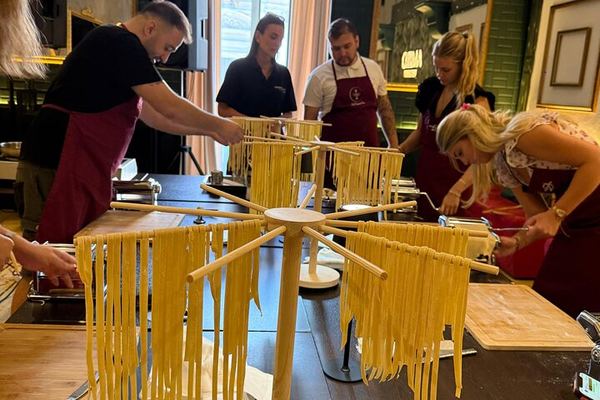
A Prosecco, Two Pasta Shapes and a Tiramisù on Via Medina
Ten people, an air-conditioned kitchen on Via Medina, prosecco and an appetiser to start. Two pasta shapes and tiramisù, then you eat them. Luggage stored free.
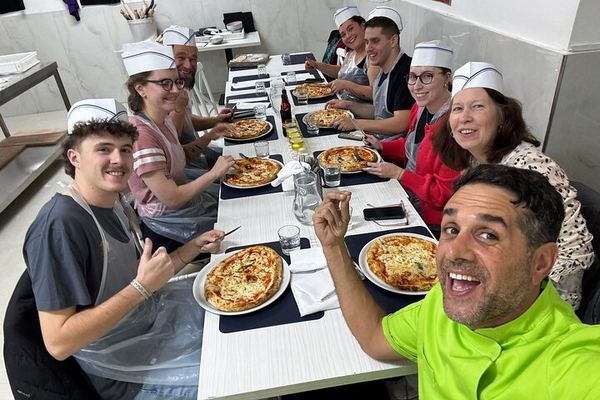
Bake Your Own Pizza, Then Churn the Gelato
The shortest hands-on class in the Naplesbay lab: stretch and bake your own pizza, then churn gelato. Drink, apron and certificate included. From €41.60.
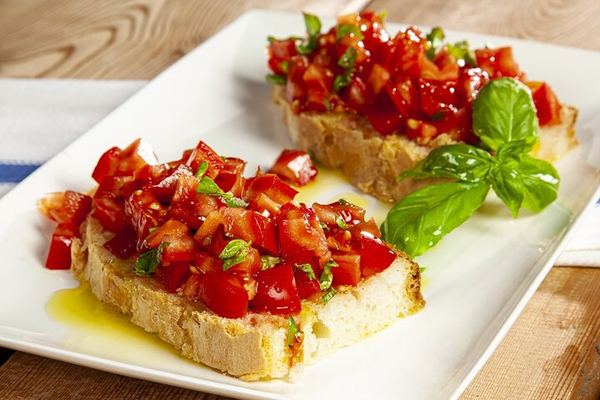
Cooking from the Family Cookbooks in Forio, Ischia
Wednesdays and Saturdays only: island recipes read out of old family cookbooks, cooked with what Ischia grows that season, at your own bench, with house wine.
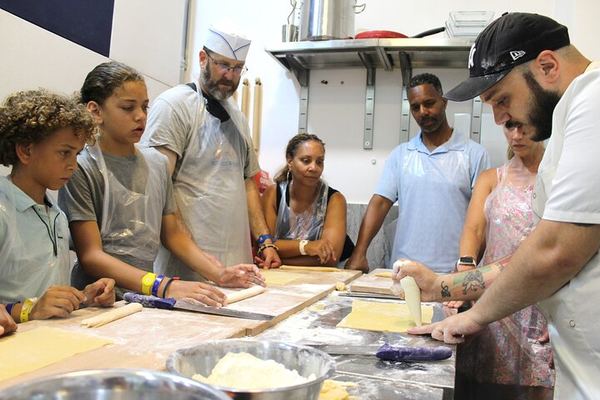
Fill the Ravioli, Cut the Fettuccine, Whip the Tiramisù
Three hours near the Duomo: fill ravioli, cut fettuccine, whip tiramisù, then eat the lot with a drink. Recipes and diploma go home with you. From €36.75.
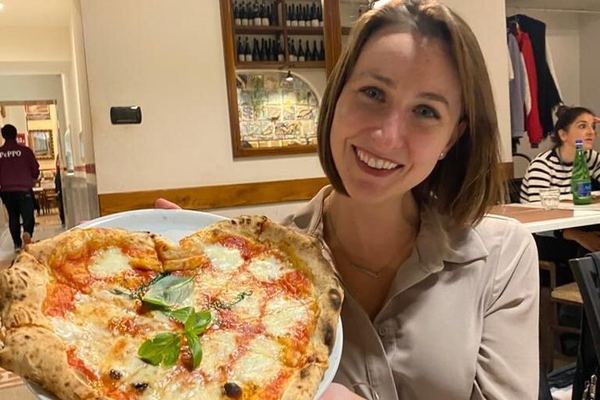
Free-Flowing Wine, One Pizza, Three Hours in Chiaia
Three hours in a restaurant kitchen on Piazza Amedeo in Chiaia: build your own pizza from the dough up, then eat it as a full meal with wine that keeps coming.
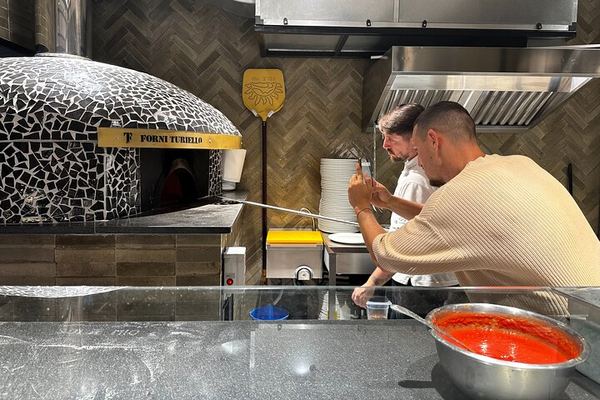
Margherita or Marinara, Plus One Dish They Won't Name
Two hours, twelve people, and a venue the operator won't name until you get there. Knead, top and fire your own Margherita or Marinara, then eat it. €58.99.
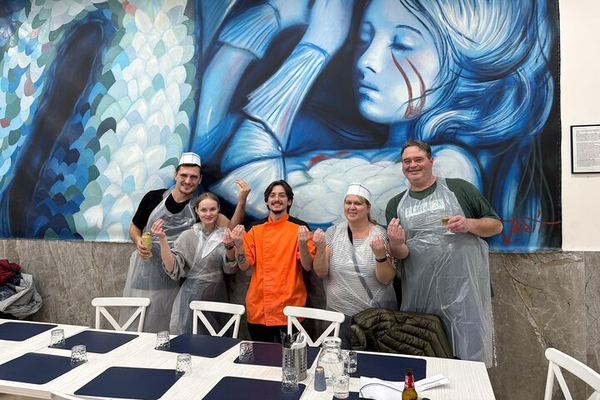
Meet the Ricotta, Then Fill the Ravioli
The class starts at the ingredients table: fresh ricotta, aged Parmigiano, San Marzano. Then fettuccine, filled ravioli and tiramisù, eaten on the spot. €49.
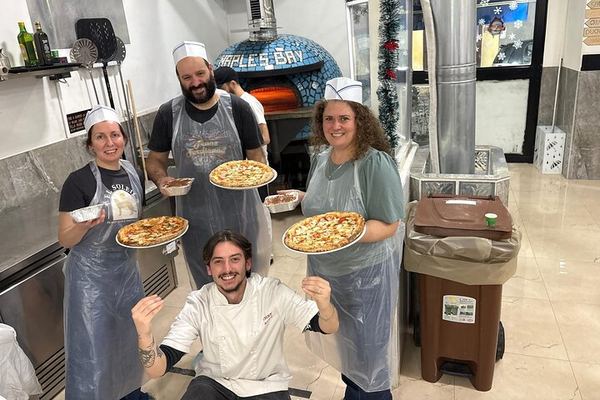
Ninety Minutes After Dark, Bread and Cherry Tomatoes First
The shortest class in the Naples set: a glass of local wine, wood-fired bread with cherry tomatoes, then your own dough into the oven. Luggage stored free. €42.
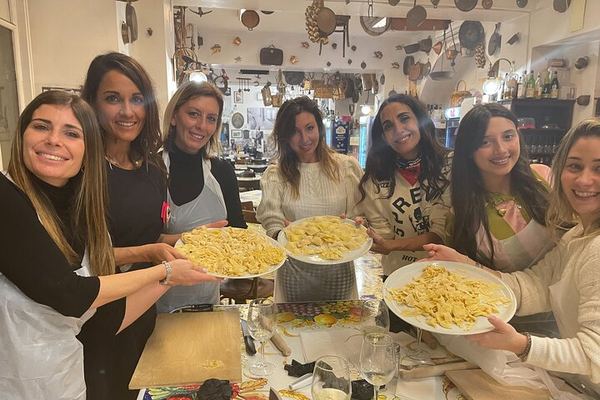
One Dough, Three Sauces, Opposite the Opera House
A restaurant kitchen on Via San Carlo, two and a half hours, and a plate that ends up holding the same pasta under three different sauces. Tiramisù too. €60.
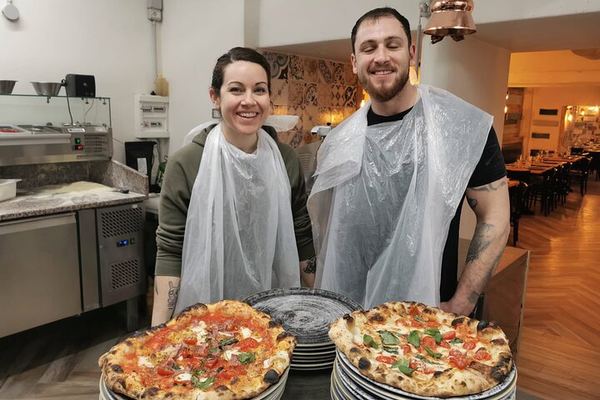
Roll Your Own at Oltre Pizzeria Democratica
Two and a half hours inside a working pizzeria east of the centre: measure, knead, roll, top and fire your own pizza. Starter and a drink included. €69.
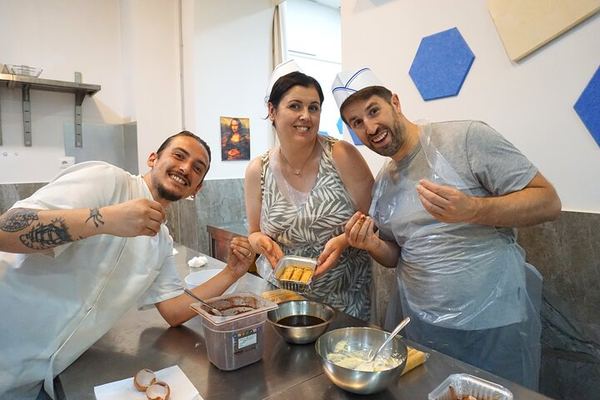
San Marzano Tomatoes, a Peel, and a Wood-Fired Oven
You prepare the San Marzano sauce yourself and load the pizza into the wood-fired oven on a peel. Then tiramisu, with a limoncello, and the recipe.
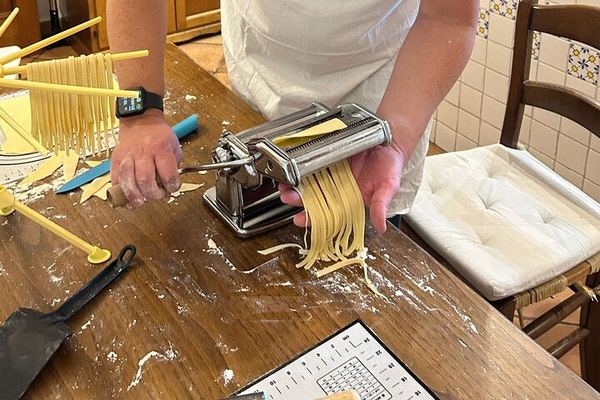
Scialatielli or Caprese Ravioli, in Emanuela's Kitchen
Three hours in Emanuela's kitchen west of the centre: fresh pasta, pizza, caprese ravioli or scialatielli, then lunch with wine, tiramisu and limoncello.
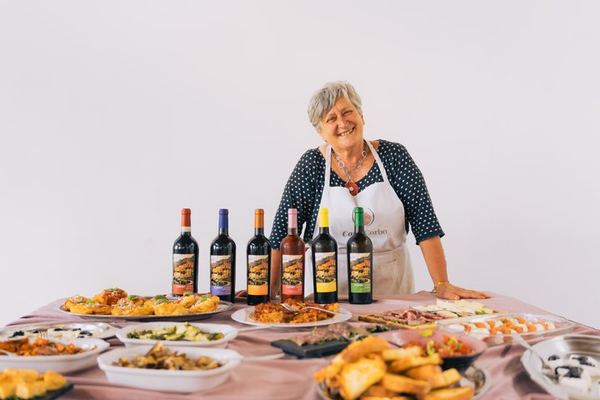
Six Wines Including Taurasi, and a Day in Irpinia
Eight hours at an organic family winery in the Avellino hills: vineyard and cellar, a hands-on class, then lunch matched to six wines. From Naples, €99.
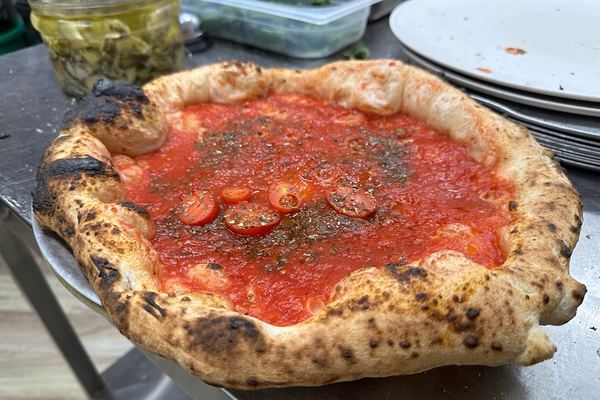
Ten at the Bench, One Wood Oven, Two Hours
A small bench in a working pizzeria near Loreto: knead, shape, sauce, top and fire your own pizza, then eat it with a starter and a drink. Ten people. €79.
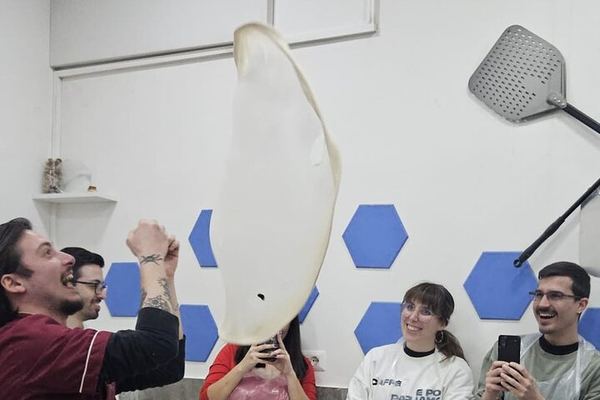
The Mozzatura, the Acrobatics, and Your Own Margherita
Knead the dough, watch the mozzatura and the pizza acrobatics, bake your own Margherita, then make tiramisu. In the historic centre, with a diploma at the end.
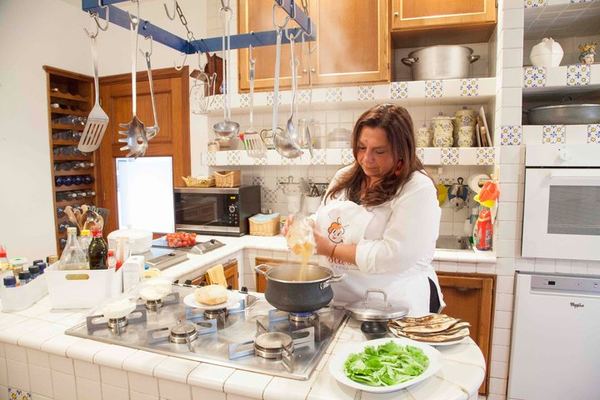
Three Recipes, One Workstation Each, in a Cesarina's Home
A private class in a Neapolitan home cook's own kitchen, with a workstation each and three regional recipes, eaten with local red and white. €79 per person.
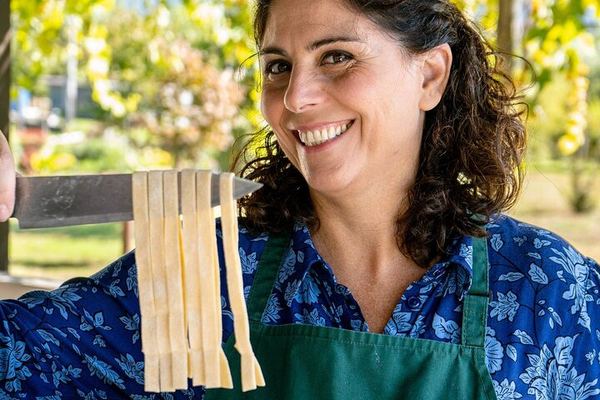
Two Hours in Pompeii, Then Pasta in a House in Scafati
Six hours: two guided hours inside the excavated city with entry included, then pasta by hand in a real family house at Scafati, eaten together with wine. €115.
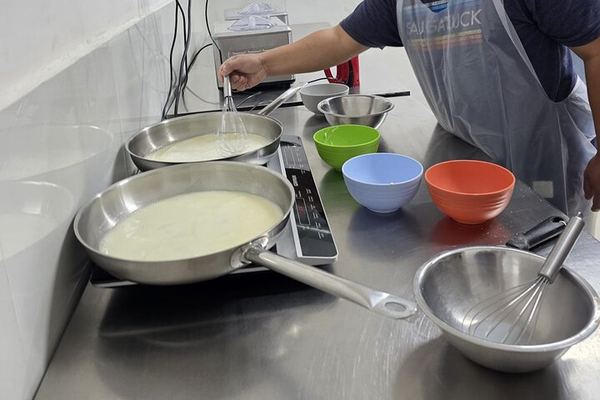
Two Pastas, Then Gelato, With an Appetiser in Between
Three hours near Stazione Duomo: roll and cut two pasta shapes, fill the ravioli, break for a local appetiser, then learn what makes gelato not ice cream. €65.
Ratings collected by Viator and Tripadvisor
What the STG protects, and what it does not
Pizza Napoletana was registered as a Traditional Speciality Guaranteed by the European Commission in 2010. A TSG protects a method rather than a place, so a certified Neapolitan pizza can be made anywhere in the world by anyone who follows the specification.
There is a detail in that regulation that almost nobody mentions and that changes what the protection means. The registration was made without reservation of the name. The text says so explicitly: protection under the relevant article was not requested. What is reserved is the STG mark and the right to claim compliance with the specification, not the words pizza napoletana themselves. Anywhere in Europe, a restaurant can sell you something called a Neapolitan pizza that follows none of it.
The specification itself is worth knowing because it is what a class teaches. Wood fired oven only. Shaped by hand, never with a rolling pin or a machine. A finished disc of no more than 35 centimetres, about 4 millimetres thick in the middle, with a raised rim of one to two. Oven floor around 485 degrees, dome around 430, and a bake of sixty to ninety seconds.
The consequence for a home cook is blunt and every honest teacher says it: a domestic oven at 250 degrees cannot do this. What you learn in Naples is the dough and the hands, and at home you adapt.
| Taught | How many | Price | Note |
|---|---|---|---|
| Pizza, hand shaped | 8 | 24 to 65 EUR | The reason most people book. Wood oven on the better ones |
| Pasta or dessert instead | 10 | 24 to 150 EUR | Filed here, and honest about it in the title |
| Also making tiramisu | 6 | Included | No oven needed, so it fits any class |
| Also making gelato | 2 | About 42 EUR | Added to a pizza session |
| Held outside Naples | 3 | Up to 150 EUR | Ischia, Pompeii and a winery in Irpinia |

The rim is the whole argument
Watch a Neapolitan pizzaiolo and the movement to look for takes about four seconds: the fingertips press the centre of the disc and push the gas outwards, into a ring around the edge. That ring is the cornicione, and it is where the fermentation shows. It should be puffed, blistered, slightly charred in spots, and hollow.
A flat edge means the air was pressed out, usually by a rolling pin or by handling the dough cold. This is why the specification bans mechanical rolling: not for tradition, but because it destroys the structure the long fermentation built. If a class hands you a rolling pin, you are not learning Neapolitan pizza, whatever the listing said.
The dough, and the flour argument that reached Brussels
Four ingredients, and the whole craft is in how long they are left alone. The specification calls for wheat flour, water, salt and yeast, and nothing else: no oil, no sugar, no milk.
The dough is worked to a hydration well below what a modern artisan bakery would use, which is what makes it possible to stretch a disc by hand without it tearing. It is then left to rise in bulk, divided into balls of roughly 200 to 250 grams, and left again. The second rest is the one that matters, and it is measured in hours rather than minutes: a class that hands you dough made that morning is handing you dough that has not finished.
That is also the honest limit of a two hour class. Nobody can teach you a twenty-four hour fermentation in an afternoon, so what you will shape is dough somebody prepared yesterday. The good classes say this and use the time to teach the hands instead.
The flour itself caused a diplomatic argument. When Italy applied for the protection, Germany and Poland both formally objected, the German case being that the specification named a flour available from essentially one country and therefore excluded everyone else. Italy settled it by withdrawing the restrictions on flour type. It is a small piece of bureaucratic history and it tells you something real: the specification is a negotiated European document, not a Neapolitan family secret written down.
Ten of these eighteen are not pizza classes
The category is called pizza classes and only eight of the titles mention pizza. Five teach fresh pasta, six add tiramisu, two do gelato, and several combine them. They are honestly described in their own titles, so nothing is being hidden, but the page as a whole does not do what the heading suggests.
The reason is practical. A pizza class needs a wood oven at nearly 500 degrees, which is a piece of infrastructure that a small operator either has or does not. Pasta and tiramisu need a table. So the operators without an oven teach the things they can teach, in the city that invented the thing they cannot.
Filter by the word pizza in the title and you have your eight. Then check that the listing mentions a wood oven rather than an electric one.
The review counts here are unusually uneven
This page carries 6,431 reviews, which is about a fifth of what Rome's cooking classes hold. More importantly, they are concentrated: the top listing has 3,624 on its own, more than half the page, and eight of the eighteen classes have fewer than fifty reviews. Several have single digits.
That is what a young market looks like, and it changes how you should read this page. In Rome, any of fourteen classes has thousands of reviews and the ratings are all you need. Here the review count is the more useful number, because a 5.0 from eight people is not evidence of anything. It is not that the small listings are bad; it is that nobody can tell you yet.
Five listings on this page also have no photograph at all in the supplier's own feed, which is a reasonable proxy for how recently they were set up.
What a pizza costs in Naples, for comparison
Worth having in your head before deciding whether a class is good value. A margherita at one of the historic pizzerias in the centre is around 6.50 EUR, with a cover charge of about a euro. The national average for a Neapolitan-style margherita measured across affiliated pizzerias in January 2026 was 7.04 EUR, with Naples itself at 6.74 and the north of Italy at 7.66.
So a 37 EUR class costs about five and a half margheritas. What you get for it is two to three hours, the dough technique, the oven, and a pizza you made. Whether that is worth it depends entirely on whether you want to cook, because as a way of eating pizza in Naples it is a poor deal, and the city is generous about giving you the alternative for six euros.
Questions about pizza classes in Naples
Will I be able to make this at home?
Partly. The dough, the fermentation and the hand shaping all transfer. The oven does not: the specification calls for a floor at about 485 degrees and a bake of sixty to ninety seconds, and a domestic oven reaches half that. What you can do at home is a good pizza using the same dough, baked longer at a lower temperature, which is a different and still worthwhile thing.
Will I make the dough from scratch?
You will make some, and you will shape dough that was made yesterday. A proper Neapolitan ball rests for many hours after being divided, and no two hour class can compress that. An honest teacher explains this; a class claiming you will make and bake your own dough from flour in one session is describing something else.
How long is a class?
Two to three hours, and Naples runs the shortest classes in Italy. You make the dough or work with dough already fermented, shape it, top it, watch it bake, and eat it. The ones including tiramisu run at the longer end.
Which of these actually teach pizza?
Eight of the eighteen, by their own titles. The rest teach pasta, tiramisu or gelato, and say so. If pizza is the point, filter on the word and then check the listing mentions a wood fired oven.
Is a class with few reviews a bad sign?
Not necessarily, but it is an unknown. Eight listings here have fewer than fifty reviews and several have single digits, against a top listing with 3,624. In a market this young the count tells you more than the score does.
What is the difference between this and a class in Rome?
Rome teaches pasta and tiramisu; Naples teaches dough. The Roman classes are more standardised, better reviewed and slightly cheaper, at a median of 56 EUR against 63. If you want to learn pizza specifically, this is the city with the ovens and the specification.
Do any of these leave Naples?
Three. One class is on Ischia, in the town of Forio, one is at Pompeii, and one is at a winery in Irpinia. They are the most expensive listings on the page, up to 150 EUR, and they are half day trips rather than city classes. Check the meeting point before booking.
Data verified on. Prices and reviews read from the 18 listings on this page on 4 September 2026. Dough and oven specification from EU Regulation 97/2010 registering Pizza Napoletana as a TSG.