
Tokyo Food Tours and Market Walks
Twenty-nine experiences from 11 to 281 EUR. Nine of them are Shinjuku, nine are Tsukiji, and those two words describe almost opposite evenings.
Tokyo's food catalogue divides almost perfectly in two, and the dividing line is the time of day. Nine listings are built around Shinjuku, which means small bars, yakitori smoke and an evening. Nine are built around Tsukiji, which means a market, a morning, and standing up. Choosing between them is the whole decision.
Tokyo is also the one city where the same tour is sold twice under the same name. Two listings here share an identical title, from different suppliers, five euros apart.
Choose a destination in Tokyo
-
Tokyo Food Tours
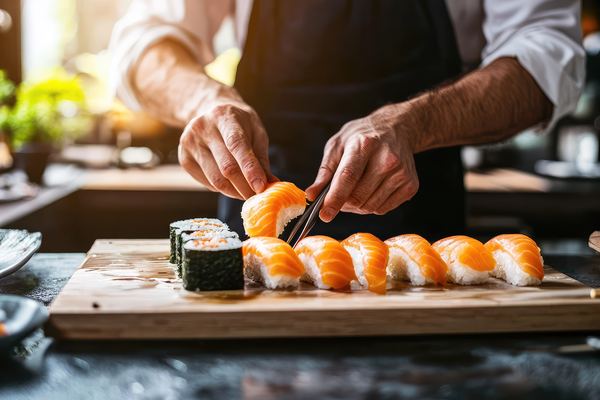
Tokyo evening food tours from 11 to 191 EUR, median 73. Four venues, twelve to fifteen small dishes, and a guide whose job is getting six people through a…
20 experiences -
Tokyo Markets & Street Food
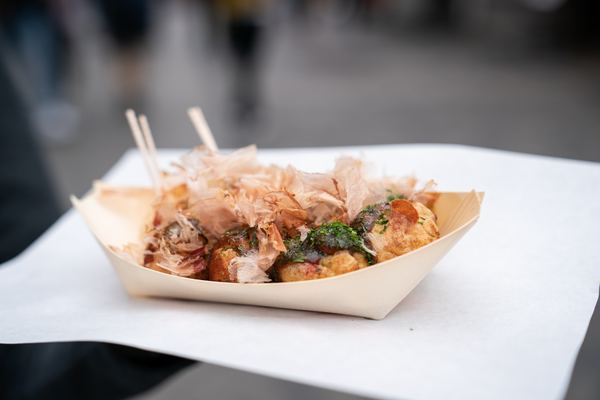
Tsukiji outer market walks from 11 EUR and Toyosu auction visits. Where to eat standing, how the tuna grades work, and which of the fourteen is a cooking class.
14 experiences

Food Tours Experiences in Tokyo
A Guide Through Tsukiji, and You Buy What You Want
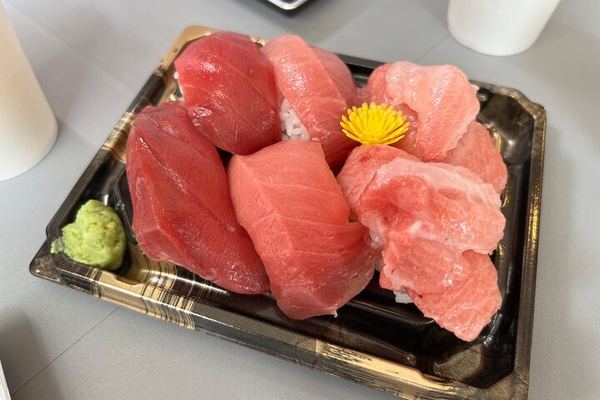
Two hours with a Japanese guide through the Honganji temple and the outer market, learning what everything is. The food is not included: you choose and pay.
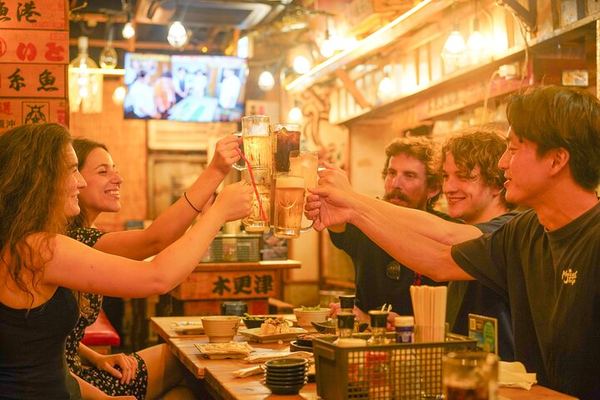
All-You-Can-Drink in Kabukicho, Under a Godzilla Head
Three bars in three hours: two drinks in a Memory Lane izakaya, all-you-can-drink with a full dinner in Kabukicho, then a Golden Gai bar you would never find.
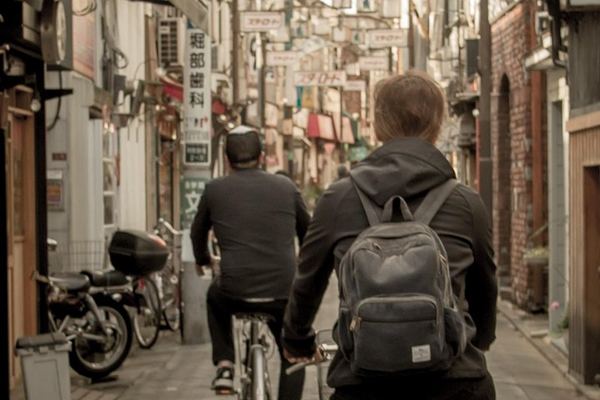
A Mamachari, a River Path, and a Salaryman Lunch
Backstreets and riverside paths through Koenji and Nakano on a Japanese city bike, with two street-food stops, a salaryman lunch and a vending-machine drink.
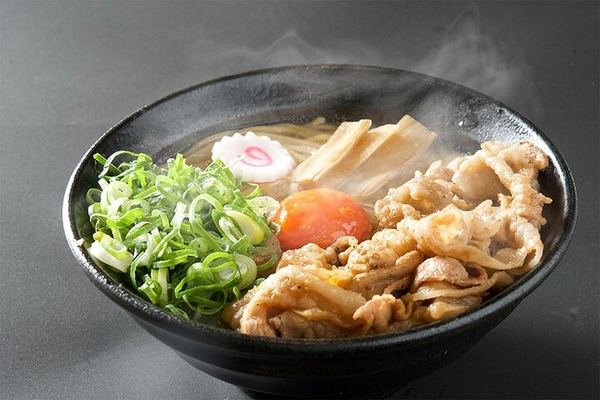
An Hour of Ramen Above a Kabukicho Beer Bar
One hour, three soups to choose from, and no pretence that you are making broth from scratch. Upstairs at Shinjuku Ale, a few doors from the Godzilla head.
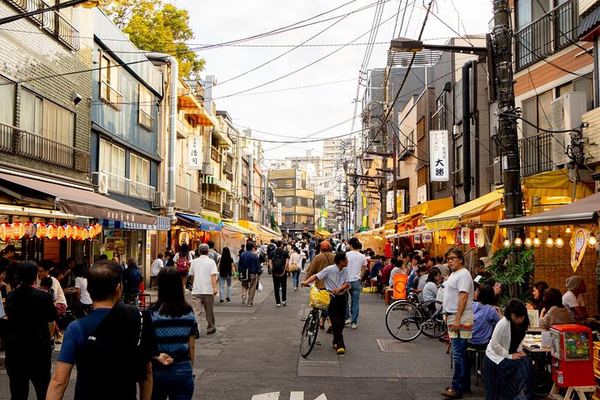
Asakusa Backstreet Food Crawl: Standing Sushi, Soba and Senso-ji
Four century-old Asakusa vendors in two hours: a standing sushi bar, a soba counter, Marugoto Nippon and Senso-ji, with lunch-size tastings at five stops.
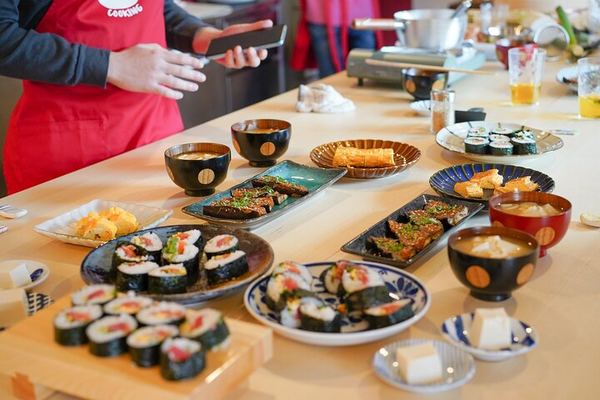
A Supermarket Aisle, Then Dashi From Scratch
Four hours starting in a supermarket aisle: how to choose the fish and the seasonings, then knife work, dashi, sushi rice, miso soup, dengaku and dashimaki.
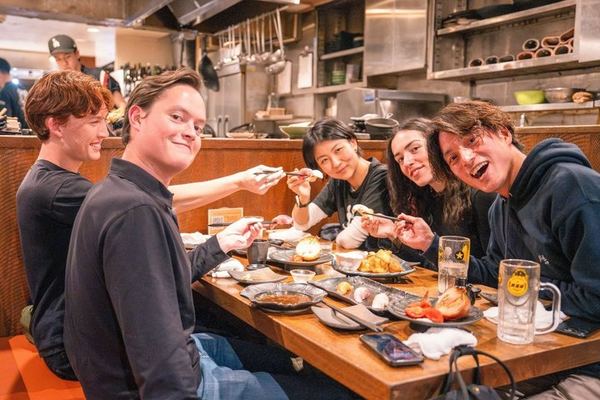
A Turmeric Shot First, and You Split the Bill Like a Local
Three izakayas in three and a half hours, ending at a sake bar down a side street off the Scramble. Guiding is the ticket; the food and drink you pay as you go.
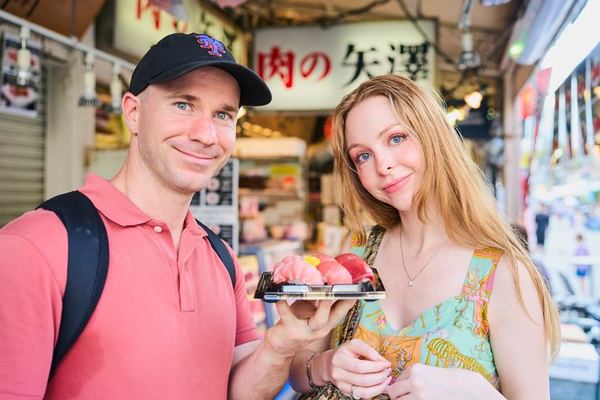
A Wasabi Set From Your Guide, and a Fish Filleted in Front of You
A short guided walk through the outer market with a fish-cutting demonstration, an explanation of curing and umami, and a wasabi set the guide brings along.
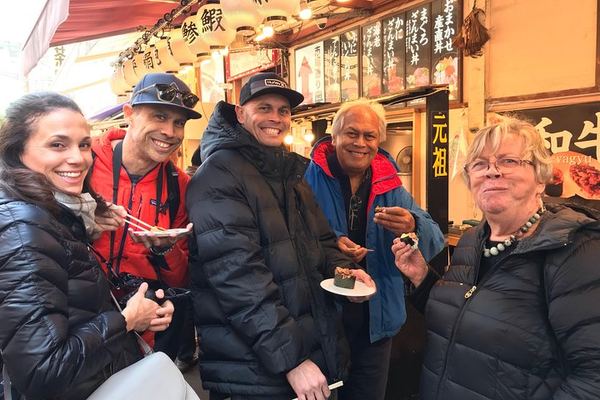
Both Fish Markets in One Morning, Old and New
Four hours across both of Tokyo's fish markets: the modern wholesale floor from the Toyosu observation deck, then the old outer market at Tsukiji. €92.83.
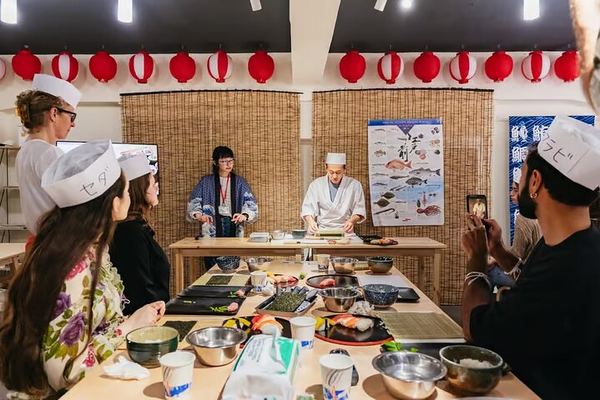
Buy the Fish, Then Shape Five Nigiri Yourself
Four hours: the outer market explained, then a professional sushi master teaching five nigiri and one roll, made with fish bought that morning. Lunch is yours.
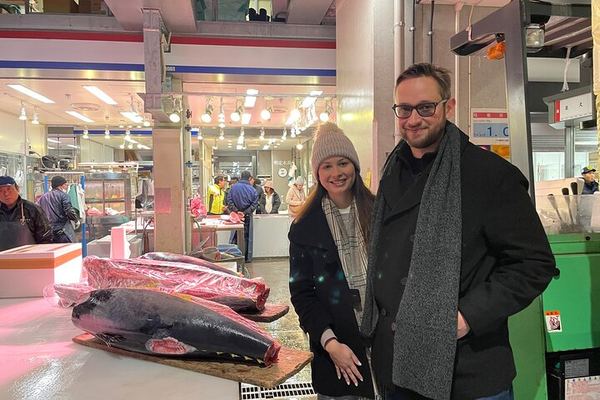
Cut the Tuna Block Yourself, in Azabujuban
Inside the Toyosu wholesale floor, buying fish at the counter, then Tsukiji, then a restaurant in Azabujuban to break down tuna and shape your own nigiri.
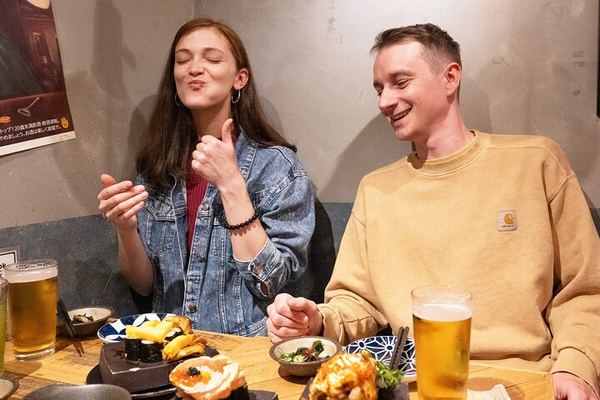
Fifteen Dishes, Ending With a Fish-Shaped Cake
Four eateries with tables reserved for you, sushi, kushikatsu, gyoza and sake, then Golden Gai, a shrine hidden behind the neon and a fish-shaped cake. €67.51.
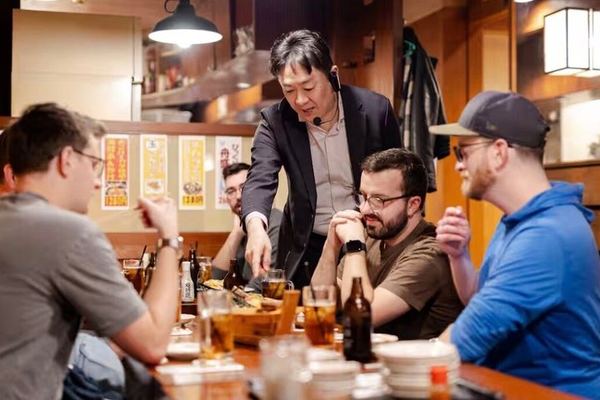
Five Drinks, a Ramen Bowl, and a Cup to Take Home
Three hours away from Shibuya and Shinjuku: sashimi, grilled fish and unusual Japanese spirits in taverns with no English menu, finishing with a bowl of ramen.
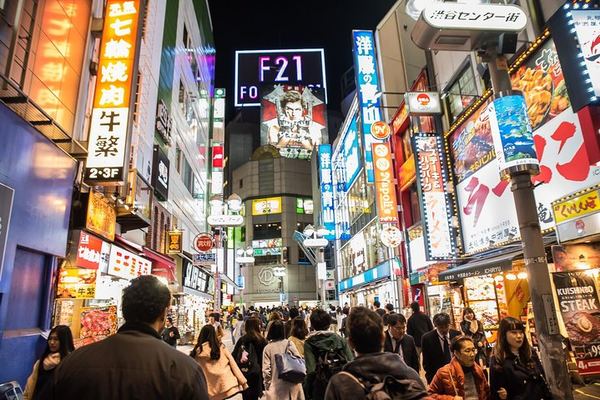
Five Stops, a Bomb Mural, and Drunkard's Alley
Five food stops, a drink and dessert across three hours, past Okamoto's atomic-bomb mural inside the station and into the drinking alley behind the crossing.
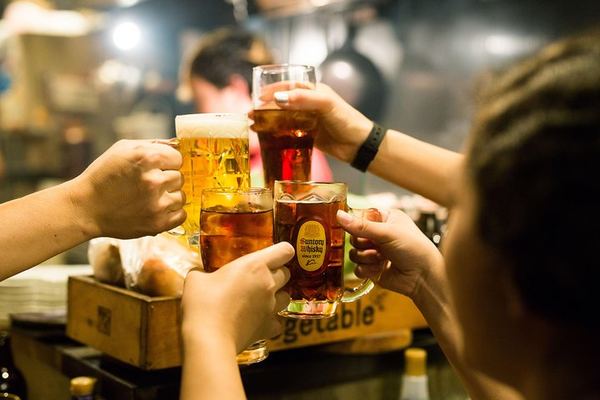
Fourteen Plates Across Three Izakayas, Three Drinks
Three and a half hours across three or four izakayas: grilled skewers, sashimi and comfort food, with three drinks of your choosing. Ten guests, €78.76.
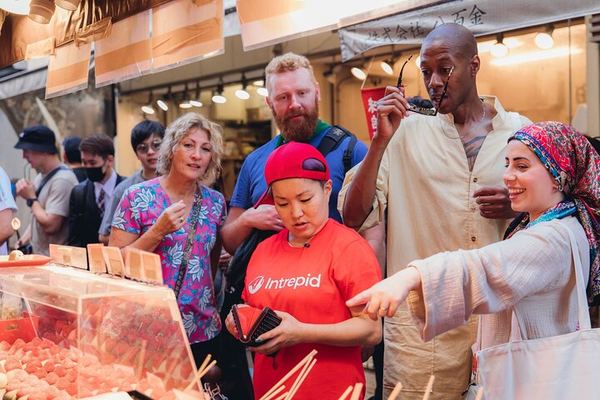
From the Kabuki Theatre's Shrine to the Wave-Warding One
Three hours from the shrine beside the kabuki theatre to the one built to hold back the sea, with sushi, snacks and wagashi sweets along the market alleys.
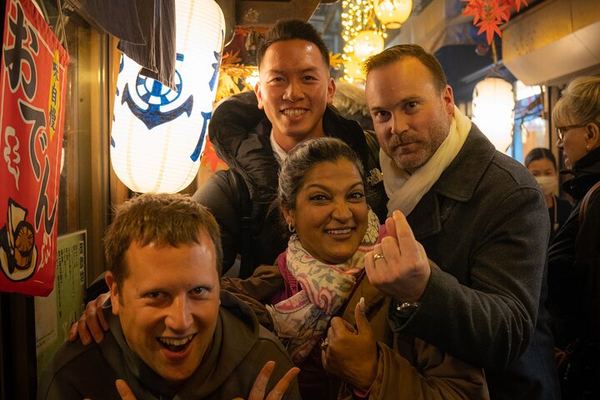
Into the Golden Gai Bars That Turn Strangers Away
Three hours through Omoide Yokocho, Kabukicho and Golden Gai, including bars that do not take walk-in customers. Cover charges paid; food and drink are not.
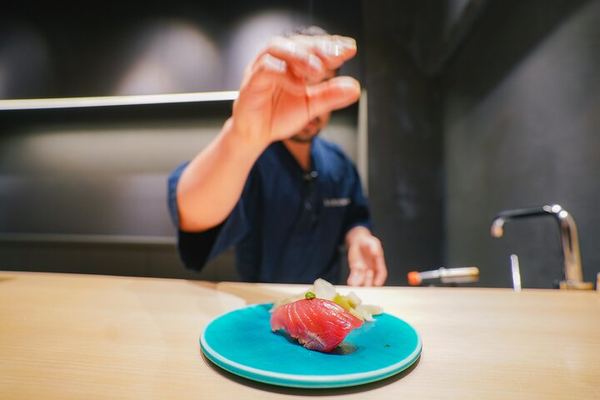
Omakase Nigiri, Then A5 Kagoshima on the Table Grill
A seasonal omakase nigiri course, then Kagoshima black beef graded A5 grilled at your own table, in two Kabukicho rooms visitors rarely find. Seven guests.
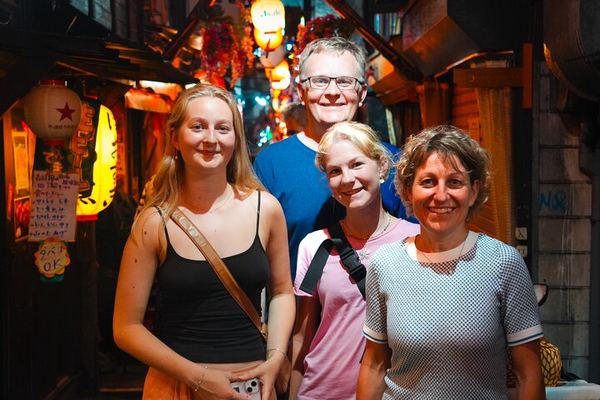
One Family at a Time: Okonomiyaki, Purikura, Arcade
Your family and a guide, nobody else: okonomiyaki and monjayaki on the griddle, a purikura booth or an arcade, then sake for adults and snacks for kids.
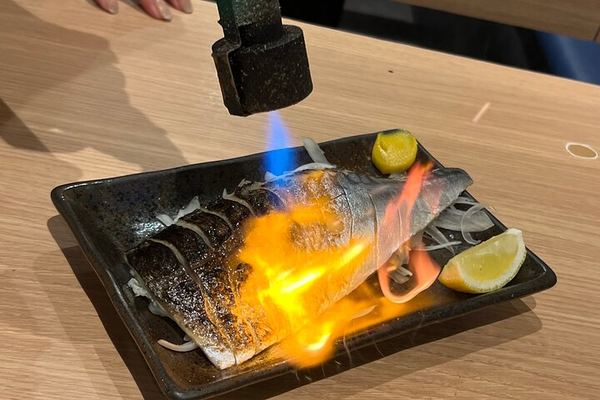
Ten Thousand Restaurants, and a Guide Who Picks Four
Shinjuku holds over ten thousand restaurants. Three hours, fifteen dishes and four of them, including the office side visitors never reach. €73.14.
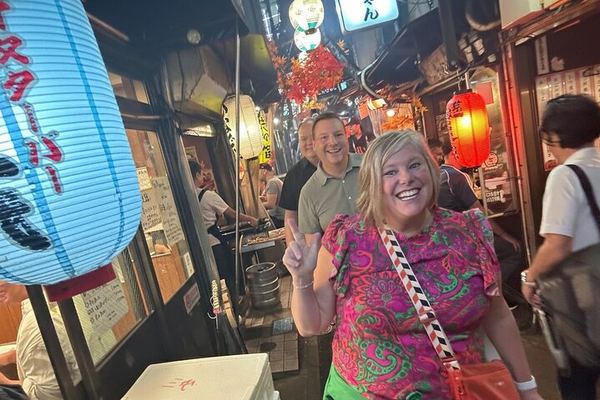
The 3D Cat, a Guide Who Worked in Kabukicho, Fifteen Dishes
Fifteen dishes and two drinks with nothing to settle afterwards, led by guides from Kabukicho itself. Omoide Yokocho, Golden Gai, and a sweet to finish. €85.
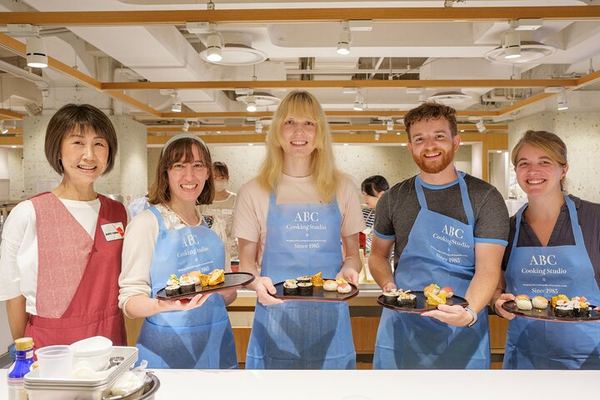
The Market, Then Japan's Biggest Cooking School
A guided hour or so through the outer market, then transport to a studio of Japan's largest cooking school to make sushi rolls and home-style dishes. €84.39.
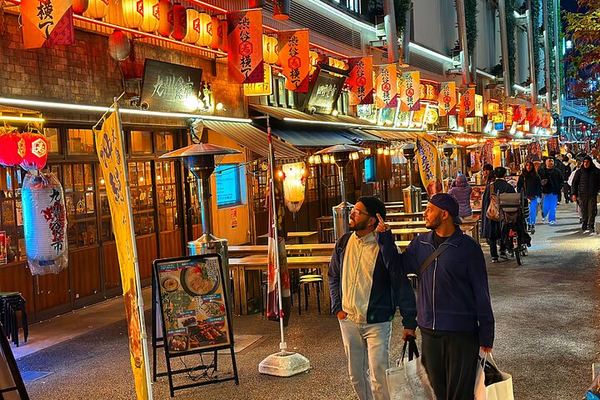
Thirteen Dishes Behind the Crossing, Starting at Hachiko
Three hours in the streets behind the world's busiest crossing: thirteen dishes at three places locals use, with food and drink included. Ten guests, €73.14.
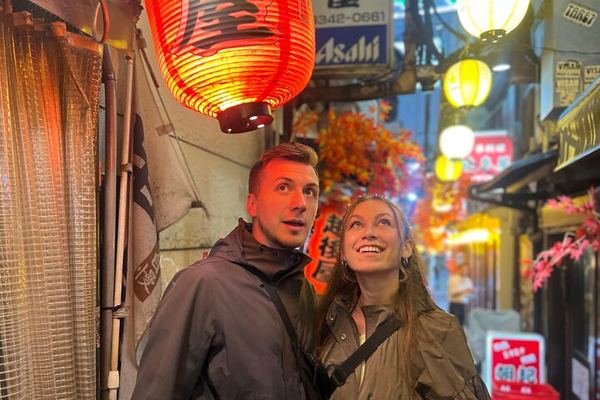
Thirteen Dishes Between Memory Lane and Golden Gai
A stall, an izakaya, a traditional restaurant and a gastrobar in three hours, with two drinks, walking Omoide Yokocho, Kabukicho and Golden Gai. From €73.14.
Ratings collected by Viator and Tripadvisor
The neighbourhoods do different jobs
Tokyo is not a city with a food district. It is a collection of districts that each eat differently, and the tour you book is really a choice of which one you spend three hours in. Read the titles on this page and six names come up repeatedly.
| Area | Listings | What it is | Time of day |
|---|---|---|---|
| Shinjuku | 9 | Yakitori alleys, tiny bars, Omoide Yokocho and Golden Gai | Evening, from about 18:00 |
| Tsukiji outer market | 9 | Retail stalls, tamagoyaki, sea urchin, knives. Not the auction | Morning, and it winds down by early afternoon |
| Shibuya | 3 | Back streets behind the crossing, and the priciest of the evening walks | Evening |
| Toyosu | 2 | The wholesale market that replaced Tsukiji, and the 281 EUR tuna cutting class | Very early morning |
| Asakusa and Ueno | 2 | Old town Tokyo, sweets, Ameyoko's covered market street | Daytime |
| Kabukicho | 1 | Nightlife district next to Shinjuku station | Late evening |
| Elsewhere, or no area named | 3 | Cycling routes and classes that do not commit to a district | Varies |

Tsukiji is a morning, and it ends earlier than you think
The outer market runs on the schedule of the people who used to supply the wholesale market next door, which means it is fully alive at eight in the morning and closing up by early afternoon. A tour that starts at ten is doing it properly. One that starts at two would find shutters.
What you eat here is standing up, in small portions, moving between stalls: tamagoyaki on a stick, grilled scallops, sea urchin on a spoonful of rice, tuna in three grades so you can taste the difference. The cheapest listing on this whole page is a Tsukiji walk at 11 EUR, which is remarkable value in the most expensive city in this catalogue, and the reason is that at that price the tastings are few and the guiding is the product.
The alleys behind Shinjuku station
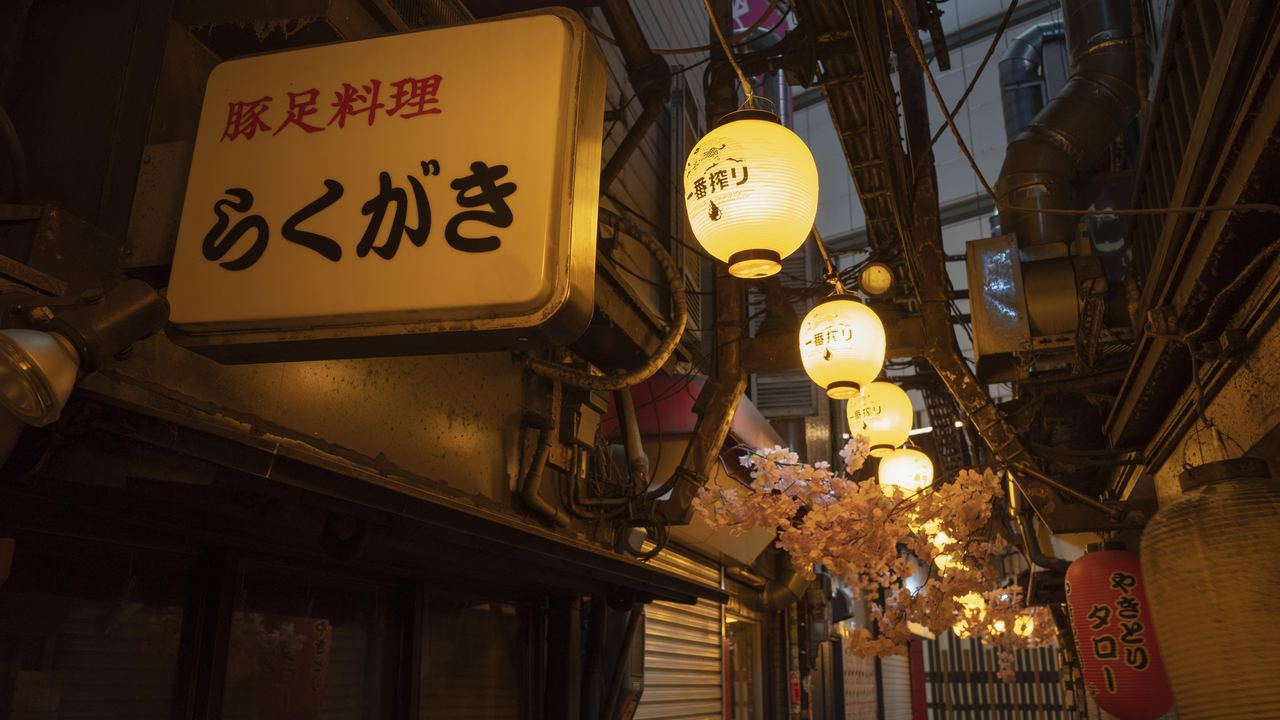
Shinjuku is where the evening tours go, and two specific places account for most of it. Omoide Yokocho is a lane of tiny yakitori counters, smoke thick enough to see, seats for six, grown out of the post-war black market that occupied the ground beside the tracks. Golden Gai is six narrow alleys of about two hundred bars, most of them the size of a small bathroom, many with four seats and a proprietor who has run the place for decades.
Golden Gai is where a guide earns their money in a way that is easy to miss. A good number of those bars charge a cover, some are effectively members' clubs, and the ones that welcome visitors are not signposted differently from the ones that do not. Walking in blind is not dangerous, it is simply a series of small refusals. One listing here, a bar hopping tour at 93 EUR, has 3,961 reviews, which is the highest count of anything in the market and street food category.
The rule that applies in both places: these are counters with six seats and a single person cooking. A group of eight cannot enter. This is precisely why the tours run in small groups, and why the good ones tell you the maximum before you book.
The same tour, twice, at two prices
Two listings on this page carry the identical title, promising fifteen dishes at four eateries in Shinjuku, sold by different suppliers at 73 and 68 EUR. We have not been able to establish whether they are the same operator selling through two channels or two operators running the same format down the same street.
Either way it is a useful illustration of how this market works: the format is what is being copied, not the restaurants, and once several operators run a fifteen-dish Shinjuku evening the price converges and the difference is the guide. Read the review counts rather than the titles. One of the two has nearly twice the reviews of the other, and that is the meaningful gap.
What 11 euros and what 281 euros buy
The spread on this page is the widest of any city on the site outside San Sebastián, and unusually the money maps onto something real.
At 11 to 28 EUR you get a market walk with a guide and a few tastings, which is genuinely enough for a first morning. At 66 to 93 you get the standard evening: three to four hours, four venues, twelve to fifteen small dishes, drinks usually included. At 155 you get an omakase counter with wagyu, where the seat is the product. At 281, the top of the page, you get a sushi workshop at Toyosu including tuna cutting, capped at six guests, which is a class rather than a meal.
Three of these listings are not food tours at all in the ordinary sense: a ramen class, a sushi lesson and a cycling tour that eats along the way. They are filed here because that is what their titles claim, and they are worth knowing about before you book an evening walk and find yourself on a bicycle.
Practical things nobody puts in a listing
Cash still matters. Tokyo has moved a long way towards cards and IC cards, but the six-seat counters and the market stalls are exactly the places most likely to be cash only. Carry some.
The small dish is a charge. Sitting down in an izakaya produces an otoshi, a seating fee served as food, normally 300 to 500 yen a head. On a guided evening it is inside your ticket. On your own, it is on the bill.
Nobody tips. Anywhere, for anything. Attempting it causes real awkwardness.
Trains stop. The last services run around midnight to one, and a late izakaya crawl can leave you facing a taxi across the city, which in Tokyo is not cheap. Guides know the timings; if you carry on afterwards, check yours.
Smoking. Tokyo restricted indoor smoking in 2020, but small bars below a floor area threshold were exempted, and a good number of Golden Gai and Omoide Yokocho places still allow it. If smoke is a problem for you, say so at booking rather than at the door.
Questions about food tours in Tokyo
Shinjuku or Tsukiji?
Tsukiji if you want a market, a morning and a lot of small tastings standing up, at 11 to 83 EUR. Shinjuku if you want an evening in bars and yakitori counters you would not have found or been able to enter, at 66 to 93. They are not variations of one another. If you have two days, do both, in that order.
Can I still see the tuna auction?
Yes, at Toyosu, which took over from Tsukiji in October 2018. There is a viewing gallery above the auction floor and it involves being there before dawn. Two listings here go. Everything labelled Tsukiji visits the outer retail market, which stayed behind and is where the eating is.
How long do these run?
About three hours for the standard evening, a little less for market walks. Tokyo listings are unusually vague about duration in their titles, so read the itinerary. The number that matters more is the venue count: four eateries is the typical Shinjuku evening.
Are the drinks included?
On most of the izakaya evenings, yes, usually one drink per venue with more available to buy. On the market walks, generally no, because the format is tastings rather than sitting down. Both are usually stated plainly, which is more than can be said for the duration.
Is Tokyo food expensive?
Eating is not; being a tourist is. A bowl of ramen or a set lunch is cheap by European standards and often exceptional. What costs money here is the guided access to places you could not otherwise book, which is why the median tour price of 73 EUR sits well above the price of the food it contains.
Will a vegetarian be all right?
Flag it early and be specific. The problem is dashi, a stock made with dried bonito that runs underneath a great deal of Japanese cooking, so a vegetable dish is frequently not vegetarian. Izakaya evenings can usually be adapted with notice; a market walk built around seafood cannot be adapted much at all.
Do I need to book far ahead?
A week is comfortable outside the cherry blossom season, longer from late March to early May when Tokyo fills up. The small group evenings cap at eight to twelve because the venues are tiny, so they fill before the market walks do.
Data verified on. Prices, reviews and areas read from the 29 distinct Tokyo experiences on this site on 4 September 2026. The wholesale market moved to Toyosu in October 2018.