
Tokyo Markets and Street Food: Tsukiji and Toyosu
Fourteen listings from 11 to 277 EUR. Nine go to Tsukiji, which is a place you eat, and two to Toyosu, which is a place you watch. Confusing the two costs you a 4am alarm.
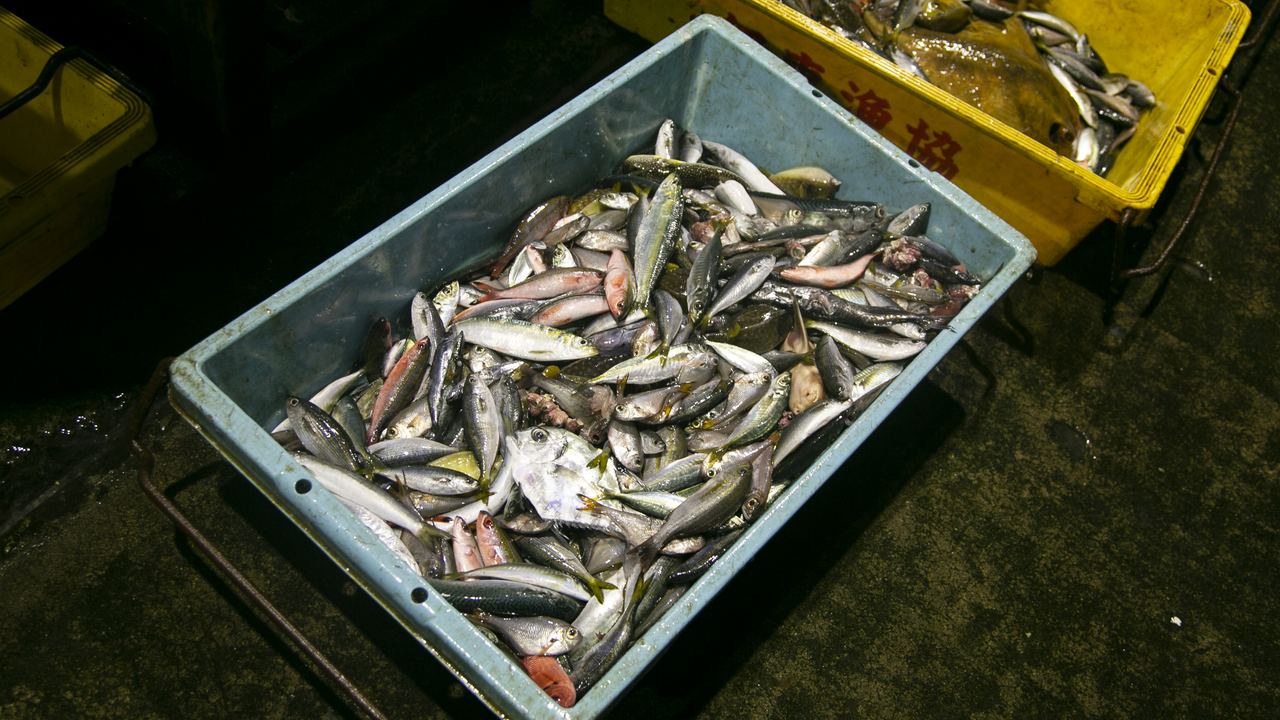
The most common misunderstanding in Tokyo food tourism is the belief that Tsukiji and the tuna auction are the same place. They stopped being the same place in October 2018, when the wholesale market moved to Toyosu and took the auction with it. The retail stalls stayed at Tsukiji, and they are what nine of these fourteen listings visit.
Both are worth doing. They are just not interchangeable, and one of them starts before dawn.
A Guide Through Tsukiji, and You Buy What You Want
Two hours with a Japanese guide through the Honganji temple and the outer market, learning what everything is. The food is not included: you choose and pay.
All-You-Can-Drink in Kabukicho, Under a Godzilla Head
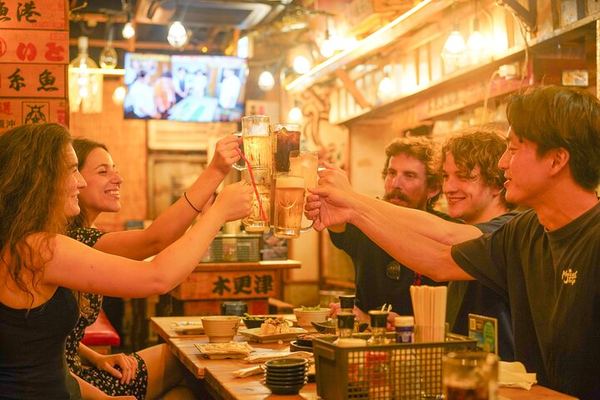
Three bars in three hours: two drinks in a Memory Lane izakaya, all-you-can-drink with a full dinner in Kabukicho, then a Golden Gai bar you would never find.
Asakusa Backstreet Food Crawl: Standing Sushi, Soba and Senso-ji
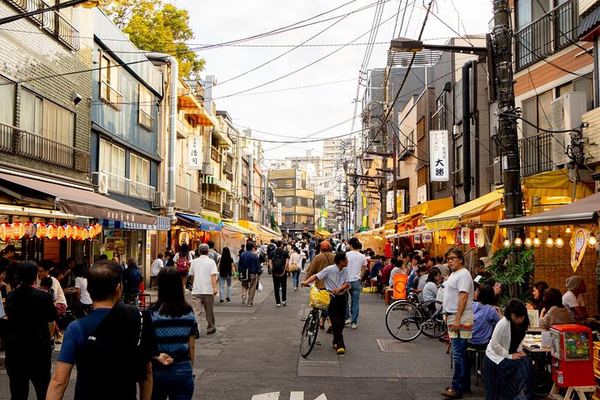
Four century-old Asakusa vendors in two hours: a standing sushi bar, a soba counter, Marugoto Nippon and Senso-ji, with lunch-size tastings at five stops.
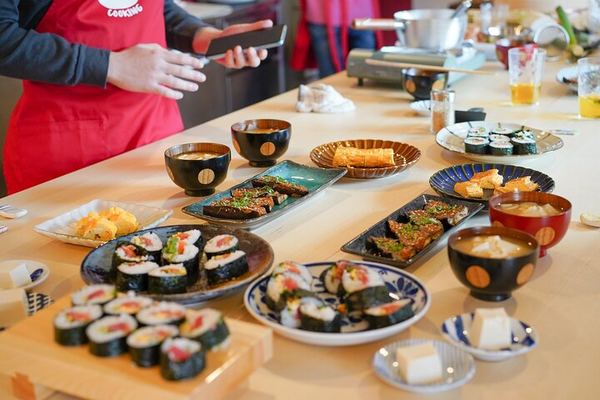
A Supermarket Aisle, Then Dashi From Scratch
Four hours starting in a supermarket aisle: how to choose the fish and the seasonings, then knife work, dashi, sushi rice, miso soup, dengaku and dashimaki.
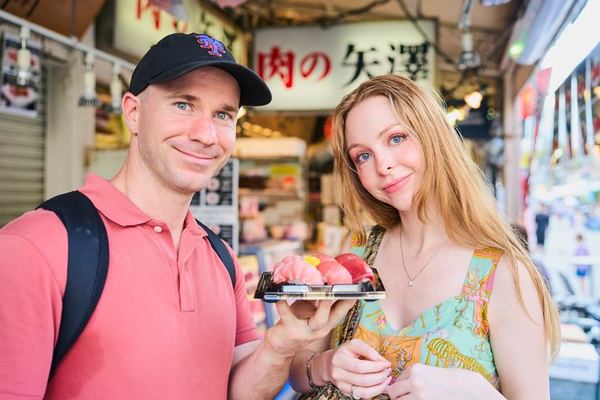
A Wasabi Set From Your Guide, and a Fish Filleted in Front of You
A short guided walk through the outer market with a fish-cutting demonstration, an explanation of curing and umami, and a wasabi set the guide brings along.
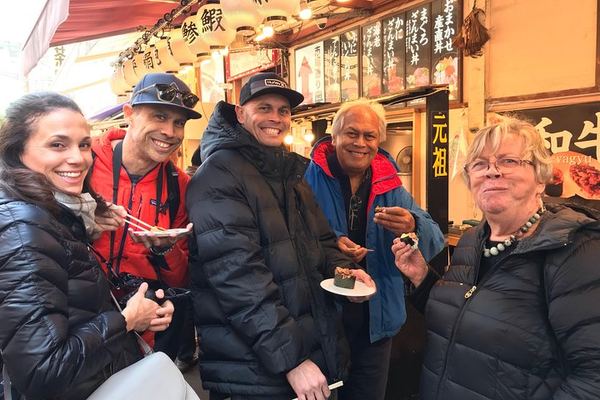
Both Fish Markets in One Morning, Old and New
Four hours across both of Tokyo's fish markets: the modern wholesale floor from the Toyosu observation deck, then the old outer market at Tsukiji. €92.83.
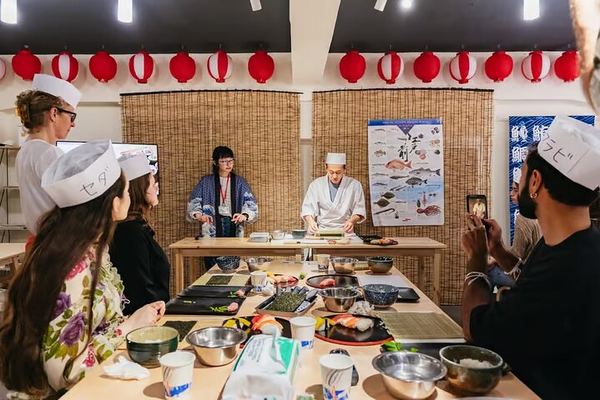
Buy the Fish, Then Shape Five Nigiri Yourself
Four hours: the outer market explained, then a professional sushi master teaching five nigiri and one roll, made with fish bought that morning. Lunch is yours.
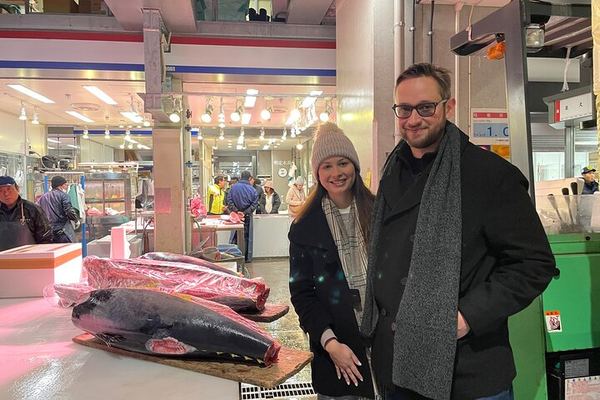
Cut the Tuna Block Yourself, in Azabujuban
Inside the Toyosu wholesale floor, buying fish at the counter, then Tsukiji, then a restaurant in Azabujuban to break down tuna and shape your own nigiri.
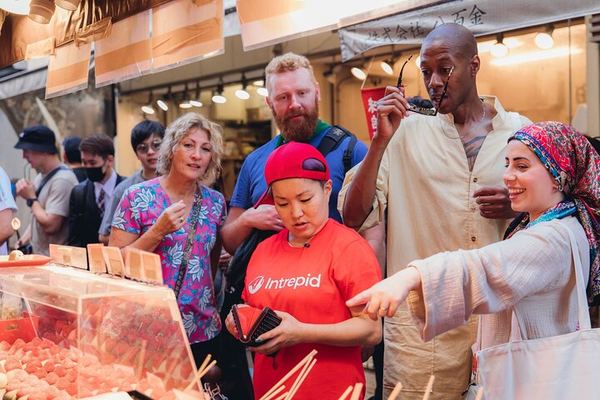
From the Kabuki Theatre's Shrine to the Wave-Warding One
Three hours from the shrine beside the kabuki theatre to the one built to hold back the sea, with sushi, snacks and wagashi sweets along the market alleys.
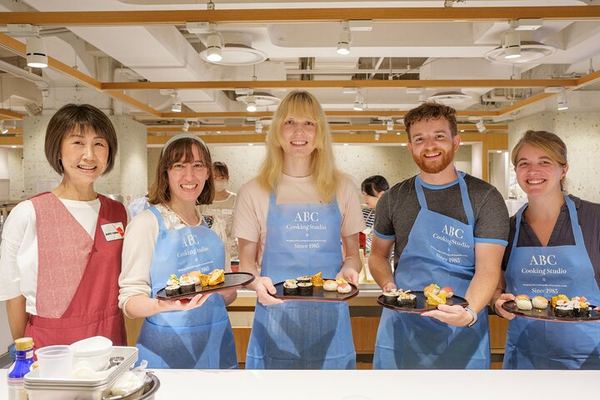
The Market, Then Japan's Biggest Cooking School
A guided hour or so through the outer market, then transport to a studio of Japan's largest cooking school to make sushi rolls and home-style dishes. €84.39.
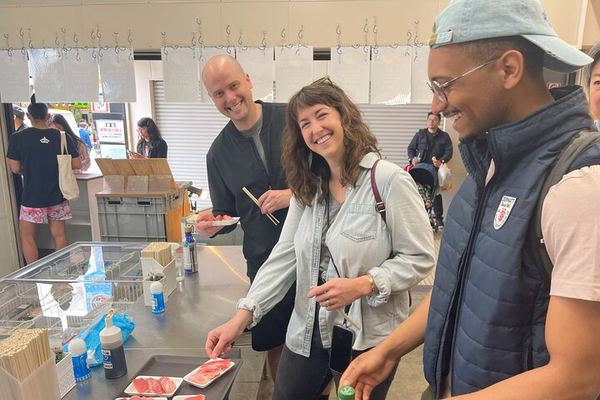
Three Cuts of Bluefin, and the Shrine That Wards Off Waves
Bluefin tuna in three cuts, tamagoyaki, sashimi, fish cake, wagyu cutlet, conger eel, dashi and green tea, ending with a tasting. Wheelchair accessible.
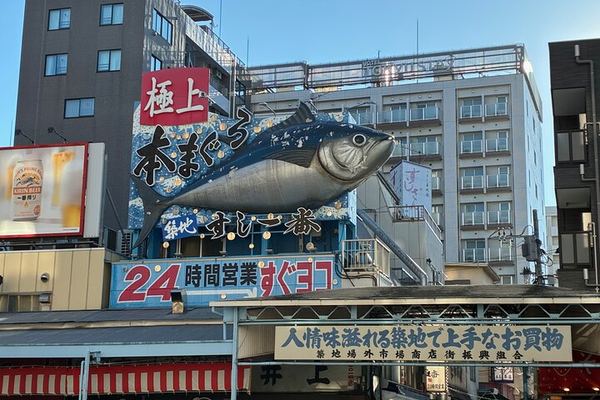
Three Guests, Two Hours, and a Historian on Perfectionism
Two hours on why Japanese food is the way it is: Shinto, Buddhism and a cult of perfectionism, sampled through beef, eel, shellfish, sushi and sweets.
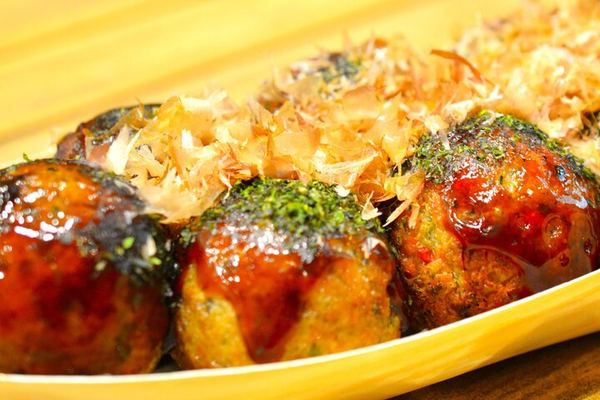
Twelve Takoyaki Each, on a Shared Griddle in Shinjuku
One hour at the takoyaki plate: two people to a griddle, twelve balls each, then the sauce, the mayonnaise and the bonito flakes that move on the heat.
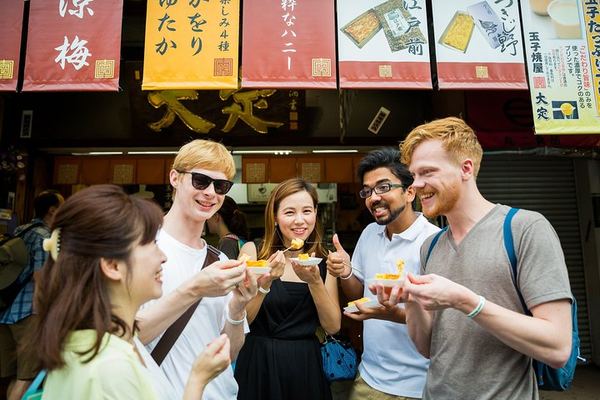
Wagyu Skewers, Tamagoyaki and a Knife Shop on the Way
Wagyu skewers, sweet rolled omelette, fried fish cake, seasonal fruit and a seafood bowl or sushi, picked for you across an overwhelming market.
Ratings collected by Viator and Tripadvisor
Tsukiji and Toyosu, side by side
Tsukiji outer market is several blocks of narrow lanes lined with retail stalls, knife shops, dried goods, and small counters. You walk, you eat standing, you buy things. It is open to anyone and it does not need a booking.
Toyosu is a modern wholesale facility on reclaimed land in the bay: three large buildings, glass corridors, and viewing galleries built specifically so visitors can watch the trade without interfering with it. You look down on the tuna auction from above. There is very good sushi in the restaurant floors, but the experience is fundamentally about seeing an industrial market work.
| Tsukiji outer market | Toyosu | |
|---|---|---|
| Listings here | 9 | 2 |
| What you do | Eat standing, stall to stall | Watch the auction from a gallery, then eat |
| When | Best 08:00 to noon; winds down early afternoon | Auction from roughly 05:30; you arrive in the dark |
| Price | 11 to 83 EUR | About 100 to 277 EUR |
| Booking | Not needed for the market itself | The lower viewing deck is limited and allocated in advance |
| Closed days | Many stalls follow the wholesale calendar: Sundays, some Wednesdays, holidays | Same calendar, and it is strict |
| Best for | A first morning in Tokyo, and eating | People who want to see the trade rather than taste it |

You eat it where you bought it
Japanese street food has a rule that is never written down and is followed almost universally: you do not walk while eating. You buy the skewer or the tray, you stand at the stall or just beside it, you eat, and you hand the rubbish back to the vendor. Then you move on.
This is why market walks in Tokyo move in short hops with pauses rather than as a stroll with food in hand, and why the tours feel slower than their equivalents in Bangkok or Hanoi. It also explains the absence of bins. Each vendor takes back what they gave you, so there is no need for public ones, and carrying a wrapper around all afternoon is a normal Tokyo experience.
What the stalls sell, and how tuna is graded
A Tsukiji morning has a fairly fixed repertoire, and knowing the words in advance makes the walk better.
Tamagoyaki is the rolled omelette sold on a stick, sweet and warm, and it is the classic first bite. Uni is sea urchin, served in a small wooden tray or on a spoonful of rice, and it is the thing people either love immediately or never order again. Hotate are scallops, split and grilled over charcoal with butter or soy. Maguro is tuna, and it is where the vocabulary matters.
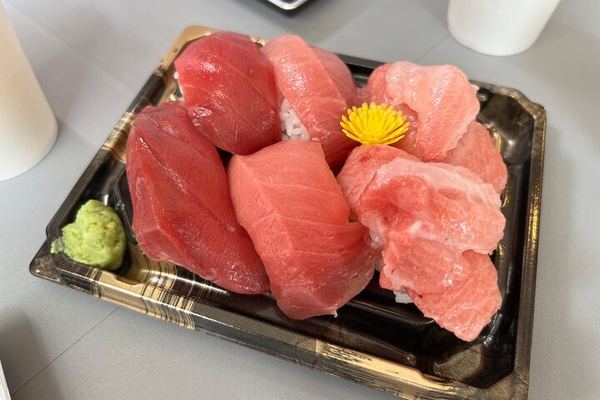
Tuna is sold in grades by fat content, and a good stall will offer all three so you can taste the difference in one sitting: akami is the lean red loin, firm and clean; chūtoro is the medium fatty cut from nearer the belly; ōtoro is the fattiest belly meat, pale pink, and the most expensive thing on most menus. Ordering all three side by side costs more than a single portion and teaches you more than any explanation would.
The other thing Tsukiji sells is knives. Several shops there are serious about it, and they will sharpen and engrave. It is not food, but it is the most common thing people carry home from this market, and a guide will tell you which shops sell to professionals.
The three other food places nobody sells you
No listing on this page goes to any of these, and all three are free to walk into. Between them they are a better second day than a second tour.
The depachika. Every large department store in Tokyo has a food hall in its basement, and the word is a contraction of depaato and chika, underground. They are extraordinary: counters of prepared food, pickles, sweets, bento, wagyu, cakes made to a standard that would carry a restaurant elsewhere, and free samples handed out without ceremony. Go around six in the evening and watch the prices on the prepared food come down as closing approaches, which is when the neighbourhood shops.
Ameyoko. A market street under and beside the railway tracks at Ueno, born as a post-war black market and still louder and cheaper than anything in central Tokyo. Dried fish, sweets by the bag, seafood shouted at you, and standing bars underneath the arches. It is the least polished food experience in the city.
The konbini. The convenience stores are not a joke here and no visitor should treat them as one. Onigiri, egg sandwiches, oden from a pot by the till in winter, fried chicken, and a standard of quality control that has no equivalent in most countries. A guide will not take you into one, and you will end up in one every day.
Four of these are cooking, one is a bar crawl
Read the fourteen titles carefully. Four are cooking experiences: a washoku class, a takoyaki session, a sushi workshop, and the 277 EUR listing at Toyosu that includes cutting a tuna. That last one is the most expensive product in the whole Tokyo catalogue and it is a class, not a market visit with lunch.
One more is a bar crawl through Golden Gai, which belongs to the night rather than the market, and which is the most reviewed item on this page with 3,961 reviews. It is here because its own title puts street food first.
Five of the fourteen also appear on our Tokyo food tours page. That is not double counting on our part: they are products whose itineraries genuinely straddle both, and the operators file them under both terms for the same reason.
The 11 euro listing is not a trap
Eleven euros for a guided walk in Tokyo looks like a mistake. It is not. It buys about two hours at Tsukiji with a guide who explains the stalls, the fish, the etiquette and the history, with a small number of tastings included and the rest bought by you as you go.
That model works here specifically because the market is retail: everything is for sale in single portions at fair prices, so a guide can walk you round and let you choose rather than pre-purchasing a set menu. At 28 EUR you get the same walk with more tastings included; at 83 you get a small group and a longer itinerary with five substantial tastings.
All three are legitimate. The 11 EUR version is the best value in the entire Tokyo catalogue if you are happy to buy your own sea urchin.
Questions about Tokyo markets
Is the Tsukiji fish market still open?
The outer market is, and it is thriving: retail stalls, small counters, knife shops, and the food tours on this page. The inner wholesale market, with the auction, moved to Toyosu in October 2018. Anyone selling you the tuna auction at Tsukiji is describing something that no longer exists.
When should I go to Tsukiji?
Between eight and noon. It works on the rhythm of the wholesale trade it used to serve, so it is fully alive early and closing by mid afternoon. Check the calendar too: many stalls close on Sundays, on some Wednesdays and on public holidays, following the market's own schedule.
What is a depachika?
The food hall in the basement of a department store, and one of the best things to eat in Tokyo that no tour includes. Prepared food, pickles, wagyu, sweets, free samples, and prices on the ready-made counters that fall as closing approaches. Free to walk into and open to anyone.
Is it worth getting up for the Toyosu auction?
If watching a working market is genuinely interesting to you, yes. If what you want is to eat very good fish, no: you can do that at Tsukiji at nine in the morning without setting an alarm for four. The auction is a spectacle of trade, seen through glass, and the number of visitor places on the lower deck is limited.
What should I eat first?
Tamagoyaki on a stick, because it is warm, cheap and immediate. Then grilled scallops. Then, if you are going to, sea urchin, and order it early while your palate is fresh. Tuna last, ideally three grades side by side.
Can I eat while walking?
You can, and almost nobody does. The convention is to eat at the stall and hand the tray back. It is why there are so few bins and why Tokyo market walks move in short hops rather than as a continuous stroll. Following the convention costs nothing and is noticed.
Is there anything here for someone who does not eat raw fish?
A good deal. Tamagoyaki, grilled scallops and skewers, wagyu, tempura, pickles, dried goods and green tea, plus the knife and kitchenware shops. Tell the guide at the start rather than at the first stall, and the route will shift accordingly.
Data verified on. Prices, ratings and inclusions read from the 14 listings on this page on 4 September 2026. The Tsukiji wholesale market moved to Toyosu in October 2018; the outer market remained.