
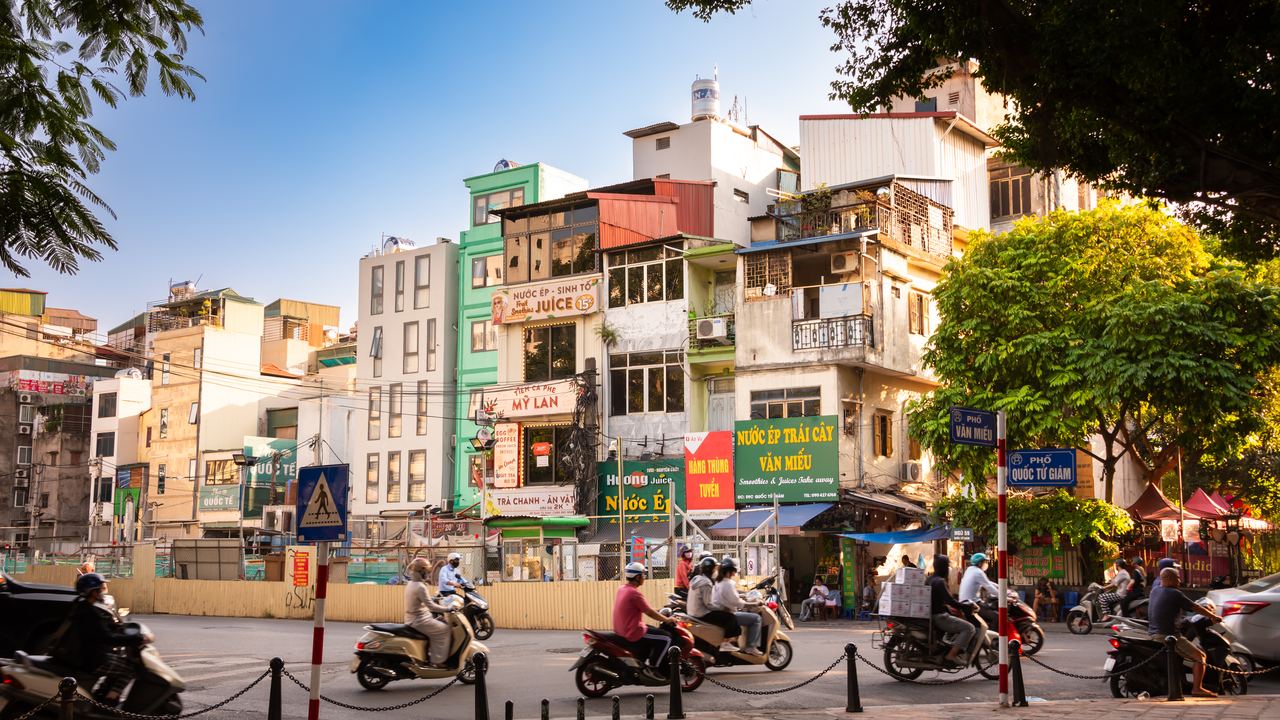
Food Tours and Cooking Classes in Vietnam
Forty-nine experiences in two cities. A street food walk in Hanoi has a median price of 25 EUR, the lowest of any destination on this site, and Hoi An sells almost nothing but cooking classes.
Vietnam is the cheapest country on this site by a wide margin, and the gap is not small enough to be a rounding error. A street food walk in Hanoi sits at a median of 25 EUR. The same walk in Rome is 82. In Mexico City it is 98. Whatever else you conclude about the food, the arithmetic here is unusual: you can book two guided evenings in Hanoi for less than one afternoon in most European capitals.
The two cities do not sell the same thing, and the difference is sharper than any brochure will tell you. Hanoi sells walking: a guide, an evening, six or eight stops on plastic stools. Hoi An sells a kitchen. Book the wrong one and you will have a fine day, but not the one you were imagining.
Choose a destination in Vietnam
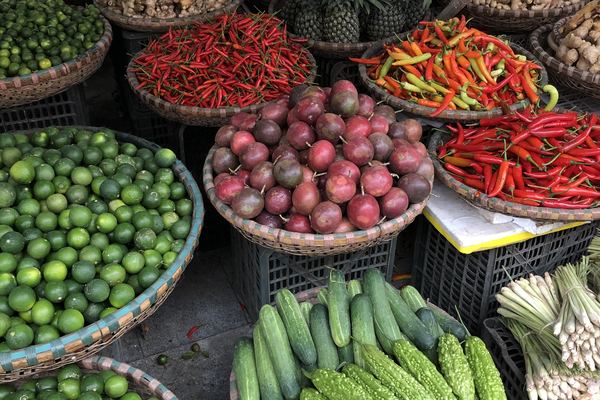

Food Tours Experiences in Vietnam
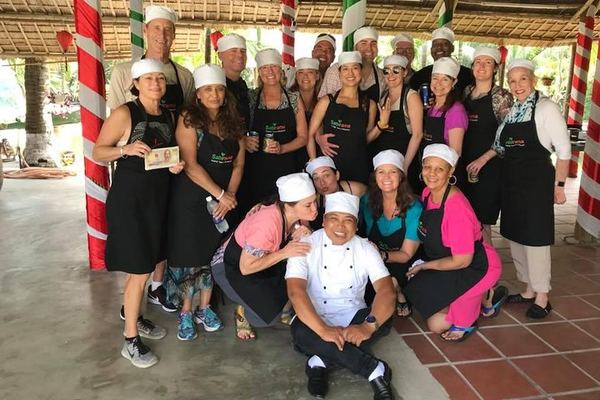
A Herbal Foot Soak Before the Knife Work, in Cam Thanh
A herbal foot soak and massage before you cook, then four dishes and the food decoration that goes with them. Thu Bon River boat, private transport, 4 hours.
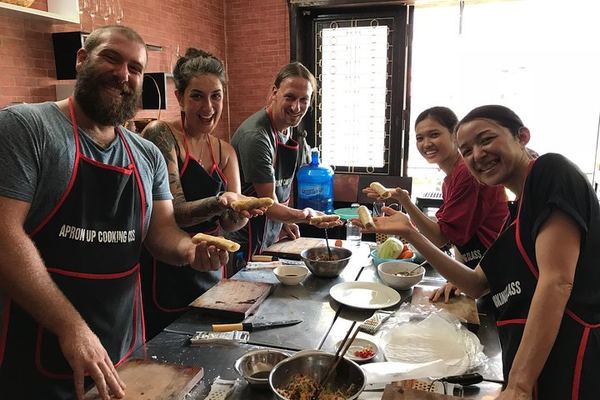
Apron Up Hanoi: Five Dishes and the City's Biggest Market
Five of the most popular Hanoi dishes cooked from scratch after a walk round the city's biggest market, with rice wine, a booklet and a certificate at the end.
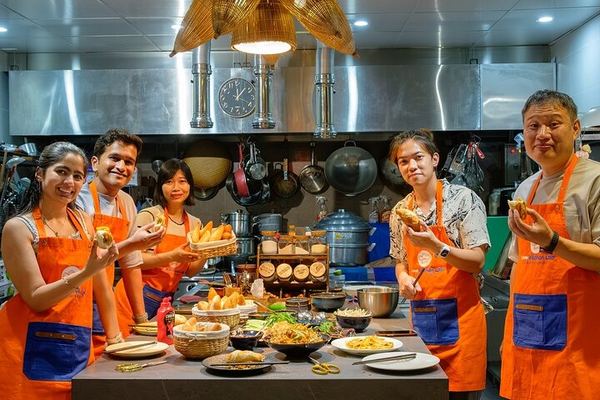
Bake the Banh Mi Baguette Yourself, in Tay Ho
Knead the dough, pickle the vegetables, brew the egg coffee: the Hanoi class that builds a banh mi from the bread up, in a home kitchen in Tay Ho.
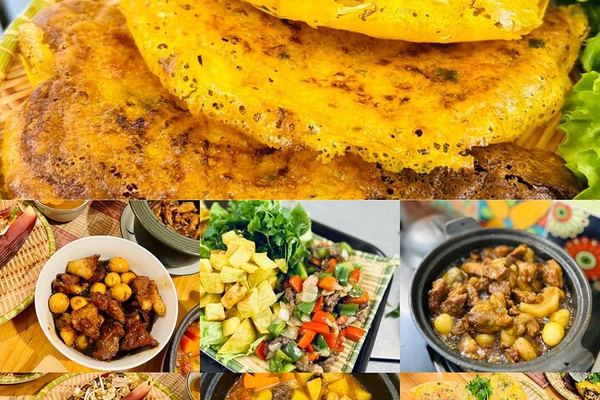
Banh Xeo and Four More at the Apron Up School, Hanoi
The banh xeo version of the five-dish class, with the market walk first and rice wine at the table. Vegetarian menu available, booklet and certificate.
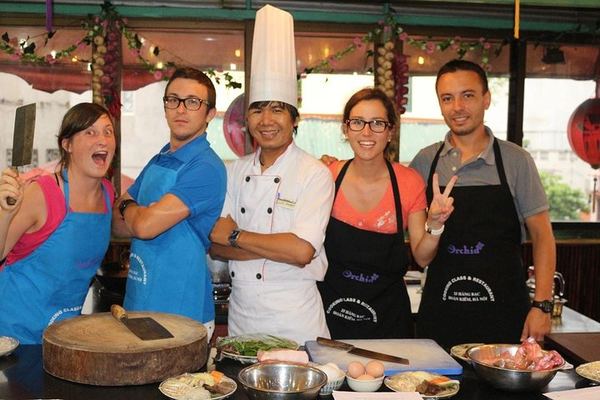
Blue Butterfly Cooking Class in Hanoi: Shop, Then Cook
Four and a half hours: shopping for the ingredients at a market, then cooking them with a chef on Ma May, with beer, coffee and seasonal fruit afterwards.
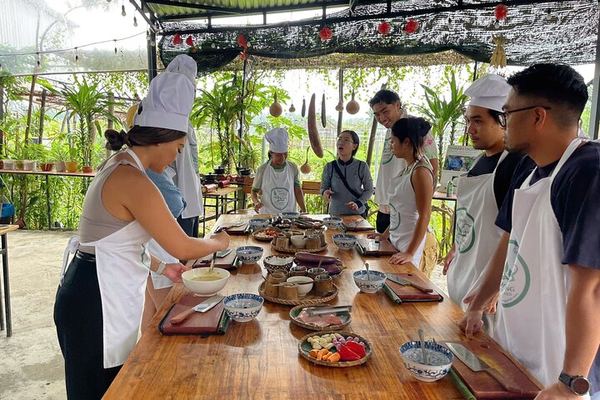
By Vespa to a Clay Pot of Caramelised Fish, Hoi An
A Vespa with a driver, a fish farm, herbs picked at Tra Que, then three Hoi An dishes: green mango salad, crispy pancake, and fish caramelised in a clay pot.
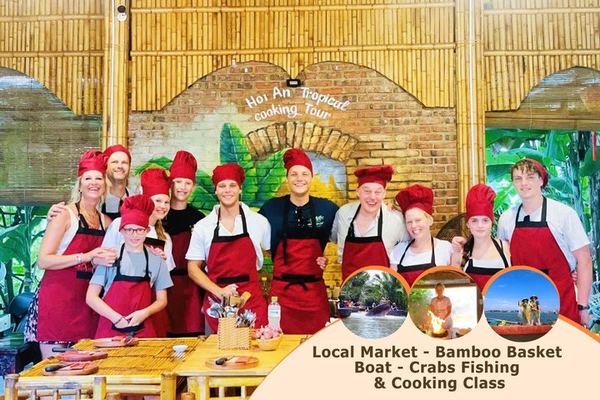
Cast the Net Yourself: Hoi An Market, Basket Boat, Four Dishes
Four and a half hours: the market with the chef, a basket boat through the coconut palms, throwing a fishing net, then four dishes and four side dishes.
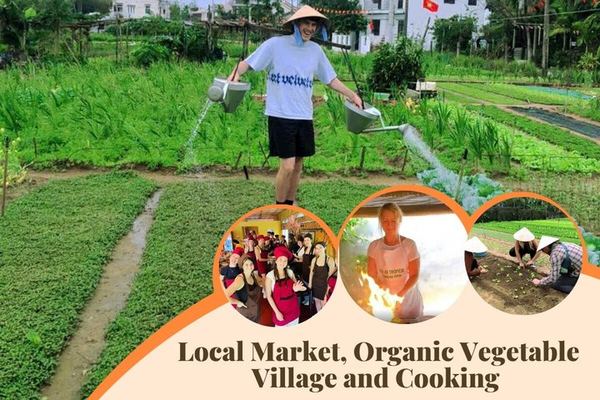
Chef Hai and the Seaweed Beds of Tra Que
Tra Que fertilises with seaweed, and you do the whole sequence: raking, planting, watering, picking. Then chef Hai, four dishes and four side dishes.
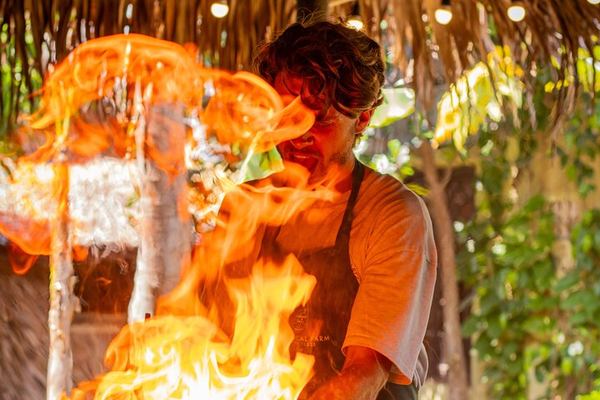
Cocolocal Farm, Hoi An: Cooking Beside the Shrimp Ponds
Five hours on a working farm in Cam Thanh: banh xeo, pho, papaya salad and spring rolls, after the market and the Bay Mau coconut forest. Ten people at most.
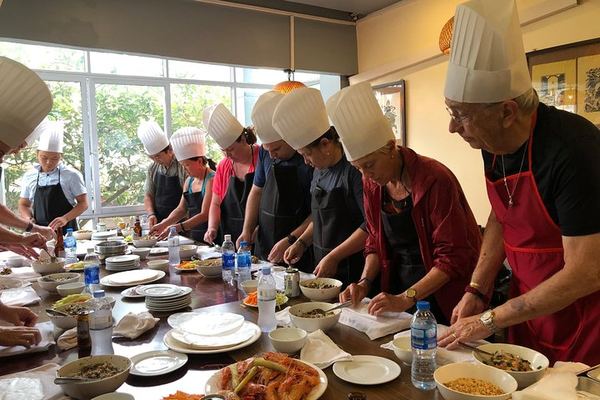
Cooking Class Above Beer Street with a Hanoi Market Run
A market run and then the kitchen, on the third floor above Hang Buom, taught by a team who have spent ten years guiding and cooking in Hanoi. Fourteen places.
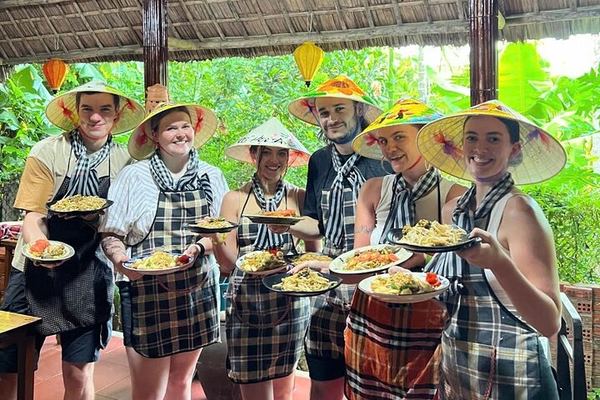
Cooking with Chef Tam in the Water Coconut Village, Hoi An
Chef Tam teaches four dishes in a coconut house, after the market, the purple crabs and the basket boat. Ten people at most, and every surface is step-free.
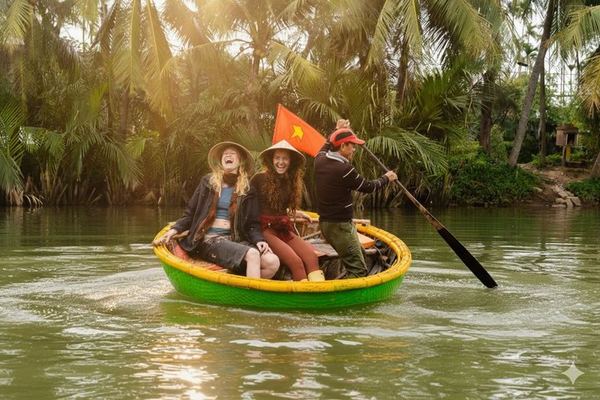
Cycle to Tra Que, Plant the Vegetables, Then Cook Them
You get there by bike through the paddy fields, plant and water and harvest at the farm, then cook what you picked. Ten people, 40 minutes of basket boat.
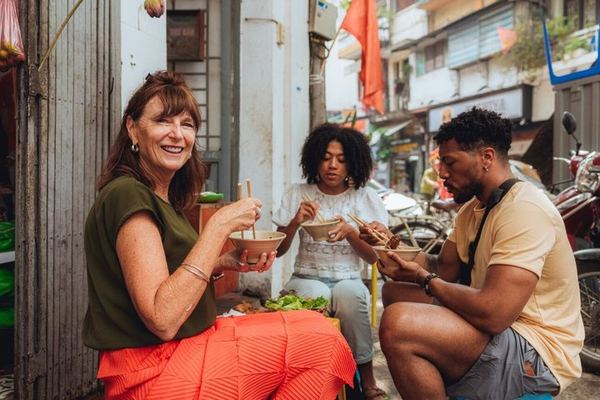
Dong Xuan Market to a Hidden Lake Cafe: Five Hanoi Stops
Starts in the largest covered market in Hanoi, works through the Old Quarter on banh mi, banh cuon, bun cha and grilled nem chua, ends over Hoan Kiem Lake.
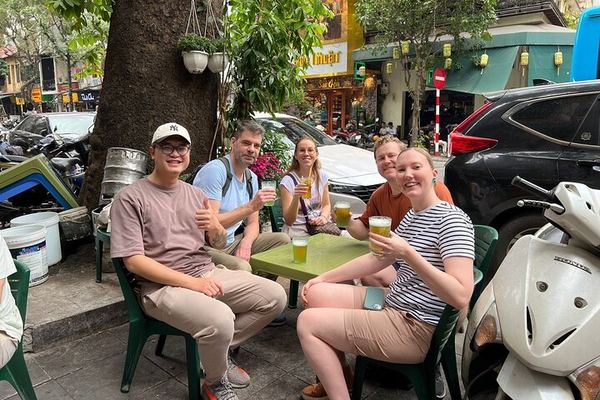
Eight Hanoi Dishes and They Keep Ordering Until You Stop
Around eight dishes, and the guide keeps ordering until you are full: banh cuon, pho, bun cha, banh mi and the sea worm dish, with egg coffee from the original.
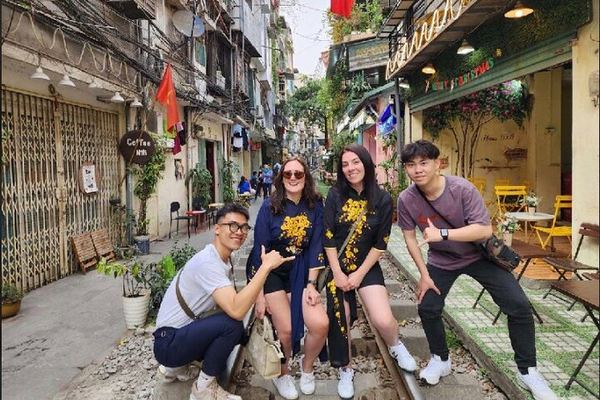
Five Dishes and a Drink Beside the Hanoi Train Track
Five dishes through quiet neighbourhood streets and hidden street art, then transport to the train street and a drink by the track while you wait for the train.
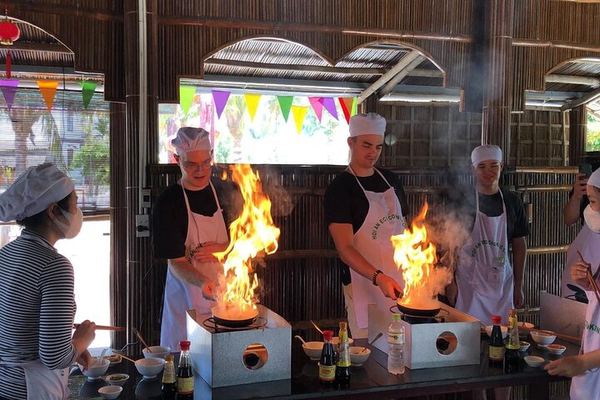
Five Hours in the Countryside with Kien Nguyen
Mr Kien Nguyen runs this one: the loud local market first, then the water coconut forest by basket boat, then rural quiet and a class. Service animals welcome.
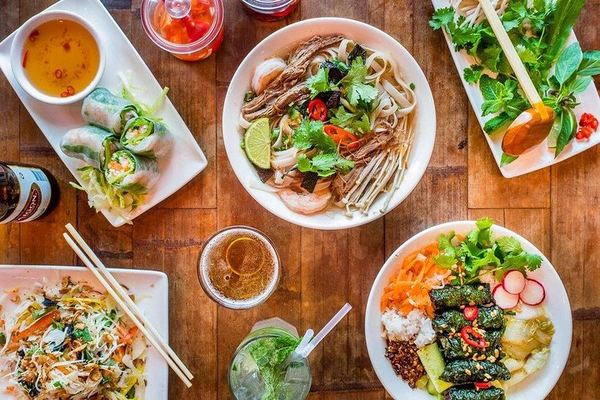
Five People, Nine Stops: Hanoi Street Food from Nom to Che
Green papaya salad, bun cha, spring rolls, egg coffee, banh cuon, pho cuon, banh mi and che, at named addresses, with the group capped at five.
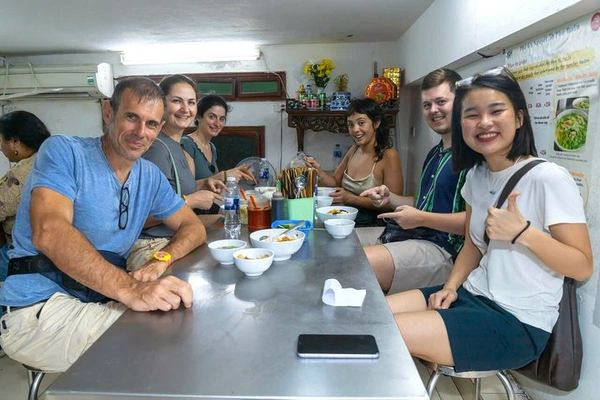
Hang Be Market and Hidden Alleys: Six Hanoi Street Bites
Bun cha, dry pho, pho cuon, banh mi, sticky rice with ice cream and egg coffee, in the alleys off Hang Be. Ten departures a day, and a train street option.
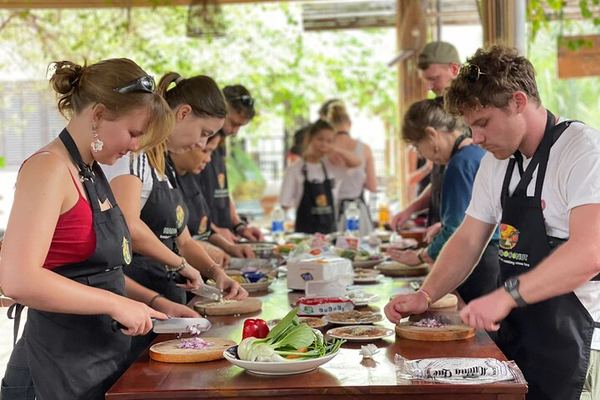
Hangcoconut: Cooking Where the Coconut Forest Hid a War
Three hours by the river in the Bay Mau coconut forest, which sheltered villagers and soldiers during the war. Spring rolls, banh xeo, crab salad, rice paper.
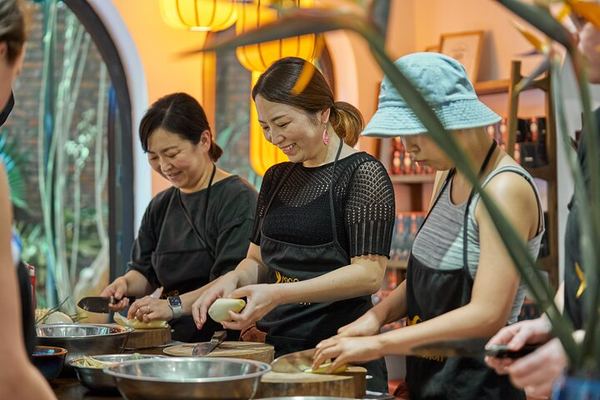
Hanoi Cooking Class in a Garden Villa with a Storyteller
Two garden villas outside the Old Quarter, guides trained by a former Metropole head chef, pho and bun cha, and a booking that funds community programmes.
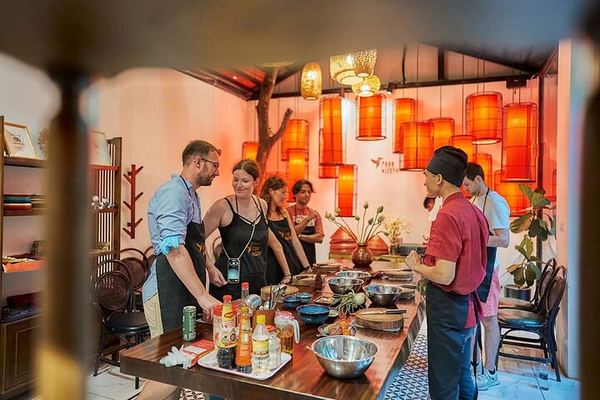
Hanoi Cooking Class with a Traditional Tea Tasting
Cook the dishes you choose in a hidden garden villa, then a traditional tea tasting and what tea means in Vietnamese life. Ten places, plastic-free setup.
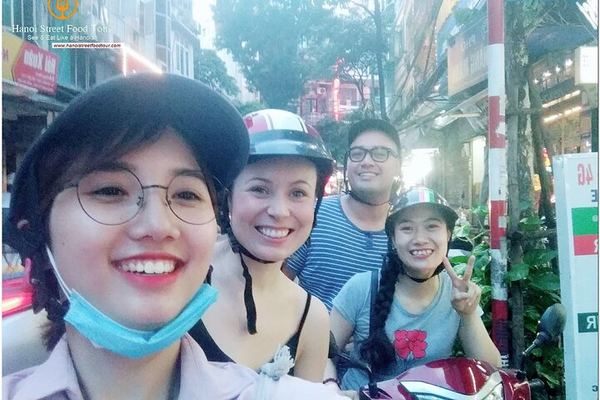
Hanoi Old Quarter by Motorbike: Ten Tastings on the Back
The Old Quarter from the back of a motorbike, with ten tastings across six to eight vendors, a fresh beer, a rice wine, an egg coffee and a local dessert.
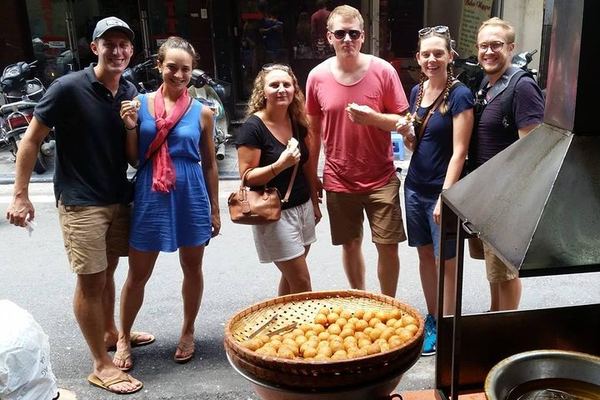
Hanoi Old Quarter Street Food Walk for Eight, with Pickup
Three hours through the Old Quarter with a guide who knows which stall to trust: pho, bun cha, snails, steamed pancakes and egg coffee, on a rotating menu.

Hanoi Street Food in Six: Certified Kitchens and Bia Hoi
Four hours and seven or more dishes in hidden alleys and small restaurants that all hold a hygiene certificate, from nom bo kho to egg coffee. Six people.
Ratings collected by Viator and Tripadvisor
Hanoi walks, Hoi An cooks
We counted the listings rather than reading the marketing, and the split is close to absolute. Of the twenty experiences in Hoi An, twenty are cooking classes. Not most: all of them. There is no guided food walk of the old town in this catalogue, which is a genuine gap in what the market offers rather than an omission on our part.
Hanoi is the mirror image. Its street food walks carry 31,059 reviews between them, which is more than the whole of Hoi An and more than most European cities on this site. The cooking classes there exist too, and five of them are the same products filed under both headings, because a class that starts with an hour in the market is honestly both things at once.
| Hanoi | Hoi An | |
|---|---|---|
| What is sold | Street food walks, plus classes that start in a market | Cooking classes, almost without exception |
| Listings | 29 | 20 |
| Median price | 25 EUR for a walk, 33 for a class | 26 EUR |
| Price range | 5 to 97 EUR | 15 to 54 EUR |
| Reviews | 31,059 on the walks alone | 13,567 |
| Typical length | Counted in stops, not hours: six to ten | 4.25 to 4.5 hours, most start at 08:30 |
| The thing you are buying | Someone who knows what the stall costs | A morning that ends with lunch you cooked |

The basket boat is not a gimmick, it is the commute
Twelve of the twenty Hoi An classes follow the same route, and once you see it you cannot unsee it: the market first, then a round bamboo boat through the water coconut palms of Cam Thanh, then the kitchen. The repetition looks like copying. It is closer to geography. The cooking schools sit out in the villages east of the old town, and the waterways are how you get there.
What separates one class from another is not the boat, then, but who is teaching and how many of you there are. Four of these listings sit at exactly 25.48 EUR, which is what a market rate looks like when a dozen operators sell the same morning. Read the number of dishes and the group size, because those are the only two variables left once you strip out the scenery.
What a guide is actually for in Vietnam
It is worth being honest about this, because the usual answer is wrong. You do not need a guide to find good food in Hanoi. The good food is everywhere, it is obvious, and the queue of local office workers outside a stall at half past six tells you more than any review site.
What you cannot do alone is read the prices, because a great many of them are not written down. A stall with no menu quotes what it likes to a visitor, and the gap between the local price and the tourist price is the whole reason a guide pays for itself at 25 EUR. The second thing you are buying is order: which of the eight things on a table you are meant to put in the bowl, when, and in what quantity. Bún chả arrives as a set of components and a diner who assembles them wrong is served the same food and eats a worse version of it.
The line that keeps coming back from travellers is that the tour was not worth it for the food, which they would have found anyway, but was worth it for the fifteen minutes in which someone explained how the eating works.
The four things you will be handed
Northern Vietnamese cooking is not the sweet, herb heavy food of the south, and Hanoi in particular runs cooler, saltier and more restrained. Four dishes turn up on nearly every itinerary in this catalogue.
| Dish | What it is | When it is eaten |
|---|---|---|
| Phở | Rice noodles in a beef or chicken broth simmered for hours, with herbs added at the table | Breakfast, properly. Stalls that sell it at night are selling to tourists |
| Bún chả | Grilled pork patties and belly in a bowl of sweetened fish sauce broth, with cold rice noodles alongside | Lunch, and almost only lunch. Most bún chả shops shut by two |
| Bánh mì | A baguette with pâté, cold cuts, pickled carrot and daikon, coriander and chilli | Any hour. It is the one thing sold from morning to midnight |
| Cà phê trứng | Egg coffee: yolk and condensed milk whipped into a custard over strong Vietnamese coffee | Mid afternoon, sitting down, and never in a hurry |
| Cao lầu | A Hoi An noodle only: thick, chewy, with pork and greens, and traditionally made with water from one particular well | Lunch, in Hoi An and nowhere else |

When to go, and what the weather does to the eating
Vietnam is long enough that the north and the centre run on different calendars, and a single answer for the country would be useless. Hanoi has a real winter: cold, damp, grey, and from December to February it can sit under drizzle for a week. That is not a reason to stay away. Street food in Hanoi is at its best when it is cold, because the food is hot and the sitting is outdoors, and a bowl of phở in February makes more sense than the same bowl in the July heat.
Hoi An has the opposite problem. October and November are the flood months on the Thu Bon river, and the old town has been known to take water at street level. Cooking classes there run in the wet season, but the boat half of the morning does not always.
When to eat where
Two cities, two calendars. The months are numbered so they read the same in any language.
| Month | 1 | 2 | 3 | 4 | 5 | 6 | 7 | 8 | 9 | 10 | 11 | 12 |
|---|---|---|---|---|---|---|---|---|---|---|---|---|
| HanoiCold and damp from December to February, which suits hot food eaten outdoors better than the humid heat of June to August | 1 | 2 | 3 | 4 | 5 | 6 | 7 | 8 | 9 | 10 | 11 | 12 |
| Hoi AnOctober and November are the flood months on the Thu Bon; the old town has taken water at street level and the boat leg of a class is the first thing cancelled | 1 | 2 | 3 | 4 | 5 | 6 | 7 | 8 | 9 | 10 | 11 | 12 |
Based on the operating months of the 49 Vietnamese listings on this site and the published rainfall pattern for the two cities, checked September 2026.
A note on the prices, because they look impossible
One Hanoi listing appears at 4.51 EUR. It is not a mistake in our data, and it is not a bargain either: the description offers a free private guide, and the money comes from what you eat and where the guide takes you. We have left it in the catalogue because it exists and people book it, but it is the one product here whose price tells you nothing about what you will spend.
Above that outlier the pricing is coherent. Fourteen euros buys a walking tour of the Old Quarter, twenty five buys a small group evening with a guide who does this professionally, and forty eight buys a private cooking class with a market trip attached. Three listings share the identical price of 24.60 EUR, which is a good sign rather than a suspicious one: it means several operators have converged on what the evening is worth.
Questions people ask before booking Vietnam
Is a food tour in Vietnam worth it when the food is so cheap anyway?
The food is cheap, which means the tour is not paying for your dinner. It is paying for someone who knows what each stall charges locals, which of them opens when, and how the dishes are assembled. At 25 EUR for an evening that is a small amount of money for a large amount of context. If you speak some Vietnamese or have been before, skip it and eat on your own with a clear conscience.
Is street food in Vietnam safe to eat?
Broadly yes, and the usual advice holds: eat where there is turnover, prefer food cooked in front of you, and be more careful with ice and with raw herbs than with anything hot. Guided tours choose stalls they use every week, which is one of the quieter reasons people book them. Take the same care you would anywhere with a stomach that is not used to the local water.
Hanoi or Hoi An?
They answer different questions. Hanoi is where you go to be walked around a city and shown how it eats: 29 listings, most of them evening walks, and the largest pool of reviews in the country. Hoi An is where you go to spend a morning cooking, and where the class comes with a boat ride and a market visit built in. If you have time for one and want to bring something home other than photographs, Hoi An. If you want the city, Hanoi.
How long do these last?
Hoi An is the predictable one: most classes run 4.25 to 4.5 hours and start at half past eight in the morning. Hanoi is looser, and the listings there tend to count stops rather than hours, typically six to ten vendors over an evening. Expect three to four hours and do not eat beforehand.
Do I need to book ahead?
For Hoi An, yes, particularly in the dry months when a dozen schools run the same morning and the small group ones fill first. For Hanoi street food, a day or two is usually enough. The exception is anything private, which is a scheduling problem rather than a capacity one.
Are these tours vegetarian friendly?
Ask before booking rather than on the day. Vietnamese cooking uses fish sauce almost everywhere, including in dishes with no visible fish, and a stall cannot make a version without it on request. Cooking classes handle it far better than street food walks, because the ingredients are bought for you in the market that morning.
Data verified on. Prices, review counts and ratings read from the 49 Vietnamese listings on this site on 4 September 2026. Durations taken from the operators' own itineraries.