

Hanoi Food Tours and Cooking Classes
Twenty-nine experiences, a median of 25 EUR for an evening walk, and a rating of 5.0 across 31,059 reviews. What you are paying for is not the food. It is the price of the food.
Hanoi has the cheapest guided eating anywhere on this site and the highest ratings on it. Twenty street food walks hold a straight 5.0 across 31,059 reviews, which is the kind of number that usually means a small sample. It is not: this is the largest pool of reviews of any Asian city in the catalogue.
The Old Quarter is small, dense and legible, and finding good food in it takes no skill at all. Which raises the obvious question about why anybody books a tour here. The answer is below, and it is not the one the operators put in their titles.
Choose a destination in Hanoi
-
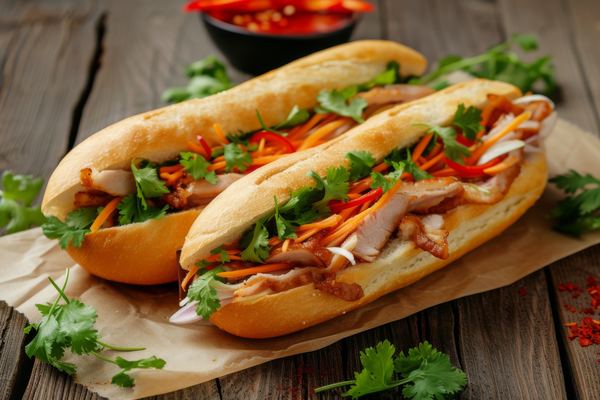
Hanoi Street Food
Old Quarter street food walks from 5 to 48 EUR, median 25. Six to ten stops on plastic stools, and a guide whose real job is knowing what each bowl costs.
20 experiences -
Hanoi Cooking Classes
Hanoi cooking classes from 17 EUR, median 33. Half start with a wet market walk.
14 experiences

Food Tours Experiences in Hanoi
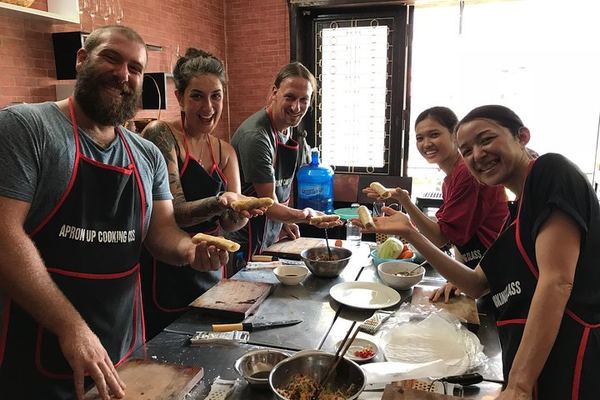
Apron Up Hanoi: Five Dishes and the City's Biggest Market
Five of the most popular Hanoi dishes cooked from scratch after a walk round the city's biggest market, with rice wine, a booklet and a certificate at the end.
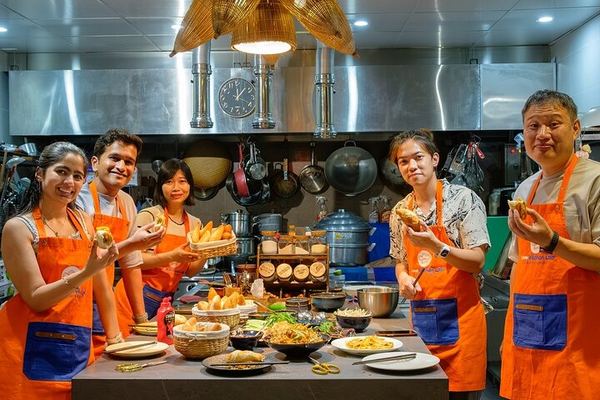
Bake the Banh Mi Baguette Yourself, in Tay Ho
Knead the dough, pickle the vegetables, brew the egg coffee: the Hanoi class that builds a banh mi from the bread up, in a home kitchen in Tay Ho.
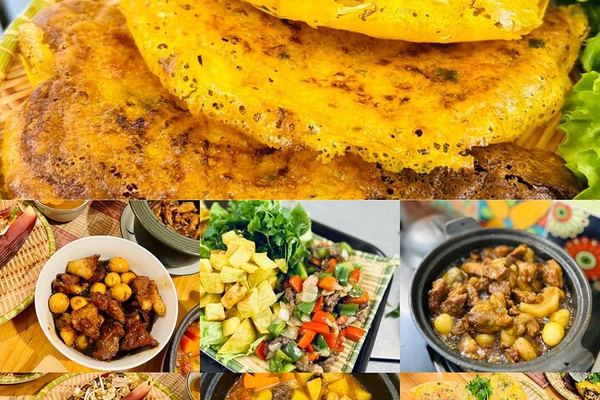
Banh Xeo and Four More at the Apron Up School, Hanoi
The banh xeo version of the five-dish class, with the market walk first and rice wine at the table. Vegetarian menu available, booklet and certificate.
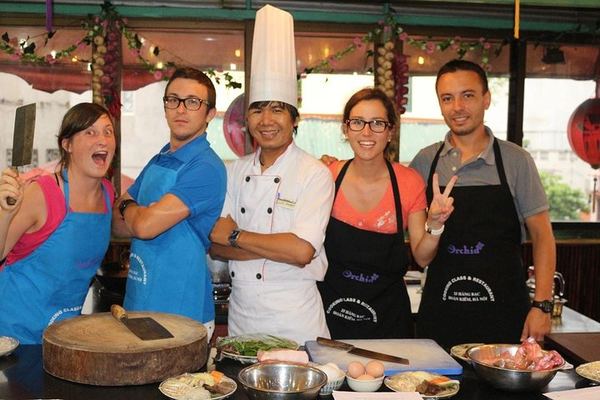
Blue Butterfly Cooking Class in Hanoi: Shop, Then Cook
Four and a half hours: shopping for the ingredients at a market, then cooking them with a chef on Ma May, with beer, coffee and seasonal fruit afterwards.
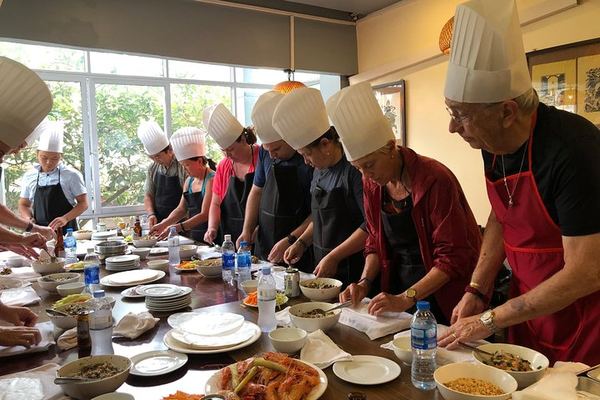
Cooking Class Above Beer Street with a Hanoi Market Run
A market run and then the kitchen, on the third floor above Hang Buom, taught by a team who have spent ten years guiding and cooking in Hanoi. Fourteen places.
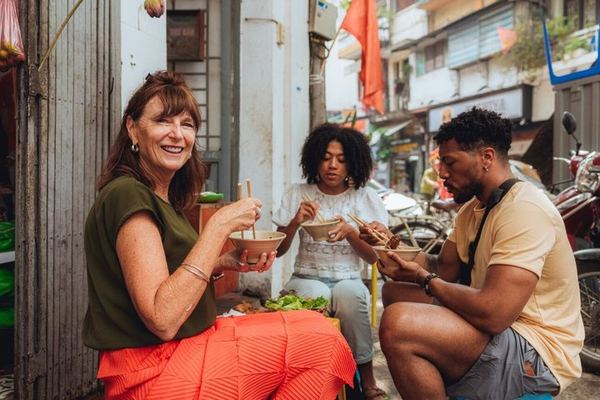
Dong Xuan Market to a Hidden Lake Cafe: Five Hanoi Stops
Starts in the largest covered market in Hanoi, works through the Old Quarter on banh mi, banh cuon, bun cha and grilled nem chua, ends over Hoan Kiem Lake.
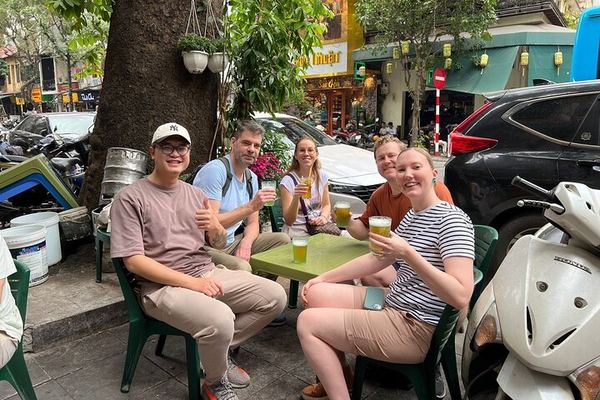
Eight Hanoi Dishes and They Keep Ordering Until You Stop
Around eight dishes, and the guide keeps ordering until you are full: banh cuon, pho, bun cha, banh mi and the sea worm dish, with egg coffee from the original.
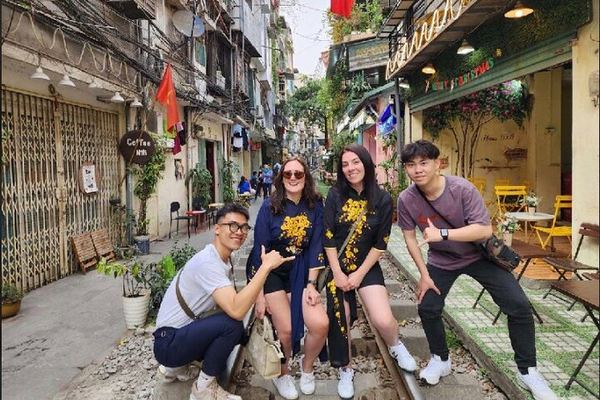
Five Dishes and a Drink Beside the Hanoi Train Track
Five dishes through quiet neighbourhood streets and hidden street art, then transport to the train street and a drink by the track while you wait for the train.
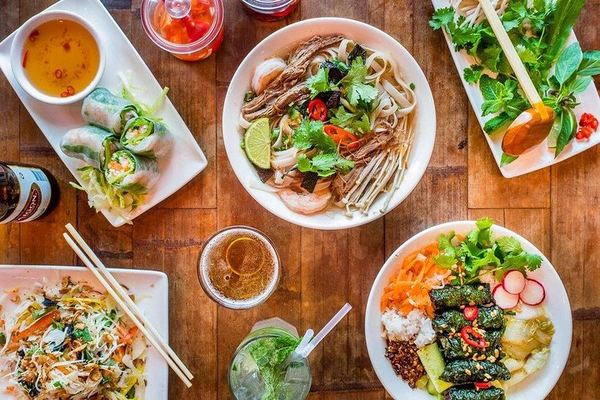
Five People, Nine Stops: Hanoi Street Food from Nom to Che
Green papaya salad, bun cha, spring rolls, egg coffee, banh cuon, pho cuon, banh mi and che, at named addresses, with the group capped at five.
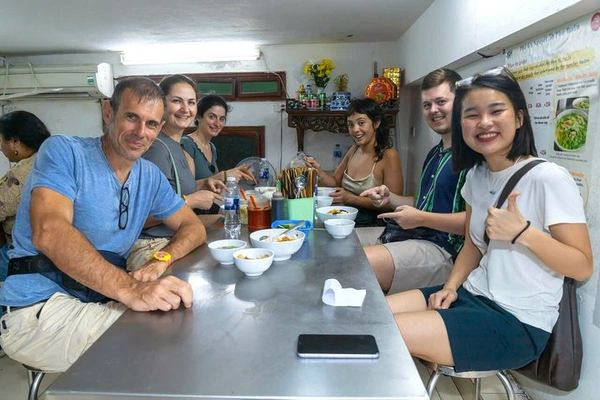
Hang Be Market and Hidden Alleys: Six Hanoi Street Bites
Bun cha, dry pho, pho cuon, banh mi, sticky rice with ice cream and egg coffee, in the alleys off Hang Be. Ten departures a day, and a train street option.
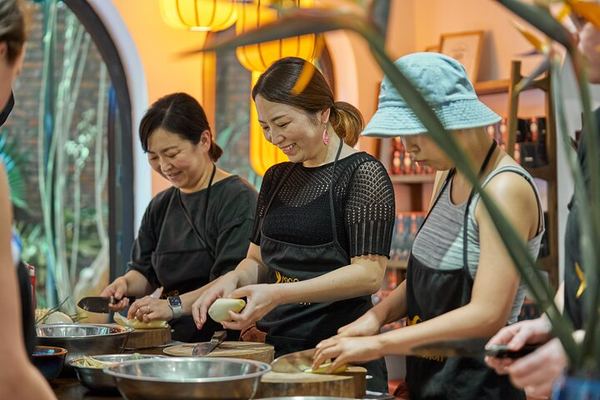
Hanoi Cooking Class in a Garden Villa with a Storyteller
Two garden villas outside the Old Quarter, guides trained by a former Metropole head chef, pho and bun cha, and a booking that funds community programmes.
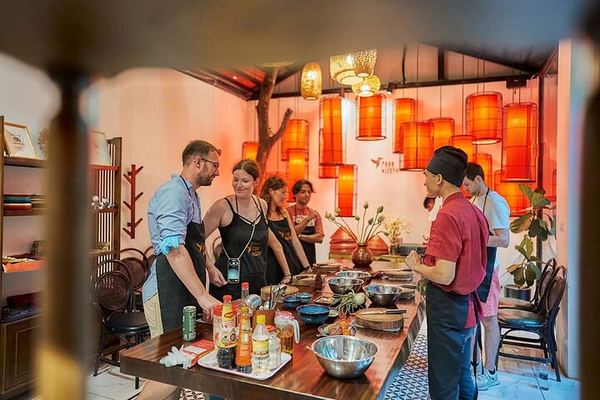
Hanoi Cooking Class with a Traditional Tea Tasting
Cook the dishes you choose in a hidden garden villa, then a traditional tea tasting and what tea means in Vietnamese life. Ten places, plastic-free setup.
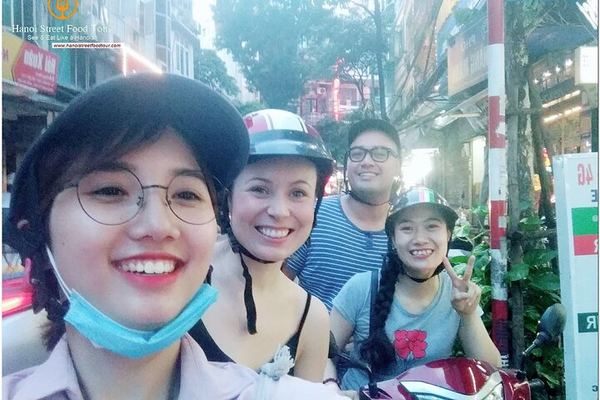
Hanoi Old Quarter by Motorbike: Ten Tastings on the Back
The Old Quarter from the back of a motorbike, with ten tastings across six to eight vendors, a fresh beer, a rice wine, an egg coffee and a local dessert.
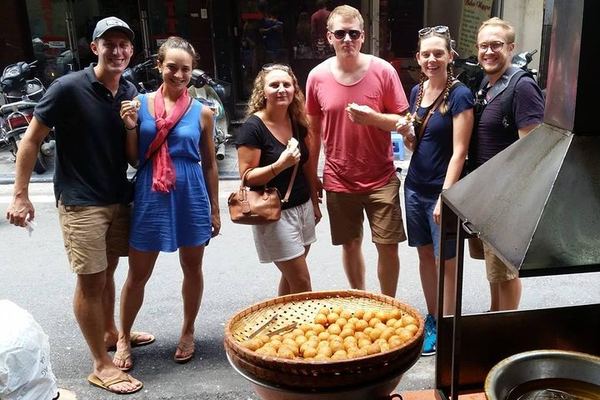
Hanoi Old Quarter Street Food Walk for Eight, with Pickup
Three hours through the Old Quarter with a guide who knows which stall to trust: pho, bun cha, snails, steamed pancakes and egg coffee, on a rotating menu.

Hanoi Street Food in Six: Certified Kitchens and Bia Hoi
Four hours and seven or more dishes in hidden alleys and small restaurants that all hold a hygiene certificate, from nom bo kho to egg coffee. Six people.
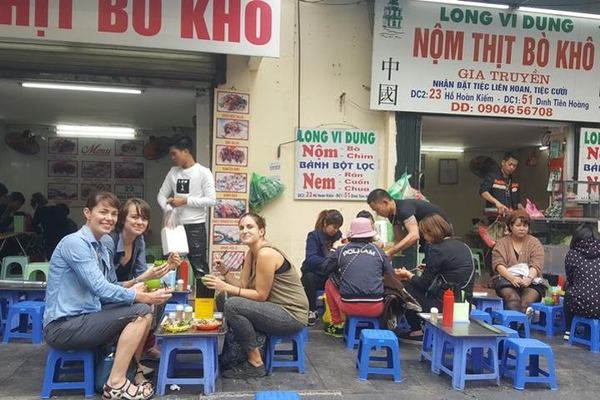
Hanoi Street Food with Sidewalk Green Tea and a Vegan Option
A rotating menu of noodle soups, snails, sticky rice and pancakes, with green tea on a plastic stool. Vegan and train street versions, pickup and drop-off.
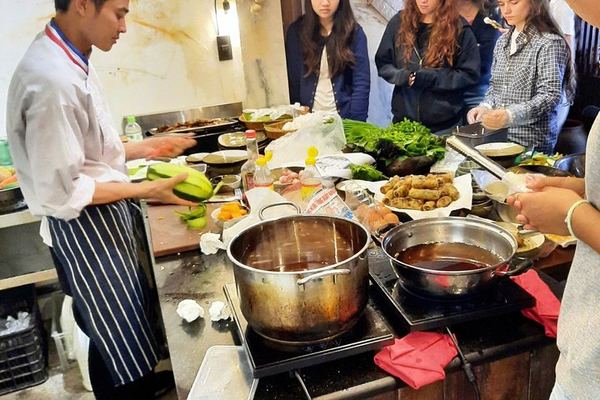
Ma May Cooking Class in Hanoi with a Market Walk and Cyclo
A cyclo collects you from the Old Quarter, the chef walks you round the market with street food stops, then you cook the set menu and sit down to eat it.
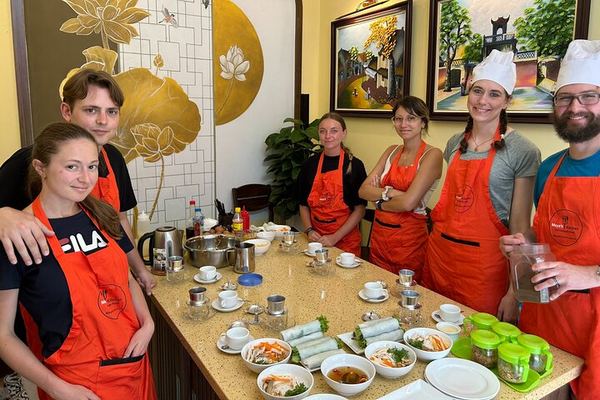
Maya Kitchen Hanoi: Four Dishes, Egg Coffee and Rice Wine
Fried spring rolls, papaya salad, pho rolls and mixed pho, bought at the market first and cooked in the Old Quarter, with egg coffee and a local wine tasting.

O Quan Chuong to Hang Bac: Hanoi's 36 Streets by Mouth
Starts at the last surviving city gate, works through six to eight vendors in the 36 streets, and ends on dessert at Hang Bac with egg coffee on the way.
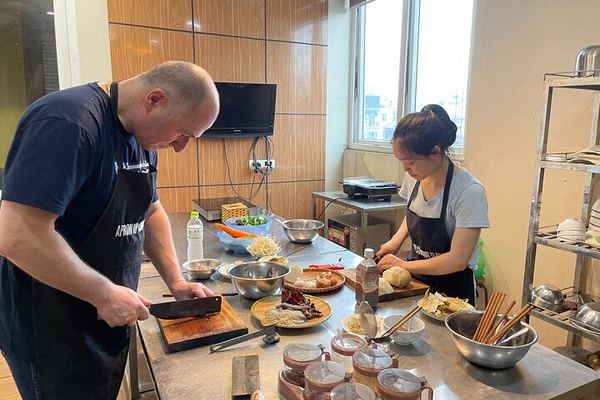
Private Apron Up Class: Five Dishes You Choose Yourself
You name the five dishes and a home chef teaches them, with time to ask everything. Four hours, private, in the middle of the Old Quarter.
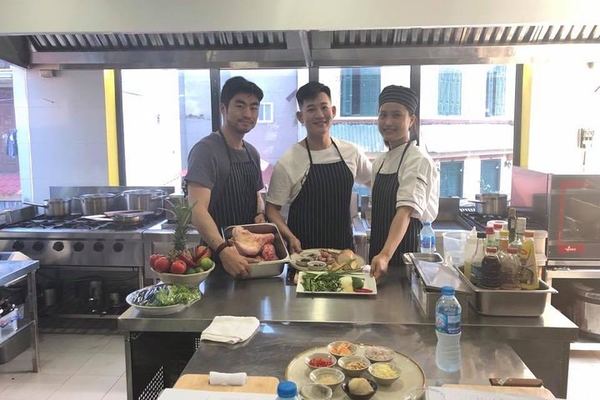
Private Hanoi Class by Cyclo, Through the Little Alleys
Five hours: a cyclo ride, a market reached through alleys most visitors never turn into, then a private class with professional chefs and the meal you cooked.
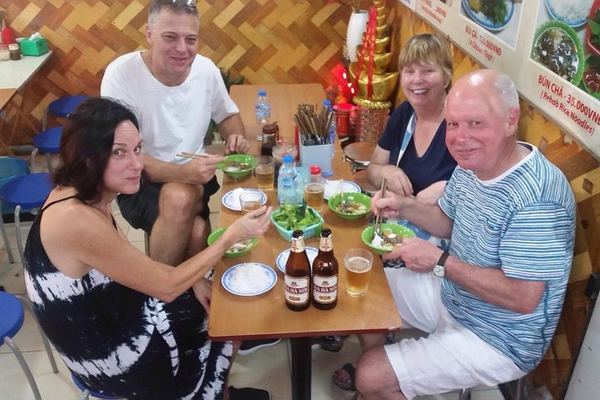
Private Hanoi Food Walk: Ten Dishes and the Original Egg Coffee
Your own guide for three hours and ten dishes across the Old Quarter, past St Joseph's and Ta Hien, finishing at the original egg coffee cafe.
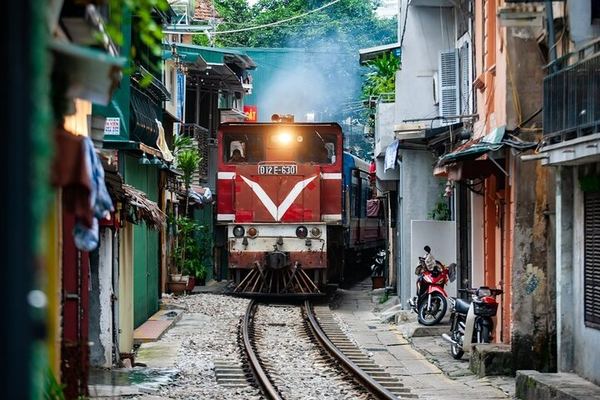
Seven Dishes and the Train Street, Eight People Only
Bun cha, pho bo, bun rieu, pork porridge, banh xeo, banh mi and salad, then the train street with an egg coffee and the entrance fee already paid.
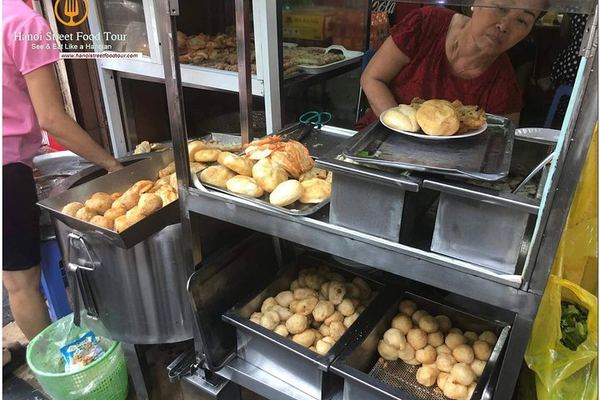
Ten Tastings at Midday in Hanoi, in Six Languages
Ten tastings across six to eight vendors, with a beer, a rice wine, an egg coffee and a dessert. Guided in six languages, including French and Spanish.
Ratings collected by Viator and Tripadvisor
The prices are not written down
This is the actual product. On a large share of Old Quarter stalls there is no menu and no price list, and the number quoted to a foreigner is not the number quoted to the woman who works around the corner. The gap is rarely enormous in absolute terms, because everything is cheap, but it is routine, and it is the single most common complaint in traveller forums about eating here.
A guide removes the question entirely. They know what the bowl costs, they order in Vietnamese, and they hand over the right money without a negotiation. At a median of 25 EUR for an evening, that service alone roughly pays for itself over a week of eating if you then go out on your own using what you learned.
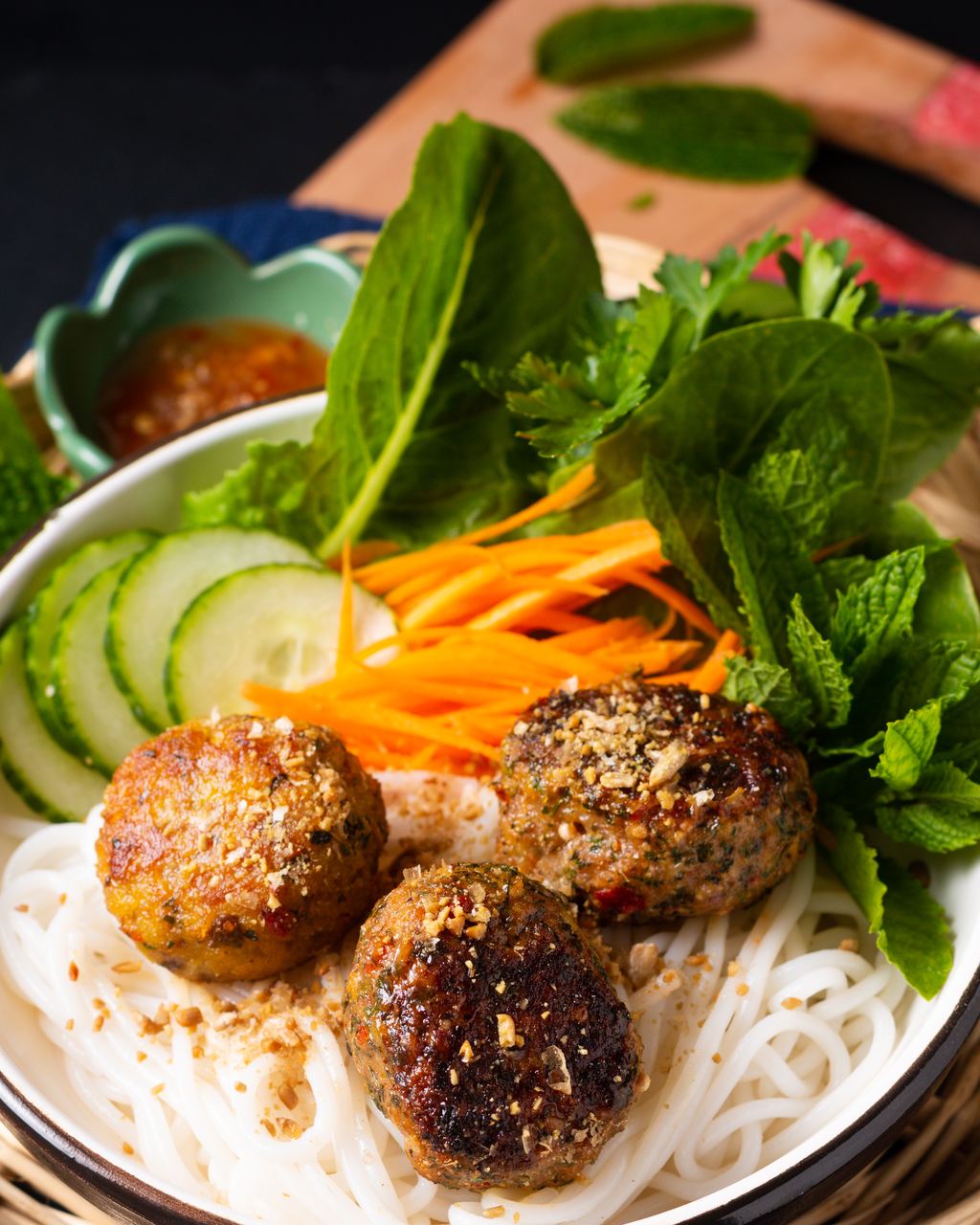
The second thing you are buying is sequence. Northern Vietnamese food arrives as components, and there is a right way to put them together. Bún chả comes as a bowl of broth with grilled pork in it, a plate of cold noodles, a pile of herbs and a dish of chilli and garlic: what goes where, and how much, changes the dish completely. Nobody at the stall has the English to explain it, and they are not going to stop serving to try.
The bowl that made the news
Bún chả is Hanoi's lunch, and it is a lunch dish specifically: most shops that do it well sell out and shut by early afternoon, and a place offering it at nine in the evening is offering it to you rather than to the neighbourhood.
In May 2016 Barack Obama and Anthony Bourdain ate it sitting on plastic stools at Bún chả Hương Liên, drinking bottled beer, for an episode of Parts Unknown. The restaurant has since preserved the table under a glass case, which tells you something about what happened to it afterwards. It is not the best bún chả in the city and no local claims it is, but it is a fair introduction, and the queue outside it is now part of the Old Quarter's furniture.
Thirty-six streets, each named after what it sold
The Old Quarter is organised by trade, and the street names still say so. The prefix Hàng means goods or merchandise, and what follows is the commodity: Hàng Bạc was silver, Hàng Mã votive paper, Hàng Đường sugar, Hàng Muối salt. The traditional count is thirty-six, which is more a formula than a census, and several streets have long since changed trade while keeping the name.
For eating, the useful consequence is that food clusters. A guide walking you through here is not wandering; they are moving between blocks where a particular thing is done well, and the walk has a shape even when it looks like meandering. It is also why the tours count vendors rather than hours in their descriptions. Six stops, eight stops, ten tastings: that is the unit of measurement here, and it is more honest than a duration would be.
| Dish | What it is | When |
|---|---|---|
| Phở bò or phở gà | Rice noodles in a long simmered broth, herbs added at the table | Breakfast, from about 6am. A late night bowl is a tourist bowl |
| Bún chả | Grilled pork in sweetened fish sauce broth, with cold noodles and herbs alongside | Lunch only. Most shops shut by two |
| Bánh mì | Baguette with pâté, cold cuts, pickle, coriander and chilli | All day, and the one thing sold at midnight |
| Chả cá | Turmeric and dill fish, finished at the table on a burner. A Hanoi dish, cooked in few other cities | Dinner, and usually booked |
| Cà phê trứng | Egg coffee: yolk and condensed milk whipped over strong coffee | Afternoon, sitting down |
| Bia hơi | Fresh draught beer, brewed and drunk the same day, served on street corners | From late afternoon, and it runs out |
Egg coffee, and why it exists
Cà phê trứng is not a novelty invented for visitors, though it is sold to them enthusiastically now. It comes from a shortage. Fresh milk was scarce and expensive in Hanoi in the 1940s, and a bartender at the Metropole hotel, Nguyễn Văn Giảng, worked out that whipped egg yolk with condensed milk would do the job of cream. He later opened his own café, and his family still runs one.
What you get is closer to a dessert than a drink: a thick, sweet custard sitting on coffee strong enough to carry it, served in a small glass often set in a bowl of hot water to keep it warm. Vietnamese coffee is robusta rather than arabica, which is why it tastes the way it does. It is bitter, high in caffeine and built to be cut with something sweet, and the condensed milk in every other Vietnamese coffee drink is doing exactly the same job the egg does here.
Walk or cook: the two things on offer
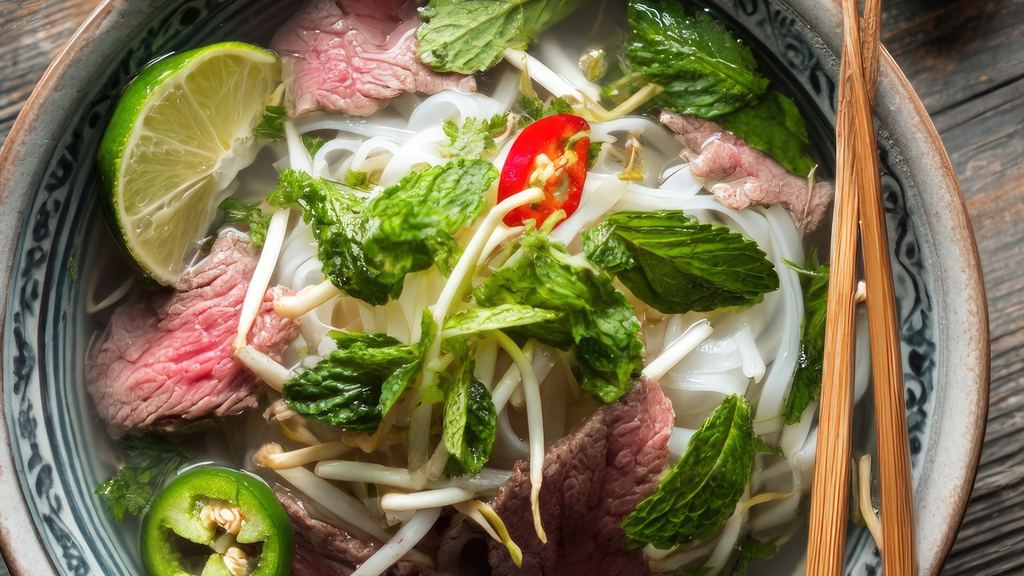
The catalogue divides cleanly, with a deliberate overlap. Twenty listings are street food walks, fourteen are cooking classes, and five products appear in both because they genuinely are both: a class that begins with an hour of shopping in a wet market has taught you as much by the time you reach the kitchen as a walking tour would.
The classes are also where the price ceiling is. A walk tops out at 48 EUR and mostly sits near 25. A class runs from 17 to 97, and the top of that range is private tuition with a market trip attached. Every one of the fourteen classes is rated exactly 5.0, which is either remarkable or a sign that people who book a cooking class have already decided to enjoy it.
| Street food walk | Cooking class | |
|---|---|---|
| Listings | 20 | 14, of which 5 are also filed as walks |
| Price | 5 to 48 EUR, median 25 | 17 to 97 EUR, median 33 |
| Reviews | 31,059 | 14,475 |
| Rating | 5.0 across all twenty | 5.0 across all fourteen |
| Time of day | Evening, mostly | Morning, starting at the market |
| What you leave with | Knowing what things cost and how to order | Three to five dishes you can cook again |
The listing that costs 4.51 EUR
One product on this page is priced at four euros and fifty-one cents, and it is worth explaining rather than hiding. Its description offers a free private guide, and the model is straightforward: the guide is unpaid by you, and the revenue comes from where they take you and what you buy there. The next cheapest listing is 14 EUR, and everything else clusters between 20 and 35.
It is not a scam and the reviews are good. But it is the one price on this page that tells you nothing about the cost of your evening, and if you want a predictable bill, the twenty-five euro bracket is where the professional operators are. Three separate listings are priced at exactly 24.60 EUR, which is a market agreeing with itself.
When to come
Hanoi has four seasons and a genuine winter, which surprises people who expect tropical Vietnam. From December to February it is cold, grey and damp, often sitting under drizzle for days. That is a good time to eat here. The food is hot, the sitting is outdoors under a low ceiling of steam, and a bowl of phở in the cold does what it was designed to do.
June to August is the opposite: humid, above thirty, with heavy afternoon rain. Evening walks still run and are still enjoyable, but you will be drinking more than eating for the first hour. October, November, March and April are the comfortable months and the busiest.
| 1 | 2 | 3 | 4 | 5 | 6 | 7 | 8 | 9 | 10 | 11 | 12 |
Questions about eating in Hanoi
Do I need a tour if the food is easy to find?
You do not need one to find good food, which is genuinely everywhere. You need one to know what it costs, because many stalls have no written prices and quote foreigners differently, and to learn how the composed dishes are meant to be assembled. Those two things are worth 25 EUR once. They are not worth it twice.
Is the street food safe?
Generally yes, with ordinary care: eat where the turnover is high, prefer things cooked in front of you, and be more cautious with ice and pre-cut fruit than with anything that arrives steaming. Guided tours use stalls they visit weekly, which is a quiet part of what you are paying for.
How long is an evening walk?
Three to four hours, though the listings describe themselves in stops rather than hours: six to ten vendors is the usual range, and some quote ten separate tastings. Do not eat beforehand, and expect to be sitting on very low plastic stools for a good part of it.
What is train street and can I still go?
It is a residential lane the railway runs directly through, with cafés set up either side, and it became famous on social media. The authorities have closed access to it more than once on safety grounds, and cafés there have been shut and reopened repeatedly. Two listings here mention it. Treat it as something that may or may not be accessible on the day, and do not choose a tour for it alone.
Street food walk or cooking class?
Walk if this is your first time in Vietnam and you want the city decoded. Class if you have a morning and want to take something home: the good ones start in a wet market, which means you get the market walk as well. Five products are both, and those are the best value on the page if you can only do one thing.
Can vegetarians do this?
With warning, yes, but say so at booking rather than on the night. Fish sauce is in almost everything, including dishes with no visible animal, and a street stall cannot make a separate version on request. Cooking classes handle it much better because the shopping happens with you present.
Is it cheaper to just eat on my own?
Much. A bowl of phở costs a fraction of what a tour does, and after one guided evening you will know how to order it. That is the honest case for booking exactly one tour early in your stay rather than several.
Data verified on. Prices, ratings and review counts read from the 29 Hanoi listings on this site on 4 September 2026. Street names and trades from the Old Quarter's documented street naming.