
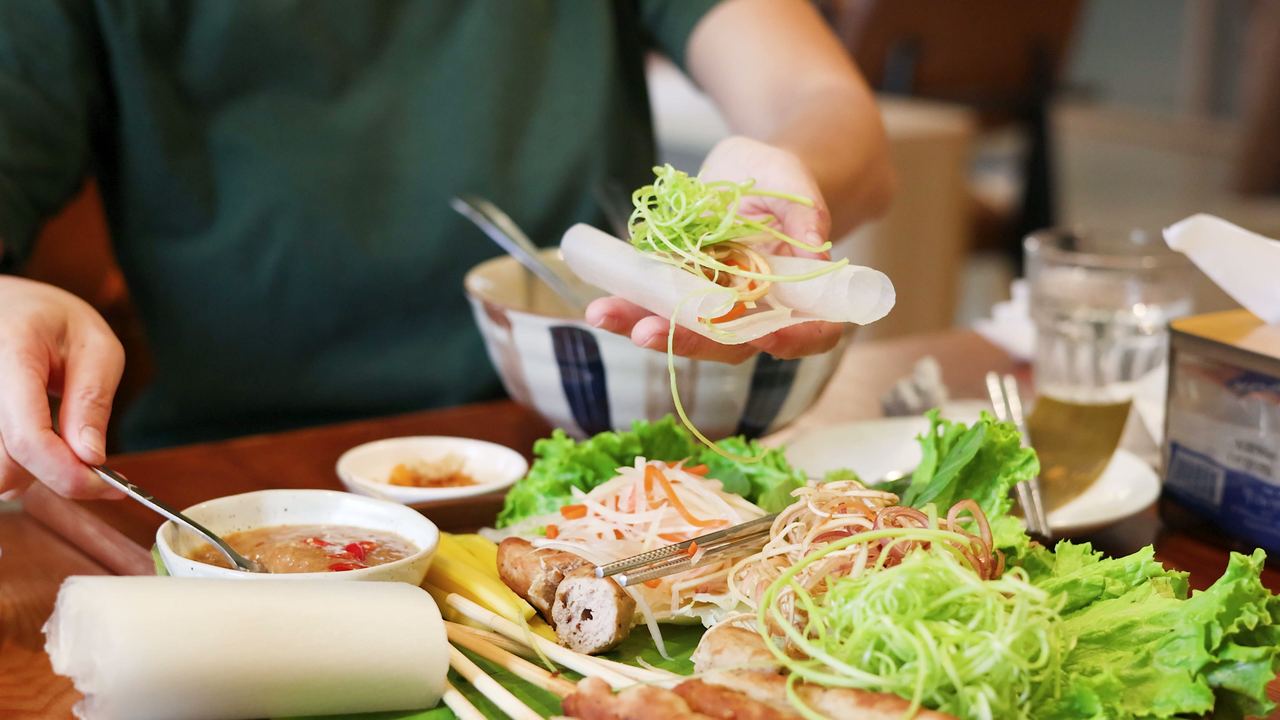
Hanoi Cooking Classes That Start in the Market
Fourteen classes from 17 to 97 EUR, and all fourteen are rated exactly 5.0. Seven begin with the shopping, which is the half of the lesson nobody advertises properly.
Every one of the fourteen classes on this page is rated 5.0. Not 4.9, not an average that rounds up: fourteen out of fourteen, across 14,475 reviews. We have not measured that anywhere else, and it is worth saying plainly that it makes the ratings useless for choosing between them. You will have to pick on something else.
The things that do separate them: whether there is a market, how many dishes, and how many people are standing at the stove with you.
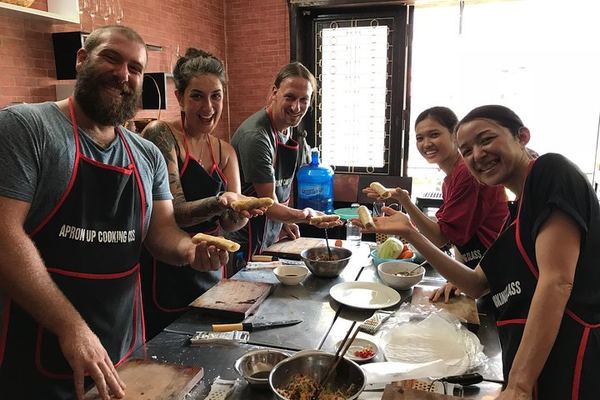
Apron Up Hanoi: Five Dishes and the City's Biggest Market
Five of the most popular Hanoi dishes cooked from scratch after a walk round the city's biggest market, with rice wine, a booklet and a certificate at the end.
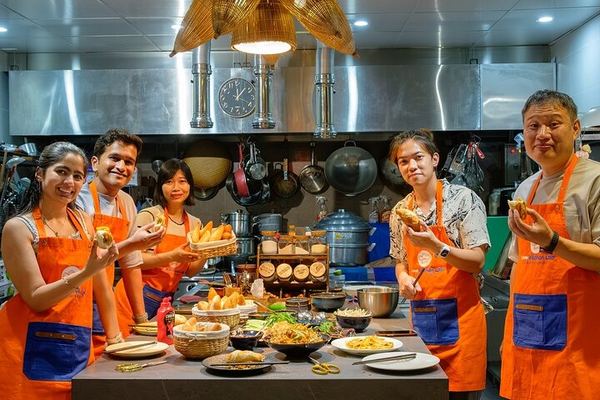
Bake the Banh Mi Baguette Yourself, in Tay Ho
Knead the dough, pickle the vegetables, brew the egg coffee: the Hanoi class that builds a banh mi from the bread up, in a home kitchen in Tay Ho.
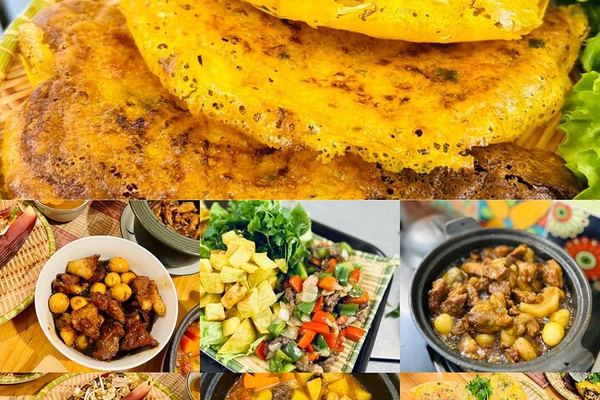
Banh Xeo and Four More at the Apron Up School, Hanoi
The banh xeo version of the five-dish class, with the market walk first and rice wine at the table. Vegetarian menu available, booklet and certificate.
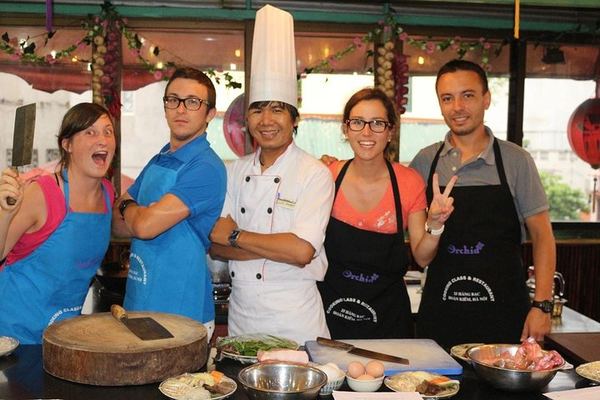
Blue Butterfly Cooking Class in Hanoi: Shop, Then Cook
Four and a half hours: shopping for the ingredients at a market, then cooking them with a chef on Ma May, with beer, coffee and seasonal fruit afterwards.
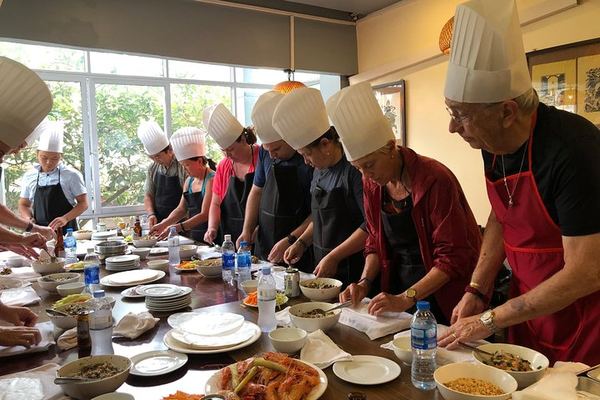
Cooking Class Above Beer Street with a Hanoi Market Run
A market run and then the kitchen, on the third floor above Hang Buom, taught by a team who have spent ten years guiding and cooking in Hanoi. Fourteen places.
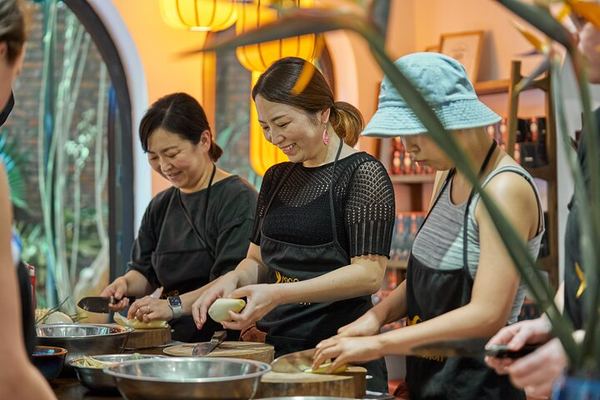
Hanoi Cooking Class in a Garden Villa with a Storyteller
Two garden villas outside the Old Quarter, guides trained by a former Metropole head chef, pho and bun cha, and a booking that funds community programmes.
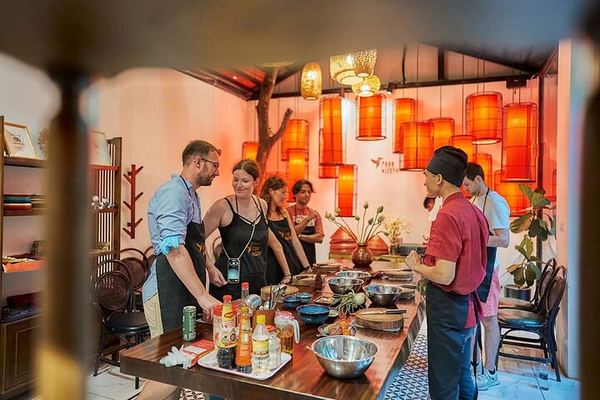
Hanoi Cooking Class with a Traditional Tea Tasting
Cook the dishes you choose in a hidden garden villa, then a traditional tea tasting and what tea means in Vietnamese life. Ten places, plastic-free setup.
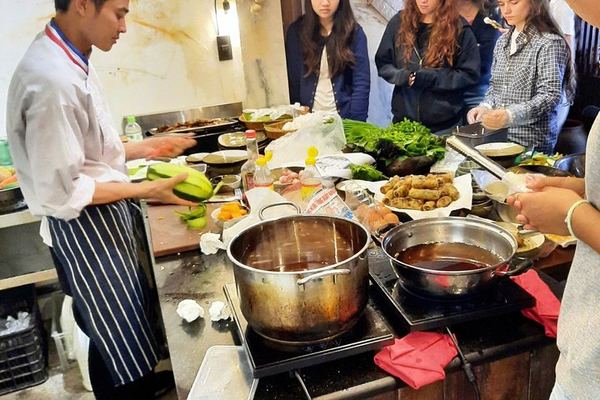
Ma May Cooking Class in Hanoi with a Market Walk and Cyclo
A cyclo collects you from the Old Quarter, the chef walks you round the market with street food stops, then you cook the set menu and sit down to eat it.
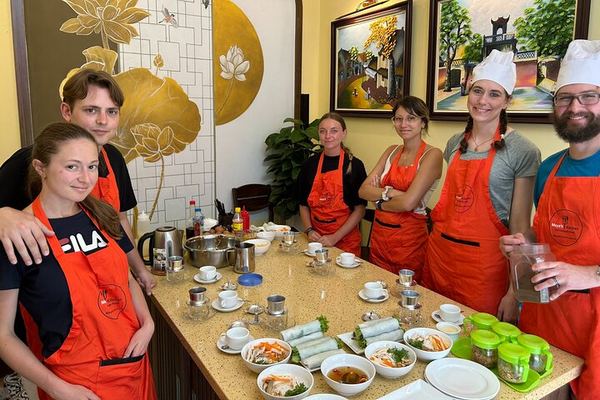
Maya Kitchen Hanoi: Four Dishes, Egg Coffee and Rice Wine
Fried spring rolls, papaya salad, pho rolls and mixed pho, bought at the market first and cooked in the Old Quarter, with egg coffee and a local wine tasting.
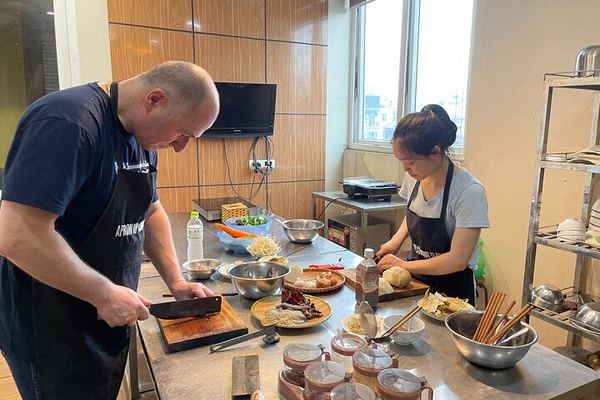
Private Apron Up Class: Five Dishes You Choose Yourself
You name the five dishes and a home chef teaches them, with time to ask everything. Four hours, private, in the middle of the Old Quarter.
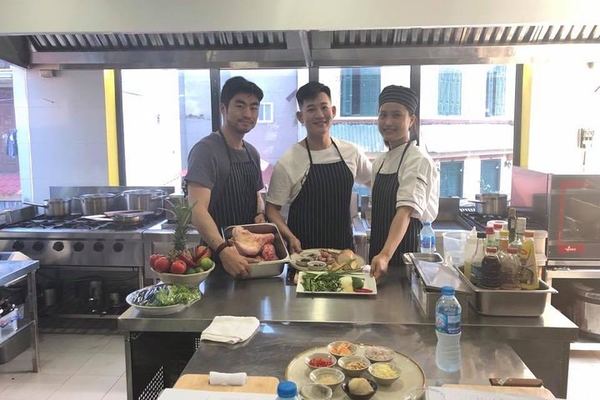
Private Hanoi Class by Cyclo, Through the Little Alleys
Five hours: a cyclo ride, a market reached through alleys most visitors never turn into, then a private class with professional chefs and the meal you cooked.
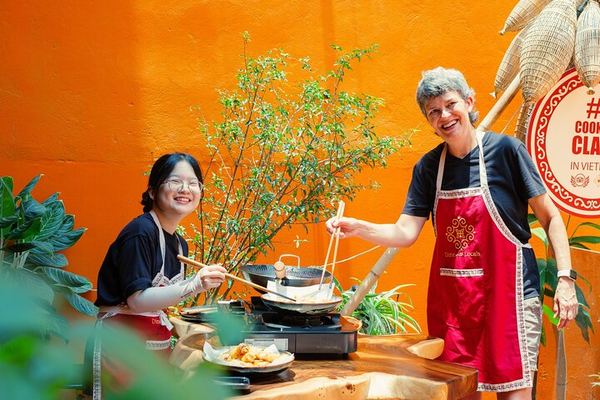
Thanh Ha Market Class with Unlimited Homemade Rice Liquor
A wet market walk, four and a half hours of cooking, unlimited homemade liquor, and a coffee tasting: salted, egg or coconut. Your booking funds hospital meals.
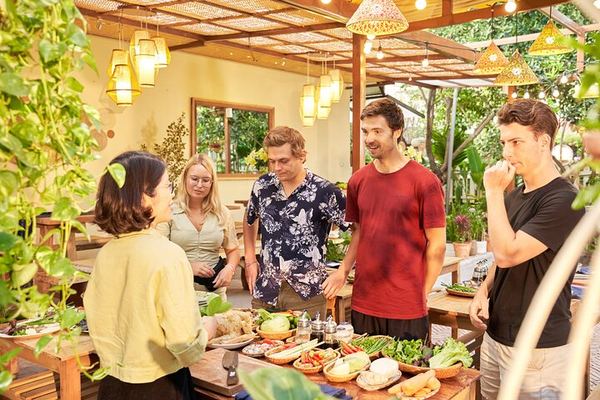
Thom Culinary: Harvest the Herbs, Then Cook Four Dishes
Three markets by cyclo, then a herb and tropical fruit garden where you pick what you cook. Four dishes, bottomless herbal drinks and homemade rice wine.
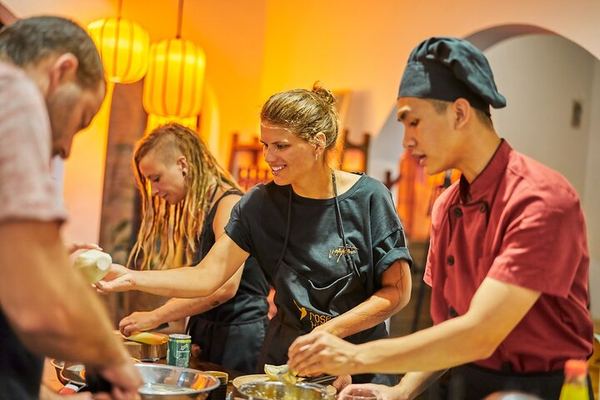
Two Hours in a Garden Villa: Cook One Hanoi Dish Properly
Pick pho, bun cha or banh xeo and cook that one properly, in a garden villa away from the crowds, with an egg, coconut or salt coffee to finish.
Ratings collected by Viator and Tripadvisor
The market is not a warm-up
Seven of these fourteen classes start with an hour walking a wet market with the teacher, and those are the ones worth paying for. It is not a scenic add-on. A Vietnamese market is where the food actually makes sense: the herbs sold in bunches you cannot name, the four different kinds of rice paper, the fish sauce in bottles graded by nitrogen content, the bundles of morning glory that will be on your plate in ninety minutes.
You also see the prices, which quietly does the same job the street food tours do. By the time you have watched someone buy a kilo of pork belly, you have a rough idea of what a bowl at a stall ought to cost, and you will spend the rest of your trip better informed.
The classes without a market are cheaper and shorter. They are perfectly good if the cooking is what you want. But the ones at 28 to 48 EUR with the shopping included are teaching two things for one price, and that is the better deal.
| Format | How many | Price | What you get |
|---|---|---|---|
| Market walk plus class | 7 | 28 to 48 EUR | An hour shopping, then three to five dishes |
| Kitchen only | 4 | 17 to 34 EUR | Straight into the cooking, shorter and cheaper |
| Private, with market | 2 | About 97 EUR | One teacher, your pace, your choice of dishes |
| Class with tea or coffee element | 1 | About 40 EUR | Adds a Vietnamese coffee or tea session at the end |
What you are actually learning is a sauce
Northern Vietnamese cooking has less to do with recipes than with balance, and if a class is any good you will spend a surprising amount of it tasting and adjusting one bowl of liquid.
That bowl is nước chấm: fish sauce, water, sugar, lime and garlic, with chilli if you want it. Every household has a ratio and none of them are written down. It goes with the fried spring rolls, it is the broth in which bún chả arrives, and it is the difference between food that tastes Vietnamese and food that tastes like an approximation. Get the proportions wrong and the dish is not slightly off, it is simply wrong.
The second thing is herbs. Vietnamese cooking uses them as a vegetable rather than a garnish, in quantities that look excessive to anyone raised on European seasoning: whole plates of perilla, fish mint, coriander, Thai basil and saw-tooth herb, torn in by the diner. A class that hands you the plate and tells you to use all of it is teaching you correctly.
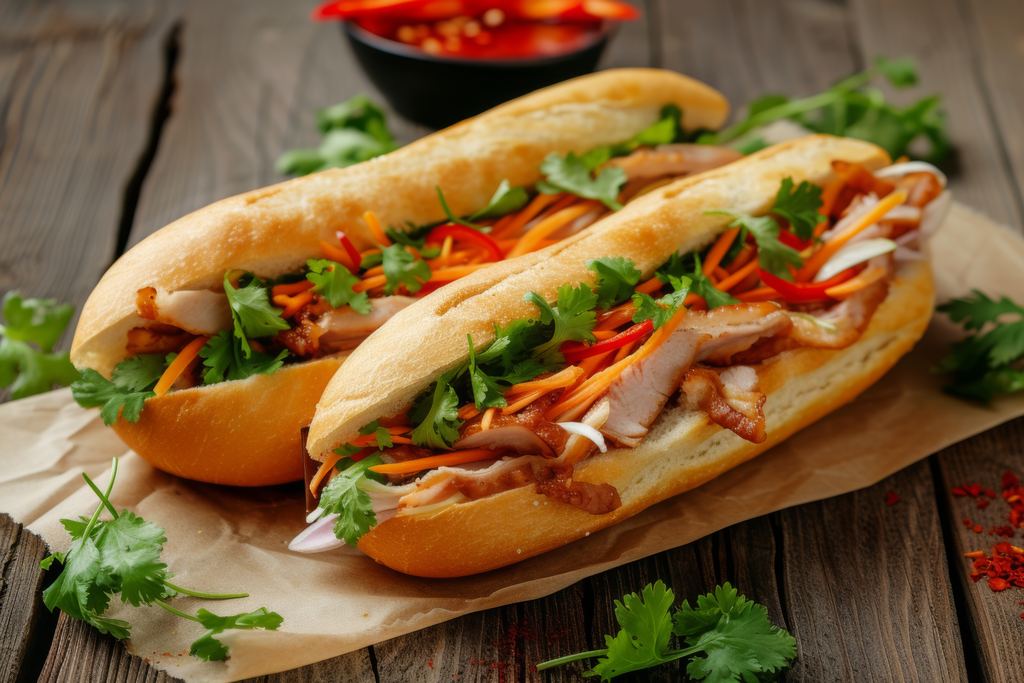
The dishes that come up again and again
Read the fourteen titles and the same names repeat. Bánh xèo, the turmeric-yellow rice flour crepe filled with pork and prawns and eaten wrapped in lettuce, appears in two of them. Phở shows up in the entry level class at 17 EUR, which is ambitious given that a proper broth takes hours: what you learn there is the assembly and the seasoning, not the stock.
Then there are the fried spring rolls, the fresh summer rolls, bún chả, and green papaya salad. Three to five dishes is the standard, and five is plenty. The classes that promise more are usually counting the dipping sauce and the garnish as separate lessons.
Five of these are also on the street food page
Five products here appear in both categories, and the two most reviewed items on this page are among them. That is not a filing error: a class opening with a market walk earns its place on a street food listing, and the operators write their titles to catch both searches.
The practical consequence is that if you have read our Hanoi street food page and shortlisted something there, check whether it is a class before you book an evening for it. These start in the morning, because that is when a market is worth walking.
One listing is not in Hanoi
A product on this page carries Hanoi in its title and Ha Long Bay in its location field, which is a hundred and seventy kilometres away on the coast. It is the kind of mismatch that turns up regularly in supplier catalogues, and we flag it rather than quietly fixing it, because we do not know which of the two fields is the mistake.
If you are booking that one, ask the operator where you are being collected and where the kitchen is. It may well be a good class. It is not a good class you can walk to from the Old Quarter.
How to choose when everything is rated 5.0
Three questions, in order of how much they change the morning.
How many of you will there be? This decides whether you cook or watch. The private classes at around 97 EUR are the extreme answer, but a small group class at 30 to 40 EUR usually caps at eight to twelve and that is enough. Nobody advertises a maximum of twenty, but the cheapest classes are often the largest.
Is there a market? Covered above. Half the value, and it costs about ten euros more.
Do you eat what you cooked, and is there enough of it? On most of these the answer is yes and the meal is the end of the class, which is why they run four hours or so. Two of the cheaper listings finish with a tasting rather than a meal, which is a different proposition and should be priced as one.
The reviews here cannot help you and the prices barely can, since eleven of the fourteen sit between 28 and 48 euros. Read the itinerary for the market and the group size, and ignore everything else.
Questions about cooking classes in Hanoi
How long does a class take?
Three to five hours, and the market is what makes the difference. A kitchen-only class runs about three hours including eating; add an hour or so for the shopping if the class includes it. None of these listings state a duration in their title, which is common in Vietnam and slightly maddening.
Do I need to book ahead?
A couple of days is usually enough, more if you want a small group class or one of the two private options. The market classes fill faster because there are only seven of them.
What will I be able to cook afterwards?
Realistically: fresh and fried spring rolls, a salad, a stir fry, and a decent nước chấm. Phở is taught in a couple of classes but the broth takes far longer than any class runs, so what you learn is how to build the bowl rather than how to make the stock. That is still worth having.
Are the ingredients available at home?
Most of them, from any South East Asian grocer: fish sauce, rice paper, rice noodles, tamarind. The hard part is the herbs. Perilla and fish mint are difficult to buy outside Asian neighbourhoods, and Vietnamese food without them is missing the point rather than a detail. Ask your teacher which substitutions they consider acceptable, and take the answer seriously.
Can these classes be done vegetarian?
Yes, and better than a street food tour can. Say so when booking: the market list is bought that morning, so the teacher can plan around it. The thing to flag is fish sauce, which is in nearly every sauce by default and can be replaced with a soy based version if they know in advance.
Class or street food tour, if I only have time for one?
Tour if you want the city explained and you are eating out for the rest of the week. Class if you want to take something home, or if you are travelling with someone who would rather sit in one place than walk between eight of them. The five products filed under both are the honest compromise.
Data verified on. Prices, ratings, review counts and inclusions read from the 14 listings on this page on 4 September 2026.