

Tokyo Izakaya Crawls and Evening Food Tours
Twenty listings sold by the plate: thirteen dishes, fifteen dishes, five tastings. Here is what those numbers actually mean, and which three of the twenty are not food tours at all.
Tokyo food tours are sold by the plate. Thirteen dishes at four eateries. Fifteen dishes at four eateries. Five tastings at the fish market. It is an unusually concrete way to price an evening, and it is worth understanding what a dish means here, because these are not courses. They are two pieces of yakitori, a small bowl, a glass.
The second thing to understand is why the groups are small. It is not a premium feature. It is arithmetic: the places worth taking you to have six seats.
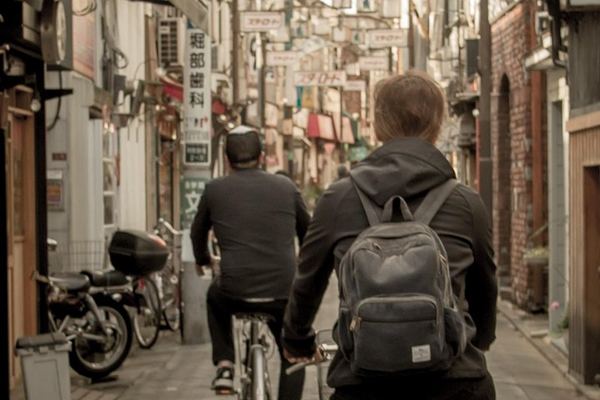
A Mamachari, a River Path, and a Salaryman Lunch
Backstreets and riverside paths through Koenji and Nakano on a Japanese city bike, with two street-food stops, a salaryman lunch and a vending-machine drink.
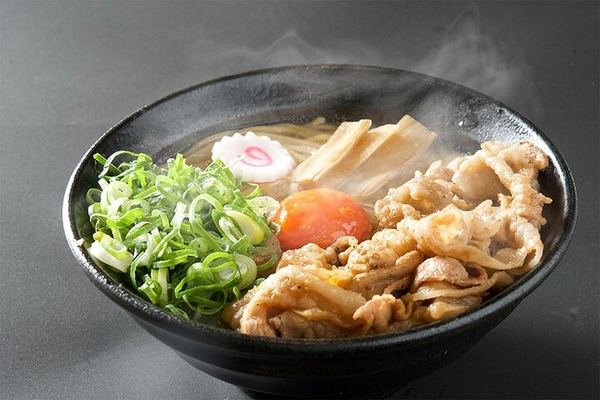
An Hour of Ramen Above a Kabukicho Beer Bar
One hour, three soups to choose from, and no pretence that you are making broth from scratch. Upstairs at Shinjuku Ale, a few doors from the Godzilla head.
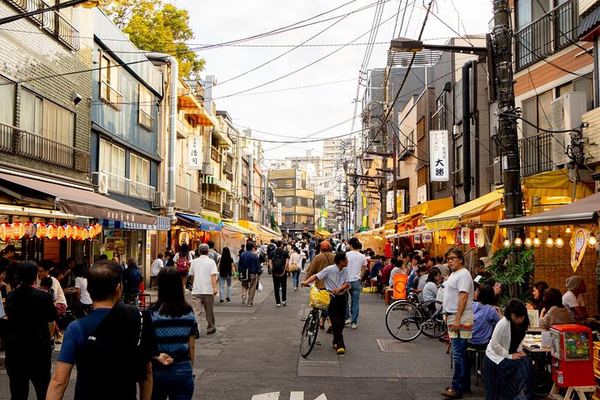
Asakusa Backstreet Food Crawl: Standing Sushi, Soba and Senso-ji
Four century-old Asakusa vendors in two hours: a standing sushi bar, a soba counter, Marugoto Nippon and Senso-ji, with lunch-size tastings at five stops.
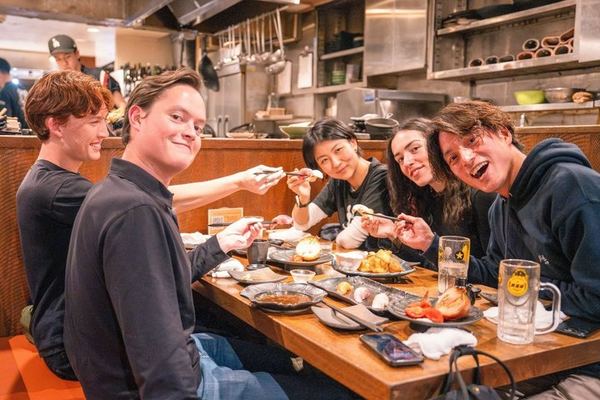
A Turmeric Shot First, and You Split the Bill Like a Local
Three izakayas in three and a half hours, ending at a sake bar down a side street off the Scramble. Guiding is the ticket; the food and drink you pay as you go.
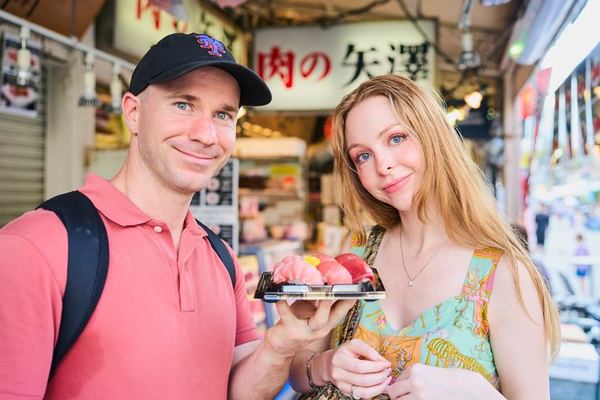
A Wasabi Set From Your Guide, and a Fish Filleted in Front of You
A short guided walk through the outer market with a fish-cutting demonstration, an explanation of curing and umami, and a wasabi set the guide brings along.
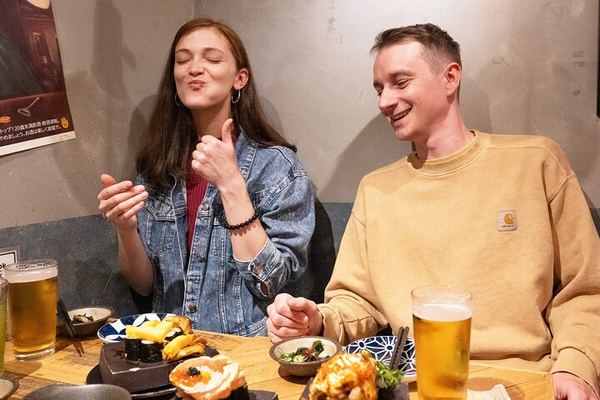
Fifteen Dishes, Ending With a Fish-Shaped Cake
Four eateries with tables reserved for you, sushi, kushikatsu, gyoza and sake, then Golden Gai, a shrine hidden behind the neon and a fish-shaped cake. €67.51.
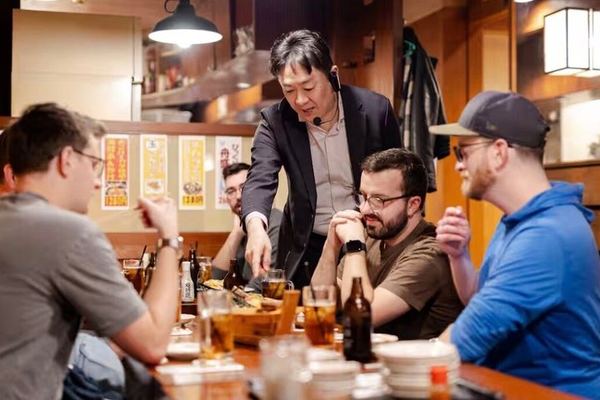
Five Drinks, a Ramen Bowl, and a Cup to Take Home
Three hours away from Shibuya and Shinjuku: sashimi, grilled fish and unusual Japanese spirits in taverns with no English menu, finishing with a bowl of ramen.
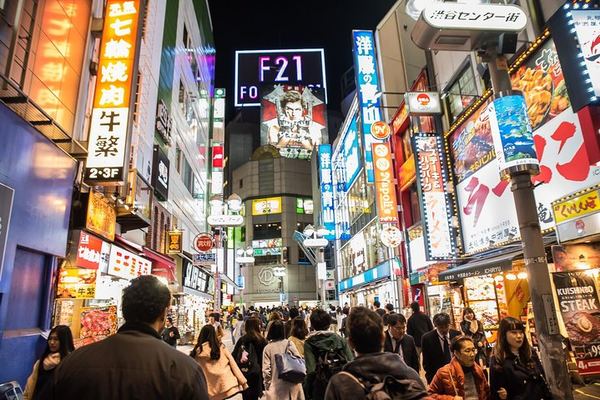
Five Stops, a Bomb Mural, and Drunkard's Alley
Five food stops, a drink and dessert across three hours, past Okamoto's atomic-bomb mural inside the station and into the drinking alley behind the crossing.
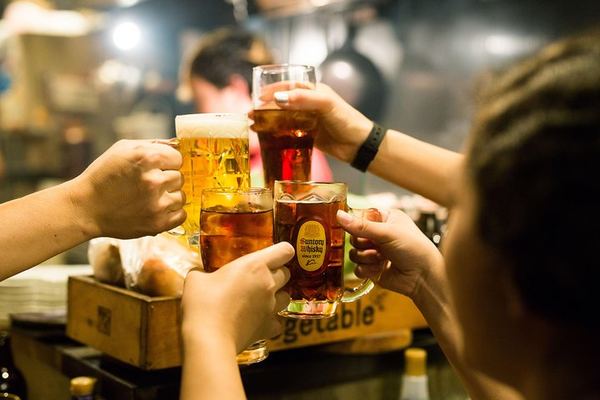
Fourteen Plates Across Three Izakayas, Three Drinks
Three and a half hours across three or four izakayas: grilled skewers, sashimi and comfort food, with three drinks of your choosing. Ten guests, €78.76.
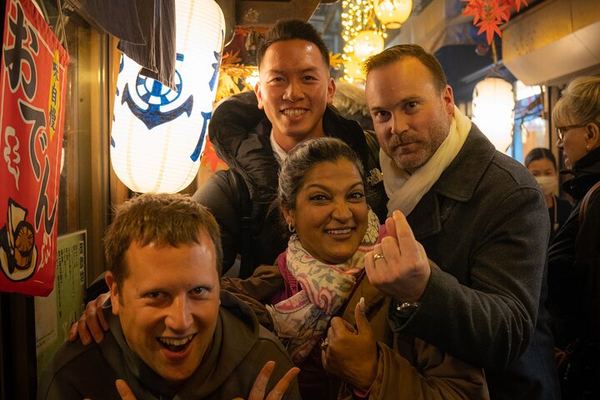
Into the Golden Gai Bars That Turn Strangers Away
Three hours through Omoide Yokocho, Kabukicho and Golden Gai, including bars that do not take walk-in customers. Cover charges paid; food and drink are not.
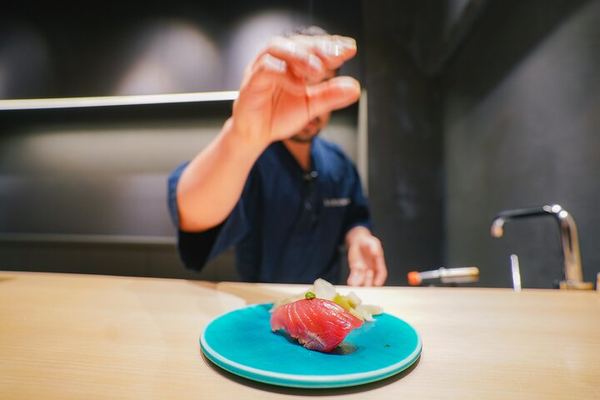
Omakase Nigiri, Then A5 Kagoshima on the Table Grill
A seasonal omakase nigiri course, then Kagoshima black beef graded A5 grilled at your own table, in two Kabukicho rooms visitors rarely find. Seven guests.
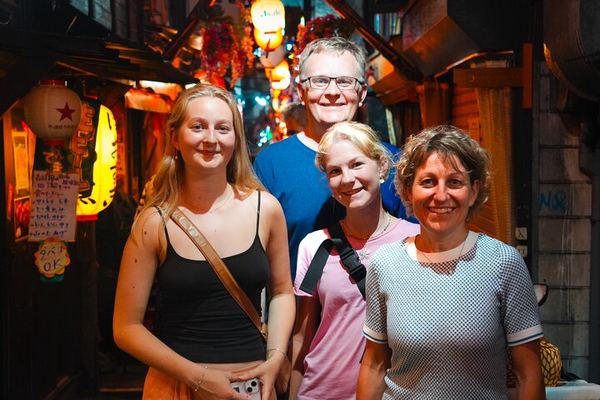
One Family at a Time: Okonomiyaki, Purikura, Arcade
Your family and a guide, nobody else: okonomiyaki and monjayaki on the griddle, a purikura booth or an arcade, then sake for adults and snacks for kids.
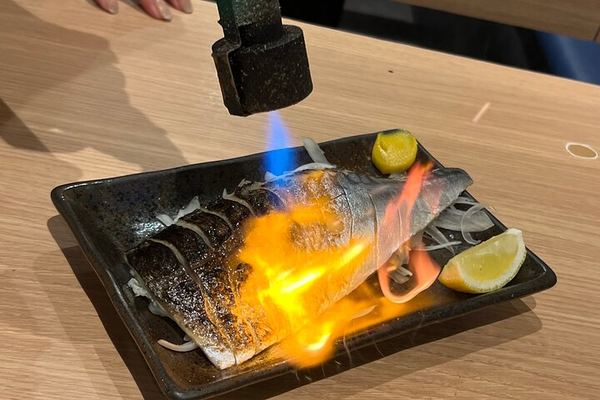
Ten Thousand Restaurants, and a Guide Who Picks Four
Shinjuku holds over ten thousand restaurants. Three hours, fifteen dishes and four of them, including the office side visitors never reach. €73.14.
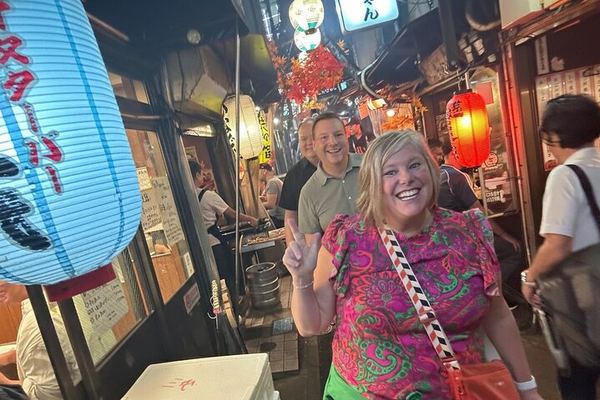
The 3D Cat, a Guide Who Worked in Kabukicho, Fifteen Dishes
Fifteen dishes and two drinks with nothing to settle afterwards, led by guides from Kabukicho itself. Omoide Yokocho, Golden Gai, and a sweet to finish. €85.
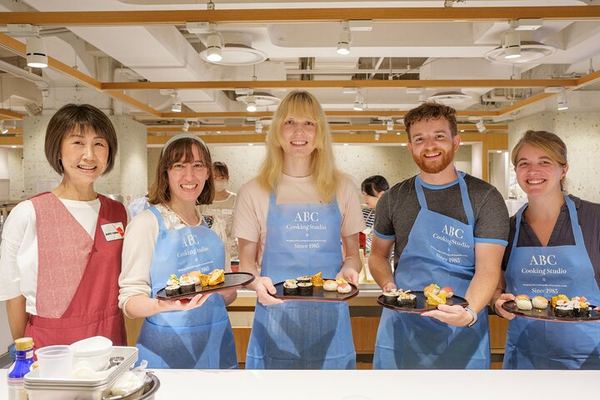
The Market, Then Japan's Biggest Cooking School
A guided hour or so through the outer market, then transport to a studio of Japan's largest cooking school to make sushi rolls and home-style dishes. €84.39.
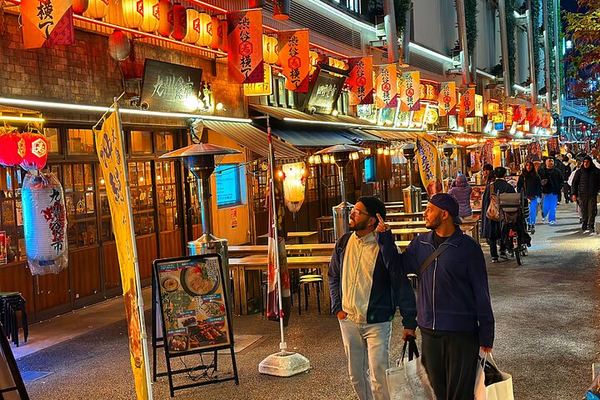
Thirteen Dishes Behind the Crossing, Starting at Hachiko
Three hours in the streets behind the world's busiest crossing: thirteen dishes at three places locals use, with food and drink included. Ten guests, €73.14.
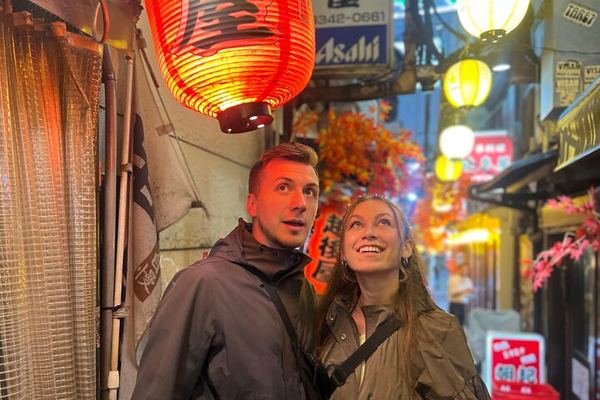
Thirteen Dishes Between Memory Lane and Golden Gai
A stall, an izakaya, a traditional restaurant and a gastrobar in three hours, with two drinks, walking Omoide Yokocho, Kabukicho and Golden Gai. From €73.14.
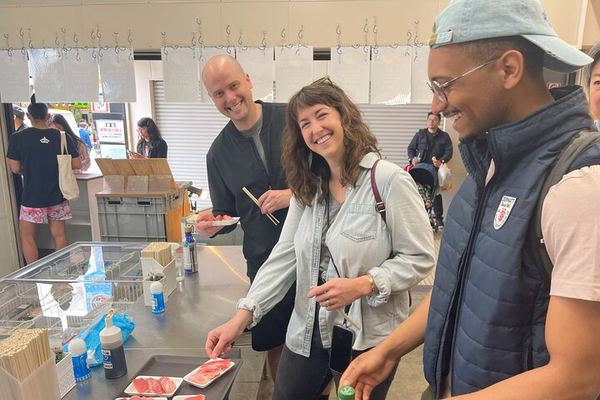
Three Cuts of Bluefin, and the Shrine That Wards Off Waves
Bluefin tuna in three cuts, tamagoyaki, sashimi, fish cake, wagyu cutlet, conger eel, dashi and green tea, ending with a tasting. Wheelchair accessible.
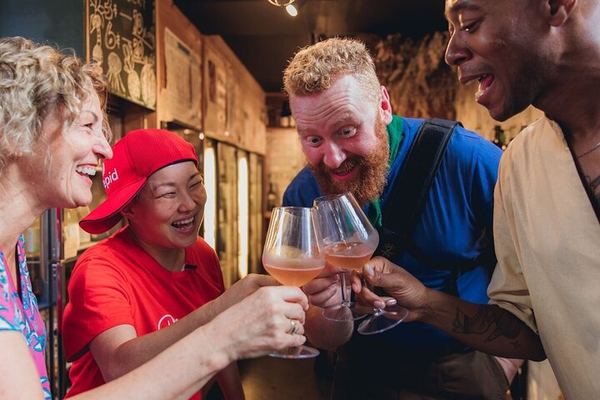
Wagashi in Ginza, Monja in Tsukishima, Yakitori Under the Tracks
Ginza for a wagashi, Tsukishima's Monja Street to cook a Tokyo dish on the griddle, and Yakitori Alley under the arches. Two subway tickets included.
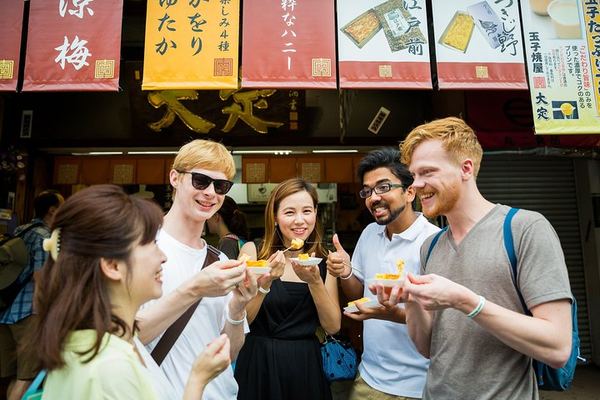
Wagyu Skewers, Tamagoyaki and a Knife Shop on the Way
Wagyu skewers, sweet rolled omelette, fried fish cake, seasonal fruit and a seafood bowl or sushi, picked for you across an overwhelming market.
Ratings collected by Viator and Tripadvisor
A dish is not a course
When a Tokyo listing promises fifteen dishes it is not promising fifteen plates of food. Izakaya eating works by small orders shared across a table: two skewers of chicken thigh, a dish of pickled cucumber, a piece of grilled fish, edamame, a bowl of rice at the end. Fifteen of those across four venues over three hours is a full evening's eating and a comfortable amount, not a challenge.
What varies between listings is how many venues the dishes are spread across, and that matters more than the total. Fifteen dishes at four eateries means roughly four small plates per stop, which is enough time to sit, drink and watch the place work. The same fifteen at two venues would be a meal with a walk in the middle.
| Type | How many | Price | Shape of the evening |
|---|---|---|---|
| Shinjuku izakaya crawl | 9 | 66 to 93 EUR | Four venues, 12 to 15 small dishes, drinks included, about 3 hours |
| Tsukiji outer market walk | 4 | 11 to 83 EUR | Morning, standing, 5 or more tastings between stalls |
| Shibuya back streets | 3 | 88 to 191 EUR | Evening, smaller venues, the most expensive on this page |
| Omakase or premium counter | 1 | 155 EUR | A seat at a sushi counter with wagyu. The seat is the product |
| Cooking lesson filed as a tour | 2 | About 70 to 90 EUR | A ramen class and a sushi lesson. Not a walk |
| Cycling food tour | 1 | About 100 EUR | Covers more ground, and you are on a bicycle in Tokyo |

Why the group has to be small
Most listings here promise a small group without putting a number on it, and the ones that do give a number keep it low. That is not a luxury positioning decision. Omoide Yokocho counters seat six or seven people in total, including the regulars already there, and a tour of twelve simply cannot enter one. The operator either splits the group, which halves the guide, or takes you somewhere with room, which is a different kind of place entirely.
If a Tokyo listing does not state a group size, ask before booking. It is the single variable that decides whether you spend the evening inside the small places or in the larger chains that can seat you, and the price does not reliably signal which you are getting.
Nobody pours their own drink
This is the one piece of etiquette that will come up within ten minutes of the first venue, and knowing it changes how the evening feels.
In Japan you pour for the people next to you, and they pour for you. Filling your own glass while others sit with empty ones is the small rudeness that visitors commit constantly and that nobody will correct. Keep an eye on your neighbour's glass; when it is low, offer. When someone offers you, lift your glass slightly to meet the bottle rather than leaving it on the table.
The first drink arrives together and nobody starts before the kanpai. After that the rounds are informal. A useful detail if you are drinking less than the group: leave your glass full rather than empty, because an empty glass is an invitation and a full one is a polite full stop.
Two words worth having. Nomihōdai is all you can drink for a fixed time, usually ninety or a hundred and twenty minutes, and the clock is real. Otsumami are the small salty things ordered to go with drinks rather than as a meal, and on a tour they are most of what you will be given.
And the thing that surprises people most: the most common izakaya drink is not sake. It is beer first, then the highball, whisky with soda, which came back into fashion two decades ago and never left. Sake is ordered later in the evening and by fewer people than the marketing abroad suggests.
Three of these are not what the category says
Two are cooking lessons, one for ramen and one for sushi, and one is a cycling tour that eats along the route. They are filed here because that is how their titles read, and we have left them rather than quietly moving them, because in each case the operator is describing the product honestly and the search term people use is the same.
The cycling tour is the one to watch. It covers considerably more of Tokyo than a walk can, which is a genuine advantage in a city this size, and it puts you on a bicycle in traffic for three hours, which is a genuine consideration. Neither of those facts is a criticism. They just belong in the decision.
The price ladder, and where it stops making sense
The median is 73 EUR and the middle of this page is remarkably consistent: nine Shinjuku evenings between 66 and 93, all doing broadly the same thing. Inside that band the price difference is not buying you more food. It is buying a smaller group, a more experienced guide, or a slightly better set of venues, in roughly that order of importance.
Below the band, 11 to 28 EUR buys a market morning where the guiding is the product and the tastings are few. Above it, 155 to 191 buys a counter seat, and that is a different transaction: at that level you are paying for a reservation you could not have made and a chef you could not have talked to. The thing that is never worth paying more for in Tokyo is quantity. Fifteen dishes is already more than most people finish.
One listing carries a 20% discount, which is unusual in this catalogue: only one in twenty products here is discounted at all, against five in twenty in Rome.
What an evening actually looks like
You meet outside a station exit, which in Shinjuku is a specific instruction because the station has more than two hundred of them and is regularly described as the busiest in the world. There will be six to ten of you and a guide holding something visible.
The first venue is usually the loudest and the most obviously enjoyable: a yakitori counter or a standing bar, a beer or a highball, skewers arriving in twos. The second tends to be quieter and more specific, somewhere with one thing it does well. The third is often the surprise, a place you would have walked past. The fourth, if there is one, is where the group has loosened up and people order for themselves.
Drinks are included at most stops, usually one each, and the guide orders. This is the part that is genuinely hard alone: not the ordering itself but knowing what to order, in a country where the house speciality is rarely the thing printed largest.
The measure of a good Tokyo guide is whether by the end of the evening you could go back to any of those four places alone and order confidently. Several of the operators here say that outright, which is a promise worth holding them to.
Questions about Tokyo food tours
Is fifteen dishes too much food?
No, because a dish here means two skewers or a small bowl, not a plate. Fifteen across four venues is a comfortable evening's eating. Come hungry but not starving, and pace the drinks rather than the food.
Are drinks included?
On most evening tours, one drink per venue, ordered by the guide. Beer, highball, sake or a soft drink, and you can buy more. The market walks generally do not include drinks because you are moving between stalls rather than sitting down.
Is there an etiquette to the drinking?
One rule matters: you pour for the people beside you and they pour for you, and filling your own glass while others sit empty is the small rudeness visitors commit most. Everyone starts together with a kanpai. If you want to slow down, leave your glass full rather than empty.
How big is the group?
Small by necessity, usually capped between six and twelve, because the counters these tours use seat about six people in total. Most listings say small group without giving a number, so if it matters to you, ask: it is the variable that decides whether you go inside the tiny places or the larger ones.
What is the difference between the 72 EUR and the 155 EUR tours?
The 72 buys an evening across four izakaya with a dozen or so small dishes. The 155 buys a seat at an omakase sushi counter with wagyu, where the chef serves you directly and the number of dishes is not the point. Neither is better value; they answer different questions.
Can I do a Tokyo food tour on my first night?
It is arguably the best night to do it. Everything you learn on it, how to read a menu, what otoshi is, how to order at a ticket machine, is useful for the rest of the trip. Doing it on your last night means learning things you no longer need.
Is there anything for someone who does not drink alcohol?
Yes, and it is straightforward. Every izakaya serves oolong tea, soft drinks and non-alcoholic beer without comment, and the tours substitute without fuss. Japan has no drinking culture problem with abstaining; it is one of the easier places to do it.
Why do two listings have exactly the same title?
We do not know. Two products here promise fifteen dishes at four eateries in Shinjuku, from different suppliers, at 73 and 68 EUR. It may be one operator selling through two channels or two operators running the same format on the same street. Compare the review counts: one has nearly twice the reviews of the other, and that is the more meaningful difference.
Data verified on. Prices, ratings, review counts, group sizes and inclusions read from the 20 listings on this page on 4 September 2026.