
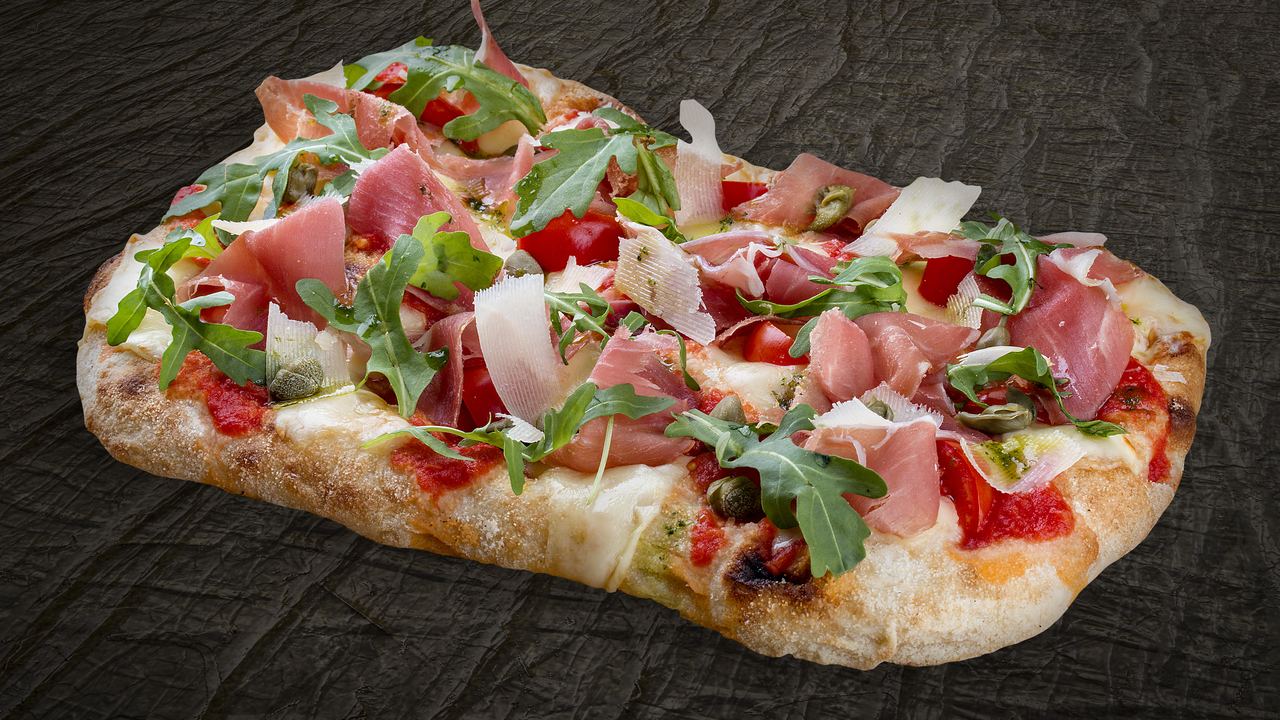
Rome Food Tours: Trastevere, the Ghetto and Testaccio
Twenty walks from 31 to 270 EUR, median 82. Five of them are cooking classes, two are golf carts, and one is an e-bike tour. Twelve are what you came for.
This is the largest pool of walking tours on the site, and the most crowded market: twenty listings inside one city, all competing for the same three or four hours of your evening. The prices spread from 31 to 270 EUR and the product barely changes across most of that range, which makes this a page where reading carefully pays.
Start by removing the eight listings that are something else, and the choice becomes manageable.
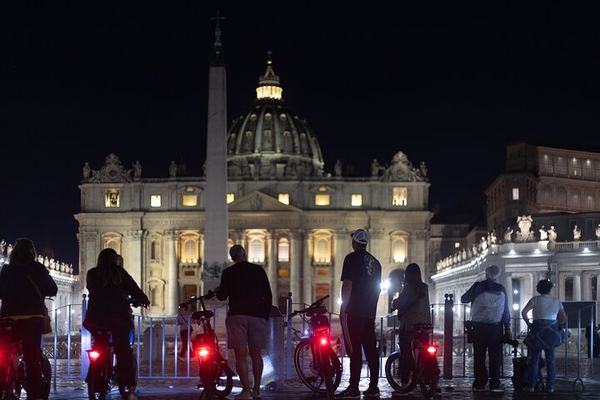
An Aperitivo, an E-Bike, and a Terrace Over the Colosseum
An aperitif by Santa Maria Maggiore, then four hours on an e-bike through Monti, the Campidoglio, St Peter's Square and the Trevi. Ten riders per guide. €59.
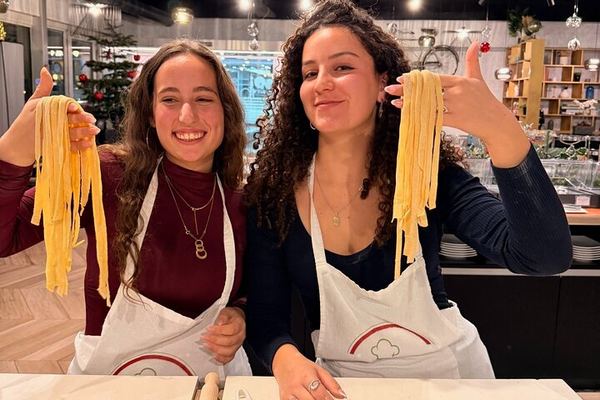
A Prosecco on Arrival, a Limoncello on the Way Out
Two and a half hours off Via Nazionale: a welcome prosecco, two fresh pasta shapes made by hand, tiramisù, and a limoncello or coffee to close. €55.
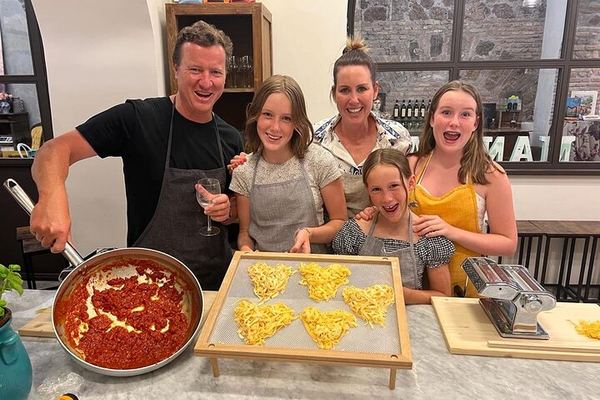
A Tomato Sauce Borrowed from Dolce & Gabbana
Handmade fettuccine, a tomato sauce the chef traces to Dolce & Gabbana, and gelato you make yourself, in a pizzeria a few streets from the Vatican walls.
A Trattoria Cut Into a Hill of Broken Amphorae
Rome's first food tour, running since 2011: bruschetta built in the market, carbonara, amatriciana and cacio e pepe, and a 105-year-old gelateria.
A Wine Cellar 160 Years Older Than the Colosseum
From the Tiber island across Ponte Cestio into Trastevere: porchetta on white pizza, supplì, a sit-down pasta dinner with amatriciana and gricia, then gelato.
Baccalà or Supplì, Then a Three-Course Dinner and a Limoncello
A century-old deli for prosciutto and pecorino, then baccalà or supplì eaten standing, a three-course Roman dinner with wine, and organic gelato to close.
Buy the Ricotta at the Butcher, Then Cook It Down the Street
Porchetta and wine at a Trastevere butcher while the chef buys the eggs, Parmigiano and ricotta, then pasta chitarra and lemon ravioli in a trattoria.
Every Table Booked Before You Arrive
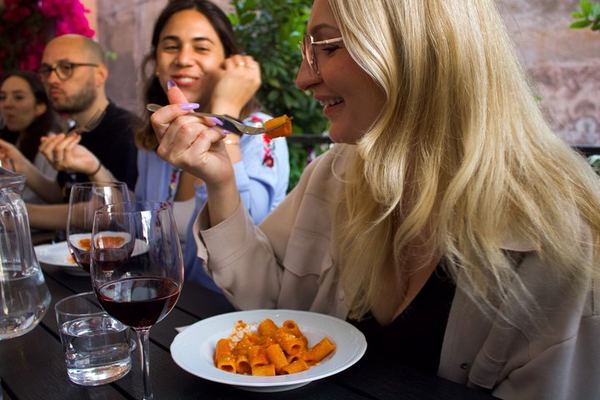
Ten or more tastings across Trastevere with every table booked in advance: cured meats, supplì, Roman pizza with a cold beer, a sit-down course, then gelato.
From Giordano Bruno's Statue to a World-Champion Gelato
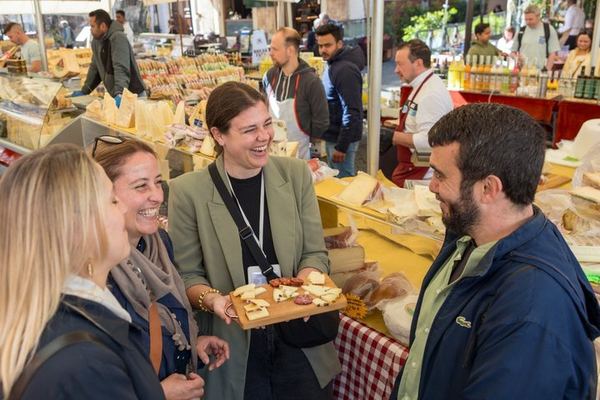
An 1890 norcineria, Rome's oldest bakery, artichokes by the Portico d'Ottavia, cacio e pepe in Trastevere and a 2020 gold-medal gelato. Twelve guests.
From the Turtle Fountain to Cacio e Pepe by the Pantheon
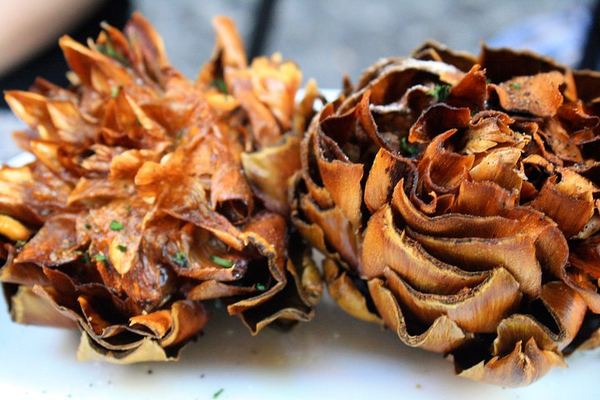
Antipasti and wine at the Turtle Fountain, a Ghetto tavern, pizza by the slice with beer at Largo Argentina, cacio e pepe by the Pantheon, then gelato. €179.
Mozzatura, a Six-Hundred-Year-Old Way to Cut Dough
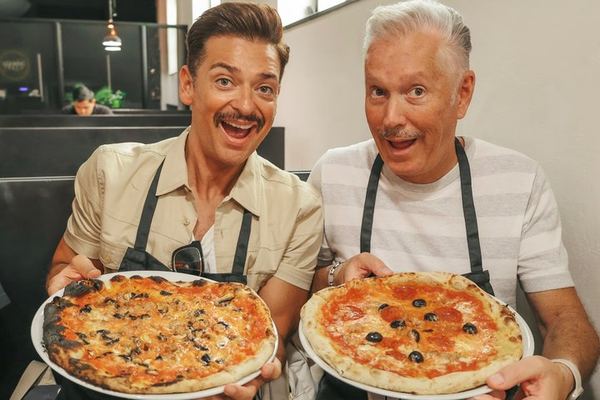
Make the dough, cut it the old way, top a Margherita and bake it in the oldest wood-fired oven in Prati. Tiramisù or gelato after, with wine that keeps coming.
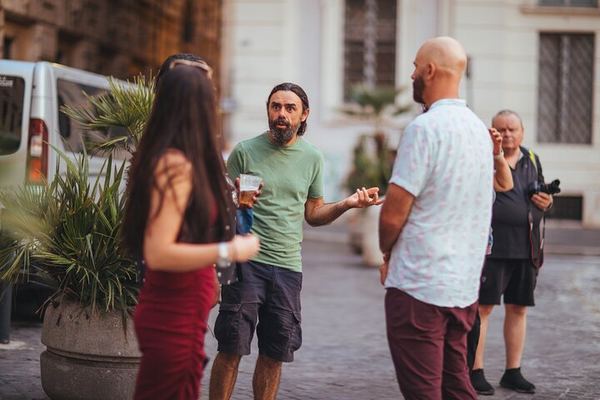
Prosecco in a Golf Cart, Two Bars, and the Aventine at Night
Three hours in a six-seat electric cart with prosecco on board and two bar stops for artisanal beer, wine and snacks. Colosseum, Circus Maximus, Navona, Trevi.
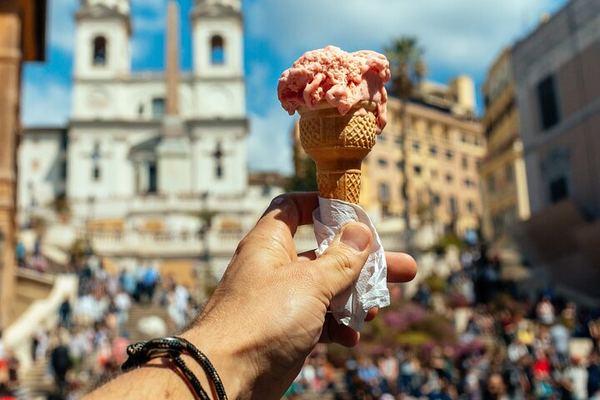
Six Tastings in Trastevere or Ten from Campo de' Fiori
Your party and one local guide, nobody else. Book six tastings starting in Trastevere or ten starting at Campo de' Fiori, with the city covered in between.
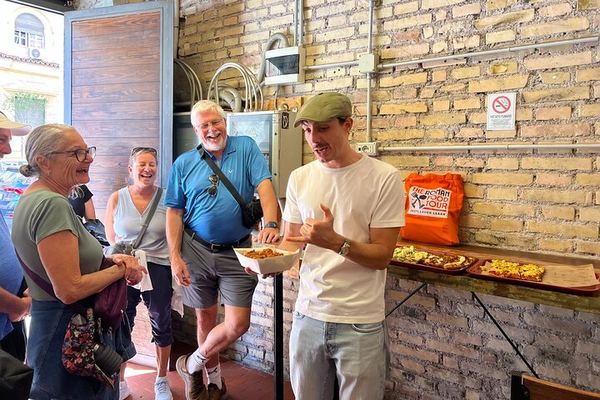
The Biggest Market in Rome, Tasted Stall by Stall
Four hours and six venues in Prati: coffee, Bonci's pizza, truffles and 30-year balsamic, several stalls in Rome's largest market, then pasta and tiramisù.

The Cart Is Yours, and So Is the Route
Three hours in your own electric cart with a guide who drives: Colosseum, Circus Maximus, Ghetto, Navona, the Spanish Steps from above and Castel Sant'Angelo.
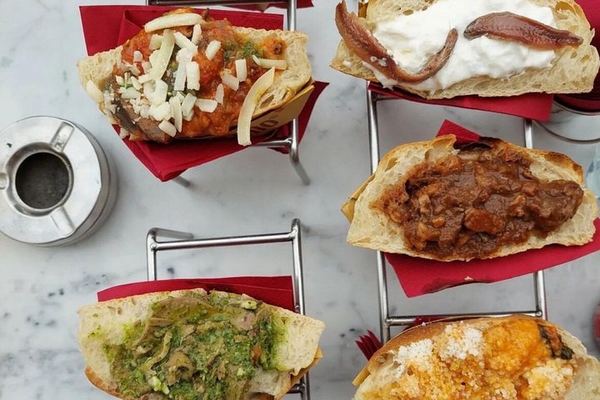
The Oldest Wood Oven in Trastevere, and the Wine Never Stops
Four hours and more than twenty tastings in four Trastevere rooms: handmade pasta, pizza from the neighbourhood's oldest wood oven, truffles, hams, gelato.
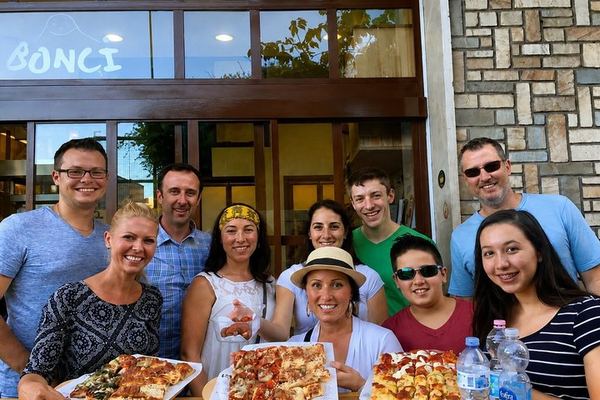
Thirty-Year Balsamic, and the Barolo Keeps Coming
Five venues in Prati: Bonci's pizza, a shop with 400 cheeses, 30-year balsamic on 36-month Parmigiano, handmade pasta with free-flowing Barolo, then gelato.
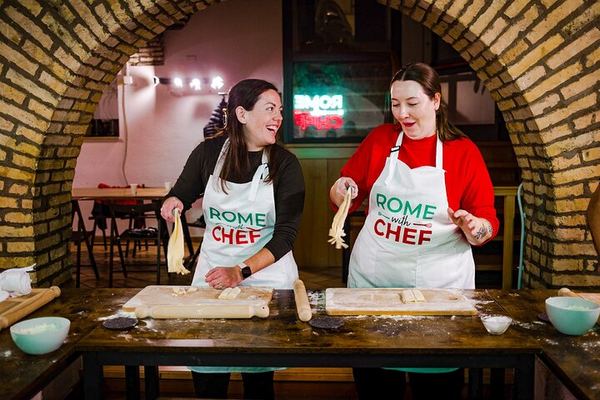
Two Proseccos, Two Wines and a Limoncello, Counted
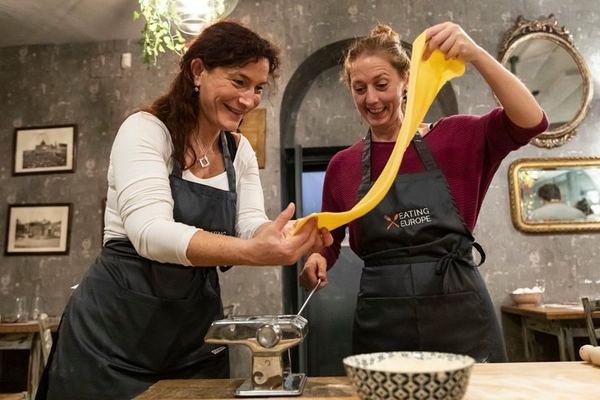
Three hours in a Roman kitchen making handmade pasta, a carbonara or cacio e pepe sauce, and tiramisù, with two proseccos, two wines and a limoncello. €65.
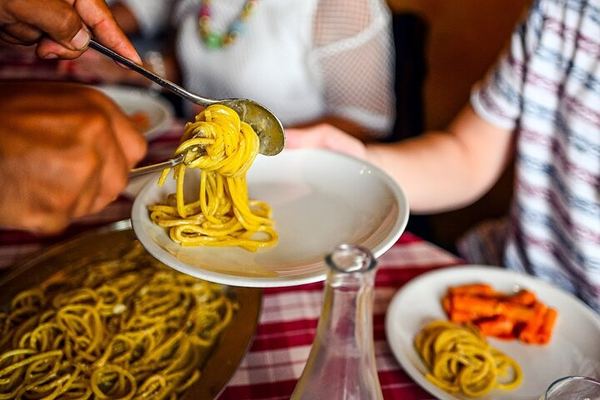
Under the Brazilian Flag on Navona, Out at Largo Argentina
Two homemade pizzas, two Roman pastas, supplì, cold cuts and cheeses, a cannoli, artisanal gelato and one unnamed dish, walked from Piazza Navona. €97.
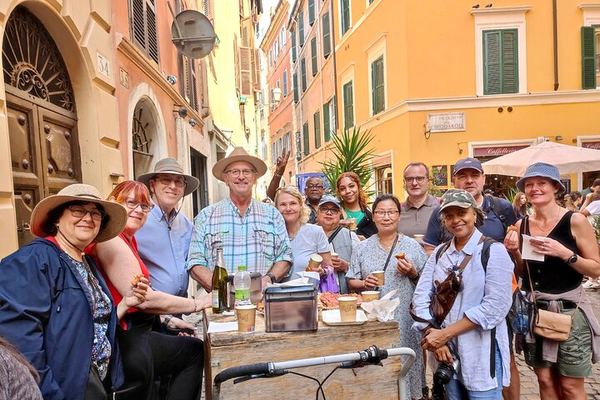
Zucchini Flowers, and Gelato Where Caesar Was Killed
Two and a half hours from Giordano Bruno's statue through the Passetto del Biscione to Largo Argentina, eating what Roman office workers eat. €47.
Ratings collected by Viator and Tripadvisor
Twelve walks, and how they differ
Once the classes and vehicles are set aside, the remaining twelve are variations on one evening: meet at six or seven, walk one neighbourhood, stop at five to seven places, eat something at each, drink wine at most of them, finish with gelato. Three to four hours.
What separates them is the number of stops, whether the stops are sit-down or standing, and the size of the group. The listing with fifteen tastings across Trastevere and the Ghetto is a different rhythm from the one with six sit-down courses: the first is a survey, the second is closer to a progressive dinner.
| Type | How many | Price | What happens |
|---|---|---|---|
| Evening walk, Trastevere | 6 | 73 to 104 EUR | Five to seven stops, wine at most, three to four hours |
| Evening walk, Ghetto or centro | 3 | 62 to 99 EUR | Fried artichokes, Jewish bakery, Campo de' Fiori |
| Market and Testaccio walk | 2 | About 70 to 85 EUR | Morning, the market, and the food of the old slaughterhouse quarter |
| Gelato or dessert focused | 1 | Lower end | Shorter, and better with children |
| Cooking class filed as a tour | 5 | 31 to 96 EUR | Pasta and tiramisu. Also on our Rome cooking classes page |
| Golf cart, private | 2 | Up to 270 EUR | Sightseeing with an aperitivo. The vehicle is the product |
| E-bike | 1 | Mid range | A city tour where food is an option rather than the structure |

Why everyone goes to Trastevere
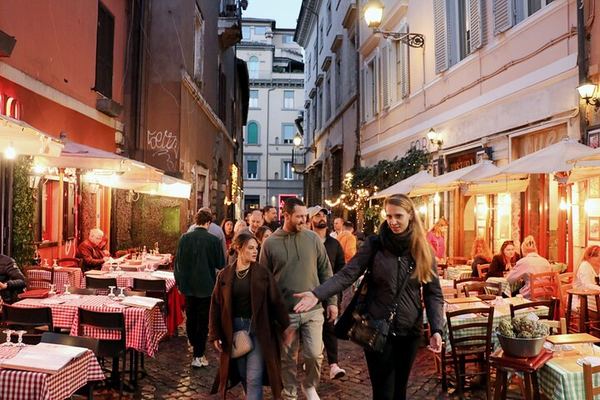
Six of the twenty titles name it, and the reason is practical rather than romantic. Trastevere is dense, walkable, largely closed to traffic in the evening, and it has enough small restaurants within a few hundred metres to build a route with five stops that do not repeat themselves. It is also across the river from the sights, which means the people in it at eight in the evening are mostly there to eat.
The obvious objection is that it is heavily visited, and it is. The tours work anyway because the operators use places that do not depend on passing trade: a wine bar with a cellar, a family trattoria, a bakery that has been there since before any of this. What you are buying is the shortlist, and in a neighbourhood this saturated the shortlist is worth more than it would be in a quieter one.
What you will actually be given
Roman food tours have a repertoire, and across these twelve walks it repeats with small variations.
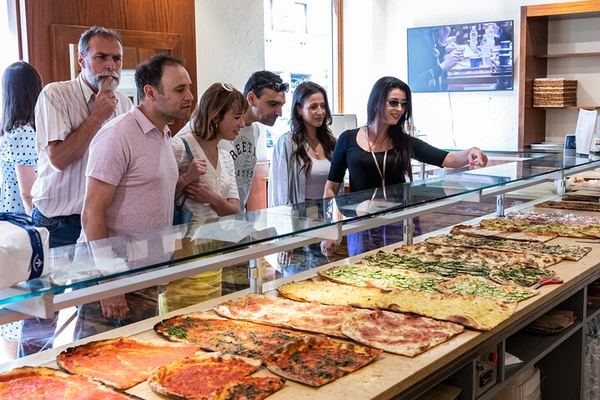
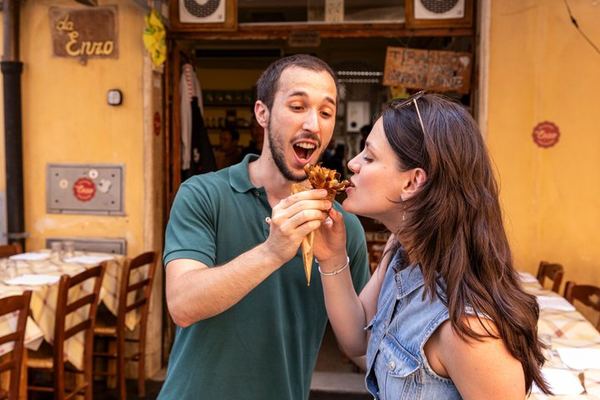
Supplì, a fried rice croquette with a core of mozzarella that pulls into a thread when you bite it. Pizza al taglio, sold by weight and cut with scissors. Porchetta, herbed roast pork carved from the whole animal, usually in a bread roll. Cheese and salumi, with pecorino romano doing the heavy lifting. Fried artichokes if you are in the Ghetto and it is spring. Pasta, one of the four Roman dishes, at a sit-down stop. And gelato, almost invariably last.
Wine is included on most of the evening walks, usually a glass at three or four of the stops. Two listings make wine the centre rather than the accompaniment, one of them built around Barolo, which is not a Roman wine at all but a Piedmontese one: worth knowing before you book it as a taste of Rome.
What the same evening costs on your own
This is the calculation nobody publishes, and it is the honest way to judge an 82 euro walk. Roman street food is inexpensive and the prices are on the wall, so the arithmetic is not hard to do.
Below is what the individual items cost at well known places in the city, read from their own published prices in 2026. Note that two of these are the same thing at two addresses: a supplì is three euros at one and two at another, and neither is overcharging. The formats differ.
| What | Price | Note |
|---|---|---|
| Supplì | 2.00 to 3.00 EUR | The price gap between two well known addresses is the portion, not a markup |
| Trapizzino | 5.00 EUR | Every filling, one price. A pocket of pizza bianca with a stew inside |
| Maritozzo | 3.50 EUR | The cream bun. Breakfast, not dessert, whatever the tour says |
| Pizza al taglio | By weight | Sold by the gram, so the portion is your decision |
| Porchetta in a roll | About 5 EUR | From a stall or a bakery counter, not a restaurant |
| A glass of house wine | 3 to 5 EUR | In a wine bar off the main squares |
| Gelato, small | 2.50 to 3.50 EUR | More on a piazza with a view, and that is legal and posted |
Add it up and an evening of seven items with three glasses of wine comes to roughly 35 euros, against a median tour price of 82. The difference is the guide, the route, the sit-down stops and the fact that somebody has already eaten at forty places so you do not have to eat at the wrong five.
That is a fair trade once and a poor one three times. The best use of this page is to book a single walk early in your stay and spend the rest of the week using what you learned, which is exactly what the better guides tell you to do.
Five of these are discounted, which is unusual
A quarter of this page carries a discount, against one in twenty in Tokyo and none at all in Hanoi or Marrakech. That tells you something about the competitive pressure in Rome: twenty operators selling the same evening in the same square kilometre, and the price is one of the few levers left.
It also means the list price is a weaker signal here than elsewhere. Two listings at the same headline price can be quite different products, and two at different prices can be near-identical. The review counts are the better guide: the top four listings on this page hold between 3,473 and 6,322 reviews each, which is years of consistent operation rather than a good month.
Practical points
Do not eat beforehand. Five to seven stops with wine is a full dinner, and the listings that promise fifteen tastings mean fifteen separate things put in front of you.
Cobbles. Rome's sampietrini are uneven, polished and unforgiving, and three hours on them in unsuitable shoes is the most common complaint on tours here that have nothing to do with the food.
Start times move with the season. Evening walks begin later in summer, when Rome does not really start eating until half past eight, and earlier in winter. Check the time on the date you are booking rather than assuming.
August. Many of the small places these tours use close for two or three weeks in mid August. Operators substitute, and the tour still runs, but it is not the route the reviews describe.
Groups. The good listings cap at ten to twelve. A Roman trattoria can seat a group that size at one table; twenty means two tables and half a guide.
Questions about Rome food tours
How many stops and how much food?
Five to seven stops on the standard evening walk, and it is a full dinner. The largest listing here promises fifteen tastings across Trastevere and the Ghetto, which sounds enormous and works out at a mouthful or two each. Skip lunch.
Is 82 euros worth it when the food costs 35?
Once, yes. Bought individually the same seven items with three glasses of wine come to around 35 euros. What the difference buys is the route and the shortlist, in a city where the bad version and the good version of every dish are on the same street. Book one walk early and eat on your own afterwards.
Is wine included?
On most evening walks, yes, typically a glass at three or four stops. Two listings are built around wine specifically, one of them around Barolo, which is from Piedmont rather than Lazio. If wine matters to you, read which wines are being poured before booking.
Trastevere or the Ghetto?
Trastevere for the evening, the density of stops and the atmosphere; six listings go there. The Ghetto for the fried artichokes and a distinct culinary tradition you will not meet elsewhere, and it works better in daylight. If you are in Rome in artichoke season, February to April, the Ghetto is the more interesting three hours.
Are the cheap listings worth it?
The two cheapest things on this page, at 31 and 55 EUR, are cooking classes rather than walks. As walks go, the entry point is around 62 EUR and the median is 82. Anything advertised as a Rome food walk far below that is likely to be shorter, larger or lighter on the tastings than it first appears.
What are the golf cart tours?
Private sightseeing trips by electric cart with food and wine included, at up to 270 EUR, which makes them the most expensive listings in Rome on this site. They cover far more of the city than a walk and stop to eat along the way. Genuinely useful if walking three hours on cobbles is not possible; not what most people mean by a food tour.
Can children come?
Most operators accept them and several are explicitly family friendly. The considerations are the length, the late start in summer, and the amount of standing. The gelato and dessert focused listing is the obvious choice with younger children, and it is shorter.
Data verified on. Prices, ratings and formats read from the 20 listings on this page on 4 September 2026. Street food prices from the published price lists of Roman shops, 2026.