Food Tours · Tour
Make the Cocoa Butter, Then Wash It Off Under a Waterfall
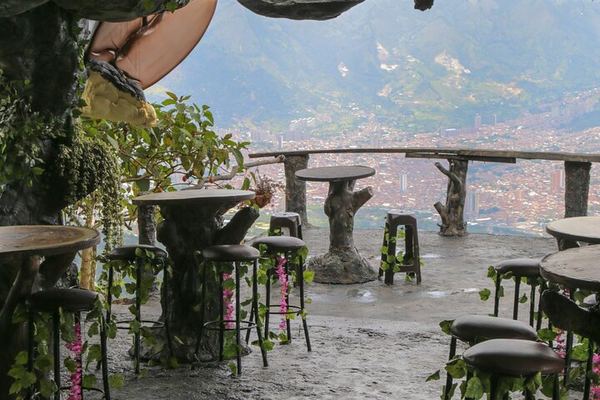
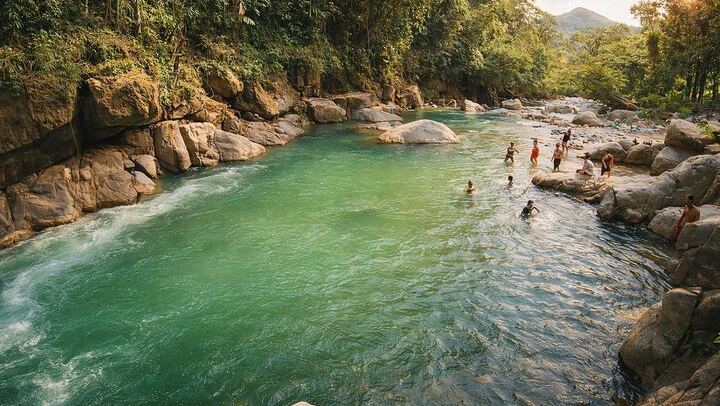
The idea is better than it sounds on paper: you grind cacao nibs into cocoa butter with your own hands at the farm, and then, a short drive later, you use that cocoa butter on yourself in a river. Six hours, east of Medellin. The first hour is the drive out through farms and small towns, with a stop at the Mirador de Cocorna, the viewpoint restaurant at the top of the mountain, which is where you get the Andes properly in view and where everyone stops. The farm is a family cacao farm, and the process it takes you through is the full one, all ten stages. Cultivation, and why cacao will not grow above 1,500 metres. Harvesting, and the trick of hanging the opened pods upside down so gravity strips the pulp off the beans. Fermentation, five or six days in wooden boxes or under banana leaves, which is where the flavour is actually made. Drying under plastic in the sun. Roasting. Winnowing, cracking the beans to separate the nibs from the husks. Grinding, by traditional method, which releases the cocoa butter. Conching. Tempering, for the snap and the gloss. And moulding, which is your own bar, packaged, to take home. Then the river. Crystal clear, with a small waterfall, and the cocoa butter used as an exfoliant before a natural massage under the falling water. Up to fifteen people, in English or Spanish, with private transport, breakfast, snacks, lunch and insurance. Suitable for all fitness levels.
What's included
- Private transportation
- Lunch
- Snacks
- Breakfast
Show 1 moreShow less
- Seguros
Itinerary
The map could not be loaded. Please try again in a moment.
El Poblado, Medellin
We meet where the buses and taxis park, right beside the police station.
1) After the pick up at your Airbnb/Hotel on a comfortable…
After the pick-up from your Airbnb or hotel in comfortable private transport, we head east of Medellin towards the countryside, past a variety of landscapes, farms and small towns. An hour out of the city we make the first stop, to stretch, use the bathroom and take in the scenery, at the Mirador de Cocorna. The Mirador is a traditional restaurant with a viewpoint at the highest part of the mountain, and it gives you the Andes in full. It is near the town of Cocorna, and nobody passing this way skips it.
2) Soon we'll arrive to a gorgeous local family Cacao farm
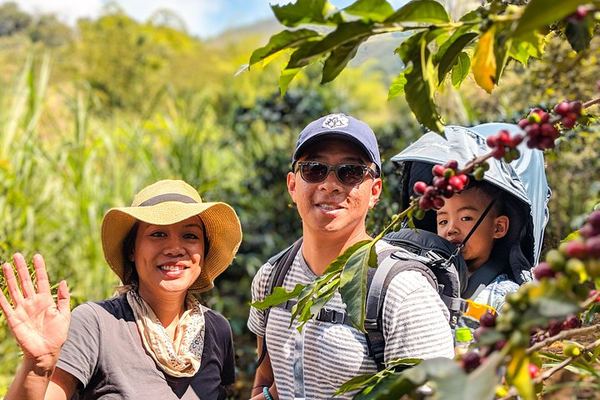
Soon we reach a family cacao farm, surrounded by natural beauty and a mix of crops, flowers and plants, where the whole chocolate process happens, from the cacao tree to the drink and the bar. With the Antioquian landscape around you, the art and science of cacao and its history make sense. From picking the fruit to roasting the nibs, you see first-hand how much complexity and dedication go into an ordinary cup of chocolate. The process, stage by stage: 1. Cultivation. Cacao thrives in tropical climates and no higher than 1,500 metres, producing the pods that chocolate starts as, which are strange oval fruits in every colour. You see the different stages of growth and how much the environment decides the quality of the bean.
2
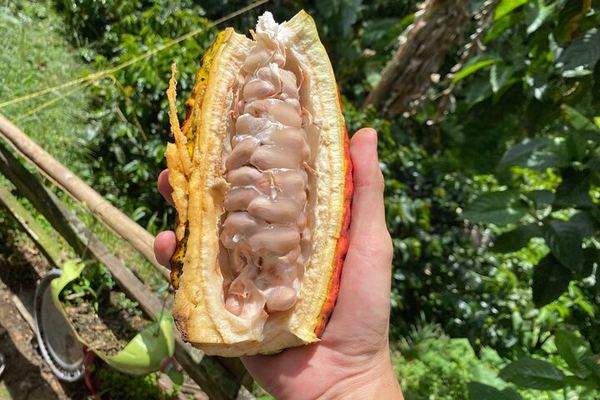
2. Harvesting. Farmers handpick the ripe pods, which are ready once they have reached a good size and a bright colour, and open them to reveal the beans inside a sweet, sticky pulp. The pods are then hung upside down for a few hours so that gravity pulls the pulp away and leaves the beans nearly clean. 3. Fermentation. The fresh beans go into shallow wooden boxes or barrels, or under banana leaves, to ferment for five or six days. This is the stage that builds the flavour and the colour, and it decides the quality of the finished chocolate. 4. Drying. After fermenting, the beans are spread in the sun under plastic, which creates a greenhouse effect. It takes several days depending on the weather, until the moisture is right.
5
5. Roasting. Once dry, the beans are roasted to bring out their complexity. Time and temperature depend on the flavour you are after. You watch it happen, and there may be freshly roasted beans to try. 6. Winnowing. The roasted beans are cracked and winnowed, separating the nibs from the husks. The nibs are cacao in its purest form and the essential ingredient in chocolate. You see how it is done, by machine or by hand. 7. Grinding. The nibs are ground into a thick paste, the chocolate liquor or cocoa mass. Industry uses heavy machinery; we use a traditional and resourceful method, which releases the cocoa butter and turns the nibs into something smooth and liquid. That is the cocoa butter we take to the river.
8
8. Conching. The chocolate liquor is refined by conching, mixed and aerated continuously at controlled temperatures. It can take hours or days depending on how smooth you want it, and it decides the texture and the taste. 9. Tempering. For the snap and the gloss, the chocolate is tempered: cooled and reheated carefully to stabilise the cocoa butter crystals. You watch the technique, and you may try it. 10. Moulding and packaging. The tempered chocolate goes into moulds, cools and hardens, and is packaged. We make and package our own bar, and take it home.
After our enriching cacao experience at the farm
After the farm we head to a crystal-clear river with a small waterfall. There we use the cocoa butter we made earlier as an exfoliant, all over, which lifts the dead skin and leaves it moisturised, and finish with a natural massage under the falling water.
El Poblado, Medellin
Good to know
- Suitable for all physical fitness levels
- Up to 15 travelers per booking.
- Mobile or paper ticket accepted
- Guiding available in: en, es.
Reviews
Loading reviews…