
How Long Is a Food Tour? The Number on the Listing Is Not the Length of Your Day
The median is 210 minutes, but that median is the middle of four products. Thirty-seven listings on this site run past six hours, and almost all of them are day trips with a tasting inside. What the format tells you that the category page does not.
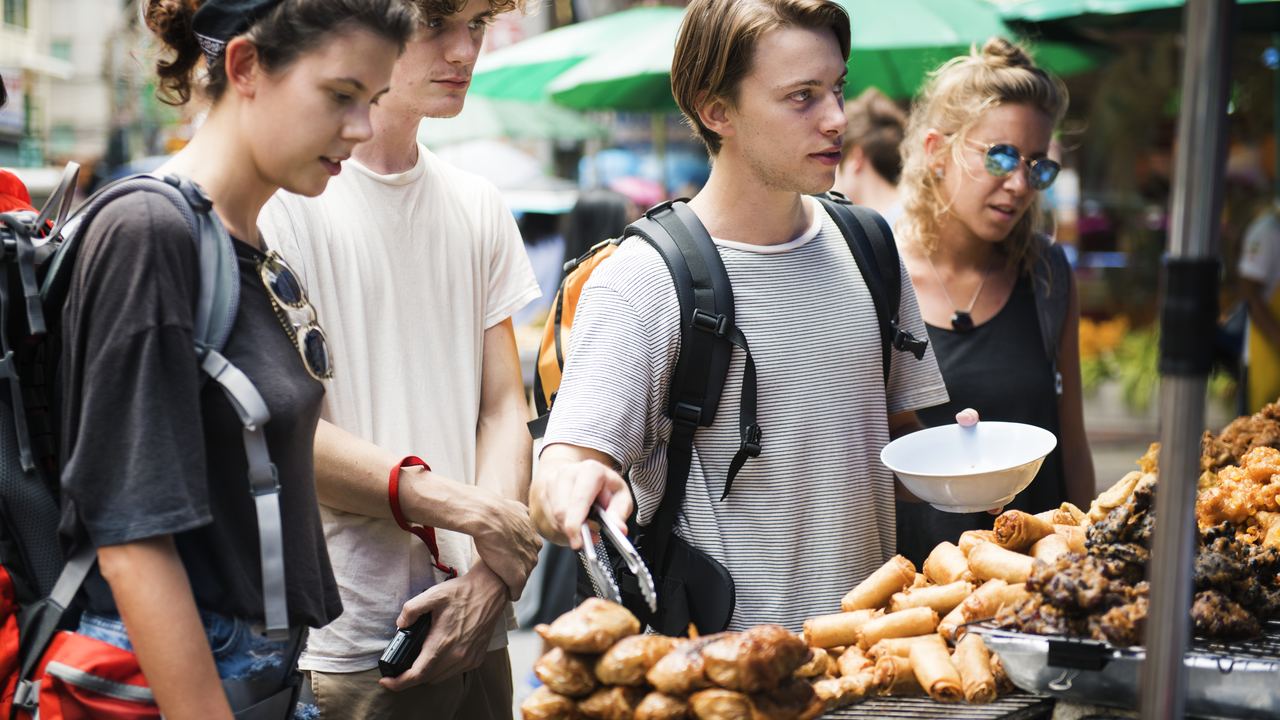
How long is a food tour? Across the 429 experiences on this site the median is 210 minutes, measured on 5 September 2026. A quarter of them run to 180 minutes or less, a quarter to 240 or more, the shortest is 45 minutes and the longest is twelve hours.
Three and a half hours is a true answer and a fairly useless one, because it is the midpoint of four products that have very little to do with each other. A pizza class in Naples and a Douro valley day out of Porto are both in this catalogue, filed as food experiences, priced within sight of one another. One of them costs you an afternoon. The other costs you the day, and a good part of that day is a coach seat.
How long is a food tour by format, not by average
We counted the catalogue by what it sells rather than by the headings it is filed under, which meant reassigning the five destinations that offer only one thing to the format they actually offer. The gaps are not subtle.
| Format | Listings | Median duration | Median price | Group cap | Stops |
|---|---|---|---|---|---|
| Food walks | 141 | 3 h | €84 | 12 | 5 |
| Cooking classes | 136 | 3 h 30 | €52 | 14 | 2 |
| Street food and markets | 92 | 3 h 30 | €45 | 12 | 4 |
| Producer visits (wine, port, coffee) | 60 | 6 h | €90 | 18-19 | 3 |
The bottom row is the one that catches people out. A producer visit runs twice as long as a food walk, carries half again as many people, and declares fewer stops than anything except a cooking class. Three stops in six hours is not a busy afternoon. It is a drive with three things in it.
None of this is concealed. It is written on the individual listing, in the paragraph most people skim after they have already decided. What blurs it is the category page, where an hour and a day sit beside each other under one heading, at prices that do not always tell them apart.
The thirty-seven listings that take your whole day
Thirty-seven of the 429 experiences here run past six hours, and the longest runs to 720 minutes. Rather than describe them in the abstract, on 16 September 2026 we opened the two pages where they cluster and read every listing on both.
The Porto wine page carried twenty listings that day. Nine of them state a day of nine hours or more in their own description, and the longest states ten and a half. At the other end, two state ninety minutes or less, and the shortest of all is an hour inside an ageing lodge in Vila Nova de Gaia. One page, one heading, a factor of ten between the ends of it.

The drive is not the gap between the stops. It is most of what you bought.
The full Douro days on that page publish their pickup times, and they are early: departures between a quarter to eight and half past eight in the morning, back in Porto around six. Inside those nine or ten hours sit two estates, a lunch and, on some of them, fifty minutes on a boat.
Add it up and the wine is a few hours of a very long day. The better listings are candid about this and sell the rest of it as the attraction, naming the town on the Tâmega where you stop for coffee and the viewpoint at 640 metres. One of them is sold on exactly that basis: less time in cellars, more time on the way there.
The Florence wine page tells the same story in Tuscan. Of its twenty listings the longest declares twelve hours and takes in Siena, San Gimignano and Pisa with a winery lunch somewhere inside it, while the shortest is a two and a half hour walk through the historic centre with five food stops and about a mile and a half of pavement. Three of the twenty are sightseeing days on which the wine is the lunch rather than the subject.
This is the most expensive misunderstanding in the category, and what it costs is a day rather than money. Nobody books ten hours on a coach believing it is ten hours on a coach and then complains afterwards. People book it believing it is an afternoon, and discover at half past five, somewhere on the road back, that the evening they had planned in the city is gone.
The other end of the same page: what an hour buys
The short listings deserve the same reading, because they are the ones people dismiss as not worth booking. On that same Porto page, the hour inside the ageing lodge is a guided walk through the largest warehouse in the historic centre of Vila Nova de Gaia, something over six thousand pipes of port ageing under one roof, with a tasting at the end of it. The ninety minute one is held in the orangerie of a small hotel and pours five Douro table wines, which is the part of the region's output most visitors leave without trying. A third has no guide and no group at all: you walk three hundred year old cellars at your own pace and stop when you like.
None of those is a food tour in the sense the phrase usually carries, and all three are a better use of ninety minutes than a mediocre three hour walk. The useful question is not how long it runs, but how many of those minutes are actually yours. An hour in which somebody is showing you something is worth more than four in which you are being moved between places.
Where the hours go once you are on it
Four stops is the median, though only 246 listings out of the 429 commit to a number at all. Set that beside the duration and the arithmetic does itself: three and a half hours across four stops is a little over fifty minutes a stop, and those fifty minutes have to cover the walk there, the queue, the eating, and the time the guide spends explaining what you are about to eat. Nobody spends fifty minutes eating.

How much of the time is spent walking has an answer, and it comes from the only two operators we could find anywhere who publish one. The rest of the industry, around twenty companies across three continents, does not put a distance on the page at all.
You will only be walking 20-30% of the time.
The other is Culinary Backstreets, at 1.5 to 2.5 kilometres across a five or six hour tour. On our own catalogue the number of listings that put a distance on the page is fifteen, out of 429, and the biggest of those figures, 24 kilometres, is a bicycle. We went back and checked that one on 16 September: it is a ride through the Chianti Colli Fiorentini out of Florence, about two hours in the saddle. A walking number that turns out to be a bike is precisely the sort of figure that gets quoted wrongly for years.

So the effort is mild and it never quite stops, which our guide to what actually happens on a food tour breaks down minute by minute, and which is the whole argument of the page on what to wear and carry. The point here is narrower: none of that walking explains where three and a half hours go. Standing, waiting and listening do.
Four checks that tell you how long a food tour really is
Does the listing name a number of stops? Only 246 of 429 do. A listing that commits to four stops has thought about the shape of your afternoon. One that gives you a duration and no stops is more often a transfer with something inside it, and the duration is measuring the vehicle.
Is the transfer inside the stated time? On a producer visit it nearly always is, and it is usually the largest single item in the day. If a listing quotes nine hours from a city and the estate is ninety minutes out, three of those hours are decided before anyone opens a bottle.
Which of the four formats is it, really? Filed under wine tours does not mean cellar visit, as the Florence page demonstrates three times over. Read the first two sentences of the description rather than the heading above it, and our guide to reading a listing covers the other fields worth checking.
Does the start time match when that city eats? A market tour at eight in the morning and a street food tour at six in the evening are two different products even when the operator and the duration are identical. The morning one sees the trade; the evening one sees the crowd.
None of this makes the long ones bad
A ten-hour day in the Douro with two estates and a lunch is a good day out, and for anyone who would rather not drive a valley road after a tasting it is the only sensible way to see the place. An hour in a lodge in Gaia is a good hour. What the two are not is the same purchase, and the only field that separates them is the one most people read last.
Read it first. Then decide whether you are buying an afternoon or a day, because that is the real price, and it is not the one printed in bold.
Questions people ask before they book
How long is a food tour, typically?
The median across the 429 experiences on this site is 210 minutes, or three and a half hours. A quarter run to three hours or less and a quarter to four hours or more, with the full range stretching from 45 minutes to twelve hours. The format predicts the length far better than the city does.
Why do some food tours last ten or twelve hours?
Because they are day trips with a tasting inside them. Thirty-seven of our 429 listings run past six hours, and they are concentrated in the producer visits: the Douro out of Porto, Chianti and the hill towns out of Florence, coffee farms out of Medellín. The wine or the coffee is a few hours of the day. The rest is the road and the landscape it crosses.
Is a longer food tour better value?
Per hour, on paper, yes: a full Douro day works out at a lower cost per hour than a three hour city walk, because the extra hours are a seat on a coach. That only counts as value if those were hours you were happy to spend that way. Judge a long listing as a day out you would have wanted anyway, not as a longer version of a food tour.
How much walking is there on a food tour?
About two kilometres on a typical city walk, and the walking accounts for only a fifth to a third of the elapsed time. Fifteen of our 429 listings publish a distance at all, and the biggest of those is a bike tour. What people underestimate is the standing, which no field on a listing measures.
Does a cooking class take longer than a food tour?
Slightly, at a median of three and a half hours against three for a city food walk, but the spread matters more than the median. A class in a kitchen in the centre of town is an afternoon. A class at a farmhouse fifteen minutes outside it is most of a day once you count the transfer both ways, and both are usually listed on the same page.
Rome food walks, the three hour format
The city where this question gets asked most, and the format the median is built on.
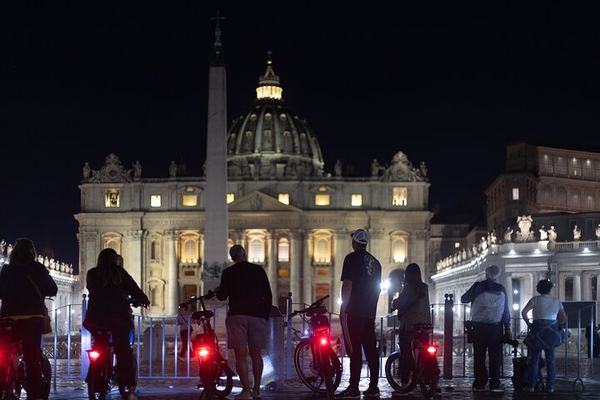
An Aperitivo, an E-Bike, and a Terrace Over the Colosseum
An aperitif by Santa Maria Maggiore, then four hours on an e-bike through Monti, the Campidoglio, St Peter's Square and the Trevi. Ten riders per guide. €59.
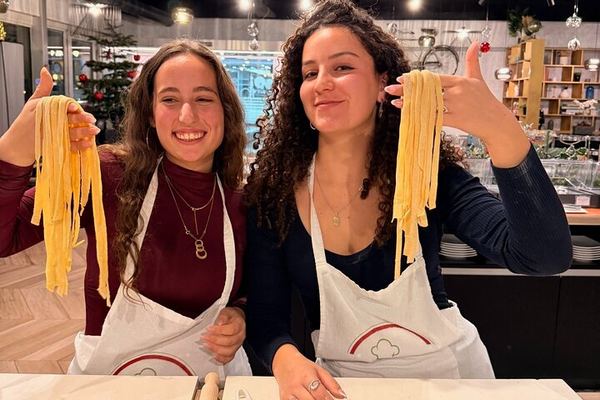
A Prosecco on Arrival, a Limoncello on the Way Out
Two and a half hours off Via Nazionale: a welcome prosecco, two fresh pasta shapes made by hand, tiramisù, and a limoncello or coffee to close. €55.
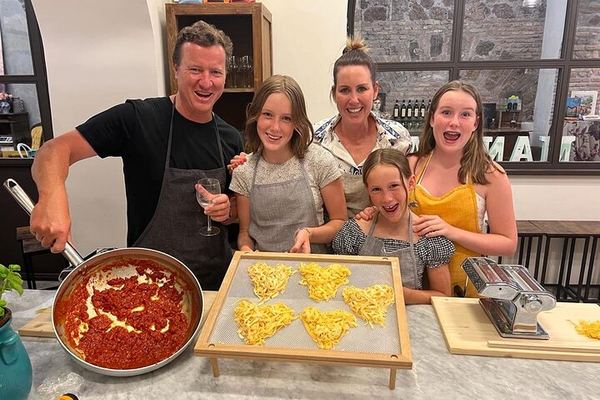
A Tomato Sauce Borrowed from Dolce & Gabbana
Handmade fettuccine, a tomato sauce the chef traces to Dolce & Gabbana, and gelato you make yourself, in a pizzeria a few streets from the Vatican walls.
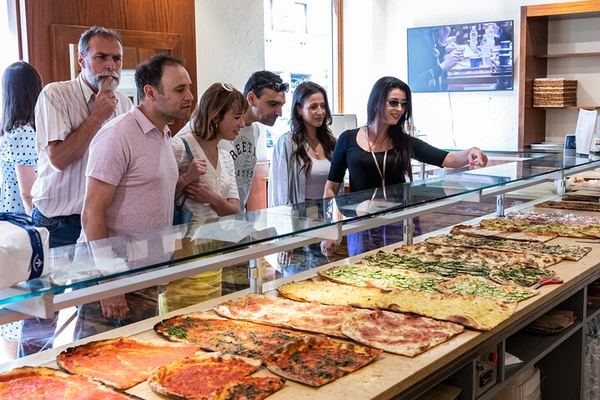
A Trattoria Cut Into a Hill of Broken Amphorae
Rome's first food tour, running since 2011: bruschetta built in the market, carbonara, amatriciana and cacio e pepe, and a 105-year-old gelateria.
Ratings collected by Viator and Tripadvisor
Data verified on. Medians counted across the 429 experiences on this site on 5 September 2026. The catalogue total, and every listing on the Porto and Florence wine pages, re-read on 16 September 2026.