
Lima Market Tours and Street Food
Fourteen listings from 40 to 110 euros, and they count themselves in bites: twelve snacks, thirteen bites, ten-plus tastes, thirty-five fruits.
Every listing on this page advertises a number. Twelve Peruvian snacks. Thirteen bites. Ten or more tastes. Thirty-five fruits. It is an unusually literal way to sell a food tour and it makes comparing them easier than in most cities: you are buying a count, and the count is roughly honest.
What they are taking you to see is a word that does not translate, and it is the most useful thing to learn in Lima.
Anticuchos and Churros Between Plaza San Martin and the Mercado Central
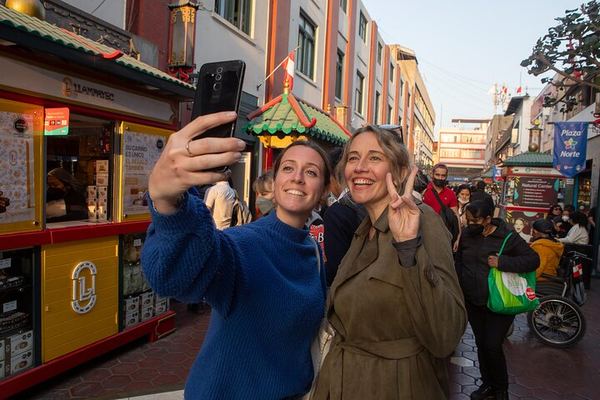
Four hours on foot from Plaza San Martin to the Mercado Central: tamal with emoliente and a pisco shot, anticuchos, creole churros. Send your passport number.
By Metropolitano to the Mercado Central and Chinatown
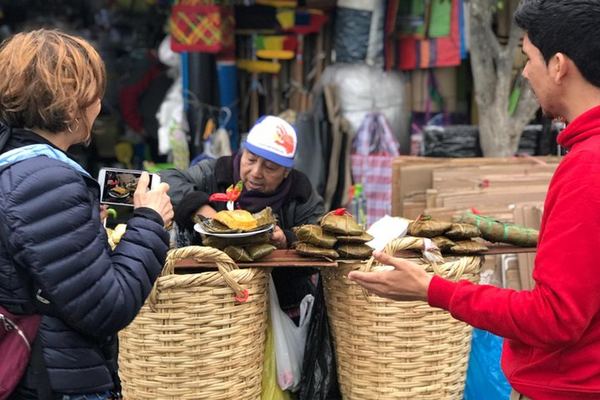
Fruit at Surquillo, then the city bus into the centre for picarones and anticuchos, min pao in Chinatown, and arroz con leche on the Alameda Chabuca Granda.
Carapulcra, Sopa Seca, Papa a la Huancaína, Off the Netflix Trail
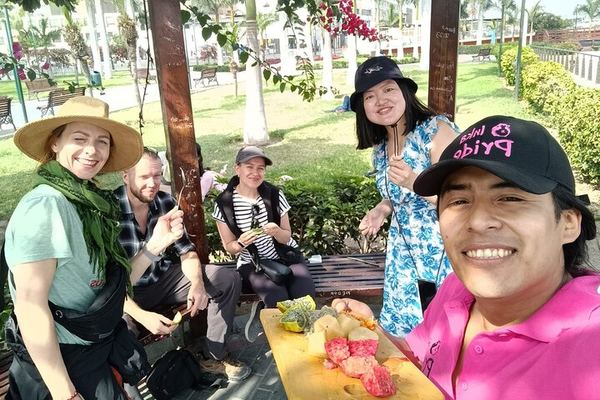
Carapulcra, sopa seca and papa a la huancaina are on the list, walked through the Central Market, Mesa Redonda, Barrios Altos and Chinatown with a licensed guide.
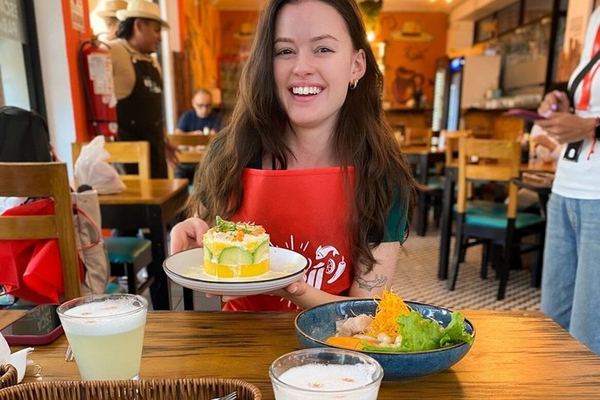
Causa, Ceviche and Picarones After Surquillo Market
Two and a half hours: four fruits at Surquillo Market, then causa rellena, ceviche and picarones with a pisco sour. The fish cannot be substituted.
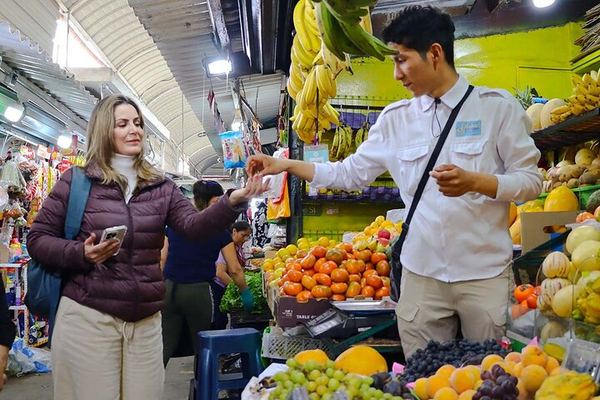
Charapita, Cocona and Juane: The Amazon Course in Surquillo
Two Surquillo markets, a cevicheria, and an Amazonian table: tacacho con cecina, juane, cocona and charapita chilli. Then picarones and lucuma cheesecake.
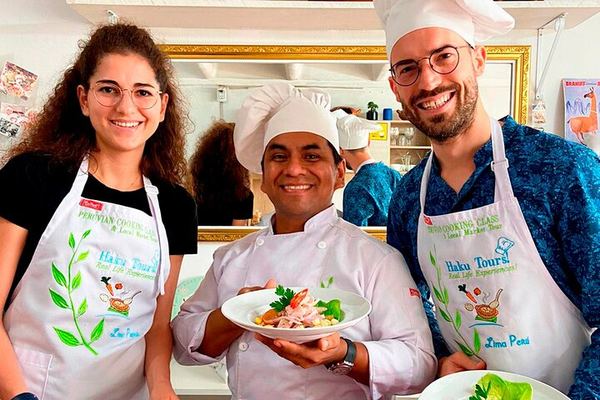
Eight Hours: Ceramic Pots, Then the Catacombs of San Francisco
A full day: Surquillo market, cooking in ceramic pots the way it was done here, then the historic centre, the catacombs, and the oldest bar in Peru.
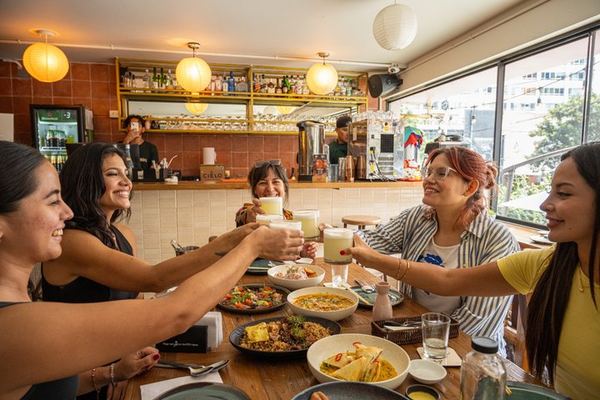
From Virgilio Martinez's Market to Parque Kennedy at Dusk
Ten-plus tastings from the Surquillo aisles where Lima's top chefs shop, through criollo cooking and ceviche, to an upmarket table and Parque Kennedy at dusk.
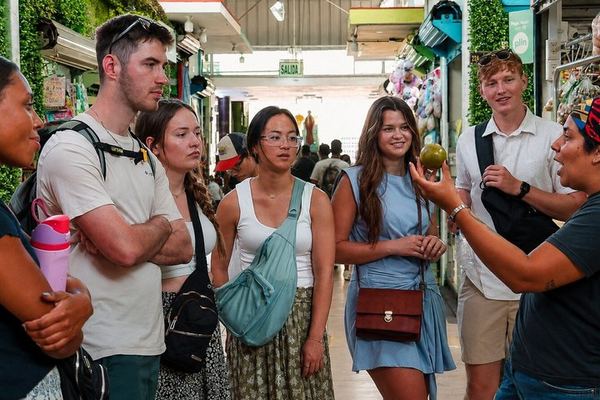
Luchito's with the Market Run and the Pickup Included
The version with the market and the transport: pick the ingredients yourself, learn how to haggle for them, then ceviche, causa and a pisco sour. Certificate.
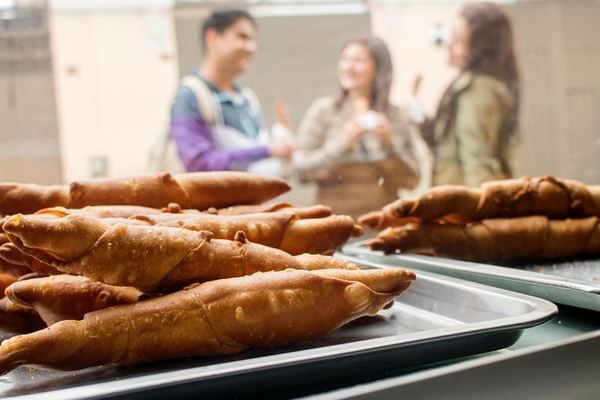
Peruvian Coffee First, Then a Pisco Sour at the Cordano
It opens with a Peruvian coffee tasting and closes with a pisco sour at Bar Cordano, a hundred years old, next to the palace. Lucuma smoothie in between.
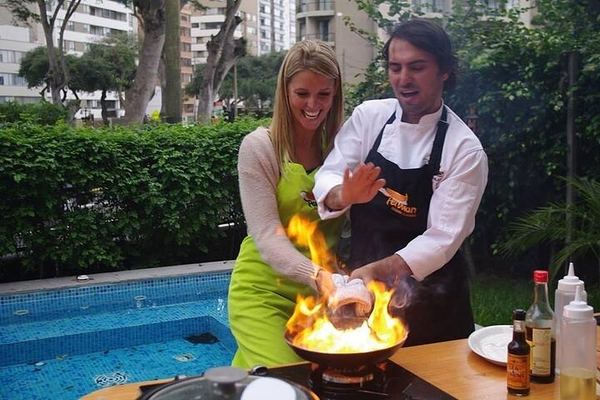
Private Class in Hector Aguilar's Garden Kitchen
Five hours, private, with Hector Aguilar: the market with him, then his outdoor garden kitchen, a pisco sour class and fruit. Transport inside the pickup area.
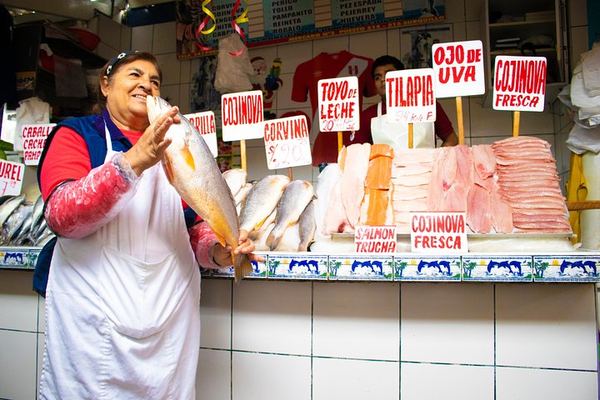
The Chorrillos Fish Market, Then the Menu del Dia
It starts where the fish lands, at the Chorrillos market, then two Surquillo markets for the daily set menu and ceviche. Eight people, hotel pickup included.
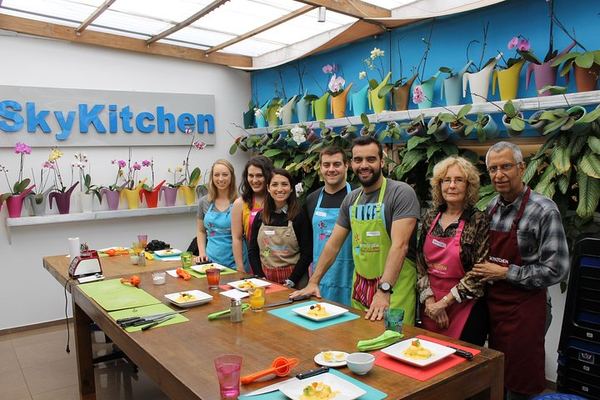
Thirty-Five Peruvian Fruits, Then the Four-Course Class
More than 35 fruits to taste, every one of them grown in Peru, after Mercado 1 de Surquillo and before you cook four dishes. Five hours, transport between.
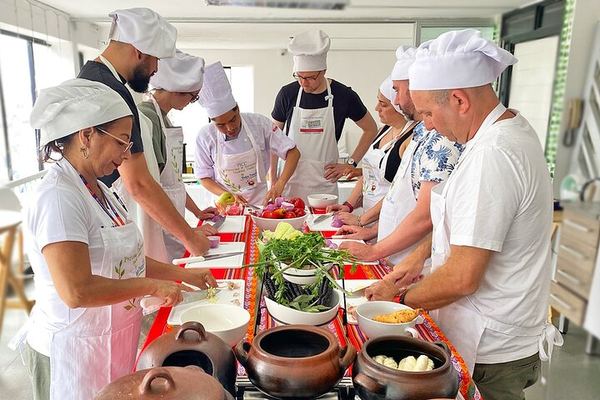
Three Menus at Surquillo Market, and the Profits Go to an NGO
Pick beef, chicken or fish, or mix the courses between them, after shopping at Surquillo Market No. 2. The profits fund Reciprocity NGO's social projects.
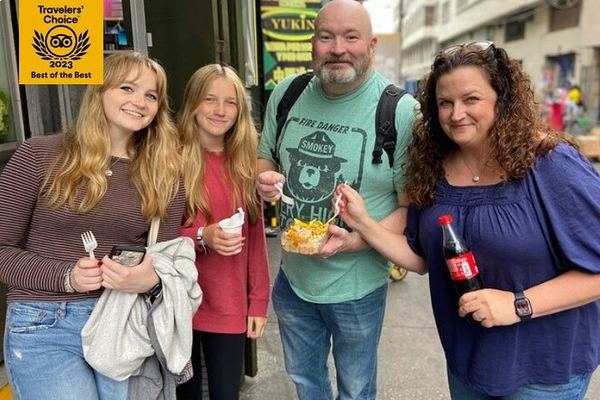
Twelve Snacks from Barrios Altos to Chinatown, Lima
Choclo con queso, papa rellena, ceviche, siu mai, anticucho, picarones, pan con chicharron and more, over three and a half hours and five stops. Bring ID.
Ratings collected by Viator and Tripadvisor
Huarique
A huarique is a small, modest, usually family-run restaurant that serves food far better than its appearance suggests. Plastic chairs, a handwritten menu, four tables, and a kitchen that has been making the same six dishes for thirty years.
The word is Peruvian and it carries no embarrassment: chefs use it about places they admire, and "my favourite huarique" is a compliment. It is not a dive, it is not ironic, and the distinction between a huarique and a bad restaurant is entirely about the food.
These are what the market and street food tours here actually visit, and it is why the listings talk about old eateries rather than restaurants. You would not walk into one alone: there is no sign, no English, and often no menu on display. That is exactly the case for a guide, and it is stronger in Lima than in most cities on this site.
The menú, which is how Lima eats lunch
Every huarique, and a great many ordinary restaurants, run a fixed lunch called the menú. It is not a tourist offer and it is not a set menu in the European sense. It is the working lunch of the country, served between roughly noon and three, and it is the single most useful thing to know about eating here on your own.
What arrives is a sequence: a soup or a light starter, then a main with rice, then a small dessert or a glass of chicha morada. There are usually two or three choices at each stage, chalked on a board or recited by whoever is serving. You do not order dishes; you pick a lane.
The economics are the point. A menú costs a fraction of what the same food costs à la carte in the evening, because the kitchen cooks a fixed quantity and sells it in two hours. It is also where the cooking is at its most honest, since the customers are the people who work on that street and will be back tomorrow.
Guided tours rarely include one, because a sit-down lunch does not fit a walking format. That is not a criticism: it is the reason to eat one on your own the following day, and any guide worth their fee will point you at the place they use themselves.
| Type | How many | Price | What it covers |
|---|---|---|---|
| Market plus street food walk | 6 | 40 to 61 EUR | Surquillo or the centre, plus huariques. Three to four hours |
| Historic centre, old eateries | 2 | 61 EUR | Barrio Chino, the centre, the most reviewed on the page |
| Cooking class with a market | 5 | 63 to 110 EUR | Also on the classes page. Morning, ends in a kitchen |
| Fruit focused | 1 | 110 EUR | Up to 35 varieties, plus a four course class |
The evening food is different from the daytime food
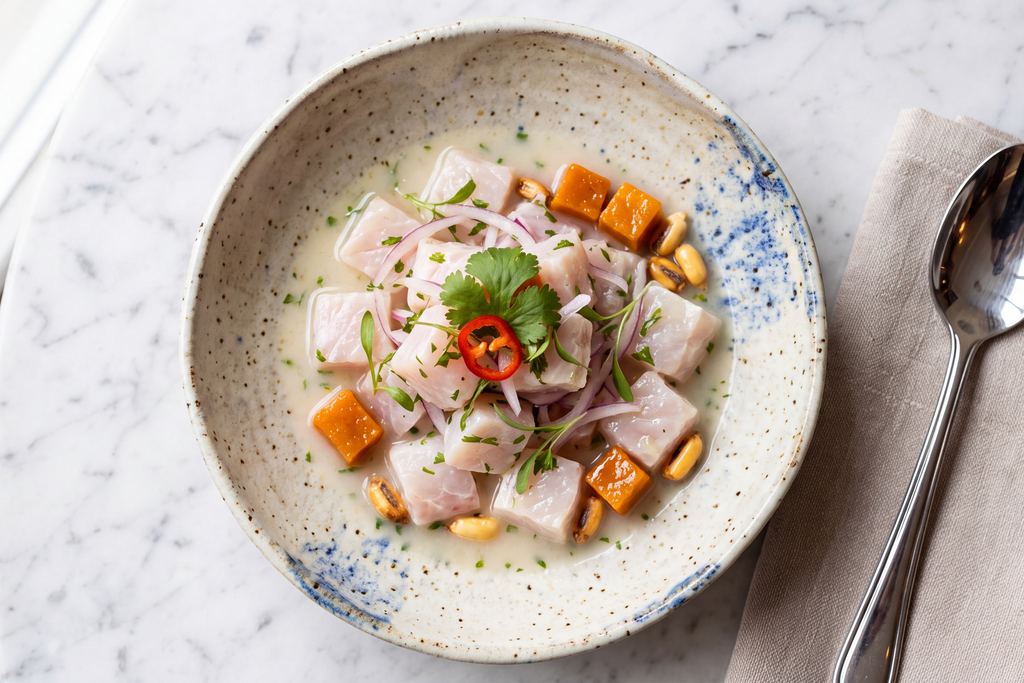
Lima eats ceviche at lunch and grills at night, and the two halves of the city's street food barely overlap.
Anticuchos are the evening: beef heart, marinated in ají panca, vinegar and cumin, threaded on skewers and grilled over charcoal on carts that appear after dark. They come with a boiled potato and a piece of choclo, the large-kernelled Andean corn. It is the most common street food in the city and it is offal, which some people need warning about and which nobody regrets trying.
Picarones follow: rings of squash and sweet potato dough, fried and served with a fig syrup. Emoliente, a hot herbal drink, is sold from carts at the same hour.
None of that is available at eleven in the morning, and a market tour and an evening street food tour are genuinely different meals.
| Name | What it is | When |
|---|---|---|
| Butifarra | A roll with jamón del país, country ham, with onion salsa and chilli | Breakfast or mid morning |
| Tamal | Maize dough steamed in a banana leaf, with pork or chicken inside | Sunday breakfast, and only then in many places |
| Papa rellena | A potato shell stuffed with mince, egg and olive, then fried | Late morning onwards, from a cart |
| Emoliente | Hot drink of barley, flax, horsetail and lime, poured from a height | Early morning and again after dark |
| Salchipapa | Chips and sliced sausage, with several sauces on top | After dark, and unashamedly |
| Picarones | Squash and sweet potato rings, fried, with fig syrup | Evening, after the anticuchos |
| Mazamorra morada | Purple maize pudding, thick, spiced, often served next to rice pudding | Evening dessert, from the same stall |
| Chicha morada | Purple maize boiled with pineapple, cinnamon and clove, drunk cold | All day, and it is not alcoholic |
The street to skip
Every local will tell you the same thing about one address in Miraflores, a pedestrian street of bars and restaurants known to everyone as the Calle de las Pizzas. It is loud, it is aimed squarely at visitors, the touts work the pavement, and nobody who lives in Lima eats there.
No tour on this page goes near it, which is a point in their favour and worth stating, because it is a five minute walk from where most visitors stay and it is the path of least resistance on a first evening.
The alternative is not exotic: Surquillo, ten minutes away, has the market and the huariques around it, and the historic centre has the old eateries the tours use. Both are places people live.
Counting the bites
The numbers in these titles are useful and slightly slippery, so here is how to read them.
Twelve snacks or thirteen bites means twelve or thirteen separate items, which across three hours is a full meal. Some will be a mouthful, one or two will be a small plate.
Ten or more tastes is the same claim with room to breathe. In practice these tours land in the same place.
Thirty-five fruits is not a food tour count, it is a fruit tasting, and it is one of the more memorable hours available in Lima. Lúcuma, chirimoya, granadilla, aguaymanto, pacay: the Peruvian coast and the Amazon between them grow a great deal that does not export, and the market vendors do most of the explaining.
What none of the listings state is walking distance, which is short. These are neighbourhood tours, and the transport between the market and the eateries is usually included when it is needed.
Which market you will actually visit
Worth repeating here because twelve of these fourteen listings mention a market. The Mercado Nº 1 de Surquillo, which appears by name in older itineraries, has been closed on safety grounds and is the subject of an ownership dispute between two municipalities. The working market is the Nº 2, on Jr. Leonardo Barbieri, a few streets away.
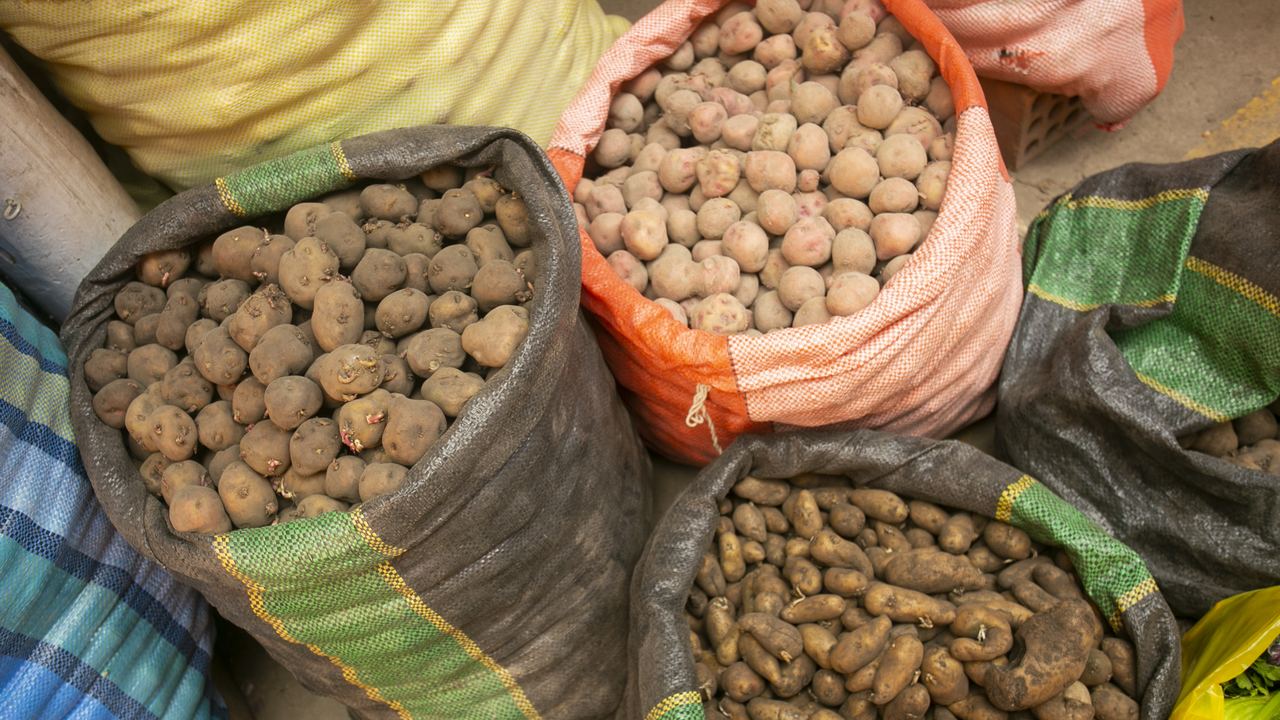
It is smaller, less photogenic and entirely functional: fish in the morning, the chilli stalls, the potato sellers, the fruit vendors who will open things for you to taste. Some tours use the Mercado Central in the historic centre instead, next to Barrio Chino, which is larger and busier.
Ask the operator. And treat any published opening hours with suspicion, including ours: no source we trust publishes them, and the ones circulating online disagree with each other.
Questions about Lima market and street food tours
How many tastings will I get?
Ten to thirteen on most, and the listings say so in their titles, which is unusually direct. Across three to four hours that is a full meal. The fruit-focused listing promises up to 35 varieties, which is a different kind of afternoon.
What is a huarique?
A small, plain, family-run place that cooks far better than it looks. The word is Peruvian and it is a compliment. These are what the tours mean by old eateries, and they are the reason a guide is genuinely worth it here: no sign, no English, no menu on display.
What is the menú?
The fixed lunch served in most ordinary restaurants between about noon and three: a soup or starter, a main with rice, and a small dessert or a glass of chicha morada, with two or three choices at each stage. It costs a fraction of the same food ordered in the evening and it is how the city eats on a working day. Tours rarely include one, so eat it on your own.
Is street food in Lima safe?
Apply the usual rules: high turnover, cooked in front of you, hot when it arrives. Bottled water is the standard recommendation for visitors and ice outside established places deserves thought. The tours use vendors they visit weekly. Hepatitis A vaccination is recommended for travel to Peru.
Morning or evening?
They are different meals. Morning gets you the market and ceviche, which is a lunch dish here because the fish lands in the morning. Evening gets you anticuchos, picarones and mazamorra from the charcoal carts, which do not exist before dark. If you can, do both, on different days.
Are the anticuchos really beef heart?
Yes, marinated and grilled, and it is the most popular street food in the city. It does not taste like offal to most people: firm, a little mineral, smoky from the charcoal. If it is not for you, the same carts usually sell chicken skewers, and the picarones afterwards are unambiguous.
Which market do these visit?
Usually Surquillo Nº 2 or the Mercado Central. The Surquillo Nº 1, named in older itineraries, is closed. Ask when you book, and be sceptical of any opening hours you find online, including on large sites: none of them trace back to a source.
Data verified on. Prices, ratings, review counts and tasting counts read from the 14 listings on this page on 4 September 2026. Market status from Peruvian press, August 2026.