

Lima Cooking Classes: Ceviche, Causa and Pisco Sour
Seventeen classes from 18 to 220 euros, rated 4.98, the highest of any category on this site. What you are learning is a marinade measured in minutes.
This page has the highest rating on the entire site: 4.98 across 3,472 reviews, with fifteen of the seventeen classes at a straight 5.0. That is partly because Peruvian food is easy to love and partly because these classes teach something genuinely useful in three hours, which not every cooking class manages.
Almost all of them teach the same three things, and the first of those is the one worth travelling for.
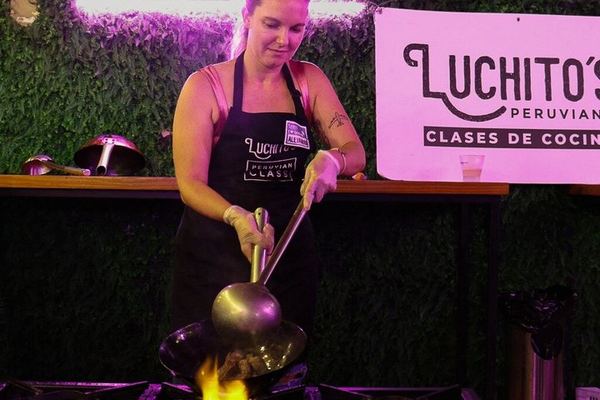
An Evening Rooftop Class: Lomo Saltado and a Chilcano
Six in the evening on a Miraflores rooftop, four people at most: lomo saltado, papa a la huancaina, and two cocktails, a pisco sour and a chilcano.
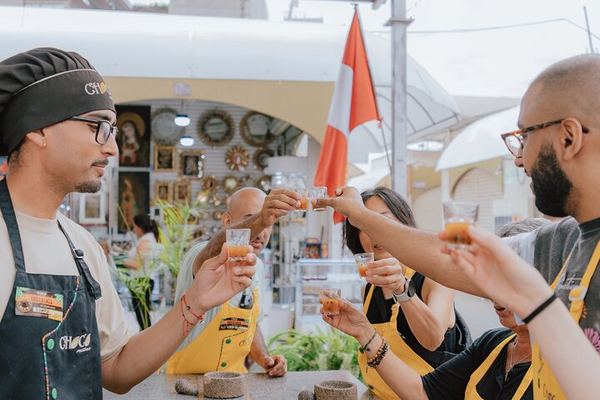
Bean to Bar in Miraflores: 130 Grams You Take Home
Two hours from the cocoa pod to a finished bar, plus why Peruvian cacao is what it is. You leave with 130g of your own, collected 45 minutes after the class.
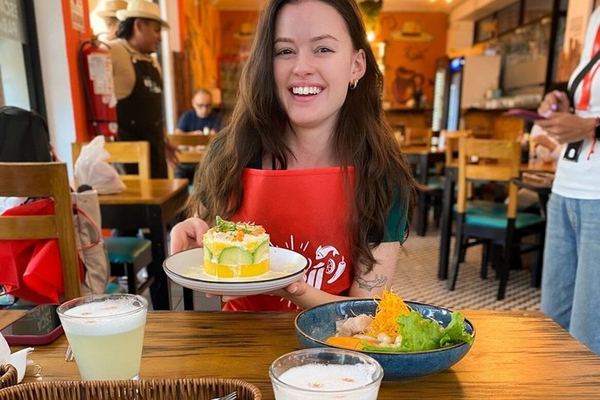
Causa, Ceviche and Picarones After Surquillo Market
Two and a half hours: four fruits at Surquillo Market, then causa rellena, ceviche and picarones with a pisco sour. The fish cannot be substituted.
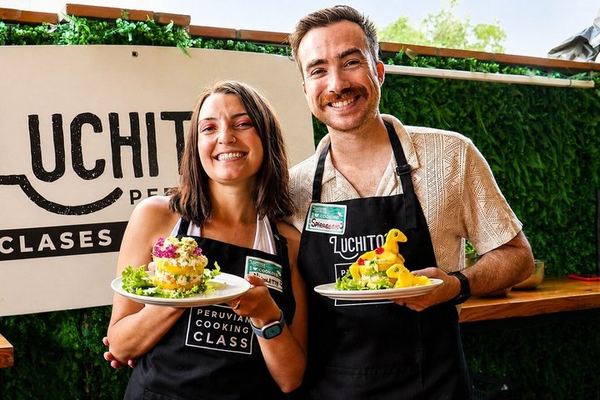
Ceviche, Causa and a Pisco Sour at Luchito's, Miraflores
Two and a half hours in Miraflores making ceviche, causa de pollo and one pisco sour, with the recipes to take home. Fourteen places, English or Spanish.
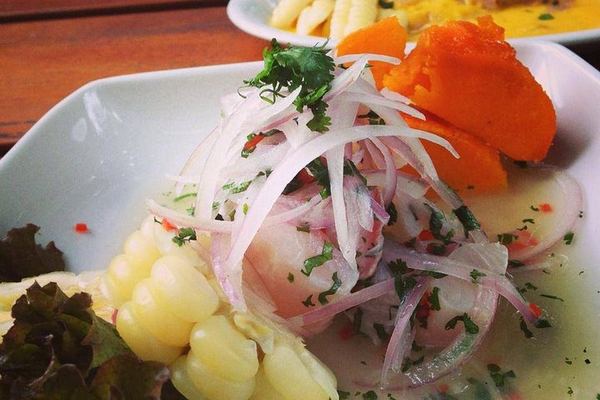
Ceviche Fifty Metres from a Pre-Incan Temple
Two hours on one dish, taught by an award-winning chef, in a kitchen fifty metres from the Huaca Pucllana. You eat what you make. Recipe e-book included.
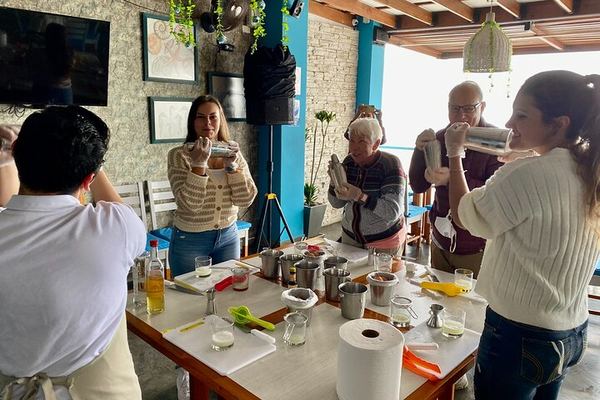
Cooking Causa and Ceviche Facing the Pacific
Four hours in front of the Pacific, cooking causa limena and ceviche with the fruit tasting first and a pisco sour after. Eight people at most.
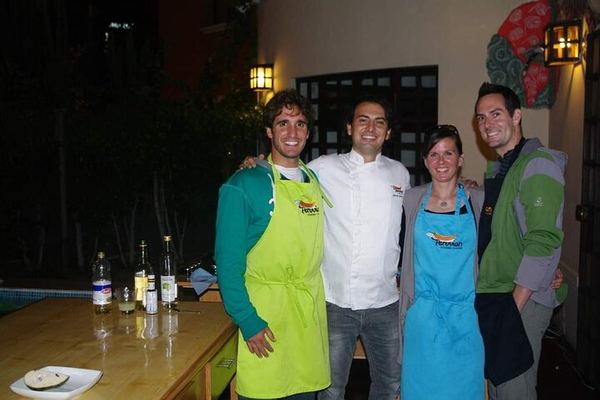
Cooking with Two Chefs from Maido, in Their Own Kitchen
Chef Hector Aguilar was Maido's creative chef and Chef Jose is its chef de cuisine. Three hours, a pisco sour class, the recipes, and the meal you cooked.
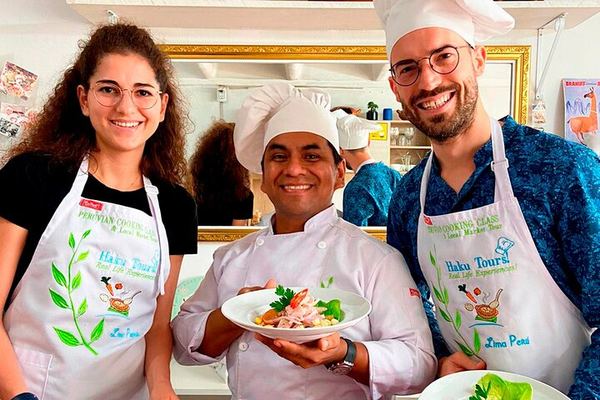
Eight Hours: Ceramic Pots, Then the Catacombs of San Francisco
A full day: Surquillo market, cooking in ceramic pots the way it was done here, then the historic centre, the catacombs, and the oldest bar in Peru.
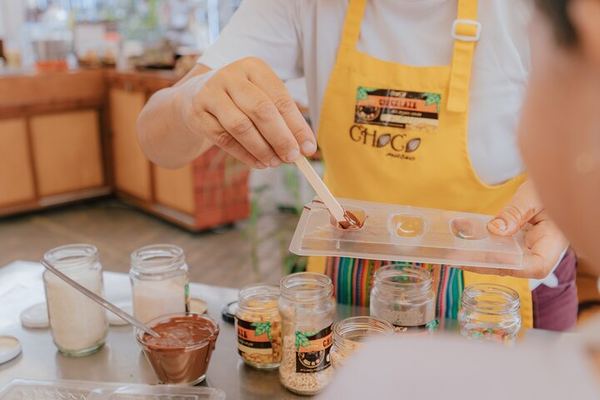
Forty-Five Minutes and 100 Grams of Chocolate
The short version of the ChocoMuseo class: 45 minutes, dark or milk, 100g to take away. Made for tight schedules and for children.
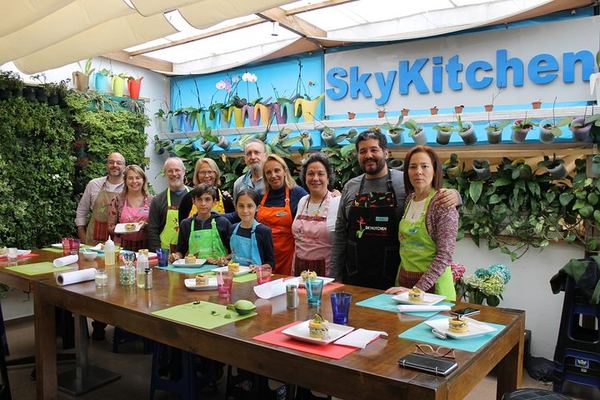
Four Courses Eaten as They Come, on the Seventh Floor
The class is paced so each dish is eaten the moment it is done, not held for a meal at the end. Plus which ingredients you can substitute once you are home.
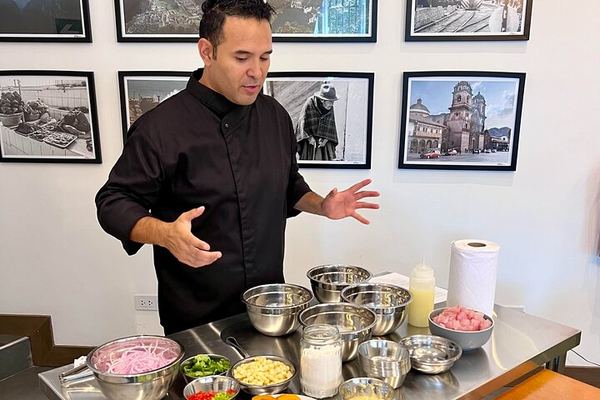
Four Dishes in a Hundred-Year-Old House in Miraflores
Two and a half hours at WasiPai, a restored century-old house near the Miraflores waterfront. Four dishes, a pisco sour and a second drink. Ten places.
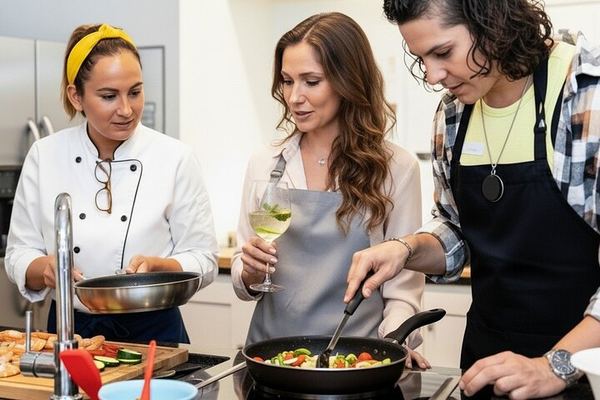
Four Hours, Iconic Dishes, and the Drinks Do Not Stop
Four hours, eight people, and the cocktails keep coming while you cook. Pisco sour mixology, a full tasting menu of what you made, and a recipe booklet.
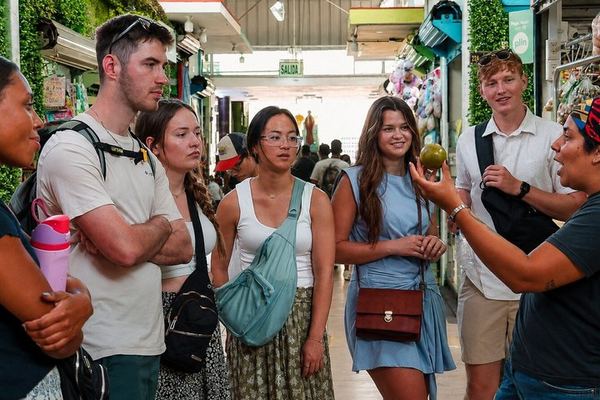
Luchito's with the Market Run and the Pickup Included
The version with the market and the transport: pick the ingredients yourself, learn how to haggle for them, then ceviche, causa and a pisco sour. Certificate.
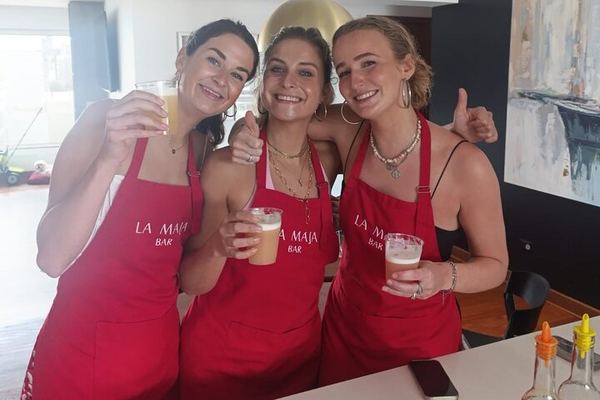
Seventeen Artisan Piscos, in Jose Antonio and Mariale's Home
Cooked in a family's own home by two pisco producers: tuna tartare, ceviche, and a tasting across 17 of their own artisan flavours. Eight people at most.
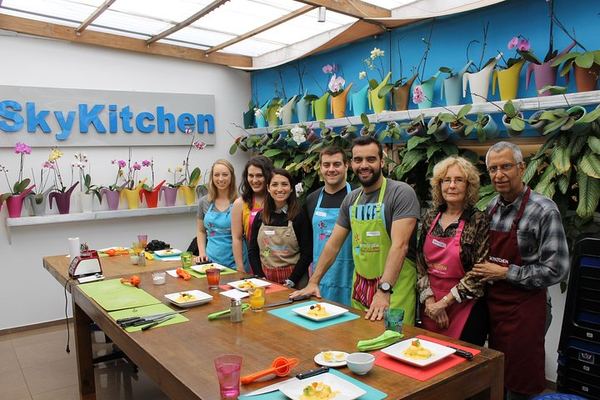
Thirty-Five Peruvian Fruits, Then the Four-Course Class
More than 35 fruits to taste, every one of them grown in Peru, after Mercado 1 de Surquillo and before you cook four dishes. Five hours, transport between.
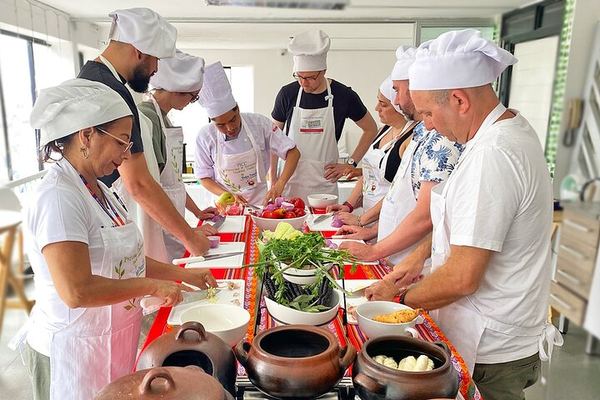
Three Menus at Surquillo Market, and the Profits Go to an NGO
Pick beef, chicken or fish, or mix the courses between them, after shopping at Surquillo Market No. 2. The profits fund Reciprocity NGO's social projects.
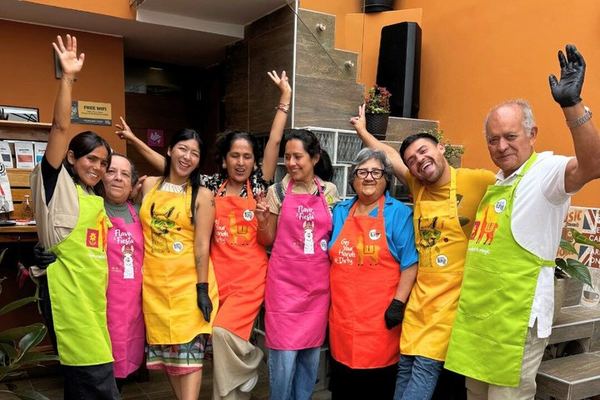
Tuk Tuk to the Market, Then a Live Peruvian Party
A Le Cordon Bleu chef, the market by tuk tuk, then ceviche, causa, lomo saltado and a pisco sour, and it finishes with live Peruvian music. Eight people.
Ratings collected by Viator and Tripadvisor
Ceviche is a timing exercise
Everything that makes a ceviche good or bad happens in about four minutes, and that is the lesson.
Cubes of firm white fish go into lime juice with salt, sliced red onion and chilli. The acid denatures the surface proteins, which is why the fish turns opaque and firm without heat. Leave it too long and the acid keeps working inward until the texture goes chalky, which is what happened to ceviche everywhere before Lima learned otherwise.
The short marination is a twentieth century change and it came from Japanese-Peruvian cooks, who applied a sashimi sensibility to a Peruvian dish. Before that, ceviche sat in lime for hours. Now it is dressed and served, and in a good cevichería it reaches the table within minutes of being mixed.
The liquid left in the bowl is leche de tigre, the tiger's milk: lime, fish juices, chilli, salt, sometimes a little of the fish blended in. It is drunk from the bowl or served in a glass on its own, and it is the part of the dish Peruvians care most about. A class that teaches you to taste and adjust it, rather than to follow a ratio, has taught you the dish.
The fish matters more than the recipe: you want something firm and white. Sea bass, sole, corvina. Salmon works and is not Peruvian. Anything soft turns to paste in the acid within a minute.
| Taught | In how many | What the technique is |
|---|---|---|
| Ceviche | 4 explicitly, more in practice | Curing in lime for minutes, and balancing the leche de tigre |
| Pisco sour | 6 | Emulsifying egg white, and lime against sugar |
| Causa | 3 | Yellow potato mashed with lime and chilli, layered cold |
| Lomo saltado | 3 | Wok heat, and the Chinese technique that arrived in 1849 |
| With a market visit | 5 | The chillies and the potato varieties, which is half the education |
| Fruit tasting | 2 | Up to 35 varieties, most of which do not travel |
| Chocolate, at a museum | 2 | Bean to bar. Enjoyable, and not Peruvian cooking |

The three chillies you need to recognise
Peruvian cooking runs on three, and none of them is primarily about heat.
Ají amarillo, the yellow one, is the backbone: fruity, moderately hot, and the colour of most Peruvian sauces including ají de gallina and causa. It is sold fresh, frozen or as a paste, and the paste is what you will find at home.
Ají limo is the small one that goes into ceviche, sharper and more floral, used in slices rather than blended.
Rocoto looks like a small round pepper, is genuinely hot, and carries black seeds. It is stuffed and baked in Arequipa and used sparingly elsewhere.
A class with a market visit will show you all three side by side, plus the pastes. That fifteen minutes is what makes the recipes reproducible at home, because ají amarillo paste travels and fresh chillies do not.
The pisco sour, which is harder than it looks
Six of these classes teach it and it is a genuine technical lesson rather than a party trick. Pisco, fresh lime, sugar syrup, egg white, and three drops of bitters on the foam.
The technique is the shake. A dry shake first, without ice, to build the emulsion from the egg white; then a wet shake with ice to chill and dilute. Reverse the order and you get a thin drink with a scummy top instead of a dense white foam.
Pisco itself is worth understanding: a grape spirit distilled to bottling strength with no water added afterwards and no ageing in wood, which is why it tastes of grapes rather than of oak or alcohol. There are several styles depending on the grape, and a class will usually pour a quebranta, which is the standard base.
One practical note about ordering them yourself: this is a drink made with raw egg white. Bars use fresh eggs and it is entirely normal here, but anyone pregnant or avoiding raw egg should ask for it without, which is a legitimate order and produces a sourer, thinner drink.
Two of these are chocolate, and one costs 220 euros
The two cheapest listings in the whole Peruvian catalogue, at 18 and 30 EUR, are chocolate workshops at a museum in Miraflores. You roast, grind and temper, and you leave with bars you made. They are good, they are cheap, they are 45 minutes and two hours respectively, and they are not Peruvian cooking classes. Peru grows excellent cacao, so the connection is real, but if you booked one expecting ceviche you booked the wrong thing.
At the other end, a ceviche class at 220 EUR is three and a third times the median and carries 17 reviews. On the same page, a class teaching ceviche, causa and pisco sour costs 52 EUR and has 1,507 reviews at 5.0. We are not going to tell you the expensive one is bad. We are going to point out that one of those two numbers is evidence and the other is not.
Several listings share identical prices, 78.19 and 51.83 appearing twice each, which is what happens when operators price in dollars and the conversion lands on the same figure.
What survives the flight home
Ají amarillo paste in a jar. This is the single most important thing to buy, it weighs little, and without it Peruvian recipes at home are approximations. Buy two.
Ají panca paste for the darker, smokier dishes, and dried rocoto if you find it.
Purple corn for chicha morada, which is easier to carry than it looks and makes a drink nothing else tastes like.
What you cannot take is the fish. Ceviche depends on fish landed that morning, and the honest version of the lesson is that at home you will make it with whatever is genuinely fresh rather than with a species name. Ask your teacher what they would use in your country: Peruvian cooks are pragmatic about this in a way that recipe writers are not.
And the potatoes will disappoint you. Peru grows thousands of varieties and exports almost none of them; causa made with a floury yellow-fleshed potato from a European supermarket is a decent dish and not the one you made in Lima.
Questions about cooking classes in Lima
How long is a class?
Three to four hours for a standard one, longer with a market visit, and one runs a full day. The two chocolate workshops are the short options at 45 minutes and two hours. Most finish with eating what you cooked, which makes them lunch.
Should I pick one with a market visit?
Yes, if the dates work. Five of the seventeen include one, and the market is where you see the chillies and the potato varieties laid out, which is the part that makes the cooking reproducible. It is also, in Lima, where a guide is genuinely useful.
Will I be eating raw fish?
In a ceviche class, yes, cured in lime rather than cooked with heat. The fish is bought that morning and the classes use suppliers they trust. If raw fish is not for you, several classes teach lomo saltado, causa and ají de gallina instead, none of which involve it.
Is the 220 euro class worth it?
It has 17 reviews. The 52 EUR class on the same page teaches the same three dishes and has 1,507 reviews at 5.0. Nothing about the expensive listing is suspect, but in a category rated 4.98 across the board, the review count is the only signal doing any work.
Can I do this vegetarian?
Yes, with notice. Causa, papa a la huancaína, solterito and much of the potato and chilli repertoire are vegetarian, and the market shopping happens with you there. Ceviche obviously is not, and a class built around it cannot be adapted much: book one of the criollo classes instead.
What is leche de tigre?
The liquid left after mixing a ceviche: lime, fish juices, chilli and salt, sometimes with a little fish blended in. It is drunk on its own, in a glass, and it is what Peruvians judge a cevichería by. Learning to taste and adjust it is the actual content of a ceviche class.
Data verified on. Prices, ratings, review counts and syllabus contents read from the 17 listings on this page on 4 September 2026.