

Marrakech Medina Food Tours
Fourteen listings from 20 to 70 euros. Three are cooking classes and one is a desert dinner forty minutes out of town, which leaves ten walks through the old city.
Ten of these fourteen are what the title says: a walk through the medina, three hours, somewhere between nine stops and fifteen tastings, ending on or near Jemaa el-Fna. Three are cooking classes that also appear on our classes page. One is a desert dinner that is neither.
The medina is also the one place on this site where a guide does a job that has nothing to do with food.
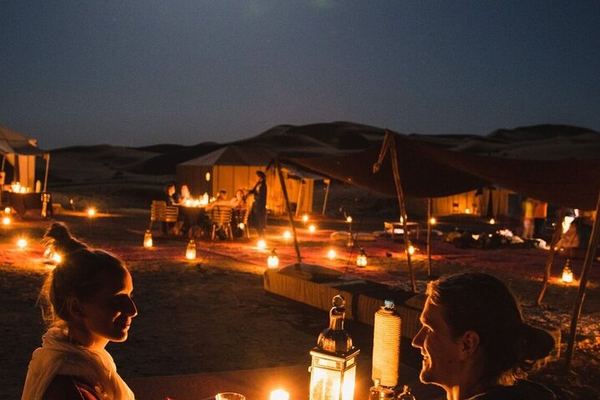
Dinner in the Stone Desert, Thirty Kilometres Out
Agafay is stone rather than sand and sits 30km from Marrakech, so a desert sunset takes an afternoon instead of two days. Tagine in a nomad tent, fire show.
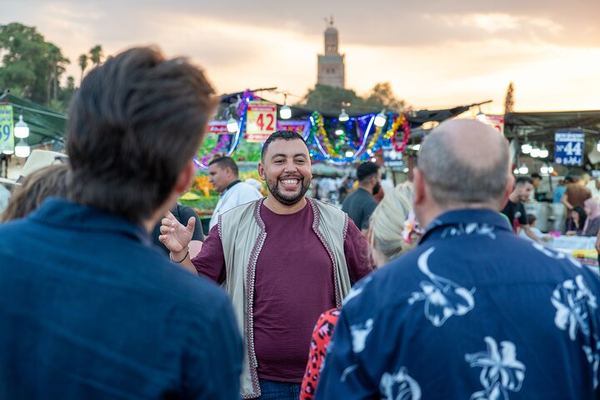
Four Olives, a Herbalist's Berber Tea, and Tanjia
Four olive varieties at Souk Semmarine, snail soup on the night square, Royal Berber tea at a herbalist, and a three-course dinner ending in tanjia.
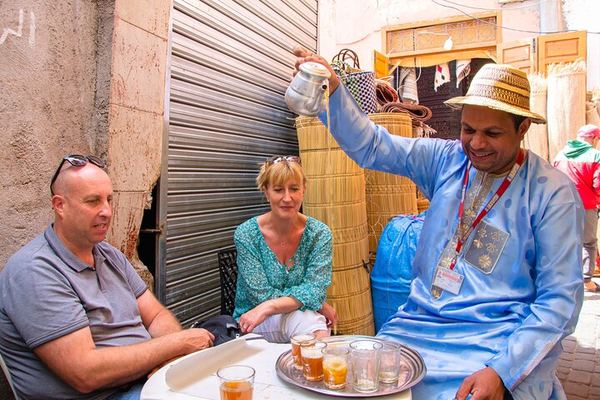
Khodanjal, Panache and Mint Tea, with the Food
Msemen, chebakia, kefta shakshuka and skewers, with three Moroccan drinks: mint tea, khodanjal and panache. Wheelchair accessible throughout, which is rare.
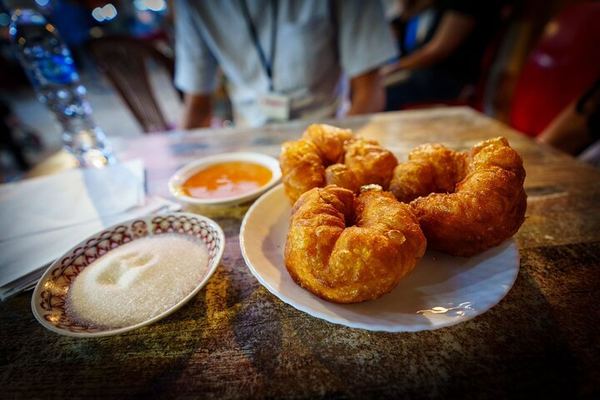
Meula, Chfange and Olives, Guided by Mehdi
Three hours through the Medina with Mehdi, a licensed guide who runs it himself: meula, the Moroccan shakshuka, chfange doughnuts, olives and the barbecue.

No Tagine, No Couscous: Nine Stops in the Hidden Medina
The operator's own promise is no tagine and no couscous: nine street food stops deep in the Medina, Berber rather than tourist. Ten people, three hours.
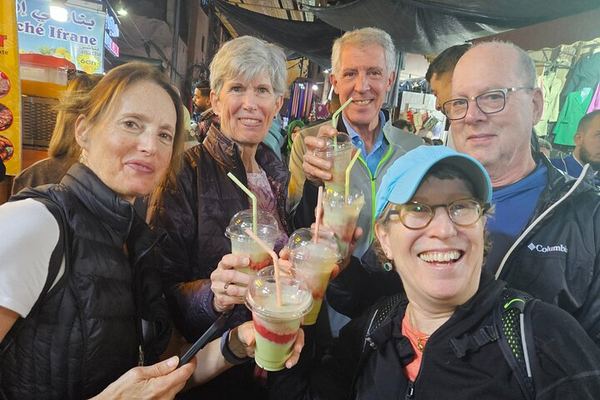
Pastilla, Tanjia and Pastries from the Oldest Bakery
Ten-plus tastings including chicken and almond pastilla, pastries from the city's oldest bakery, snails, and a tanjia dinner. Guided in six languages.
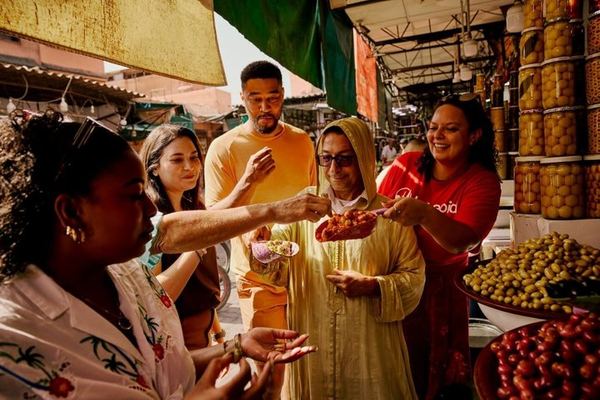
Rahba Kedima's Spice Stalls, and Dinner in the Square
Three hours through the souks after dark, past the spice stalls of Rahba Kedima, ending with dinner among the food carts of Jemaa el-Fnaa. Twelve people.
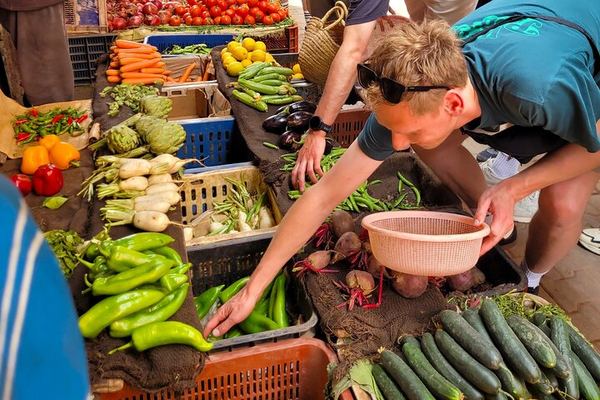
Ras El Hanout and Several Tagines, with Chef Hassan
The market first, then a family home and several tagines cooked as one team, with the spices explained. Ten people, air-conditioned, recipes at the end.
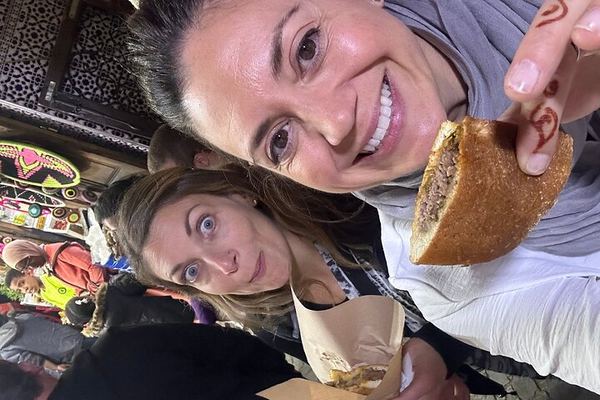
Snails, Sheep's Head and Chebakia: Two Medina Routes
Two alternating routes through the Medina from golden hour into the night: snails in herb broth on one, steamed sheep's head on the other. Both end in dinner.
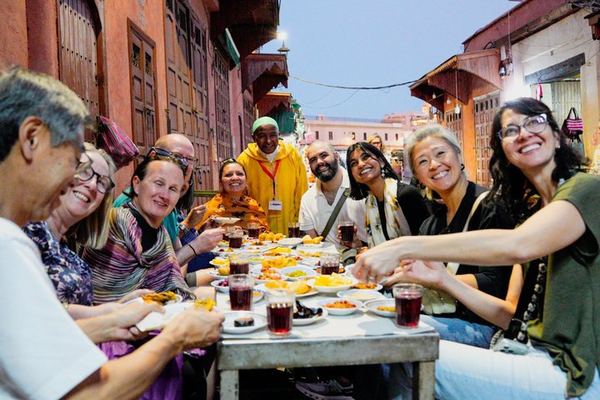
Spleen, Tangia and Butter Beans, After Dark
Five to eight dishes from 18:30, including tihal, grilled spleen, and tangia, the Marrakech dish. Not for vegetarians, and different during Ramadan.
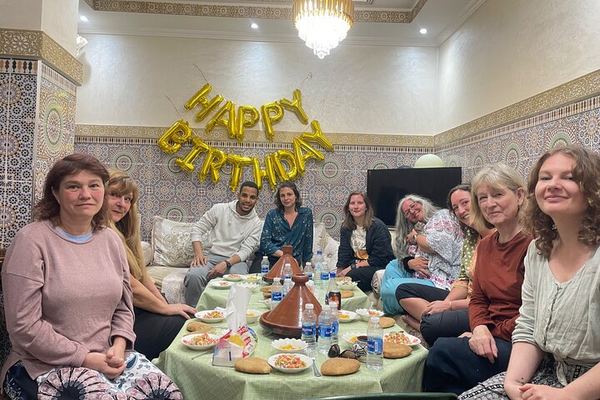
Tagine, Salads and Spice Tips, Two Minutes off the Square
A family house two minutes from Jemaa el-Fna: tagine, fresh Moroccan salads and dessert, with the recipes and the spice tips to take away. Three hours.
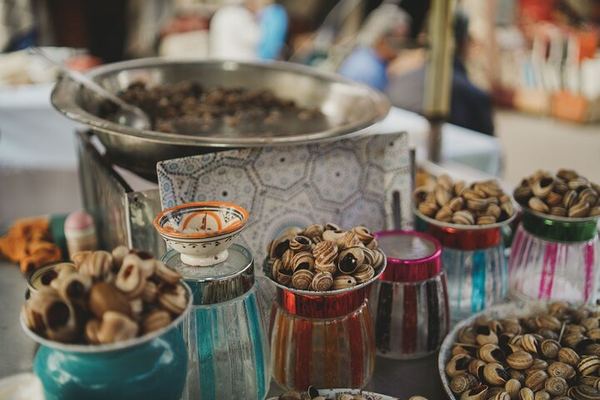
Tangia Baked in the Hammam Embers, and Fifteen More
Nine or ten stops and more than fifteen tastings: sardines from a wood-fired bakehouse, snails in ras el hanout, and tangia slow-cooked in a hammam furnace.
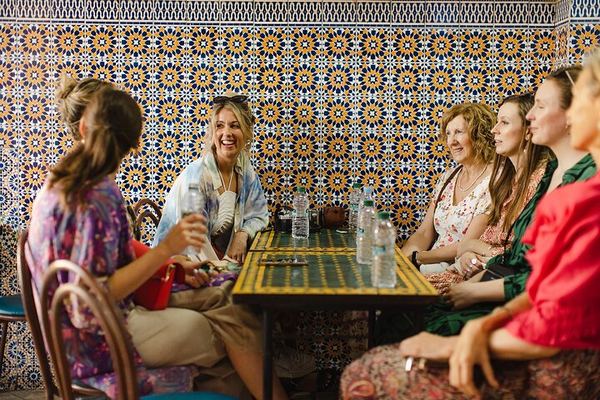
The Marrakech Tour That Can Actually Adapt the Menu
Eight people, an evening on foot through the medina, and unlike most street food tours here this one adapts to dietary needs if you say so in advance.
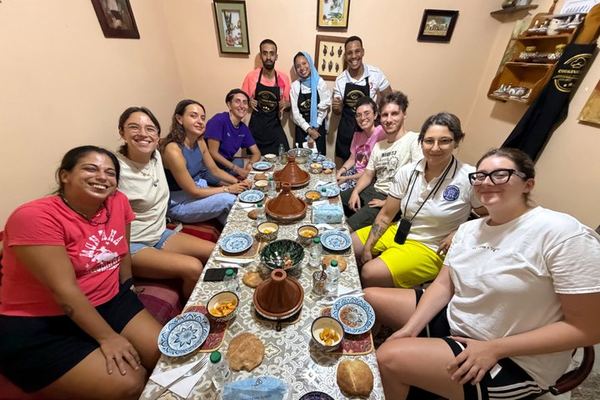
Two Hours In, the Meal Arrives: A Marrakech Home Kitchen
You cook for about two hours and then the meal is served, at lunch or at dinner. Tagine, Moroccan salads and dessert, in a home kitchen. Twelve people.
Ratings collected by Viator and Tripadvisor
Two jobs, and only one of them is eating
The first is navigation. The medina is a genuine maze of several thousand lanes, many unnamed, and mapping applications lose their signal and their usefulness inside it. Getting lost is not dangerous and it is guaranteed, and on a first day it eats hours.
The second is the approach problem. Men presenting themselves as official guides approach visitors constantly, and British government advice states this plainly. Walking with a licensed guide ends it: the approaches stop, because the people making them can see they are pointless.
The relevant law is worth knowing even if you never book a tour. Licensed guides must carry a professional card and a badge and produce them on request, both personal and non-transferable, and impersonating a guide is a criminal offence under the Moroccan penal code rather than a civil matter. Lending or renting a badge carries six months to a year in prison and a fine of 10,000 to 20,000 dirhams.
Ask to see the badge. It is a normal request, a licensed guide will produce it without irritation, and it is the single most useful sentence you can carry into this city.
| What arrives | What it is | When |
|---|---|---|
| Harira | Tomato and pulse soup with lentils, chickpeas and herbs, often with dates alongside | Late afternoon onwards, and it is the fast-breaking soup in Ramadan |
| Msemen | Square laminated flatbread, folded and griddled, served with honey or cheese | Breakfast and mid afternoon |
| Baghrir | Semolina pancake full of holes, soaked in butter and honey | Breakfast, and always with tea |
| Sfenj | Ring doughnut fried to order, sold by the piece | Morning, from a specialist stall |
| Brochettes | Skewers grilled over charcoal, with bread and cumin salt | Evening, on and around the square |
| Babbouche | Snails in a spiced broth, drunk from the bowl afterwards | Evening, from stalls that sell nothing else |
| Mechoui | Slow roasted lamb, carved by weight and eaten with salt and cumin | Midday, from a pit oven |
| Mint tea | Poured from a height, sweet by default | Every stop, whether you asked or not |
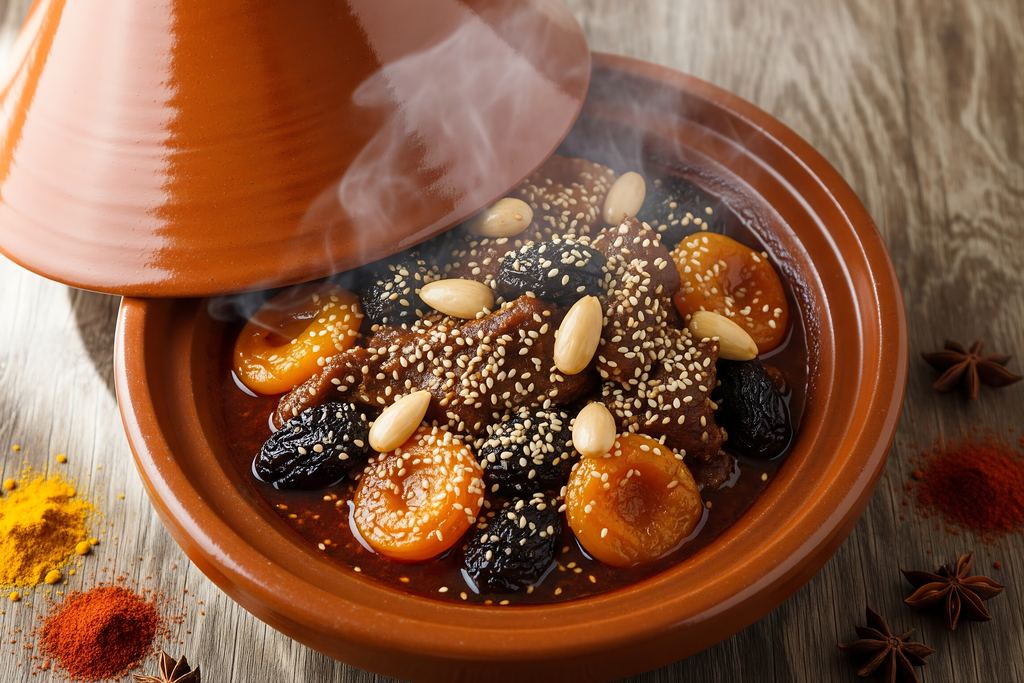
Nine stops or fifteen tastings
The listings count themselves differently and both numbers describe the same three hours. One promises nine stops; another promises more than fifteen tastings. In practice a Marrakech walk moves between eight and twelve places, most of them a doorway, a griddle or a cart, with two or three sit-down pauses for soup and tea.
The stops are small on purpose. Moroccan street food is not portioned in courses: it is a piece of bread, half a pastry, a bowl of soup shared. Fifteen tastings is a full dinner and not an ordeal.
What varies more than the count is the hour. The afternoon walks catch the bakeries and the pastry shops; the evening walks catch the square, the brochettes and the snail stalls, which do not exist before dusk. Two listings here are explicitly evening or sunset tours, and they are a different meal from the daytime ones.
The oven belongs to the street, not to the house
The best stop on a medina walk is often the one that sells nothing. In the old city, bread is baked in communal ovens: households make their dough at home, carry it on a board to the neighbourhood ferran, and collect it later. Families are recognised by the mark pressed into the loaf, and the man who runs the oven keeps track of whose is whose without writing anything down.
The same furnaces have a second life. Traditionally the heat left over from the bathhouse boiler was used to cook the sealed clay pots of tanjia buried in the embers, which is why that dish belongs to Marrakech and not to Morocco generally.
Bread here is a utensil as much as a food. Khobz, the round flat loaf, is torn and used to scoop: you eat a tagine with your right hand and a piece of bread, and cutlery is offered to visitors rather than used by everyone. A tour that walks you past an oven and lets you watch for five minutes has shown you something more Moroccan than any tasting on the list.
About the haggling, since you will be shopping too
Food in the medina has fixed prices. Everything else does not, and since your walk goes through the souks, it is worth knowing the difference so you do not haggle over a bowl of soup or accept the first number on a spice tin.
The stalls that feed locals daily, the bread ovens, the soup counters, the fried food, work on set prices and small margins. Do not negotiate there. It is the equivalent of arguing over a coffee.
The spice shops, the argan oil, the ceramics and anything aimed at visitors work differently, and a first price is an opening position rather than an insult. The convention is unhurried: you talk, you drink the tea if offered without that obliging you to buy, you name something well below, and you meet nearer the middle than you expect. Walking away is a normal move and is not rude.
The one thing a guide adds here is calibration, because the gap between the first price and the fair one varies enormously by product, and knowing that saffron and argan oil are the two things most often adulterated is worth more than any bargaining technique.
The desert dinner that is not a food tour
One listing on this page is a sunset dinner in the Agafay desert with a show, at 22 EUR. It has 1,147 reviews, which makes it the second most booked product in the whole Moroccan catalogue, and it carries 4.6, the lowest rating of anything we sell in Morocco.
Agafay is a stony desert about forty minutes from Marrakech, not the Sahara. The format is a tented camp, a buffet, music, and often camels. Plenty of people enjoy it and its rating is not bad in absolute terms; it is simply the worst on a page where everything else sits between 4.8 and 5.0.
That gap is the point. It is not in the medina, it is not a food tour, and a proportion of the people booking it from a page called medina food tours were expecting something else. We have left it visible rather than removing it, because it is what the provider filed here and because seeing the mismatch is more useful than a tidy page.
Timing, and the thing that changes everything
Late afternoon into evening is the best window for a medina walk. The heat drops, the square transforms as the food stalls are assembled, and the brochette grills and snail stalls appear. In July and August this stops being a preference: with average highs of 37 degrees, a daytime walk is genuinely hard.
Friday is the main prayer day and parts of the medina are quieter around midday. Couscous is traditionally the Friday dish, which some tours build around.
Ramadan changes the entire pattern. Daytime eating is limited, most places are closed until sunset, and the whole rhythm moves to the evening meal, which is a remarkable thing to witness and a difficult one to build a lunchtime tour around. One listing on this page still carries a Ramadan notice from a previous year in its own description, complete with a typo, which is a fair warning about how quickly this information goes stale. Check the dates for your year, and confirm with the operator rather than trusting a listing.
Questions about Marrakech medina food tours
How many stops and how much food?
Eight to twelve places over about three hours, described in the listings as nine stops or fifteen plus tastings. Portions are small and it adds up to a full dinner. Two or three of the stops involve sitting down for soup or tea.
Do I really need a guide in the medina?
For a first day, yes, and for two reasons. The medina is a maze where navigation apps fail, and walking with a licensed guide ends the constant approaches from men claiming to be official guides. Impersonating a guide is a criminal offence here, and licensed guides carry a badge you are entitled to ask to see.
Should I haggle over food?
No. The bread ovens, soup counters and fried food stalls that feed the neighbourhood work on fixed prices and thin margins, and negotiating there is like arguing over a coffee. Haggling belongs to the spice shops, the ceramics and anything aimed at visitors, where a first price is an opening position.
Afternoon or evening?
Evening, if you can. The heat drops, Jemaa el-Fna transforms as the food stalls go up, and the brochette grills and snail stalls only exist after dark. Afternoon walks catch the bakeries and pastry shops instead, which is a good alternative in winter.
What is the desert dinner listing?
A tented camp in the Agafay desert, forty minutes out, with a buffet and a show. It is the second most booked product in Morocco and carries the lowest rating on the page at 4.6. It is not a food tour and it is not in the medina. It is filed here by the provider, and we have left the filing visible.
Is the street food safe?
Use the usual judgement: busy stalls, food cooked to order, hot when it reaches you. Guided tours use vendors they visit weekly. Public health advice recommends hepatitis A vaccination for unvaccinated travellers and typhoid for most, which is standard for the region.
Will I be able to find these places again?
Some of them, and it is worth asking your guide to point out landmarks rather than street names, since most lanes have neither signs nor a presence on a map. Take a photograph of the doorway. Several operators will happily write down two or three places for you to return to, which is a good test of a guide.
Are there vegetarian options?
Yes, more than you would think: harira is often meatless, msemen, baghrir, sfenj, the cooked salads and the pastries are all vegetarian, and vegetable tagines are standard. The exceptions are the brochettes, the mechoui and the snails. Tell the operator when you book and the route will shift.
Data verified on. Prices, ratings and review counts read from the 14 listings on this page on 4 September 2026. Guide licensing requirements from Moroccan law 05-12 of 2012.