
Thai Cooking Classes in Bangkok
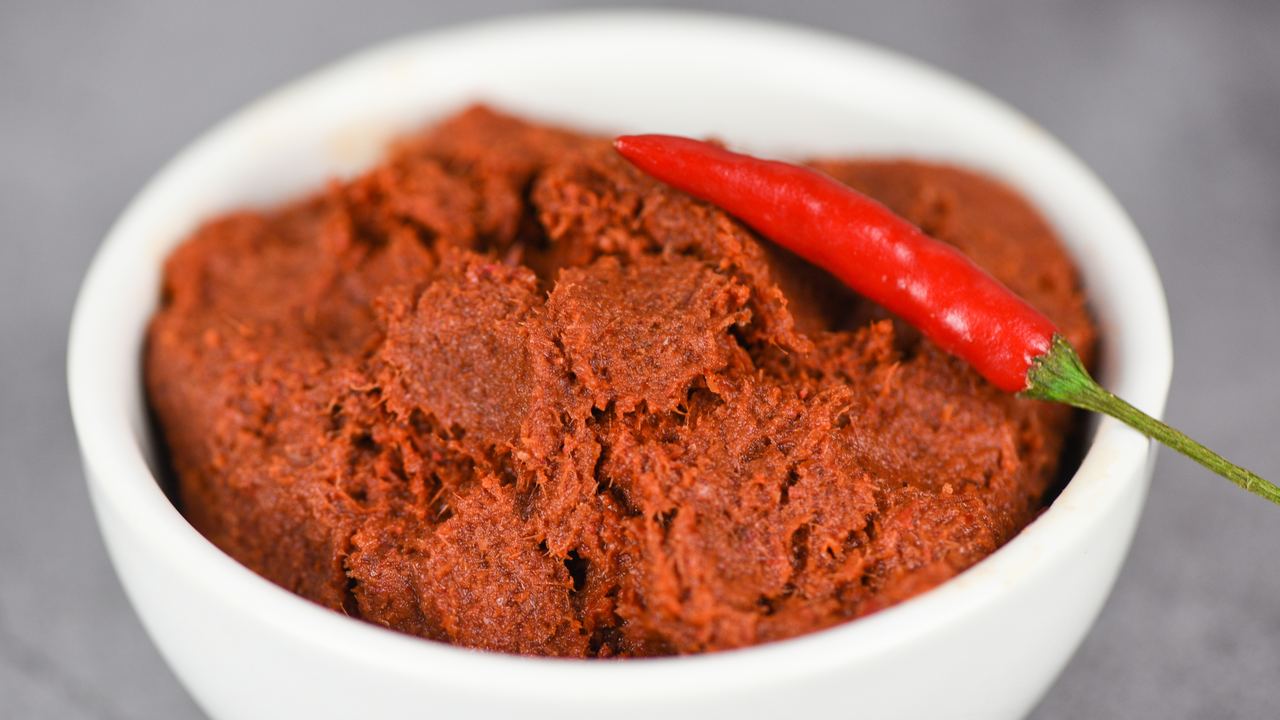
Fourteen classes from 18 to 175 EUR, median 35. Most run 08:30 to 12:00 and start at a wet market. What you are there to learn is a paste, and the order you pound it in.
Almost every Thai cooking class teaches four dishes and one technique, and only the technique matters afterwards. The dishes you can look up. The thing you cannot learn from a recipe is what a curry paste is supposed to feel like under a pestle after eight minutes, and which of the twelve ingredients goes in when.
The classes here are unusually consistent in price and unusually varied in setting, from purpose-built schools in Sukhumvit to a kitchen in somebody's flat.
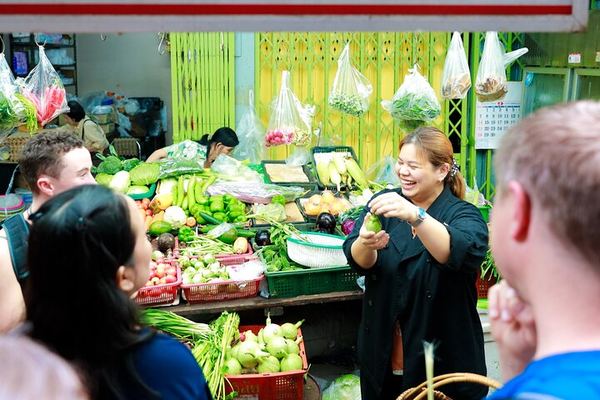
Asok Market Thai Cooking Class: Four Dishes at House of Taste
Four Thai dishes cooked in an air-conditioned kitchen off Sukhumvit 4, with a walk round Asok market first on morning classes, mango carving on later ones.

Boat, Don Wai Market and a Cooking Class with Chef Aoy
Two markets, a thirty-minute boat down the Tha Chin river, and a private class in the riverside home of an Iron Chef Thailand winner. Six hours, private.
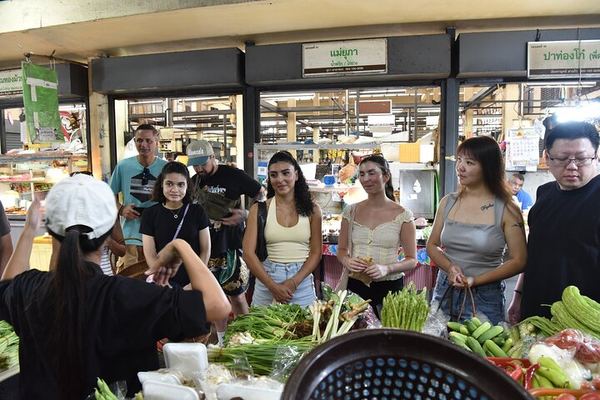
Hands-On Thai Cooking in Sathon with Coconut Milk from Scratch
Press the coconut milk, pound the curry paste, cook four dishes and eat each one hot. Inside Suan Phlu Market, with the market walk in every session.
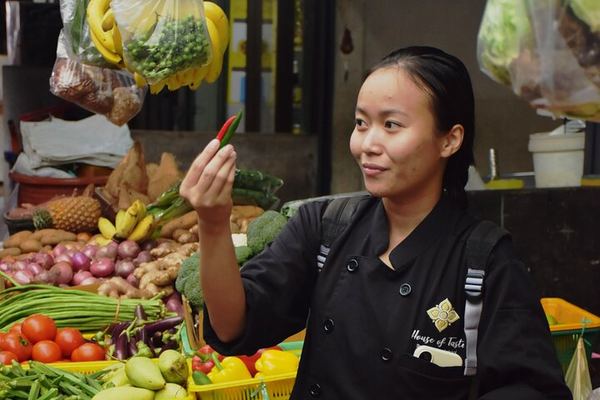
House of Taste Thai Cooking Class with Curry Paste from Scratch
Four Thai dishes in two hours, with the curry paste pounded and the coconut milk made from scratch. Morning classes add a market walk near BTS Asoke.
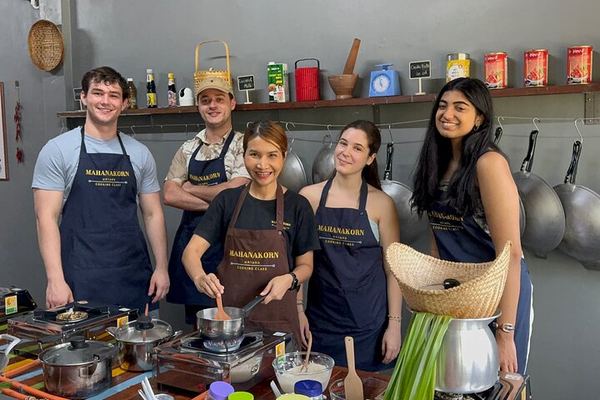
Mahanakorn Cooking Class by Wat Paknam: Four Thai Courses
Four Thai courses cooked by hand in a residential district two minutes from Wat Paknam, with the Giant Buddha optional afterwards. Eight people at most.
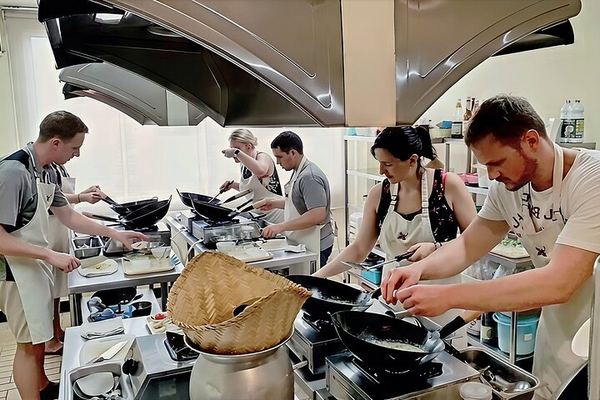
Maliwan Thai Cooking Class near Bowon Niwet, Four Places
The smallest class in the old town: four people, a wet market walk, a menu the instructor sets in advance, and printed recipes with a certificate at the end.
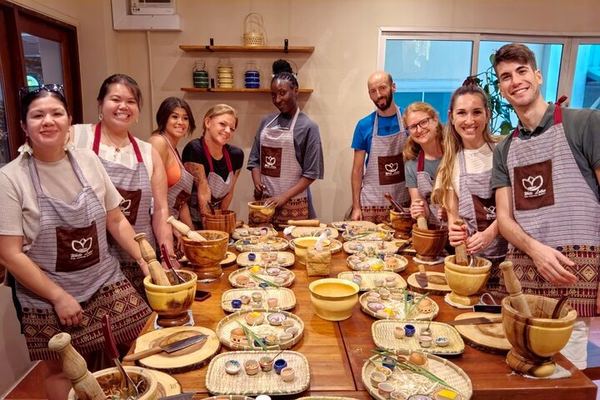
Old Town Cooking Class at Pak Khlong Talad with Lotus Folding
Four Thai dishes above the Pak Khlong Talad flower market, minutes from the Grand Palace, plus a lesson in folding a white lotus to take home.
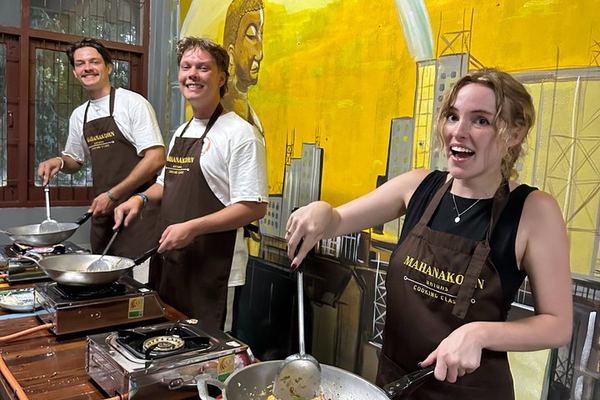
One-Hour Pad Thai and Tom Yum Class near Wat Paknam
Sixty minutes and two dishes: pad thai and tom yum with shrimp, cooked from fresh ingredients with a local chef in a district few visitors reach.
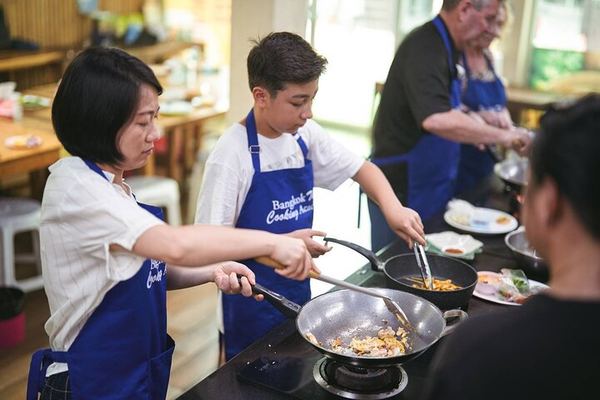
On Nut Thai Cooking Class: Pick Five Dishes from Twenty
No set menu: pick five dishes from more than twenty, pound your own curry paste, and cook all five yourself. Two minutes from BTS On Nut, market walk first.
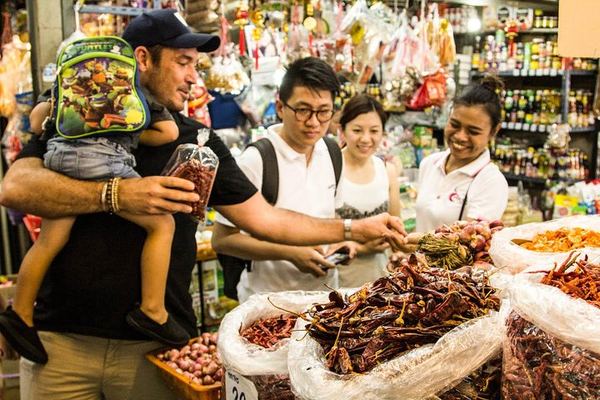
Pink Chili Thai Cooking Class in Phra Khanong with Market Walk
Green curry, pad thai and som tam among the four dishes, shopped for at a local market first. Six people at most, and beginners are the point here.
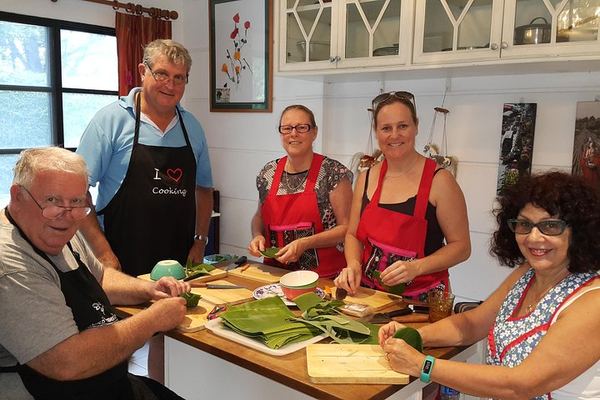
Private Thai Home Cooking Lesson: Pick from 100 Family Recipes
A teacher who has been running these since 2004, more than a hundred recipes from three generations of one family, and you pick which ones you cook.
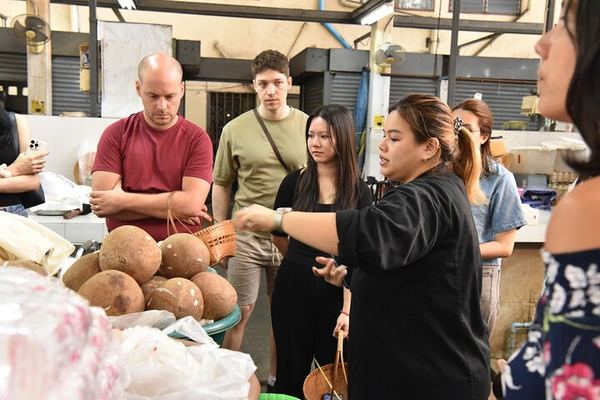
Suan Phlu Market Cooking Class in Sathon: Four Thai Dishes
The market is one minute from the kitchen, so every class gets the walk, morning, afternoon or evening. Four Thai dishes, each eaten as it comes off the heat.
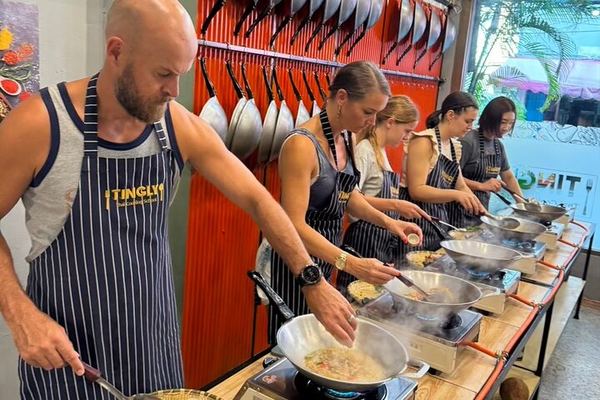
Tingly Thai Cooking Class: Tom Yum, Pad Thai and Mango Sticky Rice
Wat Kheak market at half past eight, then tom yum kung, pad thai kung, a curry that changes with the day, and mango sticky rice. Recipe book to take home.
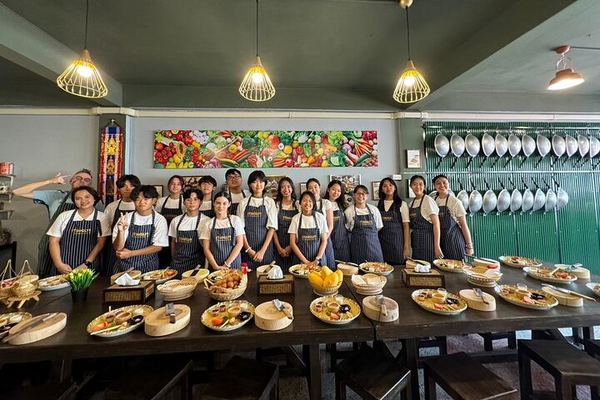
Tingly Thai Cooking School: Morning, Afternoon or Evening Class
The same four dishes at 8.30, 1pm or 6pm: tom yum kung, pad thai kung, a curry set by the weekday, and mango sticky rice. Only the morning goes to the market.
Ratings collected by Viator and Tripadvisor
The paste, in the order it goes in
A Thai curry paste is built in a granite mortar in a sequence that is not arbitrary. The hardest and driest things go first, because they need the most work and because pounding them creates the abrasive base that breaks down everything after. Dried chillies, soaked and deseeded. Salt, which acts as a grinding agent. Then the fibrous aromatics: lemongrass sliced thin against the grain, galangal, kaffir lime zest. Then garlic and shallot, which are soft and wet. Shrimp paste last, folded in rather than pounded.
Get the order wrong and you have a wet mess with fibres in it. Get it right and you have a paste that emulsifies into coconut cream instead of sitting on top of it. This is the whole lesson, and it takes ten minutes of genuine effort with a heavy pestle, which is why the classes that hand you your own mortar are worth more than the ones that demonstrate with a blender.
The pastes themselves are a family rather than a list. Green is the hottest, made with fresh green chillies. Red uses dried red ones and is the base for most of the others. Massaman carries dry spices, cinnamon and cardamom and clove, from Persian and Indian trade. Panang is thicker and sweeter. None of them is a fixed formula, which is what people find hardest to accept: every cook adjusts.
| Dish | The technique behind it | Difficulty at home |
|---|---|---|
| Green or red curry | Pounding a paste, then cracking coconut cream before adding it | Hard without a mortar, easy with one |
| Tom yum goong | Building a sour and hot broth without boiling the aromatics to death | Easy, if you can find galangal and kaffir lime leaves |
| Pad thai | Wok heat and order of ingredients. Tamarind, not ketchup | Easy, and better at home than most restaurants abroad make it |
| Som tam | Bruising rather than crushing, in a tall clay mortar | Easy, and the papaya is the only obstacle |
| Mango sticky rice | Steaming glutinous rice properly, then salted coconut cream | Easy, but needs the right rice and a steamer |
| Tom kha gai | Coconut and galangal balance, and knowing when to stop cooking | Easy |

Ten of these start at a market
The market hour is the part people remember, and it is doing more than sourcing. You are shown the four kinds of basil and told which one goes in which dish, the difference between galangal and ginger held side by side, why a kaffir lime looks like it does, and how fish sauce is graded.
It also fixes prices in your head. After watching a teacher buy the ingredients for four dishes, you have a working sense of what food costs in Bangkok, which changes how you read a menu for the rest of the week. The classes without a market are two to five euros cheaper, which is not a saving worth making.
The rice is the meal, and the dishes are what goes on it
A good class spends five minutes on this and it reorganises how you think about the whole cuisine. In Thai, the word for rice, khao, does duty for food itself: the standard greeting asks whether you have eaten rice yet, and a meal without it is not a meal.
That has a structural consequence. Thai dishes are not courses and they are not portions in the European sense: a curry, a stir fry, a soup and a salad arrive together, are placed in the middle, and each person keeps their own plate of rice and takes a spoonful of one thing at a time onto it. The dishes are seasoning for the rice, which is why a single curry ordered on its own tastes too intense and why the balance only makes sense across the table.
Three kinds turn up. Jasmine rice, long grain and faintly floral, is the everyday one, steamed and served loose. Sticky rice is a different species, soaked for hours and steamed in a woven basket rather than boiled, eaten with the fingers in the north and northeast, and rolled into a ball to pick things up. It is also what goes under the mango. Khao tom, rice boiled soft into a soup, is breakfast.
The practical lesson for home: cook more rice than you think and fewer dishes than you planned. Four people and three dishes is a Thai meal. Four people and four large portions is a European meal with Thai flavours.
What 18 euros buys and what 175 does
The bottom of this page is genuinely cheap. Eighteen euros buys a class teaching pad thai and tom yum, two dishes, in a school kitchen, without a market. It is a good introduction and nobody is being short-changed at that price.
The middle, where eleven of the fourteen sit, is 32 to 40 EUR: four dishes, a market walk, three and a half hours, a group of eight to twelve, and your own station. Six listings across the Thai catalogue share the exact price of 37.28 EUR, which is what a mature market looks like from the outside.
The top is 175 EUR for a private class that includes a market trip and a boat, taught by a named cook. That is five times the median, and what it buys is one teacher for your group and a schedule built around you. Whether that is worth 140 euros more than the standard class depends entirely on how much you dislike sharing a kitchen.
One listing here has five reviews. That is not a criticism of it, but it does mean the rating tells you nothing at all. On this page, where eleven classes hold a 5.0, the review count is the only number doing any work.
What survives the journey home
Most people leave a Thai class intending to cook it weekly and manage it twice. The difference between those two outcomes is usually shopping, so it is worth asking your teacher, in the class, which substitutions they consider acceptable. Their answers tend to be more pragmatic than the internet's.
Things that travel: curry paste ingredients keep in a freezer, lemongrass and galangal and kaffir lime leaves all freeze well, and fish sauce and tamarind keep indefinitely in a cupboard. A granite mortar is heavy but it is the one piece of equipment that actually matters, and they are cheap in Bangkok.
Things that do not: Thai basil and fresh green peppercorns have no useful substitute, and a curry made without them is a different dish rather than a lesser one. Coconut cream in a carton behaves differently from a tin, and neither behaves like the fresh cream you will use in class.
The honest note: a wok on a domestic hob does not reach the heat of a Thai burner, and pad thai at home will always be slightly softer than the one you made in class. That is physics, not skill.
Questions about cooking classes in Bangkok
How long do they take?
Three and a half to four hours including the market, with the sessions that state their hours running 08:30 to 12:00. You eat what you cook at the end, which is lunch, so plan the rest of the day accordingly.
Do I need to book with a market visit?
We would. Ten of the fourteen include one and they cost a few euros more. The market hour is where you learn to tell galangal from ginger and what things cost, and that knowledge is useful for the rest of your trip in a way that a fourth recipe is not.
How many dishes will I cook?
Four is standard, sometimes three plus a dessert. What matters more is whether you cook them or watch them being cooked. Ask about the group size: eight to twelve with individual stations is the normal arrangement, and the cheapest classes tend to be the largest.
How much rice should I cook at home?
More than you think, and fewer dishes than you planned. Thai dishes are eaten together over individual plates of rice rather than as portions, so three dishes for four people with plenty of jasmine rice is the right shape. Cooking four large portions is a European meal with Thai flavours.
Can these be done vegetarian or vegan?
Yes, better than any street food tour, because the ingredients are bought that morning. The two things to name explicitly are fish sauce and shrimp paste, both of which are in curry pastes and dressings by default and neither of which is visible in the finished dish. Say vegan rather than vegetarian if that is what you mean, and mention both by name.
Is 175 EUR for a private class worth it?
It is five times the median and it buys exclusivity rather than better teaching. If you are a group of four who want to set the pace and the menu, the maths works out closer than it looks. If you are two people who do not mind a shared kitchen, the 37 EUR class teaches the same paste.
Will I be able to buy the ingredients at home?
Most of them, from any south east Asian grocer, and the durable ones keep well: fish sauce, tamarind, palm sugar, dried chillies. The hard ones are Thai basil and fresh green peppercorns. Buy a granite mortar while you are in Bangkok, where they cost a fraction of what they do abroad, and accept the weight in your luggage.
Data verified on. Prices, ratings, review counts, hours and inclusions read from the 14 listings on this page on 4 September 2026.