
Moroccan Cooking Classes in Marrakech
Twenty classes from 18 to 70 euros, rated 4.94 across 7,763 reviews. Several are sold under the cook's own name, and one of those has 1,862 reviews on its own.
These are the cheapest cooking classes on this site and among the best rated: a median of 36 euros and a weighted 4.94 across 7,763 reviews. Nothing here costs more than 70. And unusually, the listings are sold under the teachers' names, which turns out to be the most reliable signal on the page.
What you will actually be taught divides into four techniques, and only one of them is the tagine.
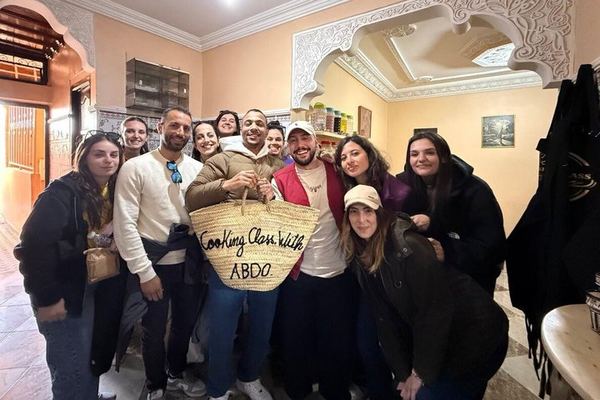
Abdo's House: Kefta Tagine and a Spice Shop if You Ask
Chicken or spiced meatball tagine in a family house off Derb Dabachi, and a free spice shop visit at either end if you say you want it. Three hours.
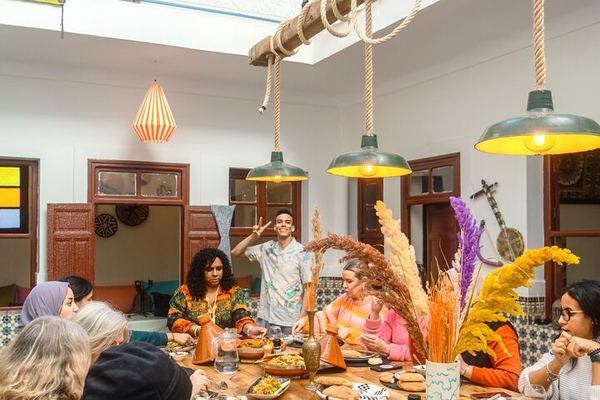
A Communal Table at ArtEscape, North of the Medina
Three and a half hours at ArtEscape, ending in a communal meal of what the group made. Wheelchair accessible throughout, and Uber gets you there easily.
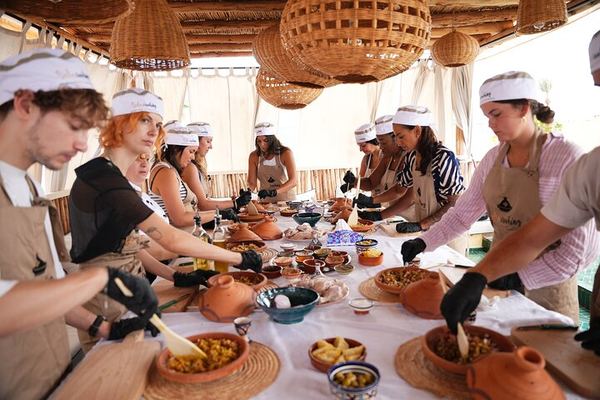
A Rooftop Tagine at Riad Nelia, Atlas in the Distance
Blend the spices, marinate, and slow-cook a chicken tagine on a Medina rooftop with the Atlas behind it. Mint tea taught properly, recipe card, certificate.
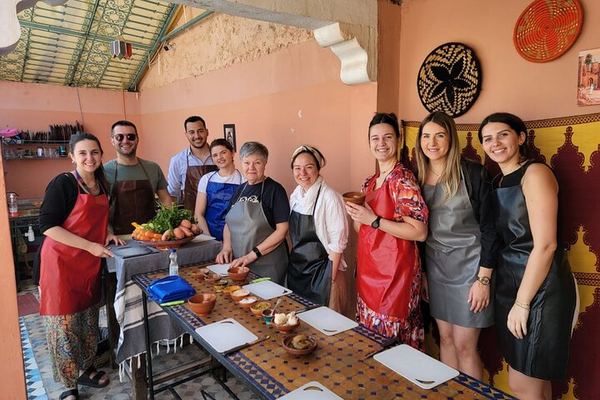
Chef Fatima's Traditional House in the Old Medina
Chef Fatima cooks and Yassir guides, in an old house in the middle of the Medina. Ten people, three and a half hours, and they walk you the last stretch.
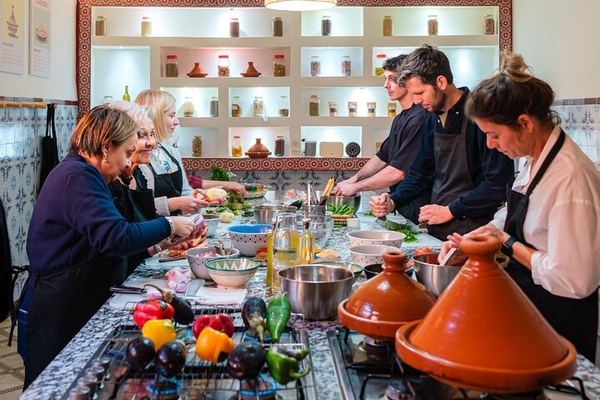
Chicken and Lemon Tagine, Then Mhencha for Dessert
Several dishes rather than one, with the spices explained as you go, and the recipes emailed after. Book the 10:30 slot if you want the market included.
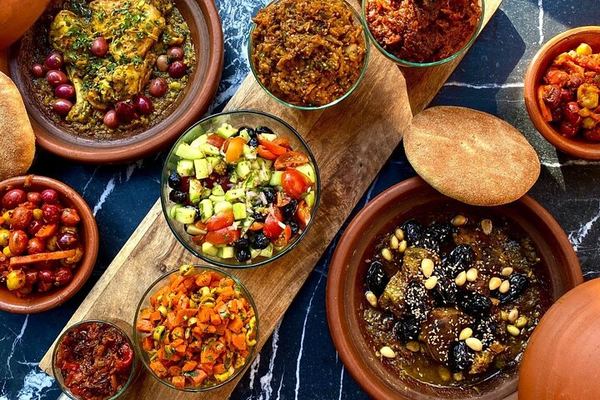
Farm to Table: Five Hours and One Tajine, Done Properly
Five hours and a single traditional tajine, cooked where the ingredients come from. Aprons, tajine pots and everything else provided. Meet at the Koutoubia.
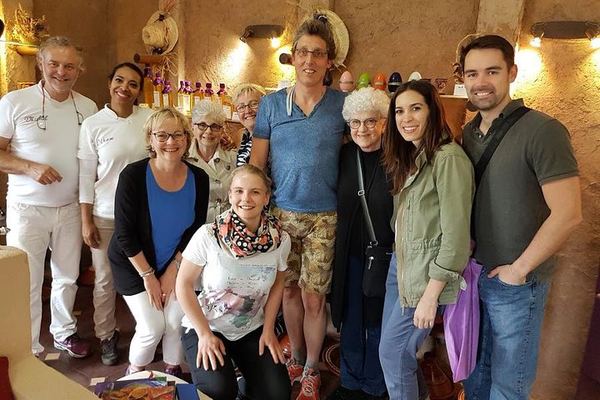
Guess the Spices, on a Farm Outside Marrakech
Six hours on a farm outside the city, with a blind spice test before you cook and a private driver each way. The market first, then lunch you made yourself.
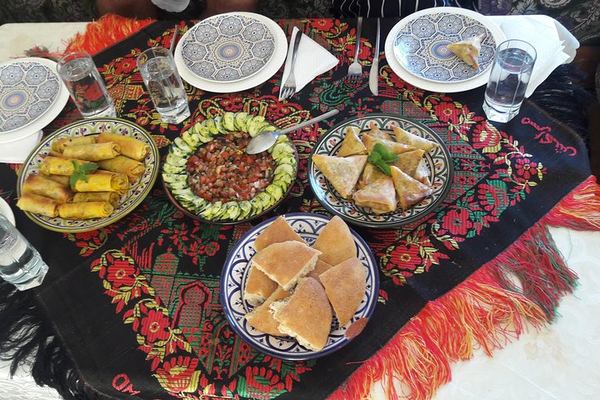
Khmisa's Kitchen in the Medina, and the Old Souk First
Twenty-five years a chef, and the class is in her own house in the Medina. Mint tea, you choose the menu, then the Old Souk for the ingredients.
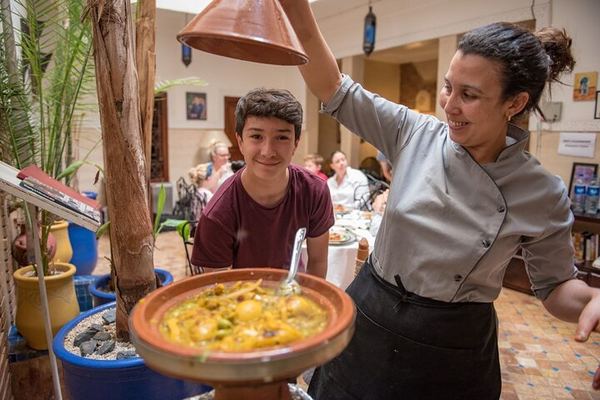
Learn to Haggle in Arabic, Then Cook the Tajine
The haggling and the Arabic food vocabulary are taught alongside the tajine, in a restored riad with a local family. B Corp certified, twelve people at most.
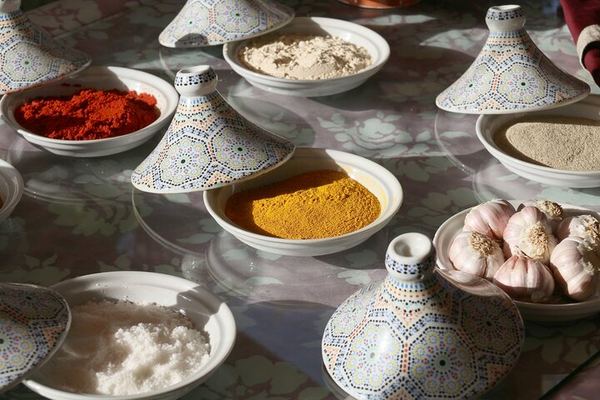
Pastilla, Briouates and the Sephardic Dishes of Morocco
Salads, briouates, tagine, pastilla, couscous and traditional Sephardic plates, which almost no other Marrakech class teaches. Three and a half hours.
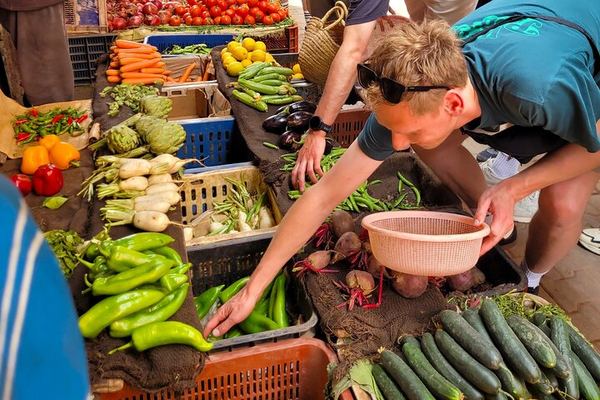
Ras El Hanout and Several Tagines, with Chef Hassan
The market first, then a family home and several tagines cooked as one team, with the spices explained. Ten people, air-conditioned, recipes at the end.
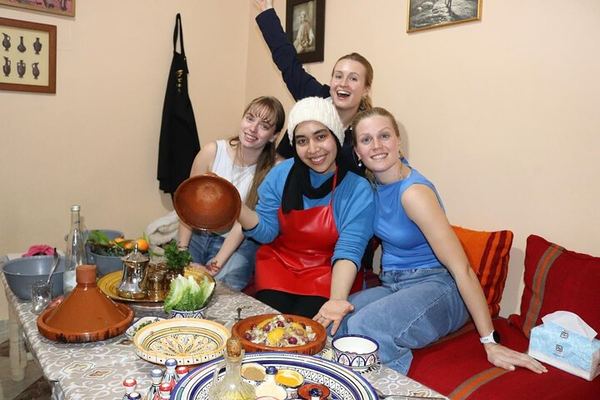
Seven at the Table in a Marrakech Family House
Seven people at most, in a family's own house near the Rue des Banques, for three hours of traditional recipes, treats and conversation with the host.
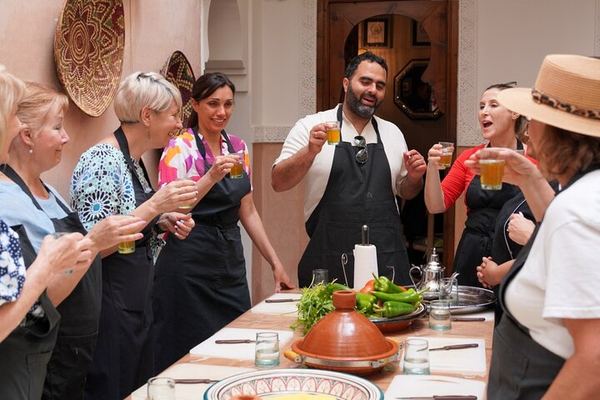
Shopping the Mellah Market, Cooking in a Working Riad
The shopping happens at the covered Mellah market rather than the tourist souk, and the class is in a riad that still takes guests. Chef Aicha, recipes after.
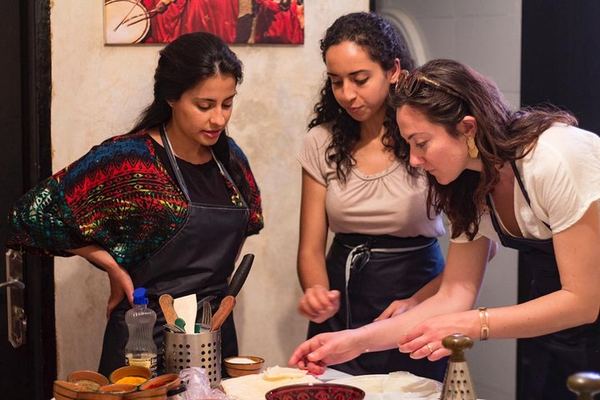
Shopping the Neighbourhood Shops with Najla, Not the Souk
The ingredients come from the small shops on Najla's own street rather than the tourist souk, and the class is in her own kitchen. Four hours, tea after.
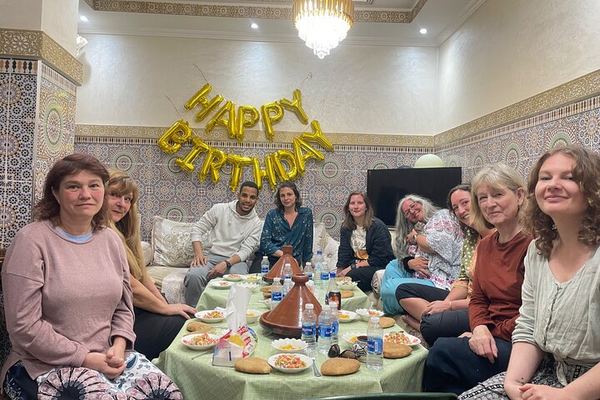
Tagine, Salads and Spice Tips, Two Minutes off the Square
A family house two minutes from Jemaa el-Fna: tagine, fresh Moroccan salads and dessert, with the recipes and the spice tips to take away. Three hours.
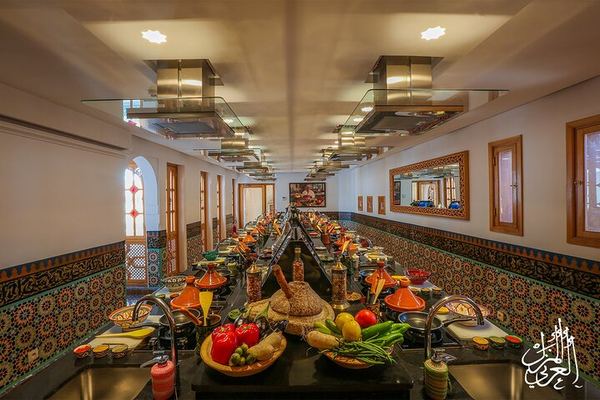
The First Cooking School in Morocco, Taught by a Dada
La Maison Arabe opened Morocco's first cooking school in 2001, and a dada still teaches it. Individual workstations, and a one-hour or three-hour option.
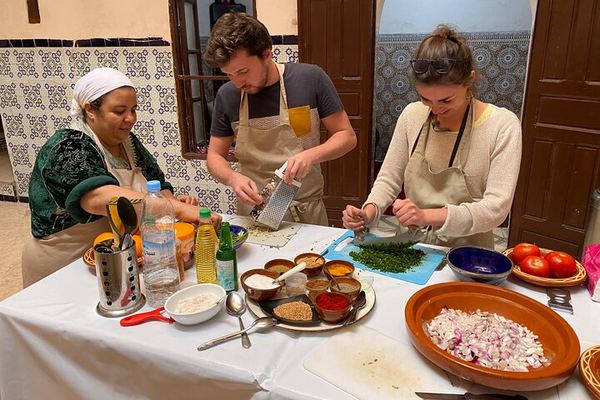
Thirty Years of Riad Kitchens, Taught by Laila
Laila has cooked for guest houses and hotels for thirty years and taught the class for twelve of them. Four hours, near the Bahia Palace, English or French.
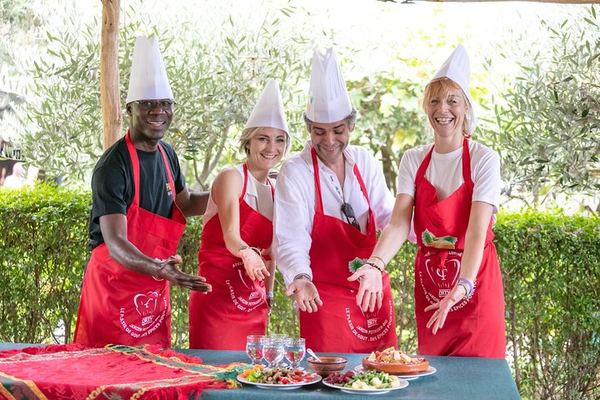
Twenty-Nine Kilometres Out, to a Berber Garden
Twenty-nine kilometres from Marrakech, an organic Berber garden with nothing touristic about it. Walk the farm, then cook. Driver, lunch and pickup included.
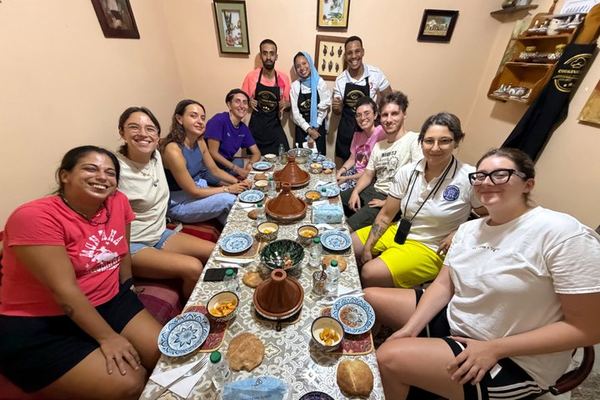
Two Hours In, the Meal Arrives: A Marrakech Home Kitchen
You cook for about two hours and then the meal is served, at lunch or at dinner. Tagine, Moroccan salads and dessert, in a home kitchen. Twelve people.
Yassine, His Mother, and a Quiet Marrakech Neighbourhood
A son and his mother teach it, in their own house in a quiet part of Marrakech, after a walk round the shops they actually buy from. Four hours, tea first.
Ratings collected by Viator and Tripadvisor
How a tagine is built
The dish is a construction, not a stew, and watching someone assemble one is the moment the cooking makes sense.
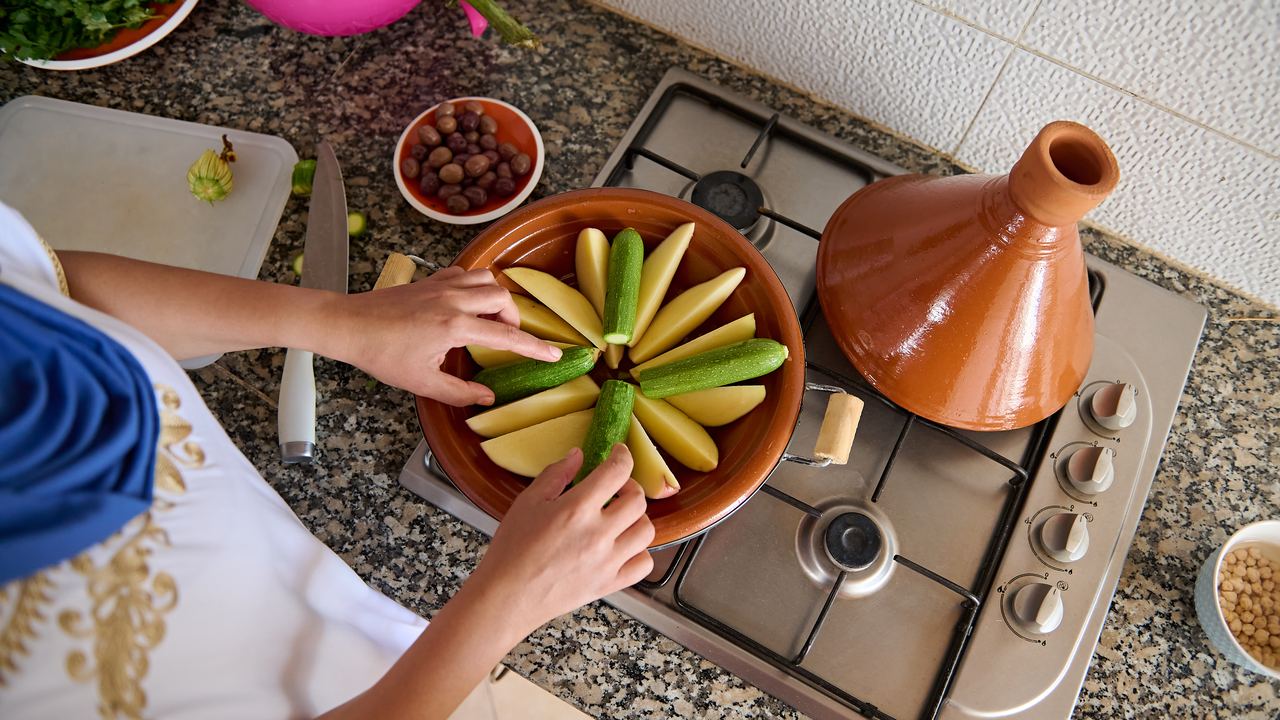
Sliced onion and oil go on the base, where they will melt and become the sauce. Meat sits in the centre, on top of them. Vegetables are then arranged around and over it in a cone, tallest in the middle, following the shape of the lid. Spices, preserved lemon, olives and a little water go on last.
Then it is left alone. The point of the conical lid is that steam rises, condenses on the cool upper cone and runs back down the sides, so the dish braises in a very small amount of liquid that keeps circulating. Lifting the lid to check breaks the cycle, which is why Moroccan cooks do it so rarely and why a class will tell you to stop fiddling.
A charcoal brazier does this better than a gas hob because the heat is gentle and comes only from below. If you buy a tagine to take home, buy a glazed one for cooking rather than the painted decorative sort, and use a heat diffuser.
| What | The technique | Why it matters |
|---|---|---|
| Preserved lemon | Lemons packed in salt for three to four weeks, nothing else | You use the rind, not the flesh. It is the flavour people cannot place in a tagine |
| Cooked salads | Aubergine, pepper, tomato or carrot, cooked down with cumin and oil | Made ahead, served cold, and the easiest Moroccan food to reproduce |
| Chermoula | Coriander, parsley, garlic, cumin, paprika, lemon, oil | The marinade for fish and the most useful paste in the repertoire |
| Mint tea | Green tea, fresh mint, sugar, poured from a height | The pour aerates it and settles the leaves. The first glass often goes back in the pot |

Ras el hanout means the top of the shop
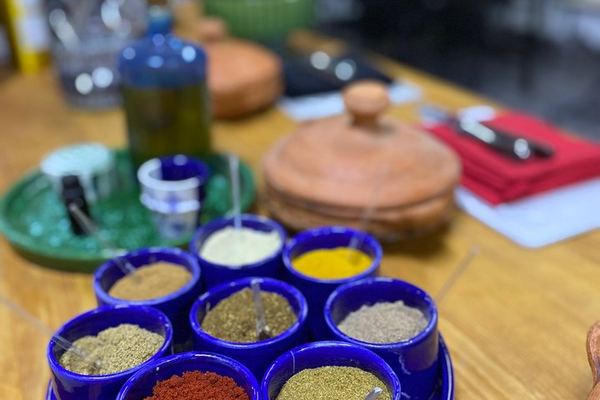
It is not a recipe. The name translates roughly as the head of the shop, and it means the blend that a particular spice merchant is proudest of. Ten spices, twenty, thirty; cardamom, cinnamon, mace, cubeb, rose, dried ginger, turmeric, pepper of several kinds. No two shops make the same one and none of them will tell you the proportions.
So there is no authentic ras el hanout to buy, only a good one, and the way to choose it is to smell several. A class with a market visit, and two of these twenty include one, is where that happens.
The other things worth carrying home weigh almost nothing: preserved lemons in a jar, argan oil for the table rather than for cooking, and dried rosebuds, which turn up in blends and which nobody outside Morocco seems to sell.
Riad, family house or farm
Seventeen of the twenty are in the city and three are outside it, and the difference is real.
A riad is a traditional house built around a courtyard, and a class there is usually on the roof terrace or around the courtyard, in a space designed for exactly this kind of gathering. These are the most common and they run 25 to 45 euros.
A family home is what the cheapest listings mean, from 18 euros: someone's actual kitchen, a small group, and a cook who does this for a living but not at scale. Several of the best reviewed classes on this page are these, and the intimacy is the point.
A farm or garden, at 39 to 70 euros, means leaving the city, in one case by 29 kilometres. You pick some of what you cook, and the setting is a garden rather than a medina roof. It is a half day rather than a morning, and transport is included.
The variable that matters most is the group size, and the listings do not always state it. Ask. A class of six in a family kitchen and a class of eighteen on a riad terrace are both sold at similar prices here.
Why the named cooks matter
Seven of these twenty put the cook's name in the title, which is rare. On this site only Lima does anything comparable, and there it is one listing.
The three most reviewed classes in Morocco are all sold this way, with 1,862, 1,357 and 551 reviews. That is thousands of people who booked a person rather than a company, in a market where the same four dishes are taught on every corner.
It is also the most honest form the product can take. A cooking class is one person teaching in their own kitchen for three hours; when it is sold under a brand, the person you get is whoever is working. When the name is on the listing, the reviews are about them.
The practical advice for this page: pick a name with four figures of reviews, check whether a market visit is included, ask the group size, and stop there. At 36 euros the downside is small and the upside is a morning you will still be describing in a year.
What is not on this page
Worth noting, because it is unusual for Marrakech. Not one of these twenty listings is a desert excursion, a quad bike trip or a balloon flight with dinner attached. When we surveyed the providers, four fifths of what carried a food tag in this city was exactly that, and it is the worst ratio of any destination we measured.
The classes came through clean. The medina food tours did not entirely: one desert dinner sits on that page, and it holds the lowest rating in the Moroccan catalogue.
So if you are choosing between our two Marrakech pages and want certainty about what you are buying, this is the one where every listing is what it says.
Questions about cooking classes in Marrakech
How long is a class?
Two to six hours. The city classes are typically three to four including the meal, starting mid morning; the farm and garden ones are half days because of the drive. One listing notes the meal is served about two hours in, which is a fair description of the usual rhythm.
Is 18 euros too cheap?
It is the lowest price for a cooking class anywhere on this site and it holds strong reviews. It buys a class in a family house with a small group. What it does not buy is a market visit, a farm setting or a large kitchen, none of which are necessary for a first Moroccan class.
Should I pick one with a market visit?
If you want to understand ras el hanout, yes, because smelling several blends side by side is the only way to learn what it is. Only two of the twenty include one, and they are among the most reviewed listings on the page.
What will I cook?
Almost always a tagine, one or two cooked salads, bread, and mint tea. Some add couscous, which is traditionally a Friday dish, or pastilla, which is more complex. The salads are the part you will actually make at home; the tagine needs the pot.
Is a tagine worth buying?
If you will use it. Buy a glazed cooking tagine rather than a painted decorative one, use a heat diffuser on a gas or electric hob, and accept that a charcoal brazier does it better. The preserved lemons and the spice blend are lighter, cheaper and change more dishes.
Can these classes be vegetarian?
Easily, and with notice they will be built that way rather than adapted. Vegetable tagines are a standard part of the repertoire, the cooked salads are all vegetarian, and the bread and tea are unaffected. Say so at booking so the shopping reflects it.
Are the classes affected by Ramadan?
Yes, and the pattern shifts entirely: daytime eating is limited, and classes may move to the evening around the breaking of the fast, which is its own remarkable thing to be part of. Check the dates for the year you are travelling, and confirm directly with the operator rather than relying on a listing description, which may not have been updated.
Data verified on. Prices, ratings, review counts and formats read from the 20 listings on this page on 4 September 2026.